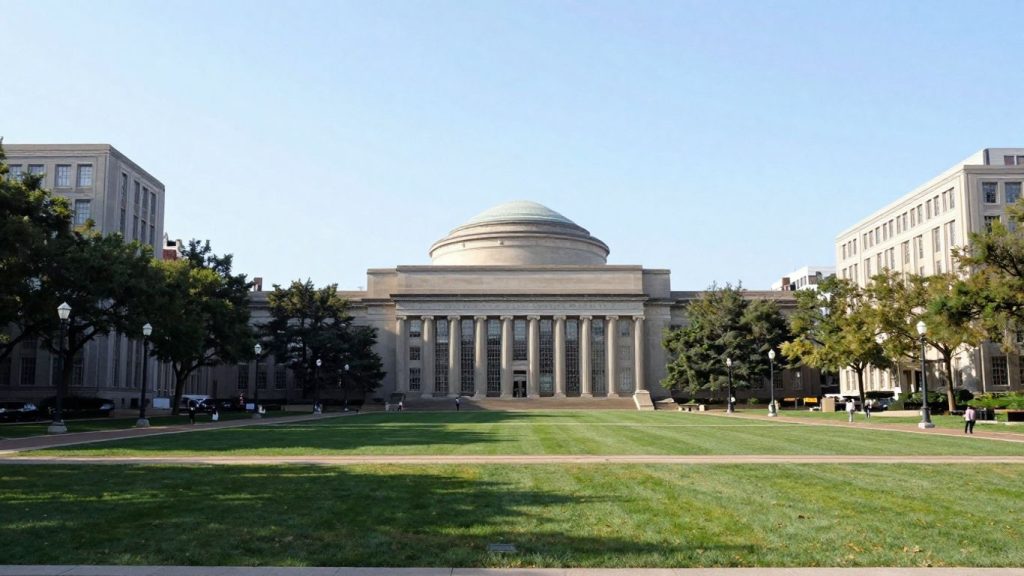
This article takes a look at the Massachusetts Institute of Technology in Cambridge. We’ll explore its campus, its academic strengths, and its history. We’ll also touch on how to get around the campus and what’s nearby, plus a bit about the school’s unique spirit.
Key Takeaways
- The Massachusetts Institute of Technology campus in Cambridge is known for iconic spots like the Great Dome and Killian Court, alongside public art and interesting buildings.
- MIT is recognized for its academic excellence, with numerous schools, research centers, and a focus on interdisciplinary work.
- The institution has a rich history, starting in Boston and moving to its current Cambridge location, influenced by industry and research.
- Navigating the MIT campus involves understanding building numbers and layouts, with tunnels and bridges connecting different areas.
- The spirit of MIT is marked by traditions, student life, and a notable rivalry with Caltech, celebrating innovation.
Discovering the Massachusetts Institute of Technology Campus
The Iconic Great Dome and Killian Court
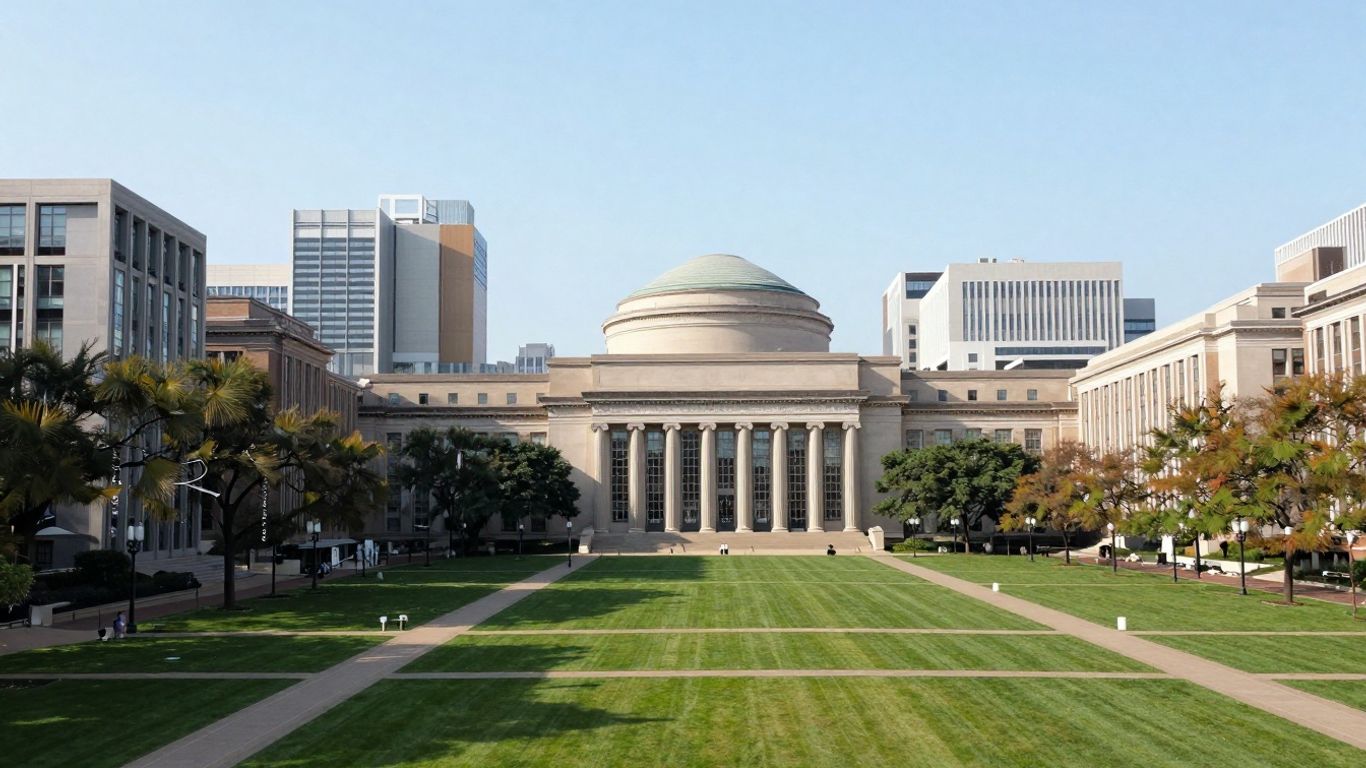
When you first arrive at MIT, one of the most striking sights is the Great Dome, a landmark that truly defines the campus’s visual identity. It sits atop Building 10, the administrative heart of the institute. Beneath it lies Killian Court, a beautiful, open space that serves as a central gathering point. This area is where commencement ceremonies are held each year, a tradition that highlights the culmination of student efforts. The dome itself is quite impressive, even larger than those found on St. Paul’s Cathedral in London or the U.S. Capitol Building. It’s also a spot with a history of notable student pranks, known as ‘hacks,’ adding a layer of playful ingenuity to its grandeur.
Exploring Public Art and Architectural Marvels
MIT’s campus is more than just academic buildings; it’s a canvas for impressive public art and distinctive architecture. As you wander, you’ll encounter sculptures by renowned artists like Picasso and Calder, adding cultural richness to the scientific and technological environment. The buildings themselves are often architectural marvels, showcasing a range of styles that reflect different eras of the institute’s growth. From the classic lines of the older structures to the modern designs of newer additions like the Stata Center, there’s a visual narrative of innovation and design throughout the campus. It’s a place where art and engineering seem to meet.
The Engaging MIT Museum Experience
Located conveniently near the Kendall/MIT MBTA station, the MIT Museum offers a fascinating look into the institute’s contributions to science, technology, and art. It’s a place where you can see firsthand the results of cutting-edge research and the creative spirit that drives MIT. The museum often features exhibits that explore the intersection of these fields, making complex ideas accessible and engaging for visitors. It’s a great spot to spend a few hours and get a tangible sense of the innovation that originates from MIT, from historical artifacts to interactive displays.
Academic Excellence at MIT
Schools of Innovation and Discovery
MIT is organized into five distinct schools, each a hub of intense study and groundbreaking work. These are the School of Architecture and Planning, the School of Engineering, the School of Humanities, Arts, and Social Sciences, the Sloan School of Management, and the School of Science. Each school houses numerous departments and interdisciplinary programs, creating a rich environment where students can explore a vast array of subjects. The focus here isn’t just on learning existing knowledge, but on pushing the boundaries of what’s known.
Pioneering Research Centers and Laboratories
Beyond the classroom, MIT is defined by its numerous research centers and laboratories. These facilities are where much of the institution’s famous innovation takes place. Think of places like the Computer Science and Artificial Intelligence Laboratory (CSAIL), the Koch Institute for Integrative Cancer Research, or the Lincoln Laboratory. These aren’t just places for professors; undergraduates often get involved through programs like UROP (Undergraduate Research Opportunities Program). It’s a chance to work on real projects, sometimes leading to published papers or even new companies.
Interdisciplinary Studies and Collaboration
One of the defining features of MIT is its emphasis on interdisciplinary work. The problems MIT tackles rarely fit neatly into one academic box. So, you’ll find engineers working with biologists, economists collaborating with computer scientists, and artists teaming up with urban planners. This approach is reflected in the curriculum, which encourages students to take classes across different schools and departments. The goal is to equip students with a broad perspective and the ability to connect ideas from various fields. This cross-pollination of ideas is what often sparks the most significant breakthroughs.
The institute’s motto, "Mens et Manus" (Mind and Hand), perfectly captures this spirit. It highlights the importance of both theoretical knowledge and practical application. Students are encouraged to not only understand complex concepts but also to build, create, and solve real-world problems using that knowledge.
A Rich History in Cambridge
MIT’s story is deeply intertwined with its physical location, evolving from its early days to its current prominent spot in Cambridge. The institution’s journey is marked by significant shifts and strategic decisions that shaped its identity and its relationship with the surrounding community.
Founding Principles and Early Development
Founded in 1861, MIT’s initial vision was to establish an independent, private university focused on practical science and engineering education. The idea was to create a place where students could learn by doing, a departure from the more theoretical approaches common at the time. This hands-on philosophy was central to its founding, aiming to train individuals who could contribute directly to the industrial and technological advancements of the era. The early years were spent establishing its academic programs and building a reputation for rigorous training in fields like mechanical engineering and chemistry.
Relocation and Expansion to Cambridge
The most significant geographical shift in MIT’s history occurred in 1916 when it moved from its original Boston campus to its current location along the Charles River in Cambridge. This move was driven by a need for more space to accommodate its growing student body and research facilities. The acquisition of a mile-long stretch of land provided the opportunity to design and build a new, purpose-built campus. The neoclassical "New Technology" campus, designed by William W. Bosworth, was a grand undertaking, funded significantly by industrialist George Eastman. The ceremonial crossing of the Charles River marked a new chapter, physically embedding MIT within the academic and cultural landscape of Cambridge.
The Influence of Industry and Research
From its inception, MIT has maintained strong ties with industry, a relationship that has profoundly influenced its development. In the early 20th century, facing financial needs and a desire to expand its research capabilities, MIT adopted what became known as the "Technology Plan." This model encouraged collaboration with industries, leading to the development of postgraduate programs focused on solving real-world problems through laboratory research. This approach helped MIT become a hub for innovation, attracting talent and resources that propelled its research forward. The university’s commitment to applying scientific knowledge to practical challenges has consistently shaped its academic structure and its role in technological progress.
The university’s strategic location and its proactive engagement with industrial partners have been key factors in its growth and its ability to remain at the forefront of scientific and technological advancement. This symbiotic relationship continues to define MIT’s unique position in higher education and research.
Navigating the MIT Environment
Understanding Building Designations
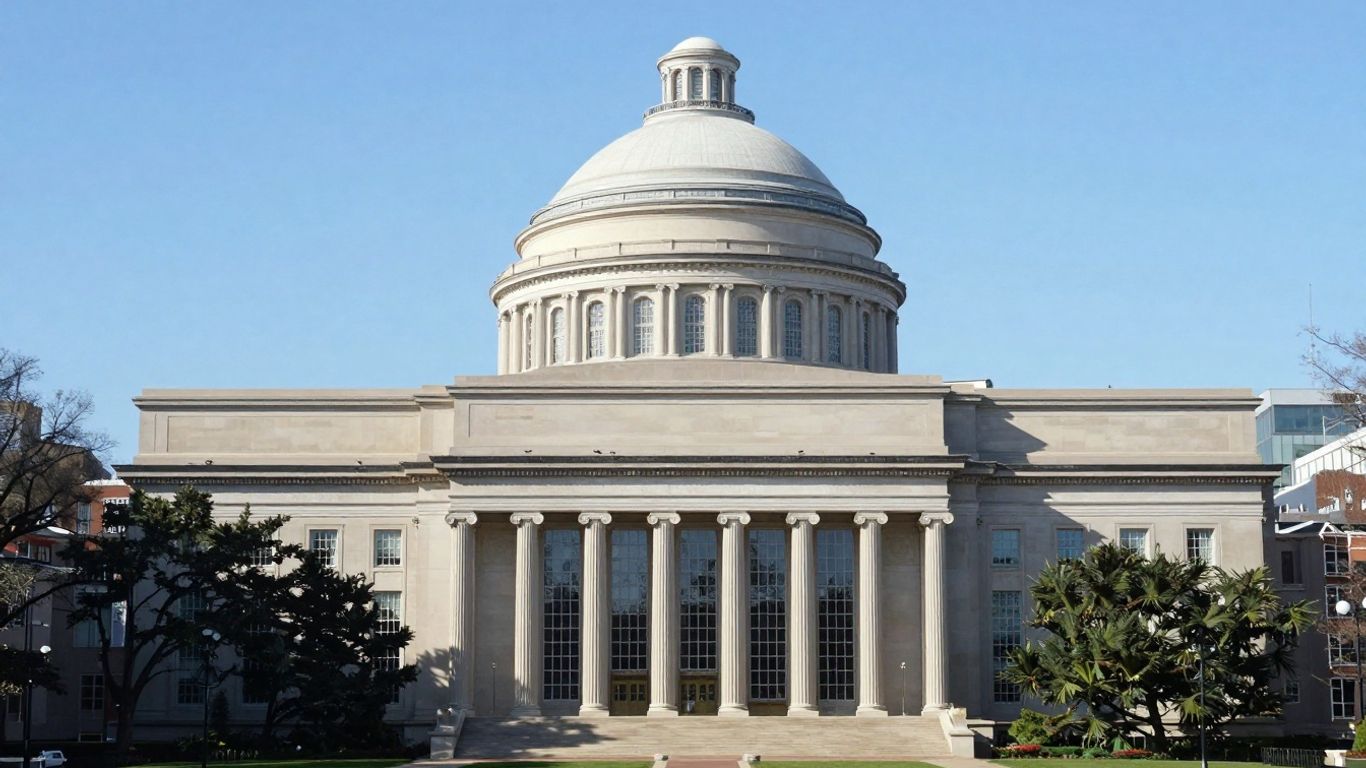
MIT’s campus can seem like a maze at first, but understanding how buildings are named can help you find your way. Most buildings are identified by a number, like ‘Building 7’ or ‘Building 34’. These numbers often correspond to their location on a grid system or their historical order of construction. Some buildings also have names, often honoring significant figures in science, technology, or MIT’s history. For instance, the iconic Great Dome is officially known as the Ralph Landau Building (Building 10). Keep an eye out for these designations on maps and building entrances.
The Extensive Campus Layout
The MIT campus stretches along the north bank of the Charles River in Cambridge, Massachusetts. It’s a dynamic space with a mix of modern and historic architecture. The main campus area is quite walkable, but it’s also quite large. You’ll find academic buildings, research labs, student housing, recreational facilities, and green spaces all integrated within the urban environment. The Welcome Center at 292 Main Street is a great starting point for any visitor, offering maps and information.
Here’s a quick look at some key areas:
- Kendall Square: The area surrounding the campus, a hub for innovation and technology companies.
- Main Campus: The core academic and residential area, roughly between Massachusetts Avenue and Wadsworth Place.
- West Campus: Home to many athletic facilities and some student housing.
Connecting Through Tunnels and Bridges
To make moving between buildings easier, especially during inclement weather, MIT utilizes an extensive network of tunnels and bridges. The most famous of these is the Infinite Corridor, a long, straight hallway that runs through several buildings on the main campus, connecting many academic departments. Other tunnels link various buildings, providing a sheltered route. Bridges also span across some of the campus’s internal pathways, offering unique vantage points and convenient passage. These connections are not just practical; they are an integral part of the campus experience, often featuring student art and gathering spots.
Beyond the Campus: Cambridge and Boston
While MIT’s campus is a world unto itself, its location places it right in the heart of two vibrant and historically rich cities: Cambridge and Boston. Stepping off campus opens up a wealth of cultural, historical, and recreational opportunities that complement the academic experience.
Exploring Local Landmarks and Attractions
Cambridge itself offers a unique blend of academic energy and urban life. Just a short walk or T ride away, you can find yourself immersed in the historic atmosphere of Harvard Square, a hub for bookstores, cafes, and street performers. For those interested in the city’s revolutionary past, the Freedom Trail in Boston is a must-see. This 2.5-mile red-lined path winds through downtown Boston, connecting 16 historically significant sites, including Faneuil Hall, the Old North Church, and the site of the Boston Massacre. It’s a fantastic way to get a feel for the city’s foundational role in American history.
Cultural Institutions and Historical Sites
Beyond the Freedom Trail, the Boston area boasts a remarkable array of cultural institutions. The Museum of Fine Arts, one of the oldest and largest art museums in the United States, houses an impressive collection spanning various eras and cultures. For a different kind of learning, the Museum of Science offers interactive exhibits that make complex scientific principles accessible and engaging for all ages. History buffs will also appreciate the John F. Kennedy Presidential Library and Museum, offering insights into the life and legacy of the 35th U.S. President. Even a simple stroll across the Harvard Bridge, famously marked in "smoots," provides a unique local experience and great views of the Charles River.
Experiencing the Vibrant Surrounding Areas
Getting around is quite straightforward. The MBTA, or "the T," provides extensive subway and bus service connecting MIT to the wider Boston metropolitan area. The Kendall/MIT Red Line station is a key transit point. For a more leisurely exploration, consider the Bluebikes bike-share program, with stations conveniently located around campus and throughout Cambridge and Boston. Many of these attractions are easily accessible via public transport or a short ride-share trip, making it simple to explore the diverse offerings of this dynamic region.
The proximity of MIT to both Cambridge and Boston creates a rich environment where academic pursuits can easily blend with cultural exploration and historical discovery. It’s an area that rewards curiosity, offering something new around every corner.
The Spirit of MIT: Culture and Rivalries
Traditions and Student Life
The culture at MIT is a unique blend of intense academic pursuit and a playful, often ingenious, approach to problem-solving. This spirit is most famously expressed through "hacks," elaborate pranks that often involve intricate engineering and a deep understanding of campus infrastructure. These aren’t just random jokes; they are often seen as demonstrations of technical skill and wit, requiring significant planning and execution. Think of the legendary "hacks" involving the Great Dome or the Infinite Corridor – these events are woven into the fabric of student lore.
Beyond pranks, student life is characterized by a strong sense of community and a shared passion for innovation. The "Brass Rat," the official MIT class ring, is a tangible symbol of this shared experience, with each year’s design incorporating unique elements reflecting the graduating class’s identity and experiences. The annual Mystery Hunt is another tradition that highlights the collaborative and problem-solving ethos, challenging teams to solve complex puzzles across campus and beyond.
The Unique Rivalry with Caltech
MIT shares a particularly distinctive rivalry with the California Institute of Technology (Caltech). Unlike many collegiate rivalries focused on sports, this one is primarily waged through intellectual challenges and elaborate pranks, often spanning the entire continent. The distance between the two institutions, over 2,500 miles, only adds to the unique nature of their competition.
These "nerd battles" have a long history. For instance, Caltech students once distributed t-shirts that humorously suggested MIT was a second choice. MIT retaliated by "stealing" a historic cannon from Caltech’s campus and displaying it in Cambridge. These exchanges are not malicious but rather a testament to the shared ingenuity and playful spirit of both institutions.
| Year | Prank/Rivalry Event | Institutions Involved |
|---|---|---|
| 2005 | Distribution of "MIT: …because not everyone can go to Caltech" t-shirts | Caltech vs. MIT |
| 2006 | Theft and relocation of the Fleming Cannon | MIT vs. Caltech |
| 2010 | Attempted TARDIS placement on Caltech’s Baxter Hall | MIT vs. Caltech |
Celebrating Innovation and Ingenuity
At its core, MIT celebrates a culture of relentless curiosity and a drive to create and improve. This is evident not only in its academic programs and research but also in its entrepreneurial spirit. The institute actively encourages students and faculty to turn their ideas into tangible solutions and even businesses.
Events like the MIT $100K Entrepreneurship Competition provide a platform for aspiring innovators to pitch their ideas and secure funding, showcasing the practical application of knowledge gained at MIT. This focus on making a real-world impact, combined with a deep appreciation for cleverness and technical skill, defines the enduring spirit of the Massachusetts Institute of Technology.
The MIT mission is to advance knowledge and educate students in science, technology, and other areas of scholarship that will best serve the nation and the world. This mission is not just a statement; it’s a guiding principle that shapes the culture, the traditions, and the very identity of the institute, encouraging a constant pursuit of discovery and betterment.
A Lasting Impression
As our exploration of the Massachusetts Institute of Technology comes to a close, it’s clear that MIT is more than just a collection of buildings and labs. It’s a dynamic hub where groundbreaking ideas take shape and future innovators are made. From its historic roots to its cutting-edge research, the institute continues to push the boundaries of what’s possible. Whether you’re a prospective student, a curious visitor, or simply interested in the world of science and technology, MIT offers a compelling glimpse into the forefront of human achievement. Its impact is felt far beyond the campus, shaping the world we live in today and paving the way for tomorrow.
Frequently Asked Questions
What is MIT famous for?
MIT is known for its amazing work in science and technology. It’s a place where brilliant minds come together to invent new things and solve tough problems. Many important inventions and discoveries have come from MIT, making it a leader in fields like engineering, computer science, and artificial intelligence.
What are some cool places to see on the MIT campus?
You should definitely check out the Great Dome and Killian Court; they’re like the heart of the campus. There are also many interesting art pieces and buildings to admire. The MIT Museum is another great spot to learn about the cool stuff happening at MIT.
How did MIT start and where is it located?
MIT was founded a long time ago, back in 1861, to help America grow with new ideas and skills. It first started in Boston but later moved across the river to its current home in Cambridge, Massachusetts. It’s right next to Boston, a city full of history and other cool places to visit.
How do students get around the MIT campus?
The campus is pretty big, so there are special ways to navigate it. Buildings have numbers, and many are connected by tunnels and bridges, which is super handy when the weather isn’t great. There’s also a subway station right on campus to help you get around.
What’s the rivalry between MIT and Caltech like?
MIT and Caltech, another top science school, have a fun rivalry. Instead of sports, they compete with clever pranks and academic challenges. It’s a friendly competition between two of the smartest schools in the country, showing their unique sense of humor and ingenuity.
What’s the main idea behind MIT’s motto, ‘Mens et Manus’?
The motto ‘Mens et Manus’ is Latin for ‘Mind and Hand.’ It means that MIT believes in learning through both thinking and doing. Students are encouraged to use their minds to come up with ideas and then use their hands to build, create, and bring those ideas to life.

Peyman Khosravani is a seasoned expert in blockchain, digital transformation, and emerging technologies, with a strong focus on innovation in finance, business, and marketing. With a robust background in blockchain and decentralized finance (DeFi), Peyman has successfully guided global organizations in refining digital strategies and optimizing data-driven decision-making. His work emphasizes leveraging technology for societal impact, focusing on fairness, justice, and transparency. A passionate advocate for the transformative power of digital tools, Peyman’s expertise spans across helping startups and established businesses navigate digital landscapes, drive growth, and stay ahead of industry trends. His insights into analytics and communication empower companies to effectively connect with customers and harness data to fuel their success in an ever-evolving digital world.