Jonathan Kniss has built his career by combining technical expertise with leadership skill. Born and raised in northwestern Illinois, he went on to the University of Illinois, graduating with a degree in electrical engineering. That background gave him the tools to understand complex systems, but it was his ability to guide people that marked him out as a leader.
He began at Honeywell as an engineering intern before joining Boeing. Over the years, he rose steadily through the ranks, earning eight promotions. At Boeing he moved from manager to director, learning to balance technical precision with the demands of large teams and global projects. His time there set the tone for the rest of his career: resilient, strategic, and focused on results.
Jonathan later became a Managing Director at FlightSafetyBoeing Training International and He went on to lead Quest’s Qi2 Systems as Vice President. In these positions, he drove business growth, negotiated major contracts, and expanded into international markets.
Today, Jonathan serves as a global real estate leader. His reputation rests on an ability to adapt to changing business conditions while keeping long-term goals in view. He is known for building high-performance teams, creating operational efficiency, and leading organizations through periods of change.
Across decades of work, Jonathan Kniss has shown what steady leadership looks like in practice. His career demonstrates how vision, persistence, and the right mix of technical and human skills can shape industries and open new opportunities.

A Conversation with Jonathan Kniss: Lessons from time in Business
Jonathan, let’s start at the beginning. What first drew you to engineering?
I grew up in northwestern Illinois, and I was always curious about how things worked, particularly electronics. That curiosity led me to the University of Illinois, where I studied electrical engineering. At the time, it felt like the best foundation for a career that could go in many directions.
Your first role was at Honeywell. What did you take from that early experience?
I joined Honeywell as an engineering intern. It was my first exposure to how big companies manage innovation. What stood out was how much detail mattered. One small oversight could affect an entire project. It was a lesson I carried into every role afterwards.
Boeing became a major part of your career. What did those years teach you?
Boeing was transformative. I started as a manager and was promoted eight times over the years, eventually becoming a director. Each step brought more responsibility and more people relying on me. One of the key lessons was about leadership under pressure. With complex projects and tight deadlines, you can’t afford to lose focus. What kept me grounded was remembering that success was about moving the whole team forward, not just personal achievement.
Can you recall a particular challenge at that shaped your approach?
There have been many, and some where people thought it was impossible to recover. But we made necessary changes, and delivered. Those experiences taught me that when someone says “it can’t be done,” it often means it can’t be done the old way. Change the approach, and new doors open.
After Boeing, you moved into roles at FlightSafetyBoeing Training International and later Baker Hughes. How did those transitions broaden your perspective?
At FlightSafetyBoeing Training International, I served as a Managing Director. That role demanded not just technical oversight, but also coordination with global customers. At Baker Hughes, the scale was also large, with projects spanning the continents. Both roles reinforced the importance of cultural awareness. Success depends on listening, adapting, and respecting different working styles.
You were Vice President of Quest’s Qi2 Systems. What was different about leading a smaller, growing business?
At Quest, and particularly with Qi2 Systems, we were trying to grow a very young business. Resources were limited, and there was competitive pressure. People told us flatly that we couldn’t compete with established players. But we did by building relationships. It was a different kind of leadership – more agile, more experimental – but it sharpened my skills in strategy and negotiation.
Today you work as a global real estate leader. How has that shift compared to your earlier roles?
Real estate might seem worlds apart from aerospace or energy, but the fundamentals are similar. It’s about managing assets, understanding markets, and leading people. My earlier experiences taught me how to assess risk, and stay calm when conditions change.
Looking back, what principles have guided you through all these roles?
Tenacity and attitude. There were times when budgets were tight, or technology wasn’t fully proven, or the competition seemed overwhelming. Giving up would have been the easier option. But persistence and a positive mindset carried me forward. Also, writing goals down has been a simple but powerful tool. It turns vague ambitions into concrete checkpoints.
Finally, what would you say to someone starting out who wants to build a meaningful career?
Don’t chase only titles. Focus on building skills and relationships. Be willing to hear “it can’t be done” and treat it as an invitation to think differently. Every success will bring new responsibility, so be ready to grow with it. And remember that success is not just about where you end up, but how you get there and who you bring along with you.
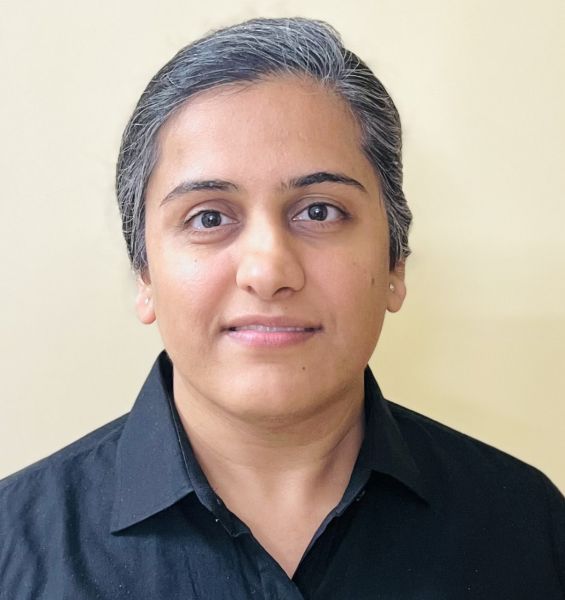
Pallavi Singal is the Vice President of Content at ztudium, where she leads innovative content strategies and oversees the development of high-impact editorial initiatives. With a strong background in digital media and a passion for storytelling, Pallavi plays a pivotal role in scaling the content operations for ztudium’s platforms, including Businessabc, Citiesabc, and IntelligentHQ, Wisdomia.ai, MStores, and many others. Her expertise spans content creation, SEO, and digital marketing, driving engagement and growth across multiple channels. Pallavi’s work is characterised by a keen insight into emerging trends in business, technologies like AI, blockchain, metaverse and others, and society, making her a trusted voice in the industry.