Intel’s entry into the dedicated graphics card market introduced a third major player to an industry long dominated by a duopoly. Gamers now have more options at various price points, specifically targeting 1080p and 1440p resolutions. If you are considering an Intel Arc PC for your next build, understanding the architecture and real-world results is necessary to make an informed choice. The Alchemist architecture brings specific strengths that differ from its competitors, focusing on modern API support and hardware-accelerated creation tools.
Alchemist Architecture and Features
The underlying technology defines the experience. Alchemist cards prioritize future-facing standards, meaning they often handle newer technologies better than legacy software.
- Xe Super Sampling (XeSS): AI-driven upscaling allows for higher frame rates without significant loss in visual fidelity, competing directly with DLSS and FSR.
- Hardware ray tracing: dedicated cores handle lighting calculations, offering realistic shadows and reflections in supported titles, delivering competitive ray-tracing performance compared to other mid-range options.
- AV1 encoding: this provides superior video quality at lower bitrates, making it a favorite among streamers and content creators who require clean, high-quality video outputs.
- Deep Link technology: systems using both an Intel CPU and GPU can leverage power sharing and hyper encoding to accelerate workload processing speeds.
While raw rasterization power is important, these features extend the lifespan and utility of the card. Gamers who record their sessions or dabble in video editing find distinct advantages here that go beyond simple frame counts.
Gaming Performance Across APIs
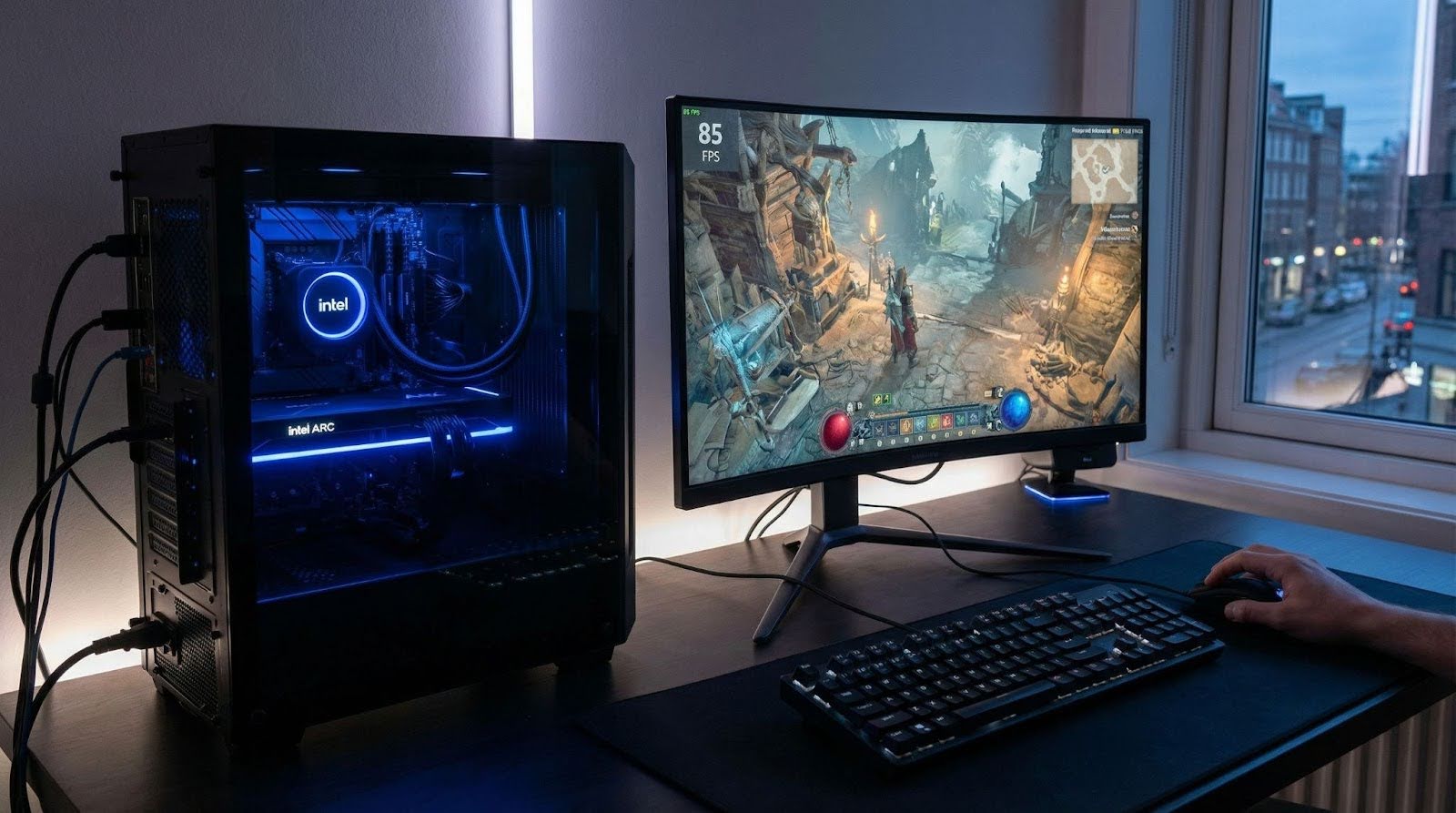
Analyzing actual frame rates reveals a pattern dependent on the software environment. The performance profile of these machines changes drastically based on the age of the game and the graphics API it utilizes.
1- DirectX 12 dominance: Arc GPUs perform exceptionally well in modern APIs, often punching above their weight class in titles like Cyberpunk 2077 or Control.
2- Legacy title improvements: Initial struggles with DirectX 9 and 11 have been largely mitigated through frequent driver updates, stabilizing frame times in older competitive shooters.
3- VRAM allocation benefits: models like the A770 come with 16 GB of VRAM, offering plenty of headroom for high-resolution textures that choke cards with 8 GB buffers.
4- Resizable BAR necessity: to achieve expected performance, enabling Resizable BAR in the BIOS is mandatory, as the architecture relies on it for efficient memory access.
Consistent software support has transformed the initial value proposition of these components. The frequent driver releases demonstrate a commitment to fixing bugs and optimizing specific game titles week after week.
Building a balanced system around these cards requires attention to CPU pairing and power delivery. Because these GPUs require specific motherboard settings like Resizable BAR to function correctly, prebuilt systems can offer a distinct advantage for users who want to avoid BIOS tinkering. HyperCyber is an excellent resource in this regard, offering prebuilt and custom configurations that are tested for stability. Their team balances the components to prevent bottlenecks, verifying that the unique requirements of Intel’s architecture are met before the system ships.
Identifying the Ideal User Profile
Specific user groups stand to gain the most from this hardware generation. While it may not be the universal answer for every single user, it fits specific profiles perfectly.
- Value-focused gamers: users targeting high-refresh 1080p or stable 1440p gaming find a strong price-to-performance ratio that is hard to beat in the current market.
- Hybrid creatives: the media engine is powerful for video editing workflows, serving as a dual-purpose machine for work and play.
- Tech enthusiasts: people who enjoy tweaking settings and following driver progression appreciate the evolving nature of the platform.
Intel Arc represents a serious alternative in the graphics market. The combination of modern feature support, ample video memory, and improving driver stability makes it a compelling option. As the software ecosystem matures, the hardware continues to unlock new performance tiers.

Peyman Khosravani is a seasoned expert in blockchain, digital transformation, and emerging technologies, with a strong focus on innovation in finance, business, and marketing. With a robust background in blockchain and decentralized finance (DeFi), Peyman has successfully guided global organizations in refining digital strategies and optimizing data-driven decision-making. His work emphasizes leveraging technology for societal impact, focusing on fairness, justice, and transparency. A passionate advocate for the transformative power of digital tools, Peyman’s expertise spans across helping startups and established businesses navigate digital landscapes, drive growth, and stay ahead of industry trends. His insights into analytics and communication empower companies to effectively connect with customers and harness data to fuel their success in an ever-evolving digital world.