Is your company confusing diversity with true inclusion? Having diverse employees is just the first step. Real workplace inclusivity means moving beyond representation to genuine empowerment, where every voice is heard and valued.

Walk into any modern office today, and you’ll likely see posters celebrating diversity, cheerful graphics of people of all colours, genders, and abilities, smiling under slogans like “Everyone belongs here!” It’s heart-warming. It’s progressive.
But here’s the uncomfortable truth: representation alone isn’t the same as empowerment.
Real inclusivity isn’t about ticking boxes on a hiring form or adding a few diverse faces to a company brochure. It’s about creating an environment where every person, regardless of gender, race, background, age, or ability, has a voice that matters, opportunities that are real, and a sense of belonging that goes beyond buzzwords.
What we mean by inclusivity
When we talk about “inclusivity” in a workplace context, we often mean fostering an environment where all staff feel they belong, are valued and are able to perform to their full potential. According to UK Research and Innovation (UKRI), for example, an inclusive workplace is one where “all staff can thrive, enjoy equal access to opportunities, have their voices heard, be recognised, feel valued, be themselves, and work in a way that supports their individual needs.”
At a more granular level, inclusivity touches on elements such as:
- Diversity: the presence of differences – people of varying gender, race, age, disability status, sexual orientation, religion, socio‑economic background, neurodiversity, etc.
- Equity: ensuring that fairness exists in opportunities, resources, rewards and access.
- Inclusion: ensuring that diverse people are genuinely integrated, rather than simply present; that they have voice, agency and belonging.
Why representation isn’t enough
Many organisations have done well at increasing representation: hiring more women, ethnic minorities, or people with disabilities. But research shows that having people in the room does not automatically lead to inclusive outcomes. In fact, without the right systems, practices and culture, representation may become tokenism.
Here are a few key issues:
Leadership understanding and commitment
The Chartered Institute of Personnel and Development (CIPD) found in their 2022 report that while 78 % of senior leaders said they understood how an inclusive workplace could benefit the organisation, only 30 % of employers said leaders were completely committed to building a diverse workforce. Only 36 % said leaders were completely committed to having an inclusive workplace.
This gap between understanding and deep commitment means that inclusion initiatives may be under‑resourced or deprioritised.
Inclusion sentiment lags behind diversity sentiment
Research by McKinsey & Company pointed out that even in companies that are diverse, employees often report negative feelings about the fairness of opportunity, openness and sense of belonging. For example:
“Negative sentiment about equality ranged from 63 to 80 % across industries … negative sentiment about openness (bias, discrimination) ranged from 38 to 56 %.”
So organisations may have diverse staff but still have cultures where many people feel excluded or limited.
The risk of superficial action
The Inclusion at Work Panel (UK Government) report from March 2024 warns that many D&I (diversity & inclusion) interventions are of little or no impact, and in some cases can be counterproductive if they are poorly designed.
What real empowerment looks like
So if representation is just the start, what does “real empowerment” in the workplace look like? Here are some markers:
- Voice and agency: Employees from diverse backgrounds feel that their voices matter. They are not passive participants but are actively shaping how work is done, how decisions are made, and how change happens.
- Belonging: Beyond being present, people feel they belong in the organisation. They don’t feel like outsiders; they feel connected, accepted, and appreciated. The inclusion research highlights belonging as one of the core components that often falls behind.
- Growth and opportunity: Empowerment means access to fair opportunities for development, promotion and reward. It means people are not stuck in roles because of bias, systems or cultural norms.
- Support for difference: Inclusion recognises that people are different, they will have different needs, different ways of working. A truly empowered workplace offers flexibility, respects difference (for example, neurodiversity, disability, caregiving responsibilities) and adapts to enable all to succeed.
- Accountability and action: Empowerment occurs when leaders and organisations hold themselves accountable: not just in words, but via measurement, resource allocation, policy change and cultural evolution. Without this, inclusion risks being a side‑project or a checkbox.
The ripple effect: Why empowerment benefits everyone
Here’s the best part, real inclusivity doesn’t just help underrepresented groups. It benefits the entire organisation.
Empowered employees are more engaged, loyal, and innovative. Teams with diverse perspectives make better decisions. And companies known for inclusivity attract top talent from every corner of the world.
In other words: empowerment isn’t charity. It’s smart business.
According to McKinsey, companies in the top quartile for gender diversity on executive teams are 25% more likely to have above-average profitability. The reason? Diverse teams don’t just bring different viewpoints; they challenge assumptions and spark innovation.
Overcoming the challenges
Let’s be real, building an inclusive, empowering workplace isn’t easy. It requires uncomfortable conversations, policy shifts, and sometimes, confronting hard truths about existing power dynamics.
Some common challenges include:
- Unconscious bias: Even well-intentioned people have blind spots.
- Resistance to change: “We’ve always done it this way” is a culture killer.
- Surface-level initiatives: Diversity days without systemic change.
- Lack of accountability: Good intentions without measurable actions.
Final thoughts
To sum up: Inclusivity in the workplace is about much more than having diverse faces in the room. It’s about transforming workplaces so that every individual, regardless of background, identity or circumstance, can truly participate, contribute, grow and belong.
We should think of a spectrum:
- On one end: Representation – we see variety in the workforce.
- In the middle: Inclusion – people feel welcomed, safe, valued.
- On the other end: Empowerment – people have agency, growth, development, voice and belonging.
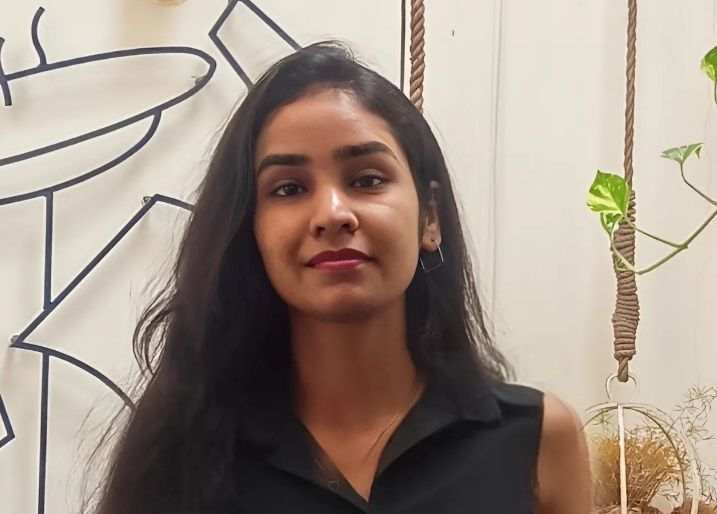
Himani Verma is a seasoned content writer and SEO expert, with experience in digital media. She has held various senior writing positions at enterprises like CloudTDMS (Synthetic Data Factory), Barrownz Group, and ATZA. Himani has also been Editorial Writer at Hindustan Time, a leading Indian English language news platform. She excels in content creation, proofreading, and editing, ensuring that every piece is polished and impactful. Her expertise in crafting SEO-friendly content for multiple verticals of businesses, including technology, healthcare, finance, sports, innovation, and more.