
As technology continues to grow, there’s a pressing need for it to feel more human. This is where the idea of humanable AI comes in. It’s about making AI systems that not only perform tasks but also connect with us on a human level. This article will explore what humanable AI is, why it matters, and how we can implement it effectively.
Key Takeaways
- Humanable AI aims to make technology feel more relatable and empathetic to users.
- Empathy in AI can significantly improve user experience and build trust.
- Implementing humanable AI involves integrating emotional intelligence and user feedback.
- Real-world applications of humanable AI are seen in healthcare, customer service, and education.
- Challenges like bias, privacy, and technical limitations must be addressed for effective humanable AI.
Understanding Humanable AI
Defining Humanable AI
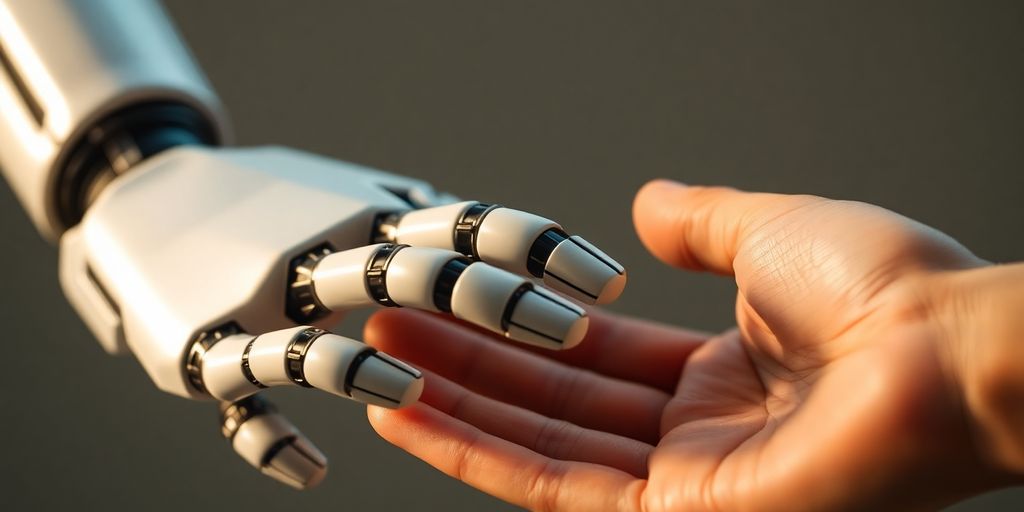
So, what exactly is Humanable AI? It’s not about making robots look like people, not really. It’s more about giving AI systems qualities that make them easier to relate to, understand, and trust. Think of it as trying to connect the dots between machines that just do calculations and people who have feelings and understanding. The goal is to create AI that can actually get our emotions, our needs, and what we care about. It’s about making AI feel more like a partner, not just a tool you use.
Humanizing AI means putting in things like empathy, emotional smarts, and a sense of social cues into AI systems. This makes talking with them feel more natural and less like you’re talking to a wall. It’s a step beyond just automating tasks; it’s about making real connections. The focus is on creating interactions that feel genuine, and making sure the user’s experience is a good one.
Key Characteristics of Humanable AI
What makes an AI system feel more human? It’s a mix of things:
- Relatability: The AI’s responses and actions should be understandable and connect with our own experiences.
- Empathy: The ability to recognize and respond appropriately to human emotions.
- Adaptability: AI that can adjust its approach based on the user’s mood, context, and feedback.
- Transparency: Clear communication about what the AI can and cannot do, and how it makes decisions.
Humanable AI seeks to move beyond mere task completion. It aims to create systems that understand context, nuance, and the emotional states of users. This involves incorporating elements of emotional intelligence, ethical considerations, and a deep understanding of human values into AI design.
This approach helps build confidence and makes using AI a much smoother experience. It’s about making technology feel less like a foreign object and more like a helpful assistant that gets us.
The Significance of Humanable AI
Why should we focus on making AI more human-like? It’s not just about creating fancy new gadgets; it’s about making technology that genuinely helps people and fits well into our daily lives. This approach aims to build AI systems that we can trust and interact with comfortably, moving beyond simple task completion to create more meaningful connections.
Enhancing User Experience
Making AI more humanable directly impacts how we experience technology. When AI can understand and respond to our emotions, needs, and even our tone of voice, interactions become much smoother and more pleasant. Think about customer service chatbots that can sense frustration and respond with patience, or educational tools that offer encouragement when a student is struggling. This focus on relatable and empathetic interactions makes technology feel less like a tool and more like a helpful assistant. It’s about creating systems that adapt to us, rather than forcing us to adapt to them, leading to greater satisfaction and ease of use.
Building Trust in Technology
Trust is a big deal when it comes to AI. People are often hesitant about new technologies, especially when they involve personal data or important decisions. When AI systems are designed to be transparent, fair, and understandable, and when they demonstrate qualities like empathy and reliability, it helps build that crucial trust. Knowing that an AI is designed with human values in mind, and that it can communicate its reasoning clearly, makes people more willing to adopt and rely on these systems. This is especially important in sensitive areas like healthcare or finance, where confidence in the technology is paramount. Building this trust is key for the widespread acceptance and positive integration of AI into society.
Addressing Ethical Concerns
As AI becomes more integrated into our lives, ethical considerations are more important than ever. Humanable AI, by its very nature, encourages a focus on human values and well-being. This means actively working to prevent bias in AI algorithms, ensuring fairness in decision-making, and protecting user privacy. When AI systems are designed with empathy and a consideration for human impact, they are less likely to perpetuate societal inequalities or cause harm. It’s about creating AI that is not only intelligent but also responsible and aligned with our ethical standards. This proactive approach helps us steer AI development in a direction that benefits humanity as a whole.
Humanable AI seeks to move beyond mere task completion. It aims to create systems that understand context, nuance, and the emotional states of users. This involves incorporating elements of emotional intelligence, ethical considerations, and a deep understanding of human values into AI design.
Strategies for Implementing Humanable AI
Making AI systems feel more connected to us involves a few key approaches. It’s not just about the fancy algorithms; it’s about how we design and build these systems to interact with people in ways that feel natural and supportive. We need to think about how AI can understand and respond to us, not just process data.
Integrating Emotional Intelligence
One of the main ways to make AI more human-like is by giving it a sense of emotional intelligence. This means AI can pick up on how someone is feeling, not just from what they say, but how they say it. Think about AI that can tell if you’re frustrated or happy based on your tone of voice or the words you choose. This allows for more appropriate and helpful responses.
- Sentiment Analysis: Using tools to detect positive, negative, or neutral language in text or speech. This helps the AI gauge the user’s mood.
- Vocal Tone Analysis: Analyzing speech patterns, pitch, and speed to understand emotional states like excitement, sadness, or anger.
- Contextual Understanding: Going beyond simple emotion detection to understand the situation and how emotions play a role in the interaction.
Building AI that can recognize and respond to human emotions is a significant step towards creating more empathetic and effective technology. It moves AI from being a purely functional tool to one that can offer genuine support.
Incorporating User Feedback
AI systems need to learn and adapt, and the best way for them to do that is by listening to the people who use them. This means actively seeking out and using feedback to make improvements. Companies that leverage agile methodologies and feedback loops can continuously refine their AI products based on real-world usage.
- Collecting feedback through surveys and direct user input.
- Analyzing interaction logs to identify common pain points or areas of confusion.
- Using A/B testing to compare different AI responses or interaction styles.
Designing Natural Interactions
Finally, how we interact with AI matters a lot. The goal is to make these interactions feel as effortless and intuitive as talking to another person. This involves designing interfaces and response patterns that are easy to understand and use, avoiding technical jargon or overly complex processes.
- Developing conversational interfaces that mimic natural human dialogue.
- Ensuring AI responses are clear, concise, and relevant to the user’s query.
- Creating intuitive user interfaces that guide users without being intrusive.
Challenges in Developing Humanable AI
Creating AI that genuinely connects with us on a human level is a complex endeavor, presenting several significant hurdles. It’s more than just programming; it involves understanding the very essence of human interaction and emotion. We face a few major obstacles in this pursuit.
Technical Limitations
While current AI excels at processing vast amounts of data and executing programmed tasks, it still lags in areas requiring common sense, intuition, and a deep grasp of complex human emotions. AI models often falter when faced with ambiguity, leading to misinterpretations of human intent and consequently, awkward or unsuitable responses. Consider how easily humans detect sarcasm or subtle shifts in tone – AI is not yet at that level of sophistication. We need to develop more advanced algorithms and learning methods that allow AI to better grasp the nuances of human communication. Some specific areas where AI currently struggles include:
- Recognizing sarcasm and irony.
- Adapting to diverse communication styles.
- Interpreting non-verbal cues.
Bias and Fairness Issues
AI systems learn from the data they are trained on. If this data contains societal biases, the AI will inevitably reflect and perpetuate them. This can result in unfair or discriminatory outcomes, particularly for certain demographic groups. Addressing these ingrained biases in datasets is a significant challenge, requiring careful curation and ongoing monitoring to promote equitable AI behavior. For instance, if historical hiring data shows a bias against a particular group, an AI trained on this data might unfairly penalize applicants from that group. Ensuring fairness requires a proactive approach to data collection and model evaluation.
Ensuring Data Privacy
As AI systems become more integrated into our lives and gather more personal information to provide tailored experiences, protecting user privacy becomes paramount. The collection, storage, and use of sensitive data must be handled with the utmost care and transparency. Users need to trust that their personal information is secure and will not be misused. Developing robust security measures and clear privacy policies is essential to build and maintain this trust. The potential for data breaches or unauthorized access to personal information poses a significant risk that must be mitigated through strong data privacy protocols and ethical data handling practices.
Real-World Applications of Humanable AI

Humanable AI is moving beyond theoretical discussions and into practical applications that directly impact our daily lives. These systems are designed to interact with us in ways that feel more natural and supportive, making technology more accessible and beneficial.
Healthcare Innovations
In the healthcare sector, humanable AI is proving to be a significant asset. AI systems can assist medical professionals by processing vast amounts of patient data, identifying patterns, and even suggesting potential diagnoses or treatment paths. Beyond data analysis, these AI tools can also provide emotional support to patients, offering a comforting presence during challenging times. This blend of technological capability with a human-like touch is transforming patient care. For instance, advancements in 3D printing are enabling the creation of custom prosthetics and implants, directly improving patient outcomes and overall quality of life.
Customer Service Enhancements
Customer service is experiencing a notable upgrade thanks to humanable AI. Chatbots are evolving to understand user frustration and respond with genuine empathy, moving beyond generic, pre-programmed replies. These AI platforms can detect emotional cues, manage complaints effectively, and ultimately increase customer satisfaction. The goal is not just faster problem resolution, but making customers feel genuinely heard and valued.
Education and Learning Tools
Education is another field where humanable AI is making a substantial difference. AI-powered tutors can adapt to individual learning styles, providing personalized feedback and tailored support. These tools can also identify when a student is encountering difficulties and offer encouragement, creating a more engaging and effective learning environment. It’s akin to having a patient, understanding educator available around the clock, which helps students improve their learning experience.
Humanable AI is not just about making machines smarter; it’s about making them more human. By integrating emotional intelligence and empathy, we can create AI systems that truly understand and respond to our needs, making our lives better in countless ways.
The Future of Humanable AI
As we look ahead, the trajectory of artificial intelligence is increasingly pointing towards a more integrated and empathetic relationship with humanity. The evolution of AI isn’t just about making machines smarter; it’s about making them more attuned to our needs and feelings. This ongoing development promises to reshape how we interact with technology across various aspects of our lives.
Trends in AI Development
The field is rapidly advancing, with a notable shift towards AI systems that can better grasp human emotions and context. This isn’t simply about task completion anymore; it’s about creating AI that can genuinely understand and respond to people. Key advancements are being driven by improvements in machine learning algorithms and the architecture of neural networks.
- Enhanced natural language processing for more fluid conversations.
- Greater accuracy in recognizing and interpreting emotional cues.
- Development of more personalized and adaptive AI interactions.
Potential Societal Impacts
The widespread adoption of humanable AI could significantly alter societal structures. Consider healthcare, where AI might assist clinicians in making more informed decisions by understanding patient sentiment. In education, AI could tailor learning paths to individual students, offering personalized support. However, we must also address the ethical considerations, such as preventing bias and ensuring equitable treatment. Many organizations are exploring AI solutions to improve decision-making processes.
It is important to ensure that AI remains a tool to assist humans, rather than a replacement.
Long-Term Benefits for Society
Looking further out, humanable AI has the potential to yield substantial long-term advantages. By making technology more accessible and understandable, it can reduce digital divides and empower a broader range of individuals. Imagine AI assistants that can help manage complex personal tasks, or systems that support mental well-being through empathetic interaction. The goal is to create a future where technology genuinely enhances human capabilities and quality of life, making our daily experiences richer and more supportive. This focus on creating more relatable AI can lead to greater user adoption of new technologies.
Moving Forward with Humanable AI
So, as we wrap up, it’s clear that making AI more like us isn’t just a cool idea; it’s becoming pretty important. We’re talking about AI that doesn’t just crunch numbers but actually gets us, you know, on a human level. This means building systems that can pick up on our feelings, respond with a bit of understanding, and generally make our interactions with technology feel less like talking to a machine and more like working with a helpful partner. It’s a big shift, and while there are definitely some tricky parts to figure out, like making sure it’s fair and safe, the potential is huge. By focusing on this human touch, we’re not just improving the tech itself, but we’re also shaping a future where technology genuinely helps us live better, more connected lives. It’s all about making sure these powerful tools work for us, in ways that feel natural and good.
Frequently Asked Questions
What exactly is Humanable AI?
Humanable AI means making computer programs, or AI, act more like people. It’s about creating AI that can understand feelings, respond kindly, and be easy to talk to, making technology feel more friendly and helpful.
Why is it important for AI to understand feelings?
When AI can understand and share feelings, it makes talking with it feel more natural and caring. This is super helpful for things like talking to a doctor’s AI helper or getting help from a company’s AI, making people feel more understood.
How can we make AI more likeable for people to use?
We can make AI better by teaching it to notice how people feel, like when they sound happy or upset. It also helps to listen to what users say they like or don’t like, and then build AI that’s simple and nice to use.
Can you give examples of Humanable AI in action?
You can see Humanable AI helping doctors understand patients better, making customer service helpers more understanding, and creating smart learning tools that help students learn in their own way. It’s also used in things like special body parts made with 3D printers.
What are the main difficulties in creating Humanable AI?
It’s tricky because AI still finds it hard to get jokes, understand hints, or know when someone is being sarcastic. Also, AI learns from information, so if that information has unfairness, the AI might be unfair too. Keeping personal information safe is another big challenge.
What good things might happen in the future because of Humanable AI?
As AI gets better at understanding us, it could help more people, make our lives easier, and maybe even create new jobs. But we need to be careful to make sure AI is fair, keeps our information private, and helps people without taking over their jobs.

Peyman Khosravani is a seasoned expert in blockchain, digital transformation, and emerging technologies, with a strong focus on innovation in finance, business, and marketing. With a robust background in blockchain and decentralized finance (DeFi), Peyman has successfully guided global organizations in refining digital strategies and optimizing data-driven decision-making. His work emphasizes leveraging technology for societal impact, focusing on fairness, justice, and transparency. A passionate advocate for the transformative power of digital tools, Peyman’s expertise spans across helping startups and established businesses navigate digital landscapes, drive growth, and stay ahead of industry trends. His insights into analytics and communication empower companies to effectively connect with customers and harness data to fuel their success in an ever-evolving digital world.