In e‑commerce, the products you sell are only as visible as the data you provide about them. A meticulously organized warehouse or a detailed discount strategy doesn’t matter if shoppers and algorithms can’t find your products. That’s where product feed enrichment enters the scene — and artificial intelligence (AI) is rapidly changing what’s possible.
Product feeds are essentially spreadsheets dressed up for machines. They contain titles, descriptions, prices, categories, and attributes for every item you sell. Marketplaces like Google Shopping, Amazon, and Meta use these feeds to match products to search queries, ads, and recommendations. Yet many feeds that businesses upload are incomplete, inconsistent, or ineffective at describing products in ways both humans and machines understand.
This article explores how AI can solve those problems and improve e‑commerce performance without becoming a buzzword.
What Is Feed Enrichment?
Feed enrichment means adding value to your product data. It’s more than fixing typos or filling blanks — it’s about making product information more relevant and discoverable. Good product data helps algorithms understand what you’re selling and helps shoppers decide to click and buy.
Human editors can enrich feeds manually, but that approach doesn’t scale well. Large catalogs with thousands of items require significant time and resources to update, monitor, and maintain.
This is where AI becomes useful.
Why AI Matters for Feed Enrichment
At its core, AI excels at pattern recognition and natural language processing — abilities that are directly relevant to structuring, generating, and enhancing product information. Historically, feed enrichment involved lots of rules: “If category = X, put attribute Y here.” AI reduces the need for rigid rules by learning from data patterns.
Three major challenges in traditional feed enrichment illustrate where AI helps the most:
- Variability in Product Titles and Descriptions
Without guidance, product titles might be too vague (“Shirt”), overly verbose (“Men’s Super Comfortable Soft Cotton Shirt for All Occasions”), or missing key attributes (size, color, brand). AI can analyze thousands of products and suggest optimized titles based on relevance and search behavior. - Inconsistent Attributes Across Items
Different vendors use different naming conventions: “silver,” “silver‑colored,” “sterling silver.” AI models can standardize terminology and suggest consistent attribute formats. - Missing or Sparse Descriptions
Some catalogs contain thousands of “N/A” fields or descriptions that are simply placeholders. AI can generate clear, informative descriptions based on product type and key features.
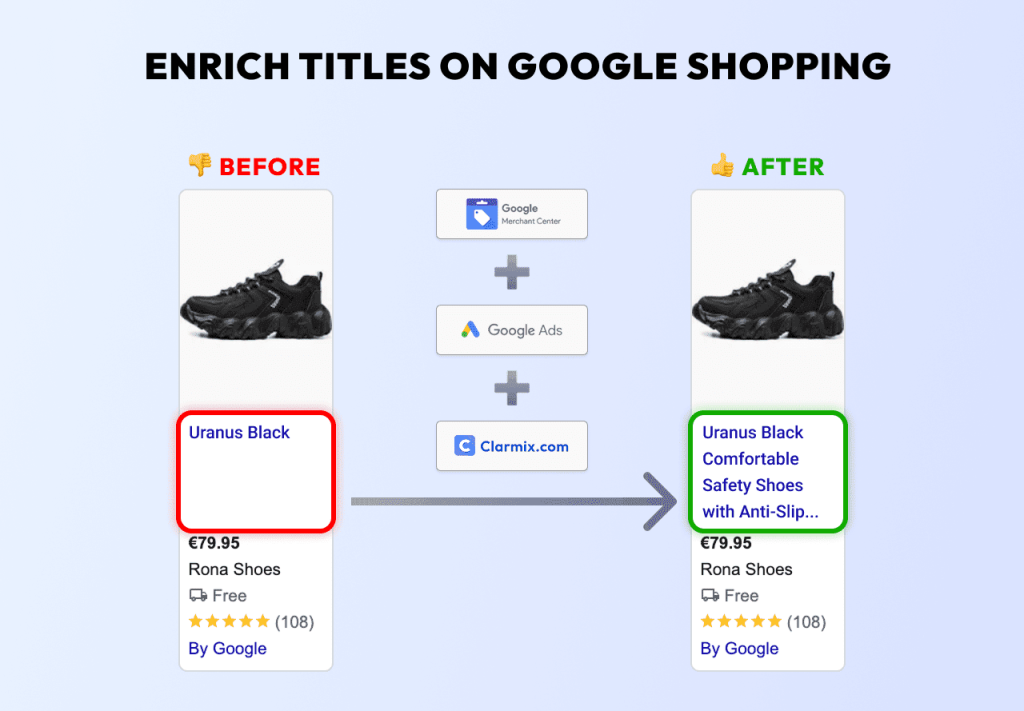
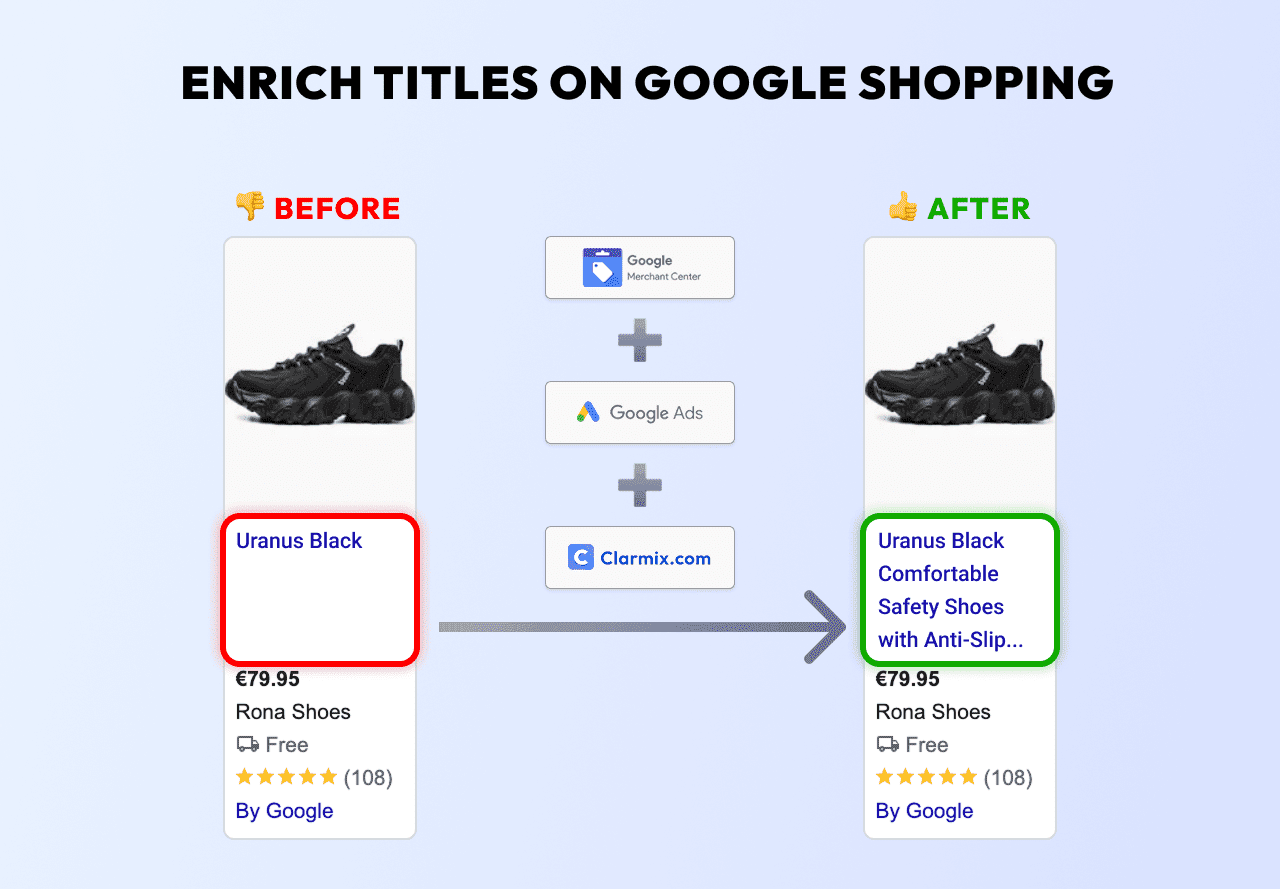
One practical example of applying AI in this space is using technologies designed to enrich product titles and descriptions in GMC — improvements that make products more understandable to both search engines and customers.
Key Ways AI Enhances Product Feeds
Here are the most impactful applications of AI in feed enrichment:
1. Automatic Title Optimization
A strong product title is short but descriptive, balancing key attributes like brand, model, color, and size. AI systems can analyze large datasets to learn which words matter most for search relevance and conversion, then construct titles that follow best practices.
Rather than requiring humans to memorize lengthy guidelines, AI can generate titles that adapt dynamically to marketplace requirements.
2. Description Generation with Context
Descriptions should do two things: explain the product clearly, and include terms that matter for search and discovery. AI models trained on language can generate descriptions that highlight features and benefits without sounding artificial.
For example, instead of simply repeating attributes like “red backpack, 20L”, AI can produce a narrative that makes the item easier for shoppers to understand and trust.
3. Attribute Extraction and Standardization
AI can parse raw data — even unstructured text or vendor submissions — to extract relevant attributes like size, material, or compatibility. It can then standardize them so that all products in the same group follow the same schema.
Standardization avoids mismatches and increases the accuracy of filters and recommendations on ecommerce platforms.
4. Semantic Tagging and Keyword Enrichment
AI can go beyond obvious keywords and suggest related search terms that humans might overlook. Through semantic analysis, it identifies language trends and common phrasings that help products appear in more relevant searches.
This doesn’t mean keyword stuffing. Instead, it means aligning product language with how people actually search.
Challenges to Consider
While AI can greatly improve feed quality, it doesn’t work perfectly out of the box. Some challenges to keep in mind:
- Training Data Matters – AI performs best when trained on high‑quality, domain‑specific data. Poor input leads to poor output.
- Over‑Optimization Risk – Sometimes AI can generate text that reads well for machines but feels unnatural to humans. Balancing algorithmic relevance with readability is key.
- Updating Outputs – Marketplaces update feed requirements frequently. AI models need to adapt to new rules and taxonomies.
AI should be implemented as a tool, not a replacement for strategic thinking. Human oversight remains important, especially for brand voice and compliance.
Best Practices for AI‑Driven Feed Enrichment
To make the most of AI enhancements, consider these practical steps:
- Audit your current feed
Identify gaps and inconsistencies. This gives the AI a clear starting point. - Define enrichment rules
Decide which attributes matter most for your categories and performance goals. - Monitor performance over time
Use analytics to measure how enriched feeds impact impressions, clicks, and conversions. - Iterate and refine
AI output improves with feedback. Regular reviews help fine‑tune models and outputs. - Stay compliant with platform guidelines
Each marketplace has rules about what can and cannot appear in titles and descriptions. Feed enrichment must respect those rules.
The Bigger Picture
Feed enrichment is not just a technical enhancement — it’s a competitive strategy. Better product data improves search visibility, increases click‑through rates, and reduces returns by setting clearer expectations.
AI doesn’t replace human judgment, but it elevates what’s possible at scale. As product catalogs grow and marketplaces evolve, businesses that integrate AI into their feed processes are more likely to deliver the right information to the right shoppers at the right time.
Effective enrichment not only makes products easier to find — it makes them easier to choose.

Peyman Khosravani is a seasoned expert in blockchain, digital transformation, and emerging technologies, with a strong focus on innovation in finance, business, and marketing. With a robust background in blockchain and decentralized finance (DeFi), Peyman has successfully guided global organizations in refining digital strategies and optimizing data-driven decision-making. His work emphasizes leveraging technology for societal impact, focusing on fairness, justice, and transparency. A passionate advocate for the transformative power of digital tools, Peyman’s expertise spans across helping startups and established businesses navigate digital landscapes, drive growth, and stay ahead of industry trends. His insights into analytics and communication empower companies to effectively connect with customers and harness data to fuel their success in an ever-evolving digital world.