When people start looking for a power solution, they usually ask one simple question:
“How much power or capacity do I actually need?”
It sounds reasonable—but in real life, this question often comes too early.
Whether you’re choosing a portable power station, a fuel generator, or a power bank, the size alone doesn’t decide if it’s right for you. What really matters is how you use power, not a number on a spec sheet.
This guide isn’t here to tell you exactly what size to buy. Instead, it helps you build a clear way of thinking, so you don’t buy the wrong thing, buy too big, or end up with something you barely use.
Step 1: Start With How You Use Power — Not the Numbers
A lot of people begin with a device list: TV, fridge, router, lights…
But here’s the thing:
the same device can need very different power sizes depending on how it’s used.
For example, someone may ask, “What size portable power station do I need to run a TV?”
But the real deciding factors aren’t the TV’s wattage. It’s how many hours you watch, and whether other devices are running at the same time.
The same goes for home backup vs. camping. Even if the devices look similar, the way you use them is totally different. That’s why portable power stations for home use and outdoor use can’t be sized with the same logic.
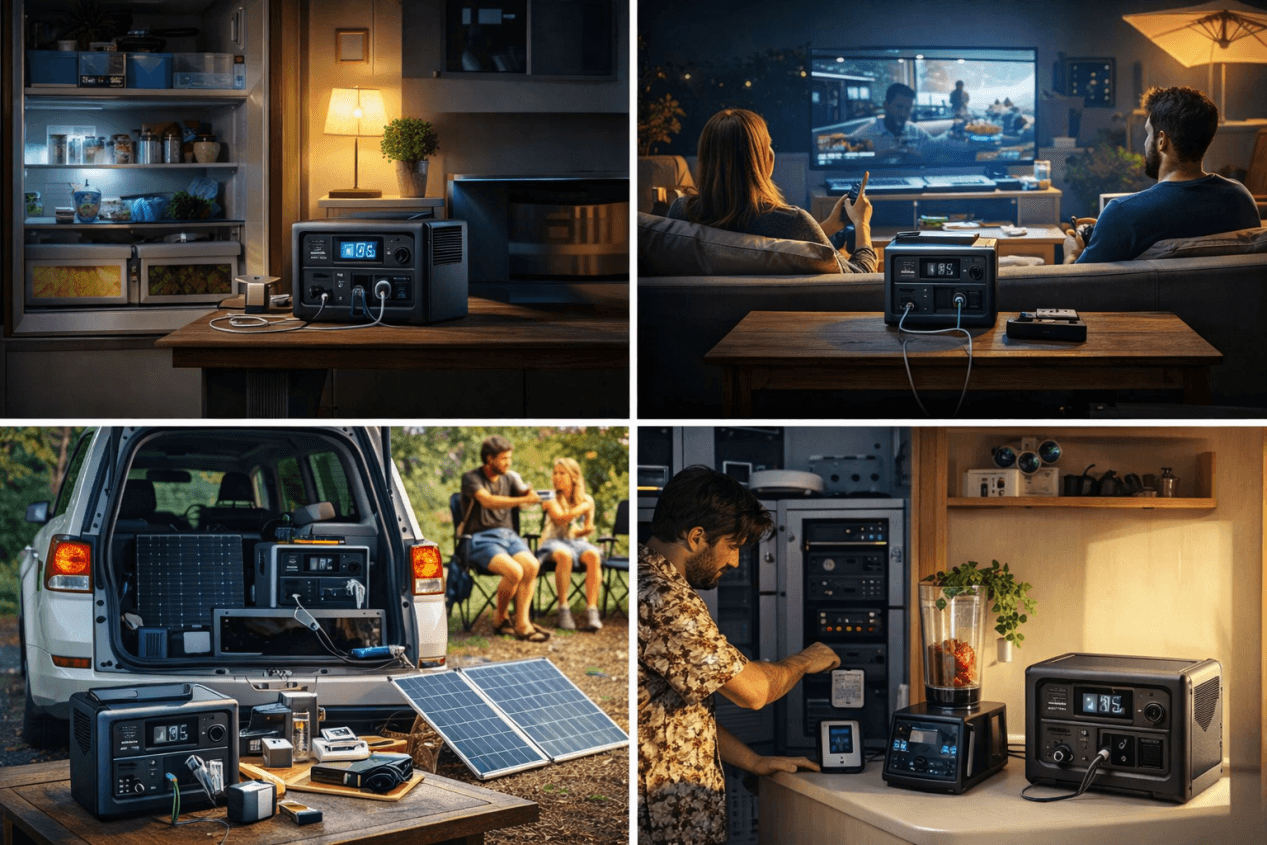
Here are some common real-world scenarios:
Home power outages
(Fridge, router, lights, laptop, phone, CPAP, etc.)
What matters:
Large enough capacity to last 8–12 hours or more, multiple output ports, and stable power for sensitive devices.
Evenings or weekends at home
(TV, game console, projector, laptop)
What matters:
Power needs are moderate, but you want 3–6 hours of use without constantly worrying about battery level.
Car camping, fishing, road trips, market stalls
What matters:
Lightweight, fits in the trunk, supports solar charging, and can power phones, lights, small cookers, fans, or drones at the same time. Portability often matters more than raw capacity.
Critical or must-not-fail situations
(Medical devices, servers, security cameras, aquarium pumps)
What matters:
Fast switching (UPS-like), high stability, and zero tolerance for power cuts.
Thinking this way helps you focus on real needs instead of guessing with math.
Step 2: Know the Difference Between Power and Capacity
Two numbers always come up:
Power (W)
Capacity (Wh)
They do very different jobs.
Power decides what you can run at the same time
Capacity decides how long it will run
This is why choosing a portable power station can feel confusing—people often mix these two ideas together.
If runtime is your main concern, focus on capacity.
If you worry about devices failing to start, focus on output power.
Step 3: Choose the Right Type First
A lot of “size anxiety” isn’t really about size—it’s about choosing the wrong type.
For example, when someone asks, “How big of a generator do I need to run a full-size refrigerator?”
What they’re really asking is whether a generator makes more sense than a battery for long, high-startup loads.
On the other hand, some people try to size a power bank again and again, only to realize it will never meet their needs—because a power bank simply isn’t designed for that job.
Different problems need different solutions.
Pick the right type first. Size only matters after that.
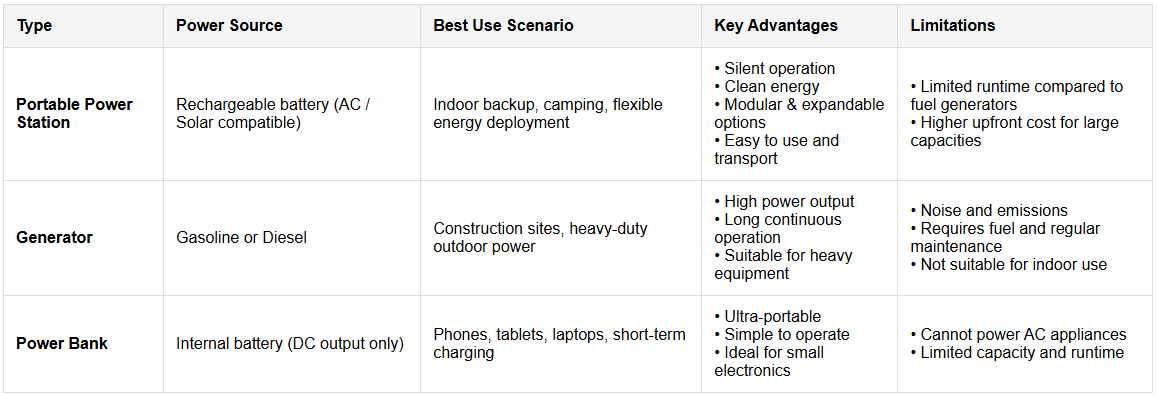
Portable Power Station
Best for indoor or quiet environments, medium power needs, and flexible setups.
If you want a clean, modular, and easy-to-use energy solution, portable power stations are often the top choice. Products like Piforz portable power solutions are designed specifically for this kind of clean and portable power use.
Generator
Traditional fuel-powered devices that run on gasoline or diesel.
They’re great for powering air conditioners, welding machines, or other heavy equipment for long periods. Best used outdoors where noise isn’t an issue. Downsides include noise, emissions, and regular maintenance.
Power Bank
Large power banks are battery-based and mainly provide DC power.
They’re designed for short-term charging of phones, laptops, and small electronics. When choosing one, output ports and real efficiency matter most. They cannot power AC appliances and are only suitable for small devices and short use.
Step 4: Find the Right Size Range
Once the type is clear, sizing becomes much simpler.
You don’t need a perfect number—just a reasonable range.
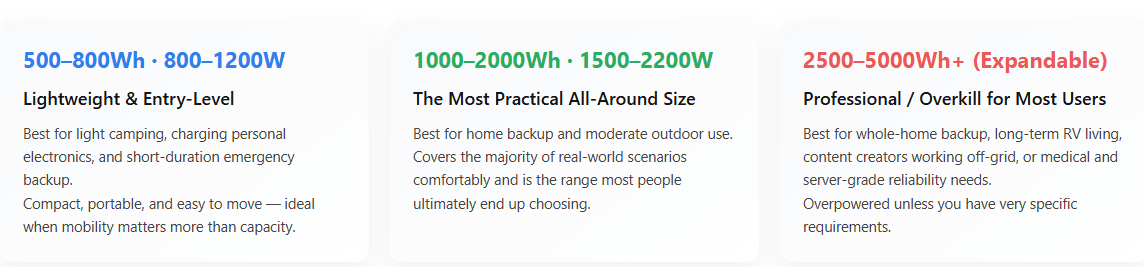
Minimum workable size
(Usable, but tight)
500–800Wh | 800–1200W
Good for light camping, charging electronics, or short emergencies.
Most practical and comfortable range
(What most people end up buying)
1000–2000Wh | 1500–2200W
Great for home backup and moderate outdoor use. Covers most real-world needs with ease.
Clearly oversized / professional level
(Only for special needs)
2500–5000Wh+ (expandable)
For full-home backup, long-term RV living, content creators, or medical and server-level reliability.
One Key Reminder
You don’t need a “perfect” size.
You need a size you won’t regret.
Too small → fails when you need it most
Too big → expensive and too heavy to use daily
That’s why questions like “What size portable power station do I need for my house?” never have one single answer.
The smarter move is finding the right range based on how you actually use power.
Common Sizing Mistakes
Even experienced users make these mistakes:
Only looking at peak power, not runtime
Buying extra capacity “just in case”
Treating a power bank as a power station
Ignoring expandability and flexibility
Avoiding these matters more than chasing bigger numbers.
So, How Do You Know You Chose the Right Size?
The right power solution isn’t the one with the biggest specs. It’s the one that:
Matches your real use case
Covers your critical devices properly
Balances capacity, flexibility, and cost
When a power solution fits how you actually use electricity, sizing becomes a smart decision—not a gamble.
Final Thought: Size Is a Decision, Not a Formula
Choosing the right power setup isn’t about finding a magic watt number.
It’s about clearly understanding what problem you’re trying to solve, then matching it with the right type and a sensible power range.
Once you go through these steps, comparing products and prices becomes easy—because you already know exactly what you need.

Peyman Khosravani is a seasoned expert in blockchain, digital transformation, and emerging technologies, with a strong focus on innovation in finance, business, and marketing. With a robust background in blockchain and decentralized finance (DeFi), Peyman has successfully guided global organizations in refining digital strategies and optimizing data-driven decision-making. His work emphasizes leveraging technology for societal impact, focusing on fairness, justice, and transparency. A passionate advocate for the transformative power of digital tools, Peyman’s expertise spans across helping startups and established businesses navigate digital landscapes, drive growth, and stay ahead of industry trends. His insights into analytics and communication empower companies to effectively connect with customers and harness data to fuel their success in an ever-evolving digital world.