Introduction
Effective construction planning lays the foundation for successful outcomes in any project, particularly in fast-growing and competitive markets. In regions such as Boulder, where demand and expectations are high, expert insights from Boulder CO real estate agents The Bernardi Group emphasize the importance of meticulous planning to ensure projects move forward efficiently, stay within budget, and meet quality standards. This holistic approach not only increases profitability for builders and developers but also results in more satisfied clients and stakeholders.
Proactive strategic construction planning helps projects avoid common pitfalls by allocating resources wisely, addressing risks before they escalate, and promoting transparent communication across all parties involved. This comprehensive guide explores why structured planning is crucial to project success, providing actionable insights for industry professionals.
Understanding Strategic Construction Planning
Strategic construction planning is a far-reaching process that aligns project objectives with daily operations and long-term organizational goals. This method entails defining the project scope in detail, setting measurable and realistic timelines, allocating financial and human resources effectively, and identifying potential risks early. Planning strategically transforms haphazard construction processes into a coordinated series of actions, ensuring that deadlines are met, budgets remain intact, and all stakeholders remain engaged and informed. A robust strategy anticipates bottlenecks and provides a framework for continuous assessment and improvement. As projects become more complex, teams often turn to specialized support, and professional construction services for investors can help align budgeting, scheduling, and execution with return-focused priorities. This kind of coordination keeps decisions consistent from early estimates through final delivery.
Benefits of Strategic Planning in Construction
Implementing strategic planning methodologies offers distinct advantages across multiple facets of a construction project:
- Enhanced Efficiency: Streamlined workflows minimize idle time and the likelihood of miscommunication, enabling teams to achieve project milestones with greater speed and accuracy.
- Risk Mitigation: The advanced identification and assessment of risks facilitate the creation of contingency plans, helping to prevent costly disruptions and delays.
- Cost Control: Detailed budgets and resource allocation strategies provide better visibility into expenses, minimizing the probability of budget overruns.
- Quality Assurance: Set standards for work quality, and regular performance checks ensure the final build meets safety laws and client expectations.
Integrating Technology into Construction Planning
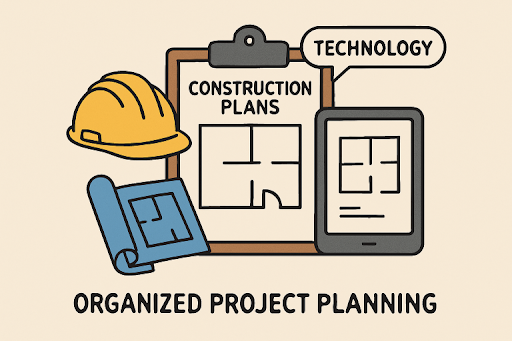
Emerging construction technologies are revolutionizing how projects are planned and delivered, ensuring advanced accuracy and timely execution. By utilizing Building Information Modeling (BIM), construction drawing management software, integrated project management tools, and real-time dashboards, collaboration and communication across teams are enhanced. Data-driven platforms provide predictive analytics to identify scheduling conflicts or potential budgetary overspends before they become critical. According to Autodesk, companies that leverage these technologies see improvements in cost management and schedule adherence, providing teams with the flexibility to adapt quickly to on-site changes or information updates.
Effective Stakeholder Engagement
Construction projects often succeed or fail based on the degree of stakeholder engagement achieved throughout the project lifecycle. Regular communication with clients, contractors, suppliers, and local authorities fosters a collaborative environment. By initiating open dialogues from the outset and continuing them through execution, teams can address concerns proactively, set realistic expectations, and ensure that all voices are heard. Employing stakeholder mapping techniques—prioritizing individuals or groups by their influence and interests—has proven valuable in successful delivery models, as advocated by resources such as Construction Executive.
Challenges in Implementing Strategic Planning
- Resistance to Change: The construction sector is traditionally resistant to adopting new standards, processes, and technologies. Encouraging cultural change and continuous education can help smooth this transition.
- Resource Constraints: Tight budgets and strict timelines can hinder the implementation of new planning tools or in-depth analysis. Making the case for long-term savings and improved outcomes is essential for buy-in.
- Complexity of Coordination: The increased number of stakeholders and moving parts in large-scale projects can complicate communication and surveillance, requiring robust management techniques and support systems.
Best Practices for Strategic Construction Planning
- Early and Inclusive Planning: Regularly bring all significant stakeholders to the table from the very start to foster mutual understanding, transparent goal setting, and unified project direction.
- Utilize Technology: Embrace digital construction management and BIM for reliable project visualization, streamlined documentation, and enhanced real-time communication.
- Continuous Monitoring and Adaptation: Track progress regularly against goals, employing dashboards and data analytics platforms to adjust strategies as conditions evolve.
- Invest in Training: Offer ongoing education and professional development opportunities to upskill teams, ensuring they can effectively leverage planning tools and methodologies.
Conclusion
Adopting a strategic construction planning framework is essential for industry leaders aiming to deliver projects successfully—on time, on budget, and to the highest standards. Through technology integration, transparent stakeholder engagement, and continuous process refinement, project teams can effectively navigate challenges and set themselves apart in a demanding marketplace. Leaders who commit to these practices foster resilient organizations positioned for long-term growth and excellence in every build.

Founder Dinis Guarda
IntelligentHQ Your New Business Network.
IntelligentHQ is a Business network and an expert source for finance, capital markets and intelligence for thousands of global business professionals, startups, and companies.
We exist at the point of intersection between technology, social media, finance and innovation.
IntelligentHQ leverages innovation and scale of social digital technology, analytics, news, and distribution to create an unparalleled, full digital medium and social business networks spectrum.
IntelligentHQ is working hard, to become a trusted, and indispensable source of business news and analytics, within financial services and its associated supply chains and ecosystems