If you’ve owned a car in Cleveland for more than one winter, you already know the drill. The snow melts, the roads clear, and a few weeks later you notice a rattle you didn’t have in October, or a rust bloom creeping up a wheel well that wasn’t there before. That’s road salt at work, and in a city that sits in the Lake Erie snowbelt, it’s not a minor nuisance. It’s one of the bigger hidden costs of car ownership.
Cuyahoga County crews spread salt heavily from November through March, and for good reason: it works. But the same chemistry that keeps I-90 passable during a lake-effect squall is quietly attacking the underside of every car that drives over it.
The Chemistry Working Against Your Car
Salt lowers the freezing point of water, which is why it melts ice instead of letting it refreeze into a sheet. Once it’s dissolved into brine, though, it clings to tires and splashes up into wheel wells, brake lines, and the undercarriage. There, it does exactly what salt water does to any exposed metal: it speeds up oxidation and eats through the thin barriers that are supposed to keep steel from rusting.
AAA spokespeople have noted that this kind of damage is easy to miss precisely because it happens underneath the car, out of sight, and that even newer corrosion-resistant designs still leave the undercarriage exposed. That’s the frustrating part. Your paint can look fine while your brake lines and suspension components are corroding a foot below your feet.
The scale of it isn’t small, either. A national AAA survey estimated that drivers have paid around $15.4 billion in rust repairs tied to de-icing chemicals over five years, close to $3 billion a year, averaging roughly $500 per repair. For a metro area with the winters Cleveland gets, that math lands harder than it does somewhere like Charlotte.
What Salt Damage Actually Looks Like
Rust doesn’t announce itself. It shows up in stages, and most drivers don’t notice until it’s already cost them something.
- Surface rust on rocker panels, wheel wells, and lower door edges. Usually cosmetic at first, but it spreads if ignored.
- Brake line corrosion, which is more serious. Brake and fuel lines are thin, sit close to the road, and corrode faster than heavier structural parts.
- Suspension and frame wear. Control arms, sway bar links, and subframes take the brunt of splash-up and can weaken over years of exposure.
- Exhaust system rust, which often shows up first as a louder ride or a failed emissions check, long before it becomes a safety issue.
None of this happens overnight. It’s cumulative, which is exactly why so many Cleveland drivers get blindsided by a repair bill in year six or seven that traces back to five winters of salt they never bothered washing off.
Why Your Insurance Probably Won’t Help
Here’s the part that catches people off guard: standard auto insurance treats rust as wear and tear, not as damage from a covered event. Most policies won’t pay to repair or replace corroded brake lines, suspension parts, or body panels, even when a mechanic can point directly to road salt as the cause. Comprehensive coverage handles things like hail, floods, theft, and hitting a deer. Slow-motion corrosion just isn’t in that category.
That doesn’t mean coverage is beside the point, though. Ohio only requires drivers to carry 25/50/25 liability coverage, meaning $25,000 per person and $50,000 per accident for injuries, plus $25,000 for property damage. That’s the legal floor, and it hasn’t changed for 2026. Those limits protect other people’s medical bills and repair costs after an accident, not the winter-related wear on your own car. If you’re already reviewing your policy before the season starts, whether you’re comparing carriers for affordable car insurance or just double-checking your comprehensive deductible, it’s also a good moment to set aside a separate maintenance budget for the kind of damage insurance was never going to cover in the first place.
Preventing the Damage Before It Starts
The good news is that salt damage is largely preventable, and the habits that prevent it cost far less than the repairs.
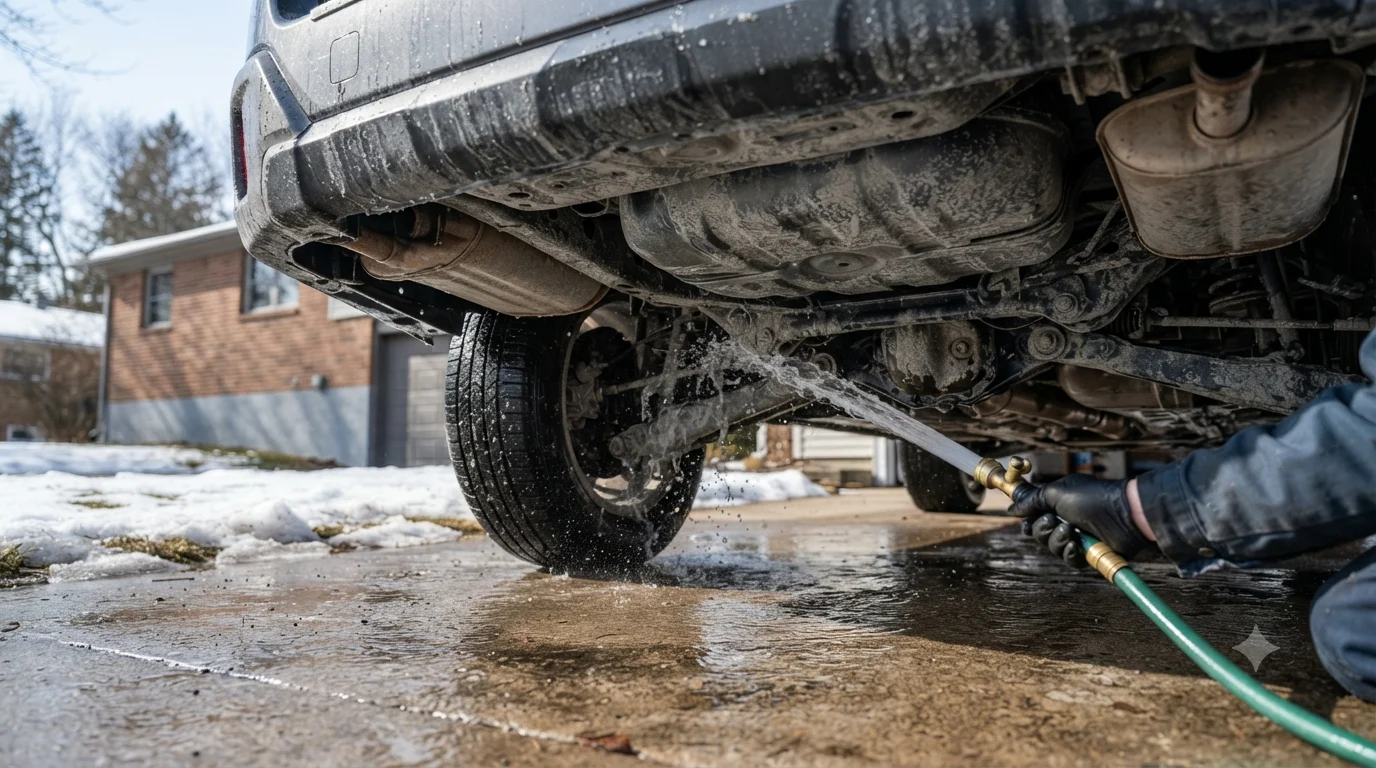
Wash your car regularly, undercarriage included. A standard drive-through wash rarely rinses the underside well. Look for a car wash with an undercarriage spray option, or, if you have a hose and a driveway on a warmer day, spray the wheel wells and frame rails directly. Doing this every couple of weeks through the winter, and especially after a heavy salting event, is probably the single most effective thing you can do.
Apply a rust inhibitor or undercoating before the season starts. Products made for the undercarriage create a barrier between bare metal and brine. It’s not a permanent fix, but it buys time and slows the reaction considerably.
Wax exposed paint in the fall. A fresh coat of wax protects painted surfaces from the same corrosive splash-up that attacks bare metal underneath.
Watch where you park. Street parking next to a curb that gets heavily salted, or a spot where slush pools and refreezes overnight, means more prolonged contact with brine. It’s not always avoidable, but when you have a choice, take it.
Get your brake lines and undercarriage inspected each spring. A quick lift-and-look at a trusted shop catches early corrosion while it’s still a cheap fix, instead of waiting until it’s a brake line replacement.
Timing Matters More Than People Think
Most of the damage isn’t from a single storm. It’s from salt sitting on metal for days or weeks between washes, especially when temperatures hover near freezing and everything stays wet instead of drying out. A car that gets salted once and washed within a day or two tends to fare much better than one that sits in a garage collecting brine residue that never fully evaporates.
This is also where electric vehicles need a bit more attention. Battery packs, cooling lines, and other electronics sit lower in the chassis on many EVs, which puts them closer to the same splash zone that used to threaten only a steel frame. If you’ve made the switch to an EV, don’t assume the newer technology is somehow immune to an old problem. According to AAA’s research on winter de-icing damage, this is becoming a bigger concern as EV adoption grows in snowbelt cities.
The Bottom Line for Cleveland Drivers
Road salt isn’t going anywhere, and honestly, nobody really wants it to. It’s the reason Cleveland roads stay passable during a February ice storm instead of turning into a demolition derby. But treating it as background noise instead of an active threat to your car is how a cheap wash habit turns into a two-thousand-dollar brake line and subframe repair.
A little consistency goes a long way here. Wash the undercarriage, get ahead of it with a coat of protection before the first snowfall, and have a shop check the brake lines each spring before you’re relying on them in an emergency stop. It’s a less dramatic story than any single repair, but it’s the difference between a car that makes it through a Cleveland winter intact and one that starts falling apart from the bottom up.