Few technology companies reach hundreds of millions of users without outside funding. MEE6 is one of them. What began as a tool built for Discord has grown into the platform’s most widely used bot, serving more than 300 million users across 20 million servers while developing into a profitable, bootstrapped business.
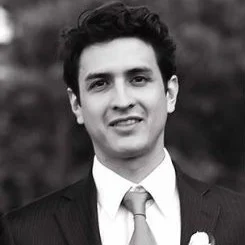
Behind that growth is Brendan Rius, MEE6’s Co-Founder and Co-CEO. A self-taught programmer who built his first app at age 12 and a file-sharing platform at 14, Rius later participated in Xavier Niel’s “No MBA” program before co-founding MEE6 with Anis Belkacem. His role has since evolved from writing the company’s original software to overseeing product direction, hiring and broader business strategy.
MEE6’s trajectory also illustrates one of the more complicated challenges facing technology founders: how to build a durable company inside an ecosystem controlled by someone else. For MEE6, Discord has provided access to an enormous global user base, but building on another company’s platform also means adapting to changing APIs, policies, product priorities and potential competition from the platform itself.
In this interview, Rius discusses the decisions that allowed MEE6 to scale while remaining bootstrapped, how his own role changed as the company grew, and what founders should understand about platform dependency, distribution and building a sustainable business within someone else’s technology ecosystem.
You started coding as a child and built your first app at 12. How did those early experiences shape the way you approached building MEE6 and solving problems as a founder?
Starting early made building software feel practical rather than abstract. If I wanted something to exist, I could try to make a version of it. That is still the part I enjoy: getting from an idea to something people can actually use.
The useful lesson wasn’t that I could write code at twelve. It was that an idea becomes much easier to evaluate once it exists. You discover what is confusing, what people care about, and what you overestimated.
With MEE6, being able to build the early software helped shorten that feedback loop. But I don’t see technical ability as a substitute for product judgment. Making something work and making something worth using are different jobs. As a founder, you need to do both, or build a team that can.
MEE6 was built without external funding and grew into a profitable business used by more than 300 million people across 20 million Discord servers. What were the key decisions that allowed you and your co-founders to scale that far while staying bootstrapped?
A few decisions mattered more than any single growth tactic. We kept the product accessible, paid attention to the cost of serving it, and built a business model around users who wanted more advanced capabilities.
MEE6’s free product and Premium offering gave us a way to reach a broad audience without expecting every user to become a customer. That also made operating efficiency important: at this scale, a small cost per user can become a large expense.
Being inside Discord helped because people could encounter MEE6 in communities they already belonged to. But distribution alone doesn’t explain why someone keeps using a product or pays for it.
I wouldn’t turn bootstrapping into an ideology. It worked for us, but the real discipline is understanding what people value and whether you can provide it sustainably. A large user count and a healthy business are not the same thing.
As Co-Founder and Co-CEO, what has your own role looked like as MEE6 evolved from an early-stage product into one of the largest applications in the Discord ecosystem?
I started very hands-on, writing the original software and building much of the technology behind MEE6. As the company grew, my responsibilities broadened into product direction, hiring, leading people, and making business decisions with my co-founder, Anis.
The shift in my role has been from solving individual problems myself to deciding which problems deserve the company’s attention. I still care about the technology, but building a company requires more than improving the software. It also means knowing what not to build and where the team can have the most useful impact.
Because MEE6 is built within Discord’s ecosystem, your team has had to grow alongside a platform you do not control. Can you share an example of a major API, policy, or product change that forced you to rethink part of the business?
One example was our work on MEE6 Monetize: a tool that lets community owners earn money from their own communities. While we were developing that product, Discord launched its own offering in the same area. We decided to pause our work rather than keep investing in something the platform was making a priority.
When Discord’s priorities later shifted away from that particular offering, we picked the work back up. The user need was still there; what changed was where it made sense for us to invest.
That is part of building on a platform. You will sometimes see the same opportunities, and your plans will overlap. A healthy relationship makes those changes easier to navigate. The important thing is to understand the direction the platform is taking and make your own decisions accordingly, rather than treating every overlap as a conflict.
At what point does platform dependency become a strategic risk rather than simply the cost of accessing a large user base, and how should founders evaluate that tradeoff?
It’s a strategic risk from the beginning, but I think we apply the label inconsistently. Take AppGratis: Apple removed it from the App Store in 2013, citing violations of its guidelines. For a business built around reaching iPhone users, losing that distribution channel is a serious threat. Platform risk isn’t something unique to businesses built on Discord.
There are substantial successes on the other side, too. Honey started as a browser extension and was acquired by PayPal for approximately $4 billion in 2020. Depending on someone else’s platform didn’t prevent a very significant outcome.
In our case, Discord has given MEE6 enormous distribution and been a valuable partner in solving technical challenges as we scaled. Those advantages belong in the same calculation as the risks.
I would look at what happens if the platform changes its policies, removes a capability, or enters your market. But I would also ask how much harder it would be to reach those users and serve them outside the ecosystem. The comparison shouldn’t be with an imaginary business that has no dependencies. It should be with the alternatives you actually have.
How do you balance continuing to innovate for MEE6 users while operating within the technical and policy constraints of Discord?
A lot depends on whether the platform genuinely wants third-party developers to succeed. Some constraints are firm boundaries, but others can be addressed through reasonable requests and close collaboration.
Discord has been a very good partner in that respect. Its team has been responsive and helped us work through technical challenges as MEE6 grew. We haven’t had to treat every limitation as something to solve entirely on our own.
A platform needs to evolve alongside its developer ecosystem. Developers encounter needs that the core product may not yet address, and the platform benefits from understanding those needs. That doesn’t mean every request should be accepted, but it does mean there should be a constructive conversation about what users need and how to make it possible. In our experience, that collaboration has given us room to keep innovating.
Looking back on MEE6’s growth, what do you think founders most often misunderstand about building a sustainable business on top of another company’s platform?
One misunderstanding is assuming that a platform will eventually build everything its users need. Having the resources to build something is not the same as having a reason to put it in the core product.
Apple doesn’t need to build its own Tinder for the iPhone to be useful to someone who wants a dating app. It can provide the platform and let a company focused on that problem build the product. That is how I think about the opportunity on Discord, too.
Imagine opening Discord and finding twenty specialist features you don’t care about. Adding all of them could make the product harder to understand without making it more useful to you. Third-party developers can go much deeper into particular needs without imposing that complexity on everyone else.
That doesn’t mean every niche is safe from competition. Some features clearly belong in the core platform, and I would be cautious about investing heavily in those. Others are valuable precisely because they serve a narrower audience well.
The opportunity is to understand that distinction and build a productive relationship around it. In our experience, Discord has been supportive of third-party developers. A healthy ecosystem needs both sides: a platform that gives developers room to build, and developers who create something genuinely useful for its users.