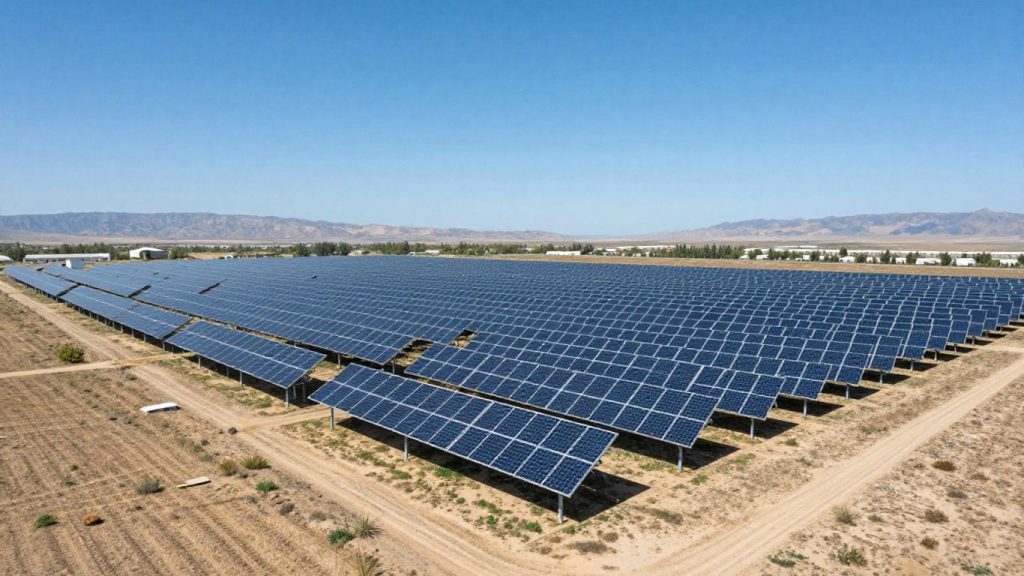
Solar technology has undergone a remarkable transformation, making clean energy more efficient and accessible than ever before. From innovative cell designs to novel deployment methods, advancements are rapidly changing how the world generates and consumes power, offering a sustainable path forward for households and industries alike.
Key Takeaways
- Perovskite solar cells offer lower manufacturing costs and increased efficiency potential.
- Bifacial panels generate power from both sides, maximizing energy capture.
- Floating solar farms reduce land use and improve panel performance.
- Modern panels boast significantly higher efficiency rates than older models.
- Smart inverters and AI enhance system optimization and grid management.
Breakthroughs in Solar Cell Technology
Perovskite solar cells represent a significant leap forward. Unlike traditional silicon cells, perovskites can be manufactured using less expensive processes. Their ability to be layered onto existing panels creates "tandem cells," which combine the strengths of both silicon and perovskite materials. This synergy allows for the capture of a broader solar spectrum, leading to substantial gains in overall efficiency. While still in the commercialization phase, these advancements promise to bring higher energy yields to homes and businesses globally.
Innovative Solar Panel Designs
Bifacial solar panels are gaining traction due to their dual-sided energy generation capabilities. By capturing reflected sunlight from surfaces like concrete, sand, or snow, these panels produce more power per unit. Their improved durability and frame designs make them suitable for various climates, positioning them for widespread use in both commercial and utility-scale projects.
Floating solar farms, once a concept of science fiction, are now a reality. These arrays are installed on bodies of water like reservoirs, reducing land use conflicts. The water also acts as a natural cooling agent, enhancing panel efficiency compared to ground-mounted systems.
Enhanced Efficiency and Smart Integration
Modern solar panels significantly outperform their predecessors. While older panels typically operated at around 15% efficiency, contemporary monocrystalline panels can achieve or exceed 20% efficiency, with high-quality options pushing these numbers even higher. Beyond panel materials, smart inverters and AI-driven monitoring systems are optimizing real-time electricity production. Homeowners can easily track output via mobile apps, while grid operators benefit from better management of distributed energy systems. This digital integration transforms solar arrays into components of a larger, intelligent energy ecosystem.
Solar Shingles vs. Traditional Panels
For homeowners, the choice between solar shingles and traditional panels involves weighing aesthetics against established performance. Traditional panels are mounted on top of the roof, offering proven efficiency and reliability. Solar shingles, on the other hand, are integrated into the roof structure, providing a sleeker appearance. Key considerations include installation costs, roof design compatibility, return on investment, and long-term performance expectations. Ongoing advancements are expected to further refine both options, offering homeowners greater flexibility.
The Future of Solar Power
Solar technology continues its rapid evolution, making it an increasingly attractive investment. With panels lasting for decades and government incentives often available, the switch to solar offers long-term savings and environmental benefits. Even on cloudy days, modern panels can generate power, albeit at a reduced capacity, and battery storage solutions can capture excess energy for later use. The ongoing improvements in efficiency, affordability, and integration solidify solar power’s position as a leading energy solution for a sustainable future.
Sources
- Advancements in Solar Technology that are Changing the Way We Power the World, The San Diego Voice & Viewpoint.

Founder Dinis Guarda
IntelligentHQ Your New Business Network.
IntelligentHQ is a Business network and an expert source for finance, capital markets and intelligence for thousands of global business professionals, startups, and companies.
We exist at the point of intersection between technology, social media, finance and innovation.
IntelligentHQ leverages innovation and scale of social digital technology, analytics, news, and distribution to create an unparalleled, full digital medium and social business networks spectrum.
IntelligentHQ is working hard, to become a trusted, and indispensable source of business news and analytics, within financial services and its associated supply chains and ecosystems