Modern financial markets might be valued at over $1 quadrillion, but they operate on razor-thin latency margins, where a single toxic order flow can degrade execution quality for an entire pool of participants. For years, the prevailing market narrative focused entirely on volume, assuming that more liquidity always equaled a healthier ecosystem. Today, trading platforms and liquidity providers are fundamentally shifting their approach by implementing strict trader screening and application processes to protect their capital and market stability.
High-frequency environments require infrastructure that can withstand extreme volatility without experiencing slippage or latency arbitrage. When platforms onboard undisciplined capital, erratic trading behavior often triggers adverse selection, forcing market makers to widen their spreads to compensate for increased risk.
Screening out toxic strategies before they interact with live order books helps platforms maintain tight spreads, lower costs, and ensure consistent execution quality for institutional and retail participants alike. This evolution means that access to wholesale liquidity is no longer just a matter of having capital; it requires proving that your strategy can operate safely within a highly coordinated ecosystem.
Why Modern Platforms Use Qualification Processes
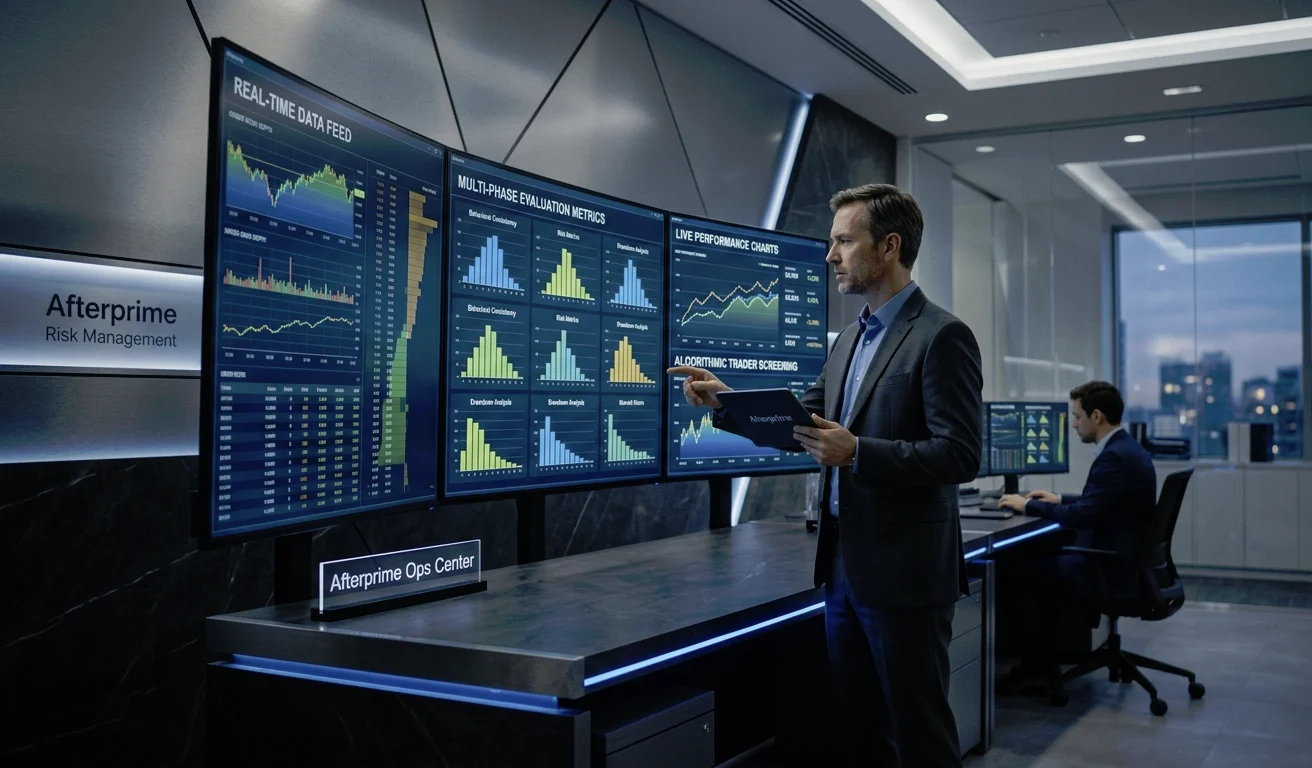
As platforms prioritize risk management frameworks over raw profit targets, the criteria for granting market access have become highly systematized. Financial firms and proprietary groups are moving away from open-door onboarding models, replacing them with multi-phase evaluations designed to test behavioral consistency under stress. These qualification protocols screen out gamblers and identify individuals who respect risk parameters, turning raw talent into structured market participants.
Enrolling in a structured evaluation allows individuals to trade with substantial institutional backing while shielding personal capital from catastrophic market events. For example, individuals looking to scale their operations can leverage the paid to trade program benefits offered by modern platforms to access deep liquidity pools that are normally reserved for institutional desks. These evaluation frameworks typically monitor real-time metrics such as maximum daily loss limits, trailing drawdowns, and position sizing consistency.
Platforms use these extensive vetting processes to align traders’ incentives with the funding firm’s long-term survival. By enforcing strict adherence to risk boundaries during an evaluation phase, platforms ensure that only disciplined strategies transition into live market environments. This protective layer keeps operational overhead predictable and prevents a handful of reckless positions from jeopardizing the firm’s broader clearing relationships.
What Risk Desks Evaluate in Trader Behavior
When risk desks analyze application data and evaluation performance, they look far past the total profit figure on a dashboard. A trader who hits a profit target in a single volatile session is often viewed as a higher liability than one who grinds out steady gains over several weeks. Evaluation models place greater emphasis on risk management frameworks than on raw profit targets, ensuring that trading strategies are repeatable rather than lucky.
Vetting systems look closely at how an applicant handles a losing streak, tracking whether they revenge-trade or maintain their technical framework. Platforms evaluate specific metrics during the screening process to judge an applicant’s long-term viability:
- Maximum daily loss limits that prevent emotional over-leveraging
- Consistency metrics that measure the variance between daily profit totals
- Volume stability to ensure position sizes match the prevailing market volatility
A sudden spike in position size during a losing session signals to a risk desk that a participant relies on luck rather than a structured edge. In contrast, maintaining steady contract sizes and pausing after reaching a daily loss limit demonstrates that a trader can protect the firm’s capital during adverse conditions. This behavioral data allows risk teams to confidently allocate capital, knowing the user will not cause a sudden liquidity drain.
The Broader Impact on Market Stability
The rise of rigorous trader screening directly influences the health of the broader financial ecosystem. When wholesale trading markets rely on multi-phase trader screening and consistency metrics, the overall frequency of sudden, cascading liquidations drops significantly. This structural discipline prevents localized trading errors from turning into systemic liquidity shocks that disrupt retail brokerages.
Irresponsible trading strategies often create artificial price imbalances, forcing market makers to pull back their orders to avoid being caught on the wrong side of a toxic trend. When screening systems filter out destabilizing behaviors, market makers can confidently keep their order books deep and reliable.
This stability ensures that everyday participants can enter and exit positions at fair prices without suffering from artificial market gaps. It’s similar to how financial discipline leads to stability in small businesses, just applied in a different context.
Exploring Professional Trading Infrastructure
Navigating these strict screening environments requires a deep understanding of institutional risk boundaries and modern execution mechanics. Keeping pace with changing structural standards is the most reliable way to turn short-term market wins into a sustainable, long-term trading career. Thankfully, our site has plenty of posts that can expand your understanding of the underlying issues at play in the markets today, so explore more.