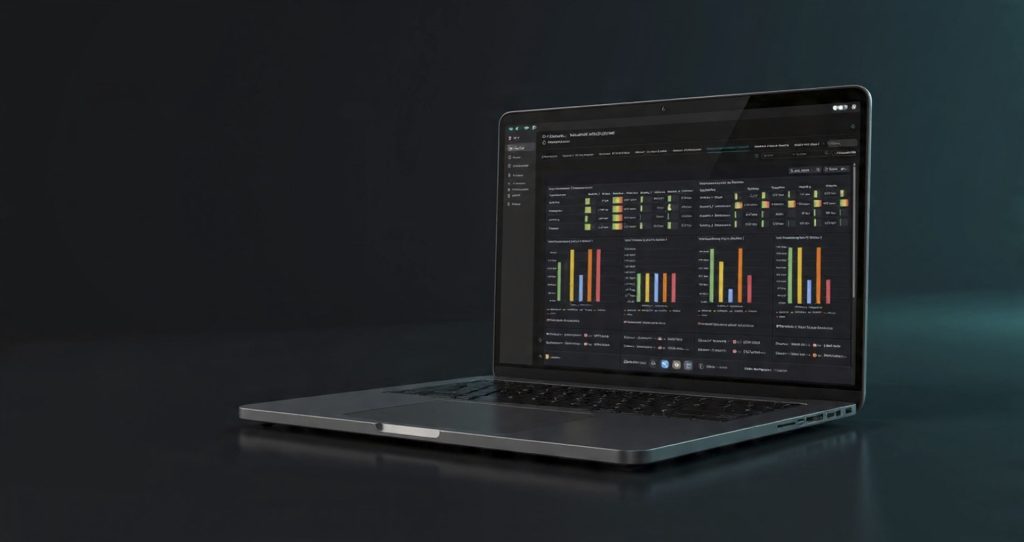
Most industrial plants do not suffer from a lack of alarms.They suffer from a lack of understanding.
SCADA, PLC and DCS systems generate thousands of threshold-based alerts every day. Operators acknowledge them, silence them, and move on – yet failures still occur, often without meaningful warning. The problem is not human error. The problem is architectural.
Traditional alarms were designed to signal violations, not to explain system behaviour. Predictive Maintenance (PdM) requires a fundamentally different approach. In Smart RDM, alarms are not the core of decision-making. Data, events, and learning are.
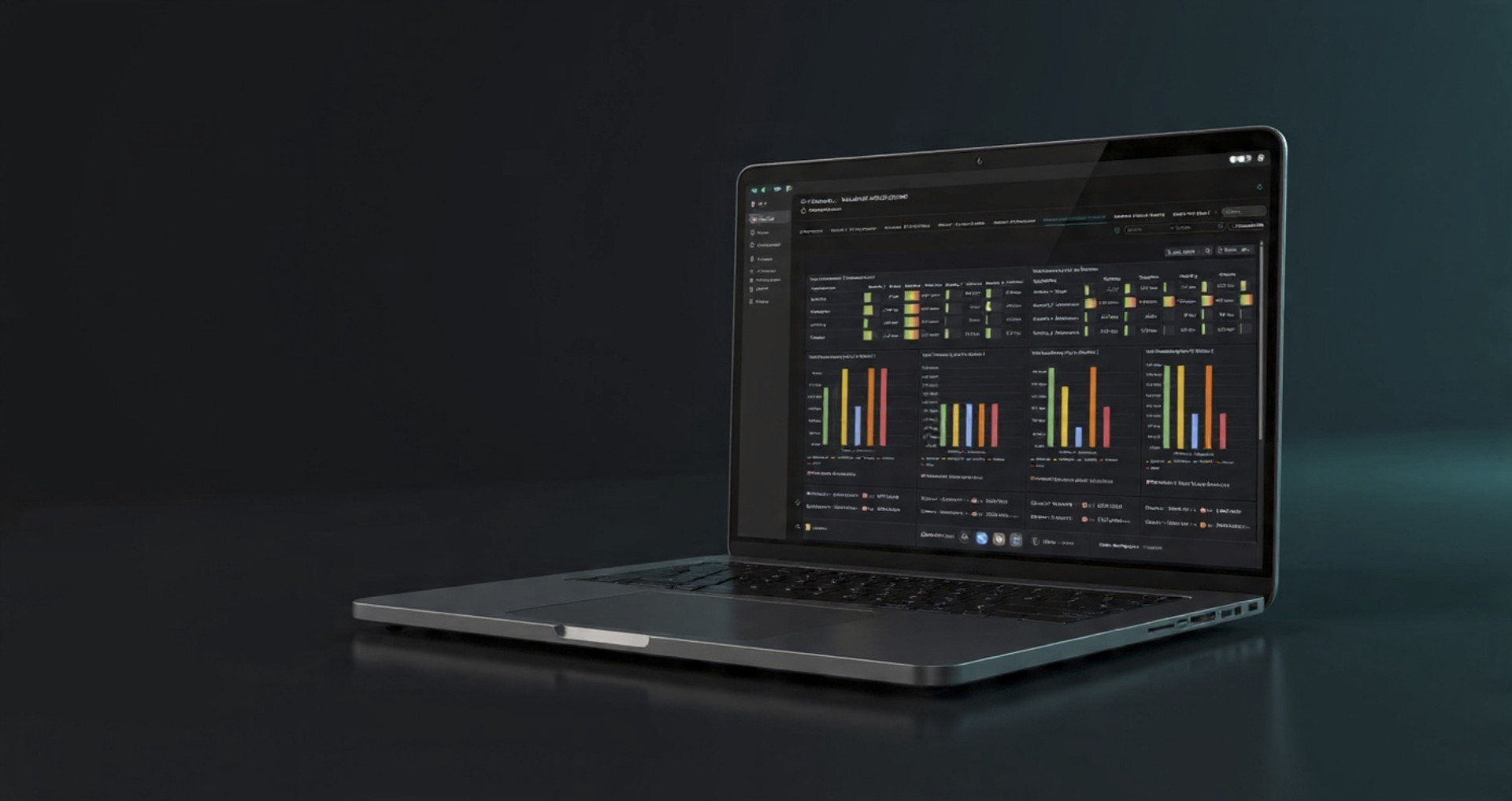
Alarm-centric thinking is the wrong abstraction
Classic alarm management answers one question only: “Is a value above or below a threshold?”
It does not answer:
- whether the deviation is meaningful in the current operating context,
- whether similar deviations happened before,
- whether this behaviour correlates with load, cycles, temperature or energy,
- whether the situation is deteriorating or stabilising,
- whether action is required now or later.
This is why unplanned downtime persists even in environments saturated with alarms. Traditional alarm systems react to threshold violations, but they do not explain how asset behaviour evolves over time or which changes are operationally significant.
Alarms are reactive by design, while predictive maintenance is inherently anticipatory. Smart RDM is built around this distinction. Rather than optimising alarm lists, it deliberately shifts away from alarm-centric logic toward a data- and event-driven PdM methodology, where operational behaviour is analysed, structured, contextualised – and continuously learned – before any action is triggered.
Step 1: First-class, complete and contextualized operational data
Predictive maintenance cannot be built on raw signals alone.In Smart RDM, operational data is treated as first-class data:
- versioned,
- historically complete,
- context-aware.
The platform integrates:
- OT data (SCADA, PLC, DCS, AVEVA PI and others),
- maintenance history (CMMS),
- operator knowledge and observations captured via structured Forms,
- events and annotations linked directly to assets and time windows.
The result is not “more data”, but complete, contextualized operational data – a prerequisite for any meaningful PdM logic. Without this foundation, anomaly detection and prediction are mathematically possible, but operationally useless.
Step 2: From raw signals to engineered health indicators
Machines do not fail because “temperature exceeded 80°C”. They fail because of evolving patterns in how multiple parameters interact over time.
The effectiveness of predictive maintenance therefore depends not only on data availability, but on what is actually instrumented and which parameters carry meaningful information about machine condition. In practice, individual signals are rarely informative on their own. It is the relationships, correlations, and dynamic behaviour across multiple operating parameters that reveal early signs of degradation.
The goal of predictive maintenance is not to monitor everything, but to identify those variables – and combinations of variables – that most reliably describe the true technical state of an asset, and whose anomalies are strong indicators of deterioration.
In Smart RDM, raw signals are continuously transformed into engineered condition indicators, including:
- trend slopes and drift rates,
- start–stop cycle counts,
- time spent in warning regimes,
- load-dependent thermal behaviour,
- energy consumption per operating mode.
These indicators are not transient calculations. They are stored as persistent, first-class data objects, immediately available for analytics, dashboards, and predictive models.
This step is critical. By converting raw measurements into structured, interpretable health indicators, Smart RDM separates noise from information – and this is precisely where most predictive maintenance initiatives either succeed or fail.
Step 3: Anomaly detection as a signal reduction layer
Anomaly detection in Smart RDM is not an alert generator.Its role is to identify statistically or behaviourally significant deviations from normal operation – before alarms fire.
Depending on data maturity and asset criticality, this includes:
- advanced adaptive thresholds,
- statistical trend analysis,
- multivariate correlation models,
- machine-learning approaches (e.g. autoencoders, sequence models).
Detected anomalies are not emitted as raw alerts. They are consolidated into structured Events, enriched with operational context.
Structured Events: the missing layer between data and decisions
This is where Smart RDM fundamentally differs from alarm systems.An Event in Smart RDM is:
- linked to a specific asset,
- time-bounded,
- enriched with context (signals, indicators, load, environment),
- annotated by operators and engineers,
- connected to historical occurrences and outcomes.
Instead of dozens of alarms, the user sees one event with meaning. Events become the backbone of PdM::
- they accumulate operational knowledge,
- they connect data science with maintenance reality,
- they enable explainability and trust.
Step 4: From anomalies to prediction – and continuous learning
Only after behaviour is understood does prediction make sense.Smart RDM supports models that estimate:
- Remaining Useful Life (RUL),
- probability of failure over defined time horizons,
- confidence levels based on data quality and historical outcomes.
Predictions are expressed probabilistically, not as binary alarms. For example:
- informational notification when failure probability within 72 h reaches 50%,
- warning when it exceeds 65%,
- alarm when it reaches 80%.
Thresholds are configurable, because each organisation knows its own optimal maintenance window.
Crucially, operator response is not just an action – it is feedback to the system.
When an operator confirms, rejects, or reclassifies an event, Smart RDM records this outcome. The system learns whether a given anomaly truly led to degradation under real operating conditions, or whether it was a benign statistical disturbance.
Machine-learning models do not initially “know” each machine as well as experienced operators do. They must learn. Through continuous feedback from Events, Forms, and maintenance outcomes, Smart RDM retrains and tunes its models so that predictions increasingly reflect the realities of the specific asset, process, and environment.
Predictive maintenance in Smart RDM is therefore not static – it is a continuously learning system.
Step 5: Closing the loop with maintenance workflows
Insights that do not trigger action have zero value. Smart RDM integrates PdM outputs directly with maintenance processes:
- automatic or assisted work order creation,
- prioritization based on risk, not alarm count,
- structured feedback via Forms after interventions,
- continuous enrichment of the event history.
This creates a closed PdM loop:
data → anomaly → event → decision → action → feedback → better model.
No manual handovers. No spreadsheets. No lost context.
Step 6: Scaling PdM without chaos
Once the methodology works for one asset, scaling becomes systematic:
- reusable asset and indicator templates,
- consistent event logic,
- shared models for similar equipment classes,
- unified dashboards across lines and plants.
Because Smart RDM is built around structured data and events, scaling PdM does not multiply complexity – it reduces it.
From alarm noise to operational foresight
Predictive maintenance is not a model. It is an ecosystem – and a learning process.
A working PdM pipeline requires:
- first-class, high-quality data,
- complete operational context,
- anomaly detection as signal reduction,
- structured Events as the decision layer,
- probabilistic, explainable predictions,
- continuous learning from operator feedback,
- tight integration with maintenance workflows.
Smart RDM integrates all these layers into a unified Predictive Maintenance architecture – connecting data, engineered indicators, anomaly detection, structured events, predictive models, and maintenance workflows within a single, coherent industrial analytics platform.
If your plant is drowning in alarms but still surprised by failures, the problem is not thresholds. The problem is thinking that alarms are insights.
Smart RDM helps you move beyond that.

Peyman Khosravani is a seasoned expert in blockchain, digital transformation, and emerging technologies, with a strong focus on innovation in finance, business, and marketing. With a robust background in blockchain and decentralized finance (DeFi), Peyman has successfully guided global organizations in refining digital strategies and optimizing data-driven decision-making. His work emphasizes leveraging technology for societal impact, focusing on fairness, justice, and transparency. A passionate advocate for the transformative power of digital tools, Peyman’s expertise spans across helping startups and established businesses navigate digital landscapes, drive growth, and stay ahead of industry trends. His insights into analytics and communication empower companies to effectively connect with customers and harness data to fuel their success in an ever-evolving digital world.