
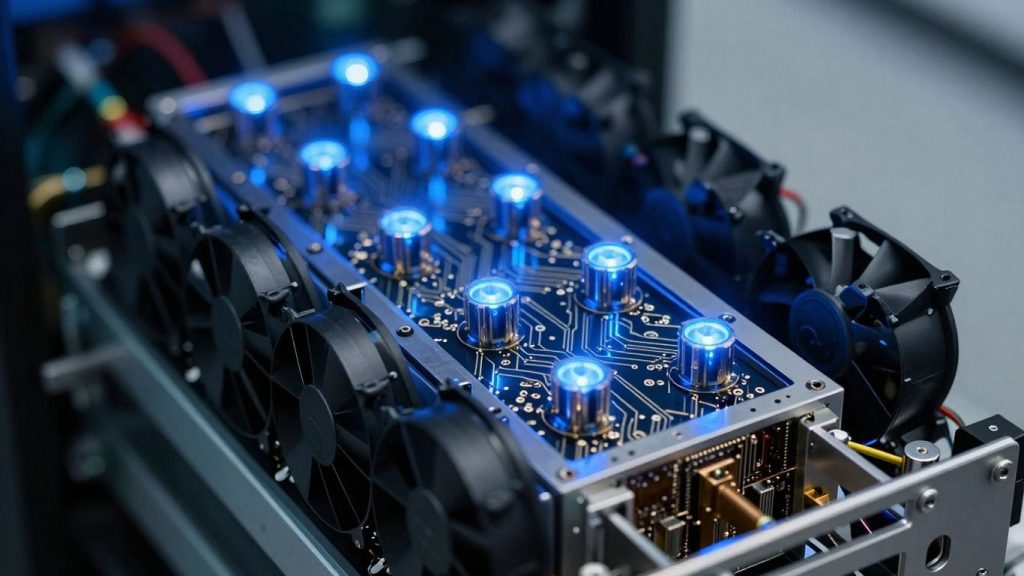
This article takes a look at EZ Blockchain, a company involved in the world of cryptocurrency mining. We’ll explore what they do, how the mining business is changing, and the technology behind it all. We’ll also touch on energy use, global politics, and what the future might hold for this digital infrastructure.
Key Takeaways
- EZ Blockchain focuses on providing mining solutions and making the process more accessible.
- Bitcoin mining is becoming a large-scale operation, and profitability can be tricky due to market ups and downs, not just price changes.
- New technology is important for mining, from getting the gear to keeping it cool and running efficiently.
- Using renewable energy and finding ways to reuse energy, like stopping gas flaring, are big topics in mining.
- Global rules and trade policies can really change where and how mining happens.
Understanding EZ Blockchain’s Role in Mining
Founding Vision and Entrepreneurial Journey
EZ Blockchain didn’t just appear overnight. It started with a vision to make something complex, like Bitcoin mining, more approachable. The founders, including Sergii Gerasymovych, who has a background in bootstrapping businesses that bring in millions, saw a gap. They noticed that while the technology was advancing, the practical side of getting involved, especially for larger operations, was often a hurdle. Their journey is rooted in building real businesses and understanding the day-to-day grind of making them work. It’s about more than just the idea; it’s about the hard work and practical steps taken to turn that idea into a functioning company.
Core Business and Hosting Solutions
At its heart, EZ Blockchain focuses on providing solutions for Bitcoin mining. This primarily involves offering hosting services. Think of it like renting a secure, well-equipped space for your mining hardware. They manage the infrastructure – the power, the cooling, the physical security – so miners don’t have to worry about the complexities of setting it all up themselves. This is particularly important as mining has become a more industrialized process. Instead of individuals running a few machines at home, it’s now about large-scale operations that need specialized facilities. EZ Blockchain steps in to fill that need, providing the physical backbone for these digital operations.
Commitment to Accessibility in Mining
One of the driving forces behind EZ Blockchain is a desire to make mining accessible. While the industry has seen a trend towards large-scale players, the goal is to keep the door open for more participants. This means simplifying the process and providing the necessary support. They aim to demystify mining, offering clear solutions that help people get involved without needing to be an expert in every single aspect of hardware, energy, and network management. It’s about creating pathways for more people to engage with this growing sector of the digital economy.
Navigating the Bitcoin Mining Landscape
The world of Bitcoin mining isn’t just about having the latest hardware; it’s a complex ecosystem with its own set of challenges and opportunities. Understanding these dynamics is key for anyone involved, from individual miners to large-scale operations.
Profitability in Volatile Markets
Bitcoin’s price can swing quite a bit, and this directly impacts how much money miners make. When the price of Bitcoin goes up, mining becomes more profitable. Conversely, when the price drops, profitability can shrink significantly. Miners have to constantly watch the market and adjust their strategies. It’s not just about the price, though. The cost of electricity is a huge factor. If electricity prices rise, it eats into profits even if the Bitcoin price stays the same. Miners need a solid plan to manage these ups and downs.
The Shift Towards Large-Scale Operations
What used to be something individuals could do from their homes has largely become a game for big companies. Setting up and running a mining operation requires a lot of capital for specialized equipment, secure facilities, and reliable, cheap energy. Smaller miners often find it hard to compete with these large operations that can buy hardware in bulk and negotiate better energy rates. This trend means that the barriers to entry are getting higher.
Here’s a look at some factors influencing profitability:
- Electricity Costs: The single biggest operational expense.
- Hardware Efficiency: Newer machines use less power for the same amount of work.
- Bitcoin Price: The market value of the mined coins.
- Network Difficulty: How hard it is to find a new block, which adjusts based on the total mining power online.
Risks Beyond Price Fluctuations
While the price of Bitcoin is a major concern, there are other risks miners face. One significant risk is the ever-increasing network difficulty. As more miners join the network and their collective computing power grows, the difficulty of mining a block also increases. This means that even if the Bitcoin price remains stable, individual miners might earn less Bitcoin over time if their own hashing power doesn’t keep up. Another challenge is hardware obsolescence; mining rigs become outdated relatively quickly, requiring continuous investment in new technology. Furthermore, regulatory changes in different countries can suddenly impact operations, sometimes forcing miners to relocate or shut down.
The mining industry is constantly evolving. What works today might not work tomorrow. Staying informed about technological changes, energy markets, and global regulations is just as important as understanding Bitcoin’s price charts. It’s a continuous learning process for everyone involved.
Technological Advancements in Mining Infrastructure
The Backbone of Bitcoin: Supply Chains and Logistics
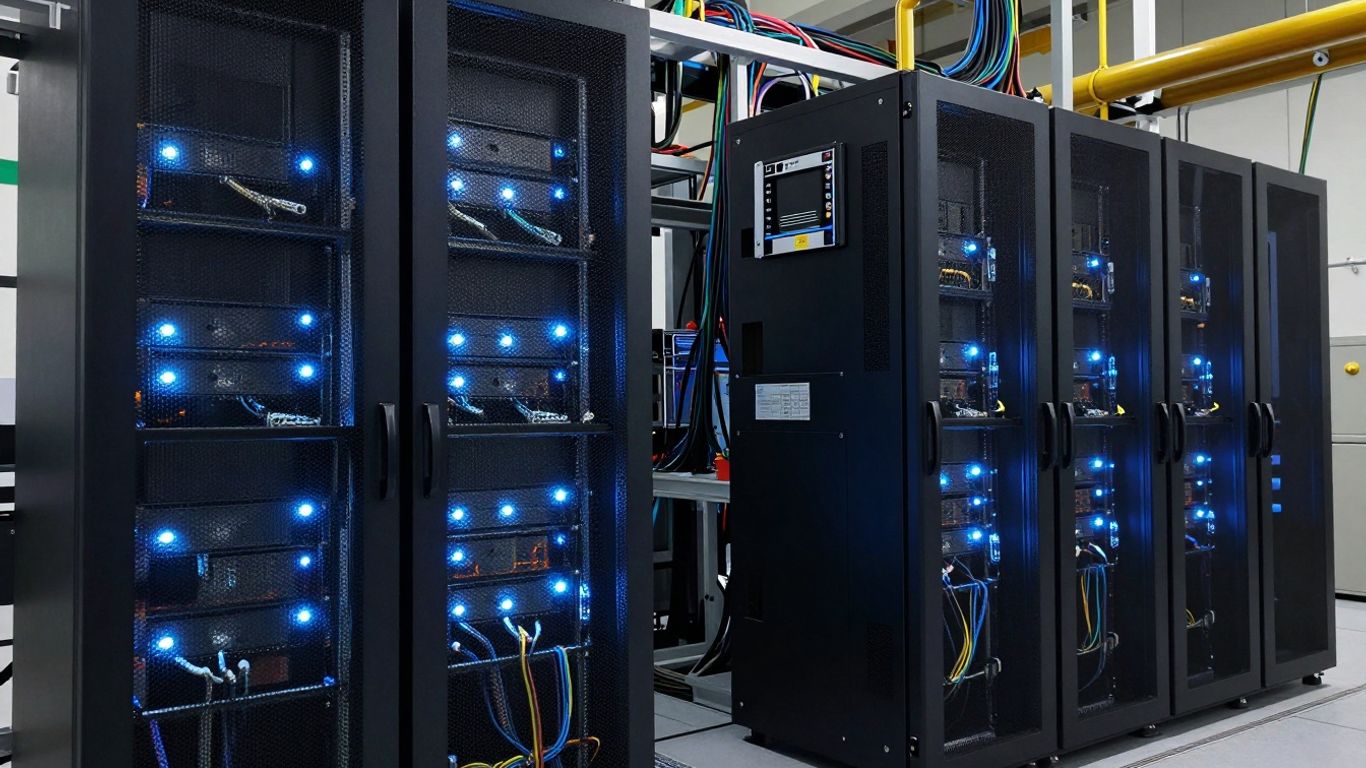
When we talk about Bitcoin mining, it’s easy to focus on the chips and the code. But behind every successful mining operation is a complex web of supply chains and logistics. Think about it: getting the latest, most efficient mining hardware from the factory to a data center, often across continents, involves a lot of moving parts. This includes everything from manufacturing and shipping to customs and warehousing. EZ Blockchain plays a role here by helping to manage these intricate processes, making sure that the physical infrastructure needed for mining is in place and running smoothly. It’s not just about buying machines; it’s about the entire journey those machines take before they can start crunching numbers.
Innovations in Cooling and Hardware
Mining hardware generates a lot of heat. A lot. To keep these machines running at peak performance and to extend their lifespan, advanced cooling systems are becoming a big deal. We’re seeing a shift from traditional air cooling to more efficient methods like immersion cooling, where the hardware is submerged in a special liquid. This not only cools the equipment better but also allows for denser setups and quieter operations. On the hardware front, manufacturers are constantly developing more powerful and energy-efficient ASICs (Application-Specific Integrated Circuits). The race is on to create the most powerful chip for the least amount of electricity.
The Convergence of AI and Mining Infrastructure
There’s a growing conversation about how the infrastructure built for Bitcoin mining can be adapted for Artificial Intelligence (AI) workloads. Both AI and mining require massive amounts of computing power and electricity. However, AI often demands much higher uptime and lower latency than traditional mining. This presents both challenges and opportunities. Miners are exploring ways to repurpose their facilities and hardware for AI tasks, potentially creating new revenue streams. This convergence could lead to more versatile data centers that can switch between mining and AI processing, depending on market demands and energy availability. It’s a fascinating look at how digital infrastructure can become more flexible and efficient.
The demands of AI compute are significantly different from traditional Bitcoin mining. While mining can tolerate brief interruptions, AI applications, especially generative AI, require near-perfect uptime. This means that infrastructure designed for AI must meet stringent Service Level Agreements (SLAs), a level of reliability that wasn’t always a primary concern for mining operations that could afford to power down during peak demand or grid instability.
Energy Strategies and Sustainability in Mining
Renewable Energy Adoption in Mining
The energy required for Bitcoin mining has long been a topic of discussion. However, the industry is increasingly turning towards renewable energy sources. This shift isn’t just about environmental responsibility; it often makes economic sense too. Many mining operations are finding that sourcing power from solar, wind, or hydroelectric facilities can be more cost-effective, especially in regions with abundant natural resources.
- Solar Power: Direct integration with solar farms, particularly in sunny climates.
- Wind Power: Utilizing wind farms, often in conjunction with other sources for consistent supply.
- Hydroelectric Power: Leveraging the consistent output of dams, a common practice in areas with significant water resources.
The integration of renewable energy is becoming a cornerstone of sustainable mining practices.
Repurposing Energy and Reducing Gas Flaring
Beyond simply using clean energy, miners are finding innovative ways to utilize energy that would otherwise go to waste. One significant area is the repurposing of natural gas that is flared at oil extraction sites. Flaring burns off excess gas, releasing greenhouse gases and wasting a potential energy source. Mining operations can be set up at these sites to use the flared gas to power their equipment, effectively turning a waste product into a revenue stream while reducing environmental impact.
This approach not only addresses a significant environmental concern but also provides a localized and often cheaper energy source for mining operations, creating a symbiotic relationship between the energy and blockchain sectors.
Addressing Energy Demands for AI and Mining
As both artificial intelligence and Bitcoin mining continue to grow, their substantial energy demands are becoming a shared challenge. Both sectors require vast amounts of electricity, leading to increased competition for power resources. This has spurred innovation in energy efficiency and the development of new energy solutions. The infrastructure built to support large-scale mining, with its focus on efficient cooling and power management, can also be adapted for AI data centers. This convergence suggests a future where these two power-hungry industries might collaborate on energy solutions, potentially driving further advancements in grid modernization and sustainable energy use.
Geopolitical Influences on Mining Operations
The world of Bitcoin mining isn’t just about powerful computers and electricity; it’s also deeply tied to what’s happening in global politics and trade. Think of it like this: where miners set up shop and how they get their equipment can change based on government rules, international agreements, and even trade disputes. These factors can really shake things up.
Impact of Trade Policies and Tariffs
Governments sometimes put taxes, called tariffs, on goods coming into their country. When it comes to mining hardware, like specialized computer chips and machines, these tariffs can make them much more expensive. This means mining companies have to spend more just to get the equipment they need to operate. It’s not just about the cost, though. Tariffs can also slow down the movement of this essential hardware across borders, creating delays and making it harder for miners to set up or upgrade their operations quickly. This can significantly affect a miner’s ability to stay competitive, especially if they rely on importing equipment.
Shifting Mining Operations Globally
Because of these political and economic pressures, mining operations are constantly moving around the globe. Countries that once seemed like prime spots for mining might become less attractive if new regulations or tariffs are introduced. This leads to a global reshuffling, with companies looking for places that offer more stable and predictable environments. We’re seeing shifts towards regions that might have lower energy costs or more favorable government policies. For example, some operations have moved from places with stricter rules to areas in Latin America, Africa, or the Middle East where the landscape might be more open for mining businesses.
Regulatory Environments and Their Effects
Each country has its own set of rules, and these regulations play a huge role in how mining businesses can operate. Some governments are very welcoming to mining, seeing it as a way to boost their economy or utilize excess energy. Others are more cautious, concerned about energy consumption or financial stability. These different approaches create a complex patchwork of rules that miners must navigate. For instance, a country might have clear guidelines on energy use and environmental impact, while another might have strict financial regulations that affect how mining companies can manage their earnings. This variety means that a mining strategy that works well in one place might be impossible in another, forcing companies to adapt their plans based on local laws and policies.
The Future of Digital Infrastructure and Mining
Mining as a Modernizing Force for Grids
It might seem a bit surprising, but Bitcoin mining operations are actually playing a role in updating our electrical grids. Think about it: these mining facilities need a lot of stable power, and they often set up shop in places where the grid could use a boost. This demand encourages investment in grid upgrades and better energy management. Companies like EZ Blockchain are involved in setting up these large-scale operations, which can act as a kind of anchor customer for new energy infrastructure. This isn’t just about powering computers; it’s about creating a more robust and responsive energy system for everyone.
The Evolution of Mining Beyond Traditional Models
We’re seeing mining move beyond just being about earning Bitcoin. It’s becoming a more integrated part of the digital economy. For instance, miners are finding ways to use their computing power for other tasks when Bitcoin prices are low or when they need to diversify. This could include processing data for AI applications or even helping with scientific research. The infrastructure built for mining is versatile. It’s a shift from a single-purpose activity to a more flexible, multi-use digital asset.
Building Resilient Digital Infrastructure
Creating strong digital infrastructure means thinking about more than just the hardware. It involves planning for energy, security, and adaptability. As mining operations grow, they need reliable power sources, often turning to renewables or innovative solutions like capturing flared gas. This push for efficiency and sustainability benefits the broader digital landscape. The goal is to build systems that can handle increasing demands while remaining stable and secure.
Here are some key aspects of building this resilient infrastructure:
- Energy Diversification: Relying on a mix of energy sources, including renewables and waste energy, makes operations less vulnerable to price spikes or supply issues.
- Hardware Innovation: Continuous improvements in mining hardware, like more efficient cooling systems, reduce operational costs and environmental impact.
- Strategic Location: Placing facilities in areas with stable energy grids and favorable regulations helps ensure consistent operation.
- Adaptable Use Cases: Developing the ability to repurpose computing power for tasks beyond mining, such as AI data processing, adds layers of resilience and economic viability.
The convergence of high-energy demands from both Bitcoin mining and the rapidly expanding field of Artificial Intelligence presents a unique challenge and opportunity for grid modernization. As these sectors grow, they are driving innovation in energy management and infrastructure development that can benefit the entire digital ecosystem.
Wrapping Up Our Look at EZ Blockchain
So, we’ve spent some time digging into what EZ Blockchain is all about, looking at their mining solutions and some of the bigger picture stuff happening in the industry. It’s clear that the world of crypto mining isn’t just about computers humming away; it’s a complex mix of technology, energy, and smart business moves. From understanding how mining profitability shifts with market changes to figuring out the best places to set up operations, there’s a lot to consider. As the industry keeps changing, especially with new tech like AI popping up, companies like EZ Blockchain are working to keep pace. It’s a dynamic field, and staying informed about these developments helps paint a clearer picture of where things are headed.
Frequently Asked Questions
What is EZ Blockchain and what do they do?
EZ Blockchain is a company that helps people mine Bitcoin. They provide places to set up the special computers needed for mining and offer other services to make mining easier. Their goal is to make mining available to more people.
Is Bitcoin mining still a good way to make money?
Mining Bitcoin can still be profitable, but it’s gotten harder. The price of Bitcoin goes up and down a lot, and it now takes a lot of powerful computers and energy to mine successfully. It’s more like a big business now than a hobby for most.
How is technology changing Bitcoin mining?
New technologies are making mining more efficient. This includes better ways to cool down the powerful computers, smarter hardware, and even using things like Artificial Intelligence (AI) to help manage mining operations. The way mining works is constantly being improved.
Are Bitcoin miners using green energy?
Many Bitcoin miners are increasingly using clean energy sources like solar and wind power. Some are also finding clever ways to use energy that would otherwise be wasted, like capturing natural gas that escapes from oil wells, which helps the environment.
How do world events affect Bitcoin mining?
Things like trade rules, taxes, and laws in different countries can really change where and how Bitcoin mining happens. Companies sometimes have to move their operations to different parts of the world to find the best conditions or avoid problems.
What is the future of mining and digital systems?
Mining is helping to make energy systems stronger and more modern. It’s also evolving beyond just mining digital money. The focus is on building reliable digital systems that can handle future needs, including those driven by new technologies like AI.

Peyman Khosravani is a seasoned expert in blockchain, digital transformation, and emerging technologies, with a strong focus on innovation in finance, business, and marketing. With a robust background in blockchain and decentralized finance (DeFi), Peyman has successfully guided global organizations in refining digital strategies and optimizing data-driven decision-making. His work emphasizes leveraging technology for societal impact, focusing on fairness, justice, and transparency. A passionate advocate for the transformative power of digital tools, Peyman’s expertise spans across helping startups and established businesses navigate digital landscapes, drive growth, and stay ahead of industry trends. His insights into analytics and communication empower companies to effectively connect with customers and harness data to fuel their success in an ever-evolving digital world.










