
In the latest episode of the Dinis Guarda Podcast, Prof. Ula Taylor, University of California, Berkeley, discusses how integrating AI like ChatGPT into teaching, addressing bias in education, and advancing Black Studies can foster critical thinking and a more just academic environment. The podcast is powered by Businessabc.net, Citiesabc.com, Wisdomia.ai, and Sportsabc.org.
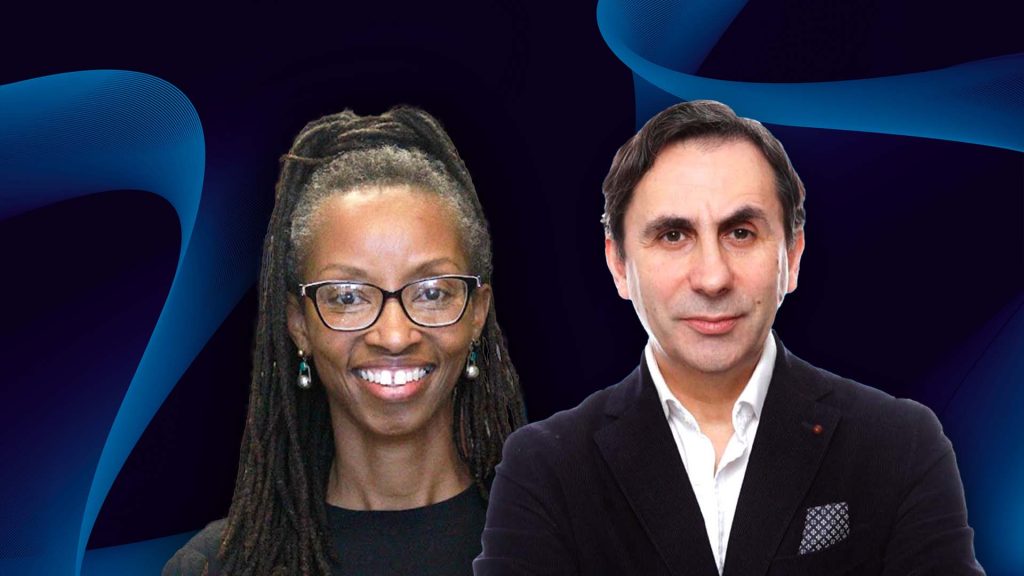
Prof. Ula Y. Taylor is a professor in the Department of African American Studies at the University of California, Berkeley. She specialises in African American history, black feminist theory, and intellectual traditions of African American women. Her research covers black nationalism, Pan-Africanism, and civil rights movements from 1890 to 1980.
She is the author of The Promise of Patriarchy: Women and the Nation of Islam, The Veiled Garvey: The Life and Times of Amy Jacques Garvey, co-author of Panther: A Pictorial History of the Black Panther Party and The Story Behind the Film and co-editor of Black California Dreamin’: The Crisis of California African American Communities.
During the interview, Prof. Ula Taylor reflects on the evolving role of AI in education.
“I contacted a person on campus who helped me redesign my course, and I redesigned it by having, so for each section, there are four questions.
Now the first question in each section has an answer that comes directly from ChatGPT.
The students are asked to critique the answer. What is correct about this? What is incorrect about this? What’s missing from this?
So, it’s a way for them to understand, yes, there is some good information, but there’s some other information that’s not correct. There are some loopholes in this. And so my hope is that after critiquing it if they continue to use it, they will also critique what they see.”
Teaching challenges with AI
Prof. Ula also discusses how her approach to teaching has evolved due to the challenges of AI:
“With the final exam, my folks, who I work with, the teaching assistants were saying, ‘Yula, we’re having everyone get the same response for this question.’ I’m like, ‘What?’
It was a very, you know, basic question in their reading, but people use ChatGPT to answer it. I didn’t know what to do because I didn’t have anything in my syllabus that said if you cannot use ChatGPT.
I also felt that there was some cheating happening because everyone had the same answer, and so I didn’t want to accuse anyone, but I wanted to hold people accountable.
It was in the confessions that I really began to rethink not only my teaching but also how to use AI in a way where students would use it critically. In the confessions, many of them were saying I know I should not have been using this on other platforms. I know it was against, you know, academic integrity, but I was feeling overwhelmed.
I was working at I was working. I had an internship. I needed this class to graduate. So all of the pressures of being a student really came forth.
As professors, we think that our class is the most important thing in the world. So how can you not also engage it in that way?
And so it was at that point that I said I needed to rethink this, and I knew I couldn’t rethink it on my own. I am a technological dinosaur. I still have a flip phone. I have never texted. So, what am I going to do with all of this new technology?”
Challenging bias in AI
Prof Ulla discusses the challenges that AI models face when they “scrape” information from the internet:
“I see perhaps all of these different AI platforms as an early version of Wikipedia, and it’s going to require human beings to make it better.
One of the things I love about Wikipedia, usually, if it’s a slim offering or they want more insight into it, they will say, ‘We need your help.’ They will say, ‘Can you help us fill out this description? Can you help us provide a more solid definition?’
This is why I think Wikipedia has now advanced to being a go-to introductory source for something.
I think that’s important for us to do if we are going to, if not, if because it’s here, so how are we going to utilise it in a way that’s beneficial and not detrimental to the academy?”
Role of black studies
Prof. Ulla discusses the significance of Black Studies in contemporary public discourse:
“Black studies is so important in the public discourse today because black studies is an interdisciplinary field.
Black studies as a field has helped to create a critical transformation of the academy in ways that disrupt the boundaries and silos of learning.
If you go to a geography department, if you go to an English department, if you go to a sociology department, there is someone who also engages in black studies in those departments.
In order to understand what one might experience in a southern city or in a northern environment, one has to engage in the movement of black people, whether they are moving from the south to the north or if they’re moving from the Caribbean to New York City.
I think this is why there has been so much pushback: it is because of the progress. But I think it’s important to understand that progress does not dismantle fairness.
Progress does not chip away at a more democratic society. In fact, it helps to create it. Fairness and progress are being wrapped around and misunderstood as discriminating against white people, particularly elite white people, when that’s not the case.
It is a sleight of hand when we need to think about how we can create this multi-racial and multilingual democracy.”

Shikha Negi is a Content Writer at ztudium with expertise in writing and proofreading content. Having created more than 500 articles encompassing a diverse range of educational topics, from breaking news to in-depth analysis and long-form content, Shikha has a deep understanding of emerging trends in business, technology (including AI, blockchain, and the metaverse), and societal shifts, As the author at Sarvgyan News, Shikha has demonstrated expertise in crafting engaging and informative content tailored for various audiences, including students, educators, and professionals.










