The major concepts that form the foundation of the Fourth Industrial Revolution (4IR) revolve around digital transformation and its key enabling technologies: Artificial Intelligence (AI), Blockchain, the Internet of Things (IoT), and Fintech.
“The past cannot be changed. The future is yet in your power.” Mary Pickford
We live in a fast, disruptive, technology-driven world where concepts like digital transformation and Industry 4.0 (4IR), AI, Blockchain, IoT, and Fintech influence everything we do as individuals and in the shaping of our cities and countries. This is a world filled with promise and opportunities but also many challenges.
The Fourth Industrial Revolution was defined by Klaus Schwab (2018) as the fourth major industrial era since the initial Industrial Revolution of the 18th century. It is characterised by a fusion of technologies that blur the lines between the physical, digital, and biological spheres, collectively referred to as cyber-physical systems.
What is driving the 4IR are data-driven technologies that have the potential to radically change our economic models, increase productivity, and improve our lives. The 4IR results from an increasingly rapid digital transformation happening worldwide. This digital transformation has brought many evident benefits but is now entering a second stage, one that presents a new set of important challenges. Among these challenges are the growing awareness of how our economic activities impact climate change, as well as the disruption of jobs and the transformation of what we understand as work.
2018 was an annus horribilis in terms of global climate catastrophes. It is irrefutable that the present economic system and human action are triggering changes in the climate. On the other hand, 4IR’s most praised asset is its ability to increase productivity. But what kind of productivity are we talking about? Do we want productivity at all costs, with its implicit externalities, such as its impact on climate change? Or are we able to pursue productivity more sustainably, mindful of the waste it produces? Can the 4IR enable us to shift to more beneficial economic systems, such as the circular economy?
Another important risk of the 4IR is its effect on what we now understand as jobs/work. We have already seen how the way we work and live has changed dramatically over the past few decades, and this will only increase. Initially, 4IR will primarily impact machine operators and food workers, but job loss is expected to extend across various sectors. This development has sparked significant public concern, and governments and nations can no longer ignore this challenge.
A world governed by digits: Digital transformation
Even if we do not think about it, our world is governed by digits. The smartphones we all carry in our pockets are small digital machines packed with powerful chips, coded in ones and zeros. These computational devices have reduced in size incredibly over time, but their capabilities continue to expand exponentially. This journey began with the invention of the first digital calculating machine during the 1940s, followed by the development of subsequent computers and the invention of the internet, which shaped the world as we know it today. The web and its devices became the core instruments around which we govern our lives, impacting the way we live, work, and relate to each other. These technological evolutions have disrupted many of our existing systems and behaviours, while heavily challenging business models, governance processes, and social dynamics.
What is digital transformation?
What we just described is known as “Digital Transformation.” What triggered it was the increasing digitisation of the world. One way to define digital transformation is as “the novel use of digital technology to solve traditional problems” (Lankshear, Colin; Knobel, Michele, 2008). Another definition comes from Shahyan Khan, who analysed the societal effects of digitalisation (Khan, 2017). According to Khan, digitisation (the technical conversion), digitalisation (the business process), and digital transformation (the effect) all contribute to accelerating and illuminating ongoing global processes of societal change. This transformation impacts business models, consumption patterns, socio-economic structures, legal frameworks, organisational patterns, cultural barriers, communication processes, and more.
The spread of digital transformation
The pace at which digital transformation occurs, and the degree to which it is embraced, vary considerably. However, digital transformation seems to have a life of its own. It is happening globally, particularly in Europe and the Western world, with an increasing number of developing countries joining in. Every year, the level of openness and interconnectivity in our economic and social activities grows. This is driven by increasing digitisation and the emergence of technology-intensive sectors shaped by globally hyper-connected marketplaces.
Impact on industries
According to recent research by McKinsey, sectors that will be most affected by digital transformation include Banking, Media and Entertainment, Pharma, Retail, Hospitality, Travel, Insurance, and the Public Sector (Brian Fox, Amit Paley, Michelle Prevost, and Nisha Subramanian, 2017). The impact of digital transformation is not only economic; it also questions our existing culture, communication models, and governance frameworks.
The third industrial revolution
Digital transformation is not a static concept. It has evolved quickly over the years, particularly with improvements in technology, especially the internet, which has fostered increasing digitisation. Jeremy Rifkin, a US economist and sociologist, described this evolution in his book The Third Industrial Revolution: How Lateral Power is Transforming Energy, the Economy, and the World (2011). Rifkin argued that technological shifts occur when new communication technologies, energy supply forms, and transportation mechanisms converge. This confluence of advancements accelerates efficiency, triggering profound societal shifts.
Technological convergence in industrial revolutions
- The first Industrial Revolution (19th century) was driven by steam power, letterpress printing, and railways.
- The second Industrial Revolution (20th century) was driven by electric communication, the combustion engine, and road transportation.
- The third Industrial Revolution is driven by the internet, renewable energies, and sustainable mobility.
Rifkin argued that developed economies could only increase productivity by adopting a connected architecture of data-driven technologies (cloud computing, AI, IoT) that improve energy efficiency in production and distribution. This shift supports a “low carbon economy” and prepares the world for the next industrial revolution.
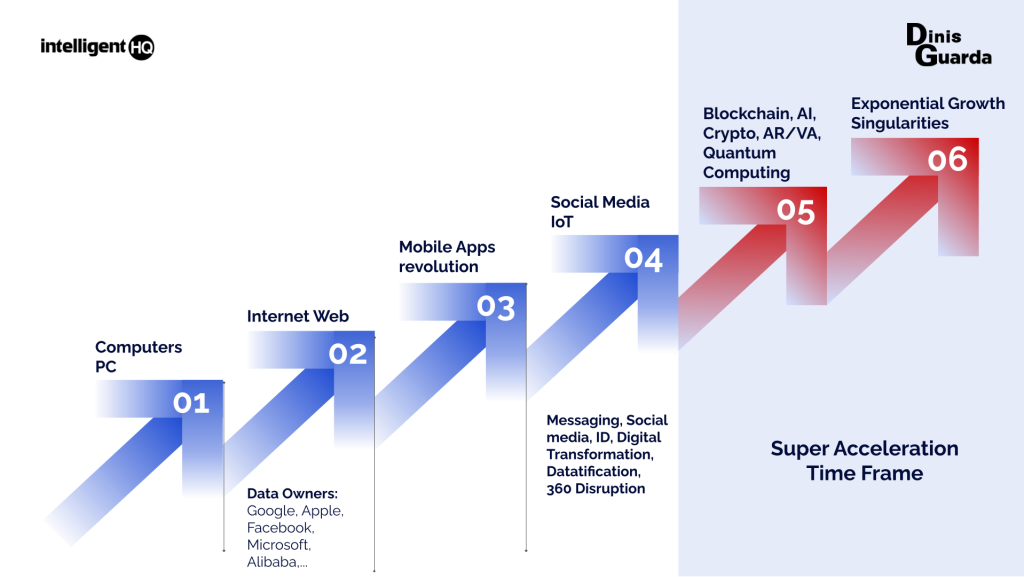
Since the invention of the iPhone in 2007, the digitisation process has accelerated significantly, especially with the widespread adoption of smartphones. There are now more mobile phones than people, and this expansion in digitisation has resulted in a massive increase in data production. This data comes from sensors, actuators, and the Internet of Things (IoT). As the cost of sensors has decreased and bandwidth has increased, the amount of data being generated has escalated, further fueling developments in AI, Blockchain, IoT, and Fintech, which are now driving the 4IR.
The 4th industrial revolution
Klaus Schwab describes the 4IR as “a range of new technologies that are fusing the physical, digital, and biological worlds, impacting all disciplines, economies, and industries, and even challenging ideas about what it means to be human.” The 4IR is characterized by “velocity, scope, and systems impact,” and is disrupting industries worldwide, leading to the transformation of systems of production, management, and governance.
Key impacts of 4IR:
- A Supercomputer in Your Pocket
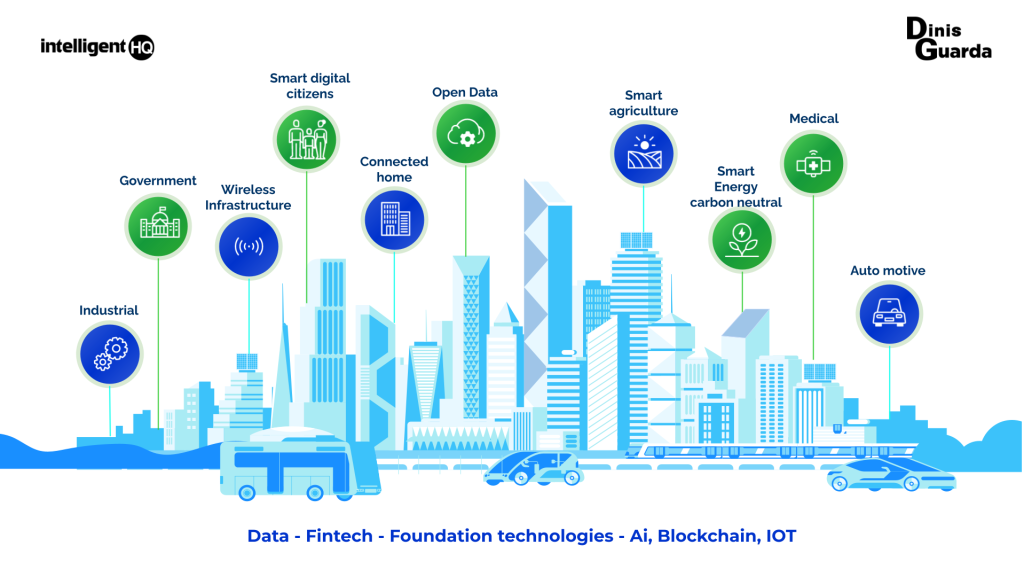
- Smart Cities
- AI and Automation
- Blockchain and Cryptocurrencies
- The Sharing Economy
- The Circular Economy
In business, the 4IR is expected to lead to:
- Transformed customer expectations.
- Products enhanced by data, improving asset productivity.
- New partnerships formed based on collaborative innovation.
- New operating models that are more automated and peer-to-peer.
Four most important data-driven technologies shaping the 4IR
I. AI: The powerful search engine at the core of 4IR
AI can imitate intelligent human behaviour and is expanding rapidly across all areas of society. Innovations in AI, such as neurotrophic chips and quantum computing, are accelerating its capabilities, enabling it to handle massive data sets and perform simulations previously thought impossible.
II. Blockchain: The potential architect of the future internet
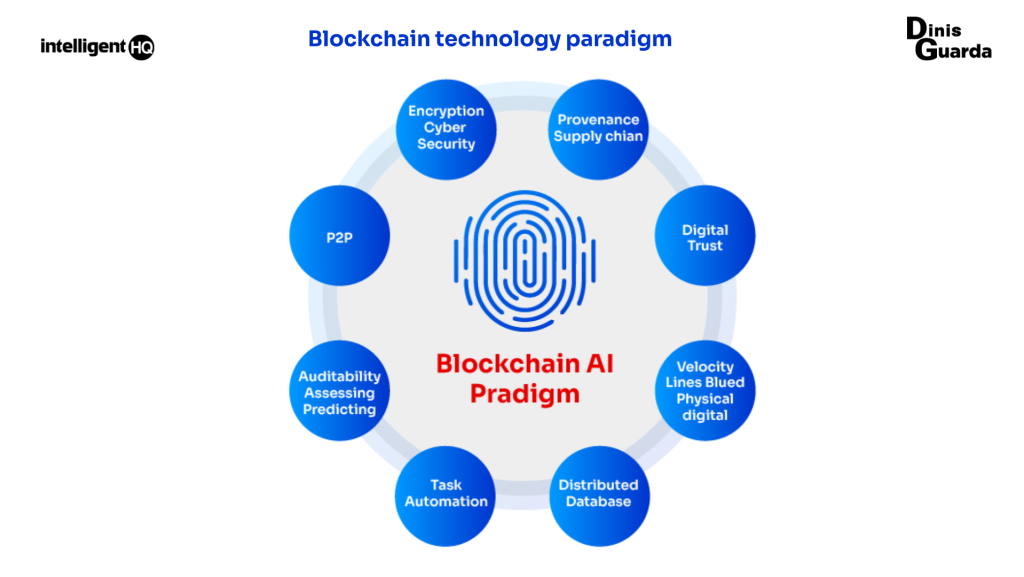
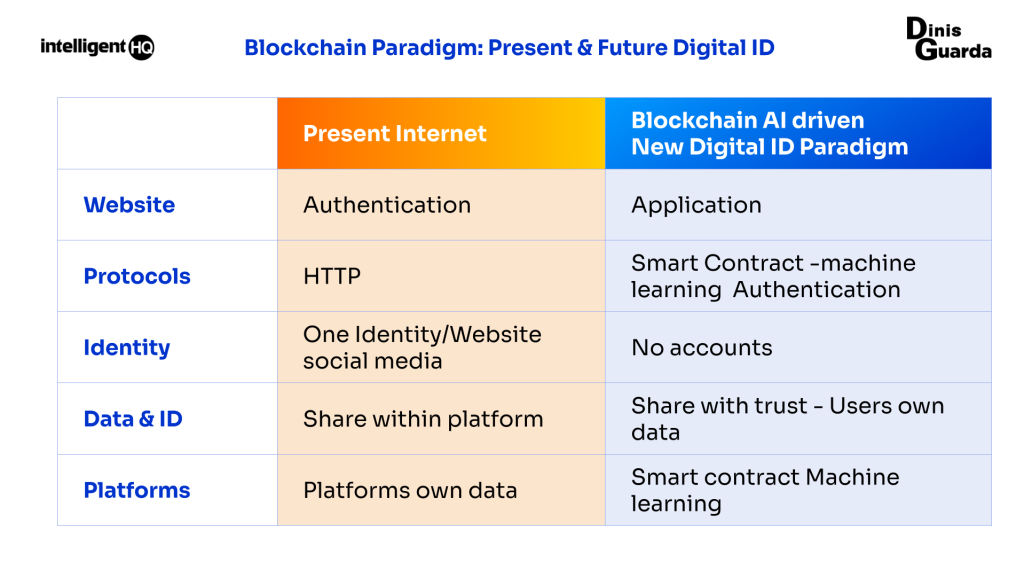
Blockchain is revolutionising how data is stored, verified, and shared across decentralised networks. Its transparency and security make it an ideal solution for storing large amounts of data, and it is increasingly seen as the future backbone of the internet.
III. IoT: Connecting matter with people
The IoT connects everyday objects and devices, enabling improved efficiency and innovation. The convergence of IoT and blockchain is creating new possibilities for communication and data management between devices.
IV. Fintech: The energy heart of the world
Fintech is transforming the financial sector by providing digital alternatives to traditional financial methods. Mobile phones have made it easier for people, especially in developing countries, to access financial services and participate in global economic activities.
Challenges of the 4IR
While the 4IR presents many opportunities, it also brings significant challenges, especially regarding job loss and security. Automation may lead to fewer new jobs in emerging industries, as studies by Oxford Martin University and McKinsey have shown. Additionally, cybersecurity concerns will escalate as more systems become automated and interconnected.
To navigate these challenges, ideas such as Universal Basic Income (UBI) and Basic Income Guarantee (BIG) have been proposed. These measures could help cushion the effects of job loss and ensure a more equitable transition into the future workforce.
Digital transformation, innovation, and legislation
Digital transformation and the 4IR are here to stay, and their impact will continue to grow. As technologies like AI, Blockchain, IoT, and Fintech converge, they will blur the lines between the physical, digital, and biological spheres. However, to ensure the benefits of these technologies outweigh their risks, careful planning and innovative legislation are required.
Countries like Luxembourg have set examples of balanced regulation that fosters innovation while ensuring safety. The key challenge for governments worldwide is to develop policies that encourage technological advancement while minimising risks such as inequality and environmental degradation.

Dinis Guarda is an author, academic, influencer, serial entrepreneur, and leader in 4IR, AI, Fintech, digital transformation, and Blockchain. Dinis has created various companies such as Ztudium tech platform; founder of global digital platform directory businessabc.net; digital transformation platform to empower, guide and index cities citiesabc.com and fashion technology platform fashionabc.org. He is also the publisher of intelligenthq.com, hedgethink.com and tradersdna.com. He has been working with the likes of UN / UNITAR, UNESCO, European Space Agency, Davos WEF, Philips, Saxo Bank, Mastercard, Barclays, and governments all over the world.
With over two decades of experience in international business, C-level positions, and digital transformation, Dinis has worked with new tech, cryptocurrencies, driven ICOs, regulation, compliance, and legal international processes, and has created a bank, and been involved in the inception of some of the top 100 digital currencies.
He creates and helps build ventures focused on global growth, 360 digital strategies, sustainable innovation, Blockchain, Fintech, AI and new emerging business models such as ICOs / tokenomics.
Dinis is the founder/CEO of ztudium that manages blocksdna / lifesdna. These products and platforms offer multiple AI P2P, fintech, blockchain, search engine and PaaS solutions in consumer wellness healthcare and life style with a global team of experts and universities.
He is the founder of coinsdna a new swiss regulated, Swiss based, institutional grade token and cryptocurrencies blockchain exchange. He is founder of DragonBloc a blockchain, AI, Fintech fund and co-founder of Freedomee project.
Dinis is the author of various books. He has published different books such “4IR AI Blockchain Fintech IoT Reinventing a Nation”, “How Businesses and Governments can Prosper with Fintech, Blockchain and AI?”, also the bigger case study and book (400 pages) “Blockchain, AI and Crypto Economics – The Next Tsunami?” last the “Tokenomics and ICOs – How to be good at the new digital world of finance / Crypto” was launched in 2018.
Some of the companies Dinis created or has been involved have reached over 1 USD billions in valuation. Dinis has advised and was responsible for some top financial organisations, 100 cryptocurrencies worldwide and Fortune 500 companies.
Dinis is involved as a strategist, board member and advisor with the payments, lifestyle, blockchain reward community app Glance technologies, for whom he built the blockchain messaging / payment / loyalty software Blockimpact, the seminal Hyperloop Transportations project, Kora, and blockchain cybersecurity Privus.
He is listed in various global fintech, blockchain, AI, social media industry top lists as an influencer in position top 10/20 within 100 rankings: such as Top People In Blockchain | Cointelegraph https://top.cointelegraph.com/ and https://cryptoweekly.co/100/ .
Between 2014 and 2015 he was involved in creating a fabbanking.com a digital bank between Asia and Africa as Chief Commercial Officer and Marketing Officer responsible for all legal, tech and business development. Between 2009 and 2010 he was the founder of one of the world first fintech, social trading platforms tradingfloor.com for Saxo Bank.
He is a shareholder of the fintech social money transfer app Moneymailme and math edutech gamification children’s app Gozoa.
He has been a lecturer at Copenhagen Business School, Groupe INSEEC/Monaco University and other leading world universities.