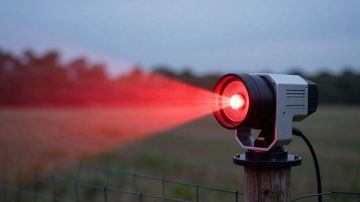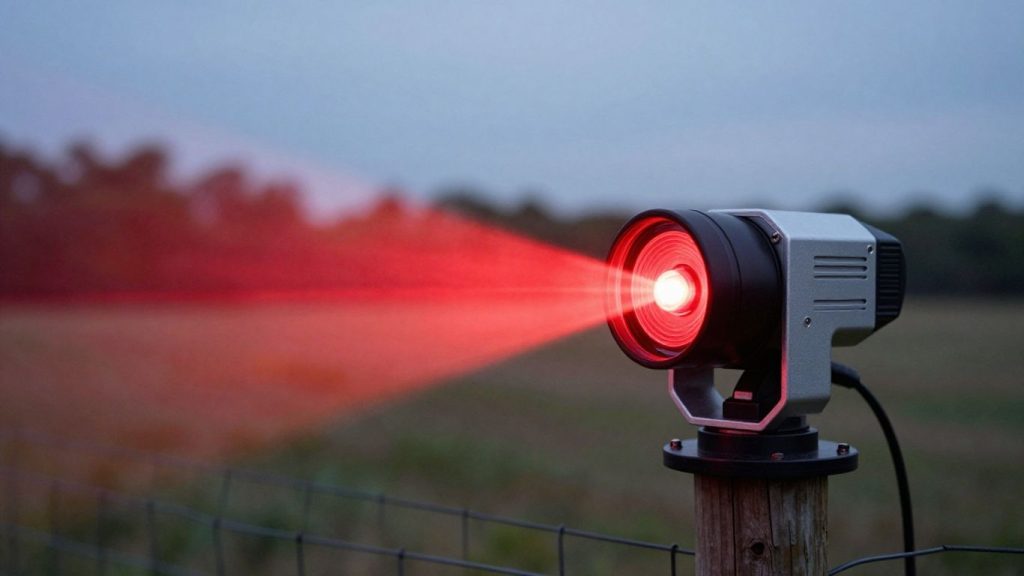
A groundbreaking laser technology developed by a Cumbria-based firm, Createc, aims to enhance safety for women and girls in public spaces by identifying and flagging potentially threatening behavior. The innovative system, adapted from crowd monitoring technology used in airports and train stations, uses lasers to track individuals as anonymous dots, alerting security personnel to suspicious patterns of movement.
Key Takeaways
- A new laser-based technology is being developed to identify predator-like behavior in public spaces.
- The system, created by Createc in Cumbria, uses laser tracking to monitor movement patterns without identifying individuals.
- It aims to alert security to potential threats, allowing for intervention before incidents occur.
- The technology is inspired by personal experiences of harassment and a desire to shift responsibility from victims to authorities.
Innovative Predator Detection
Rosie Richardson, product and strategy director at Createc, is leading the development of this technology, driven by a personal history of experiencing unwanted attention and assault. The system works by analyzing movement patterns, distinguishing between normal activity and behaviors such as loitering or tailing. When unusual patterns are detected, such as someone sitting unnecessarily close to another person on an empty train platform, security teams are alerted. This allows them to direct CCTV or dispatch personnel to assess the situation.
Technology’s Origins and Functionality
Createc’s technology is an adaptation of a system already in use at major transport hubs like King’s Cross Station in London. This existing system monitors crowds, identifying anomalies in group movements that might indicate a problem. The new application focuses on identifying individual behaviors that could signal predatory intent. "It uses, effectively, laser beams and very clever maths," Richardson explained. The system maps patterns of movement and only flags suspicious activity based on known manifestations of threatening behavior. This approach aims to respect public privacy by not continuously monitoring individuals, only intervening when a potential issue is detected.
Addressing a Societal Issue
Richardson emphasizes that the onus for safety has historically fallen on women. She believes this technology can help shift that responsibility to public authorities and space owners. Her motivation stems from a childhood sexual assault and the loss of her brother in a street altercation, fueling a desire to create solutions that prevent harm. The technology’s development is informed by real-life data from busy public spaces, mapping behaviors that indicate potential threats. The system does not rely on cameras, thus avoiding privacy concerns associated with constant surveillance, and only directs cameras or personnel when an anomaly is detected.
Expert Perspectives and Future Outlook
Dr. Emma Cunningham, a criminology expert at the University of East London, acknowledges the potential of such technology but stresses that it is not a complete solution. She advocates for broader societal change, including shifting attitudes from victim-blaming to perpetrator-blaming and educating young people to challenge misogyny. While technology can aid safety in public spaces, Cunningham believes it cannot replace human intervention and the importance of voicing concerns. Createc’s system has undergone simulated trials and is preparing for real-life testing, with the ultimate goal of preventing even a single severe incident.
Sources

Founder Dinis Guarda
IntelligentHQ Your New Business Network.
IntelligentHQ is a Business network and an expert source for finance, capital markets and intelligence for thousands of global business professionals, startups, and companies.
We exist at the point of intersection between technology, social media, finance and innovation.
IntelligentHQ leverages innovation and scale of social digital technology, analytics, news, and distribution to create an unparalleled, full digital medium and social business networks spectrum.
IntelligentHQ is working hard, to become a trusted, and indispensable source of business news and analytics, within financial services and its associated supply chains and ecosystems