
A Scientist Shaped by Curiosity and Discipline
Dr. Chun Ju Chang did not plan a global career from the start. She planned to understand how disease works. That focus guided every step that followed. Over time, it carried her from Taiwan to leading research centres in the United States and back again, with a clear purpose at each stage.
“I was always interested in how science could explain what we see in health and disease,” she has said. “Once I started asking those questions, I never really stopped.”
Today, she is a Professor at China Medical University in Taiwan. She is known for her work in cancer biology, her strong publication record, and her commitment to mentoring. Her career shows how steady progress, rather than bold shortcuts, builds real leadership in science.

Early Training and a Global View of Science
Chang grew up in Taiwan, where education was taken seriously and effort was expected. That mindset followed her to the United States, where she earned her PhD at the University of California, Los Angeles. At UCLA, she learned how large research systems operate and how ideas move from discussion to data.
“UCLA taught me how to think independently,” she recalled. “You were expected to defend your ideas clearly, but also change them when the data told you to.”
Her work during this period earned early recognition, including research and leadership awards. These were not turning points, but signals that her approach was working. She then moved to the University of Texas MD Anderson Cancer Center for postdoctoral training, a period she often describes as formative.
“At MD Anderson, the pace was intense,” she said. “You learned quickly that good science depends on discipline. Experiments fail. Timelines shift. You still show up and do the work.”
Recognition Through Results, Not Noise
Chang’s postdoctoral years brought several major honours, including awards for research excellence and scientific productivity. These reflected consistent output rather than a single breakthrough. Her work focused on understanding cancer mechanisms and producing results that others could build on.
She became known for careful study design and clear writing. These skills later supported her role as a reviewer for scientific journals and research study sections.
“Reviewing other people’s work teaches you a lot,” she explained. “You see common mistakes. You also see what strong thinking looks like when it’s done well.”
This reputation helped her secure a faculty position at Roswell Park Comprehensive Cancer Center in New York, where she served as an Associate Professor.
Leadership in Research and the Classroom
At Roswell Park, Chang balanced research with mentoring. She worked closely with trainees and junior researchers, many of whom were navigating high-pressure environments for the first time.
“I realised then how much influence a mentor really has,” she said. “A short conversation can change how someone approaches their work for years.”
Her approach was practical. She mentors students to organise experiments, interpret results, and recover from mistakes on a daily basis. One former trainee recalled her insistence on reviewing raw data line by line before drawing conclusions.
“She would say, ‘Let’s slow down and look at what the data is actually telling us,’” Chang noted. “That habit saves time in the long run.”
This mix of rigour and patience became a hallmark of her leadership style.
Returning to Taiwan With Experience
After years in the United States, Chang returned to Taiwan to join China Medical University as a Professor. The move was deliberate. She wanted to apply what she had learned in international research environments to education and training closer to home.
“I felt a responsibility to bring that experience back,” she said. “Students here are just as capable. They need access to strong training and clear guidance.”
At China Medical University, she leads research while teaching and mentoring young scientists. She emphasises preparation, consistency, and collaboration. She also encourages students to think beyond borders.
“Science does not stop at national lines,” she said. “The best work often comes from sharing ideas across countries.”
Standing for Inclusion and Long-Term Thinking
Chang has been an active member of Women in Cancer Research within the American Association of Cancer Research. Her involvement reflects a broader belief in widening access to scientific careers.
“Talent is everywhere,” she said. “Opportunity is not. We have to be honest about that if we want science to improve.”
She avoids grand statements about impact. Instead, she points to daily actions. Careful mentoring. Clear feedback. Respect for process. These, she believes, shape the field more than headlines.
A Career Built on Consistency
Chun Ju Chang’s career does not follow a dramatic arc. It follows a disciplined one. Each step builds on the last. Each role adds responsibility rather than flash.
Her leadership comes from reliability, not volume. From teaching as much as publishing. From guiding others as carefully as she guides her own work.
“Progress in science is often quiet,” she said. “But quiet progress still moves the field forward.”
That steady approach has earned her respect across institutions and borders. It also makes her a model for how modern scientific leadership is built—one decision, one experiment, and one student at a time.
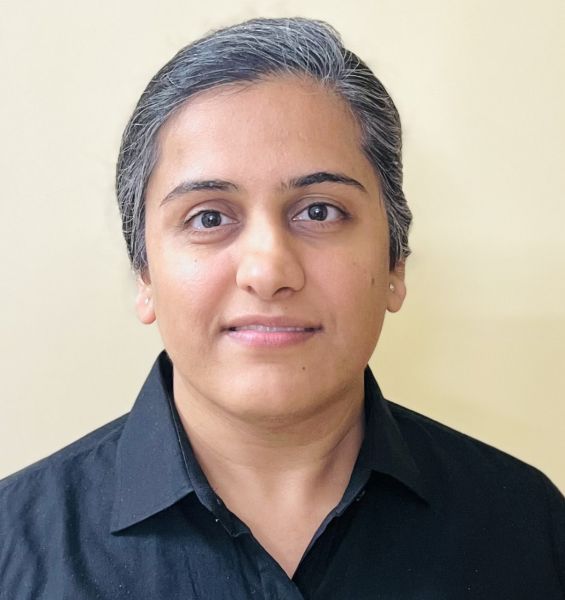
Pallavi Singal is the Vice President of Content at ztudium, where she leads innovative content strategies and oversees the development of high-impact editorial initiatives. With a strong background in digital media and a passion for storytelling, Pallavi plays a pivotal role in scaling the content operations for ztudium’s platforms, including Businessabc, Citiesabc, and IntelligentHQ, Wisdomia.ai, MStores, and many others. Her expertise spans content creation, SEO, and digital marketing, driving engagement and growth across multiple channels. Pallavi’s work is characterised by a keen insight into emerging trends in business, technologies like AI, blockchain, metaverse and others, and society, making her a trusted voice in the industry.