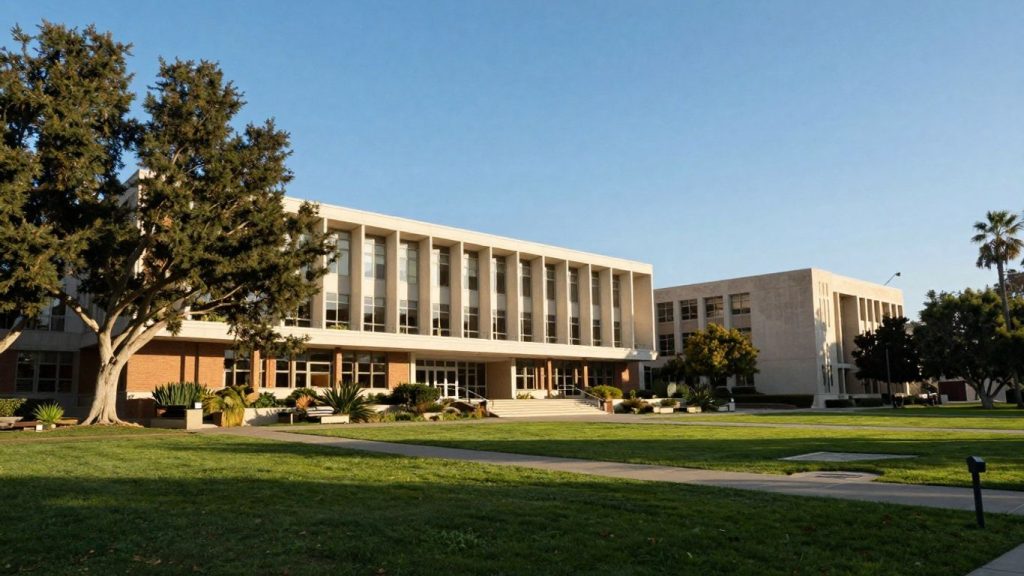
The California Institute of Technology, often called Caltech, is a big name in science and engineering. Located in Pasadena, California, this school is known for its tough programs and groundbreaking research. It’s a place where some of the smartest minds come together to figure out big problems and push the boundaries of what we know. Let’s take a closer look at what makes this California institute of technology so special.
Key Takeaways
- Founded in 1891, the California Institute of Technology has grown from a small vocational school into a world-leading research university focused on science and engineering.
- Caltech is famous for its highly selective admissions and its rigorous academic programs, especially in STEM fields, with a strong emphasis on undergraduate research.
- The institution manages significant research facilities like the Jet Propulsion Laboratory (JPL) and the Laser Interferometer Gravitational-Wave Observatory (LIGO), contributing to major scientific discoveries.
- Caltech boasts an impressive list of alumni and faculty, including numerous Nobel laureates and pioneers in various scientific and technological domains.
- The California Institute of Technology is recognized globally for its academic excellence, consistently ranking among the top universities worldwide for its research output and educational quality.
A Legacy of Innovation: The California Institute of Technology Story
Founding Principles and Early Development
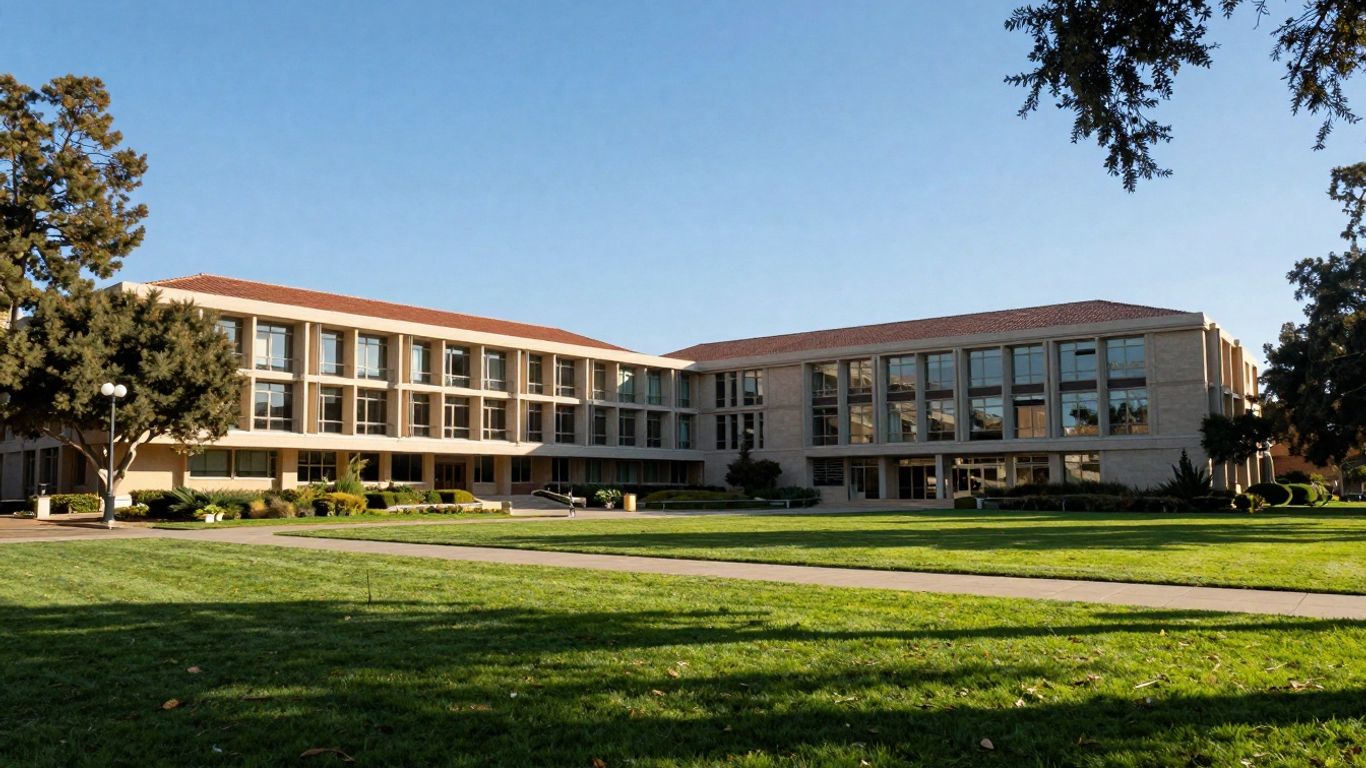
The story of the California Institute of Technology, or Caltech as it’s widely known, begins not with a grand vision of a global scientific powerhouse, but with a more practical aim. It was established in 1891 by Amos Gager Throop, a local politician in Pasadena, California. Initially, it was called Throop Polytechnic Institute, and its focus was on manual arts and vocational training. The idea was to provide practical skills for the growing community. It was a different era, and the needs of the time shaped its beginnings.
Over the next couple of decades, the institution started to shift its focus. A significant turning point came in the early 20th century when influential scientists like George Ellery Hale and Robert Andrews Millikan joined the faculty. Hale, in particular, had a vision for a research institution that could rival the best in the world. He was instrumental in shaping the school’s direction, moving it away from vocational training and towards pure and applied sciences. This transition wasn’t immediate, but the seeds of a future research university were firmly planted.
Evolution into a Premier Research Institution
By 1913, the institution was renamed Throop College of Technology, signaling its academic evolution. The real transformation, however, began to accelerate in the 1920s. The adoption of the name California Institute of Technology in 1921 marked a new chapter. Under the guidance of leaders like Millikan, Caltech began to build its reputation as a serious research center. This period saw the construction of key facilities, like the Norman Bridge Laboratory, and the recruitment of top scientific minds.
Caltech’s growth wasn’t just about buildings and faculty; it was about cultivating an environment where groundbreaking research could flourish. The institute actively sought to integrate research with education, a principle that continues to define it today. This approach meant that students, even at the undergraduate level, were exposed to and involved in cutting-edge scientific inquiry. This commitment to research excellence, coupled with a rigorous academic program, started to draw attention from across the scientific community.
Key Milestones in Caltech’s History
Caltech’s journey is marked by several significant achievements and developments:
- 1891: Founded as Throop Polytechnic Institute.
- 1910: The vocational and preparatory schools were spun off, and the college began to focus solely on science and engineering.
- 1921: Officially renamed the California Institute of Technology.
- 1930s: Significant expansion in physics and engineering, including partnerships with burgeoning industries.
- 1943: Caltech began managing the Jet Propulsion Laboratory (JPL), a critical step in its involvement with space exploration.
- 1958: Caltech assumed management of NASA’s Jet Propulsion Laboratory.
- 2010: Established a U.S. Department of Energy Innovation Hub focused on energy efficiency.
- 2012: Launched its first Massive Open Online Courses (MOOCs) through Coursera, expanding its educational reach.
The institute’s early focus on practical skills gradually gave way to an intense dedication to fundamental scientific exploration and technological advancement. This deliberate shift, driven by visionary leadership and a commitment to academic rigor, laid the groundwork for Caltech’s future as a global leader in science and engineering.
Caltech’s story is one of continuous adaptation and a relentless pursuit of knowledge. From its humble beginnings as a vocational school, it has evolved into one of the world’s most respected institutions for scientific and technological research and education. Its ability to attract brilliant minds and its dedication to pushing the boundaries of what’s known have cemented its legacy. For those interested in the history of scientific institutions, understanding Caltech’s trajectory provides a fascinating case study in academic growth and strategic development, much like understanding the factors involved in choosing a web host requires careful consideration of various elements for long-term success.
Academic Excellence at the California Institute of Technology
Caltech is known for its rigorous academic environment, focusing intensely on science and engineering. The institution prides itself on a curriculum that pushes students to think critically and analytically, preparing them for advanced research and complex problem-solving.
Renowned STEM Programs and Options
Caltech offers a focused selection of undergraduate majors, called "options," and graduate programs, all deeply rooted in science and technology. These programs are designed to provide a strong foundation while allowing for specialization in cutting-edge fields. The institution is particularly recognized for its strengths in areas like physics, engineering, computer science, and chemistry. Students have the chance to explore subjects like:
- Astronomy, with hands-on experience at observatories and facilities like the NASA Jet Propulsion Laboratory.
- Chemistry, investigating molecular science through various research projects.
- Computer Science, focusing on computational theory and application.
- Mechanical Engineering, blending theoretical coursework with practical lab work.
The Undergraduate Core Curriculum
The undergraduate experience at Caltech is defined by a mandatory core curriculum. This ensures that every student, regardless of their chosen major, builds a solid understanding of fundamental scientific principles. The core typically includes extensive coursework in physics, mathematics, chemistry, and biology. Beyond the sciences, students also engage with humanities and social sciences, aiming for a well-rounded education. This shared academic journey is a hallmark of the Caltech experience, creating a common intellectual ground for all undergraduates.
The core curriculum is intentionally demanding, designed to equip students with the analytical tools and scientific knowledge necessary for advanced study and research. It’s a challenging but rewarding path that sets the stage for future innovation.
Distinguished Graduate Studies
Caltech’s graduate programs are equally rigorous, attracting top talent from around the globe. The institution offers a variety of master’s and doctoral programs, each emphasizing research and discovery. Graduate students work closely with faculty who are leaders in their fields, often contributing to groundbreaking research projects. The emphasis is on independent study, original research, and the development of new knowledge. Many graduate programs are closely tied to Caltech’s world-class research facilities, providing unparalleled opportunities for hands-on experience and scientific contribution.
The Research Powerhouse of Caltech California
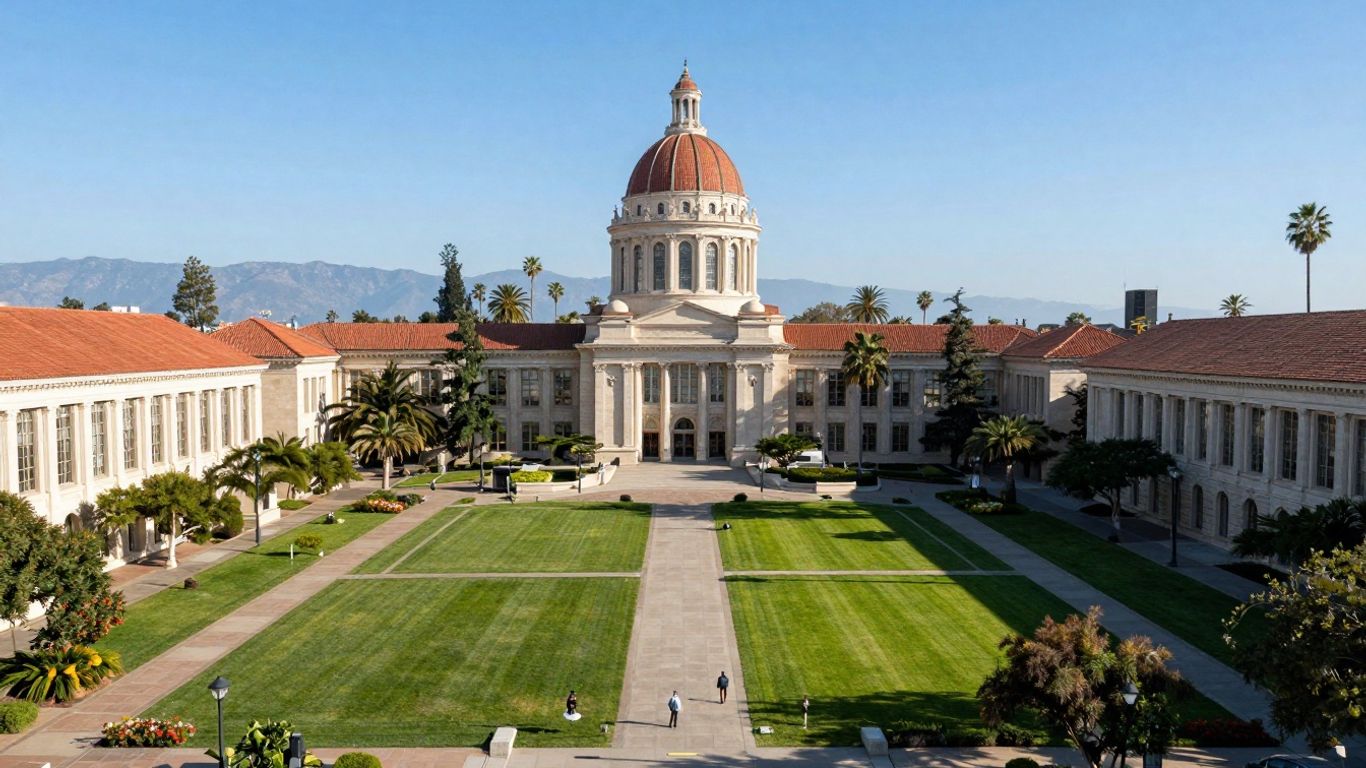
Caltech isn’t just a place for learning; it’s a hub where groundbreaking research happens daily. The institute is known for its "very high" research activity, primarily in science and engineering. This focus means students get to be part of discoveries that shape our world.
World-Class Research Facilities
Caltech manages some seriously impressive research spaces. Think labs equipped with the latest technology, observatories peering into the cosmos, and specialized centers tackling everything from quantum physics to biological systems. These facilities aren’t just for show; they are the engines driving scientific advancement.
- Jet Propulsion Laboratory (JPL): Managed by Caltech for NASA, JPL is at the forefront of robotic space exploration. Missions to Mars, Jupiter, and beyond all have roots here.
- High-Energy Physics Labs: These facilities allow researchers to explore the fundamental building blocks of the universe.
- Bio-Nano Lab: This space is dedicated to the intersection of biology and nanotechnology, opening doors for new medical treatments and materials.
- Seismological Laboratory: Caltech has a long history in understanding earthquakes, and this lab continues that work with advanced monitoring and analysis tools.
Integrating Research into the Student Experience
What’s really neat is how Caltech weaves research right into the student experience. It’s not something separate that professors do; undergraduates and graduate students alike get hands-on opportunities. This means you’re not just reading about science; you’re doing it.
From the moment students arrive, there’s an expectation that they will engage with the research happening on campus. This hands-on approach is a core part of the Caltech education, preparing students for future challenges.
Many students participate in research projects, often working alongside faculty and postdocs. This can lead to co-authored papers, presentations at conferences, and a really solid foundation for future careers or further studies. It’s a chance to contribute to real scientific questions while still in school.
Impactful Scientific Discoveries
The research coming out of Caltech has had a massive impact. Think about the work that led to understanding quantum mechanics, developing new materials, or even sending probes to other planets. Caltech scientists have been behind many of these leaps forward.
Here are just a few areas where Caltech research has made a significant mark:
- Space Exploration: From the Voyager missions to the Mars rovers, Caltech’s involvement through JPL has expanded our view of the solar system.
- Physics: Caltech has been a center for major breakthroughs in quantum physics, relativity, and particle physics, with many Nobel Prizes awarded to its faculty and alumni.
- Biotechnology: Advances in genetics, molecular biology, and neuroscience are continually emerging from Caltech labs, leading to new ways to understand and treat diseases.
- Seismology: The development of earthquake measurement scales and ongoing research into earthquake prediction and mitigation are significant contributions.
Caltech’s commitment to pushing the boundaries of knowledge has consistently placed it at the forefront of scientific and technological innovation.
Admissions and Student Life at Caltech
The Highly Selective Admissions Process
Getting into Caltech is quite the challenge, and it’s not just about having top grades. They really look at the whole picture. It’s a small school, so they can be pretty picky. The application process asks for a lot, not just test scores and grades, but also essays that show who you are and what you’re passionate about. They want to see that you can handle the intense workload and that you’re someone who likes to figure things out and maybe even build stuff.
- Application Portals: You can apply through the Common Application or the Coalition Application.
- Standardized Tests: Caltech has brought back the requirement for SAT or ACT scores for students applying for Fall 2026 admission.
- Holistic Review: They consider your academic record, extracurricular activities, essays, and recommendations.
Caltech’s admissions team is looking for individuals who not only excel academically but also demonstrate creativity, resilience, and a genuine drive to explore the frontiers of science and technology. They want students who will contribute to and thrive within their unique, demanding academic environment.
A Diverse and Talented Student Body
Even though Caltech is small, the students who get in come from all over. You’ll find people from different states and even different countries. They aim for a good mix, with a nearly even split between male and female students, and a good number coming from public schools. It’s not just about academics, either; many students are also athletes or have impressive portfolios showcasing their creative or technical projects.
| Category | Percentage/Number | Notes |
|---|---|---|
| Geographic Diversity | 41 US States | Students from across the United States |
| International | 27 Countries | Representation from around the globe |
| Gender Distribution | ~45% Female | Nearly balanced gender representation |
| ~54% Male | ||
| ~1% Other | ||
| Public School Attended | ~56% | Majority from public high school backgrounds |
Vibrant Campus Community and Extracurriculars
Life at Caltech is intense, but there’s more to it than just studying. The campus has a unique vibe, and students get involved in all sorts of activities. Because it’s a research-focused place, many students get hands-on experience with research projects, even as undergraduates. This is a big part of the Caltech experience, giving students a taste of real scientific work. There are also clubs, organizations, and events that help build a strong sense of community among the students.
- Research Integration: A significant majority of undergraduates participate in research, often through programs like SURF.
- Student-Faculty Ratio: With a 3:1 ratio, students have great access to professors for guidance and collaboration.
- Campus Traditions: Caltech has its own set of unique traditions that add to the student experience.
Global Recognition and Impact of Caltech
Distinguished Rankings and Accolades
Caltech consistently finds itself at the pinnacle of global academic rankings, a testament to its focused approach and groundbreaking research. While its student body is small, its influence is immense. Year after year, major ranking systems place Caltech among the world’s elite institutions. This high standing isn’t accidental; it’s built on a foundation of exceptional research output, faculty distinction, and a highly selective admissions process that draws the brightest minds.
Here’s a snapshot of how Caltech fares in some prominent global and national rankings:
| Ranking Organization | Global Rank | National Rank (US) |
|---|---|---|
| QS World University Rankings | #10 | – |
| Times Higher Education (THE) | #7 | – |
| U.S. News & World Report | #23 | #11 |
| ARWU (Shanghai Ranking) | #9 | – |
Notable Alumni and Their Contributions
The impact of Caltech graduates extends far beyond academia, shaping industries and pushing the boundaries of human knowledge. The institute has nurtured individuals who have not only achieved the highest honors but have also fundamentally altered our understanding of the world and our technological capabilities.
- Linus Pauling: The only person to have won two unshared Nobel Prizes, one in Chemistry and another in Peace.
- Richard Feynman: A Nobel laureate in Physics, renowned for his work in quantum electrodynamics and his accessible explanations of complex physics.
- Gordon Moore: Co-founder of Intel and the mind behind "Moore’s Law," which accurately predicted the exponential growth of computing power.
- Harrison Schmitt: A geologist and former U.S. Senator, he holds the unique distinction of being the only scientist to have walked on the Moon.
- Qian Xuesen: A key figure in the development of rocket science, co-founding NASA’s Jet Propulsion Laboratory (JPL).
Caltech’s Influence on Science and Technology
Caltech’s influence on science and technology is profound, often punching far above its weight class. The institution has been instrumental in numerous scientific breakthroughs and technological advancements that define our modern world. From the intricacies of quantum physics to the vastness of space exploration, Caltech’s contributions are undeniable.
The institute’s commitment to fundamental research and its interdisciplinary approach have consistently led to discoveries that reshape scientific paradigms and create new technological frontiers. This focus on deep scientific inquiry, coupled with a culture that encourages bold thinking, has cemented Caltech’s reputation as a powerhouse of innovation.
Caltech alumni and faculty are associated with an extraordinary number of prestigious awards and recognitions, including:
- Nobel Prizes
- National Medals of Science
- MacArthur Fellowships
- National Medals of Technology and Innovation
- Astronauts
- Fields Medalists
- Turing Award winners
Accreditation and Institutional Standing
Accreditation Details and Affiliations
Caltech holds a strong position within the academic world, backed by its official accreditations and affiliations. The institution is recognized by the Western Association of Schools and Colleges (WASC) Senior Commission, a key accreditor for institutions in the Pacific Region. This recognition, reaffirmed through regular reviews, signifies Caltech’s adherence to educational quality standards. Furthermore, Caltech’s engineering programs have been approved by the Accreditation Board for Engineering and Technology (ABET) since 1936, a testament to its long-standing commitment to excellence in these fields.
Commitment to Educational Quality
Caltech’s dedication to maintaining high educational standards is evident in its consistent pursuit of rigorous academic practices and its engagement with recognized accrediting bodies. The institution undergoes regular evaluations to ensure its programs meet and exceed established benchmarks. This ongoing commitment means that students receive an education that is not only innovative but also formally recognized for its quality and effectiveness.
Institutional Recognition
Caltech’s standing is further solidified by its numerous accolades and its role within the broader scientific community. It is recognized by the Council for Higher Education Accreditation (CHEA) and the California Bureau for Private & Post-Secondary Education (BPPE). The university is also affiliated with a significant number of Nobel Prize laureates and National Medal of Science recipients, highlighting the caliber of its faculty and alumni. These affiliations and recognitions underscore Caltech’s status as a leading institution.
Here’s a look at some key aspects of its institutional standing:
- Accreditation: WASC Senior Commission, ABET approval for engineering programs.
- Recognition: CHEA, BPPE.
- Affiliations: Numerous Nobel Prize and National Medal of Science recipients.
The consistent reaffirmation of its accreditation and the high-profile affiliations Caltech maintains speak volumes about its enduring commitment to academic rigor and scientific advancement. This institutional stability provides a solid foundation for its groundbreaking research and educational endeavors.
A Lasting Impact
So, as we wrap up our look at the California Institute of Technology, it’s clear this place is something special. From its beginnings as a vocational school to its current status as a global leader in science and engineering, Caltech has consistently pushed the boundaries of what’s possible. It’s a place where brilliant minds come together to tackle some of the world’s biggest challenges, whether that’s exploring the cosmos, understanding the human body, or developing new technologies. The impact of its research and the success of its graduates are undeniable, making Caltech a true cornerstone of innovation not just in California, but across the globe. It’s a testament to what focused dedication and a passion for discovery can achieve.
Frequently Asked Questions
What is Caltech and where is it located?
Caltech, which stands for the California Institute of Technology, is a well-known school focused on science and engineering. It’s located in Pasadena, California, a city near Los Angeles.
What makes Caltech’s programs special?
Caltech offers many advanced programs in science and engineering. They are famous for their tough classes that help students learn a lot and become great problem-solvers. Many students get hands-on research experience even when they are undergraduates.
Is it hard to get into Caltech?
Yes, getting into Caltech is very difficult. They look for students who are not only smart but also very curious and determined to discover new things. They have a very low acceptance rate, meaning only a small number of students are admitted each year.
What kind of research does Caltech do?
Caltech is a major research center. They manage important places like the Jet Propulsion Laboratory (JPL) for NASA and are involved in big projects like detecting gravitational waves with LIGO. They also have powerful telescopes for studying space.
What is student life like at Caltech?
Even though academics are very important, Caltech has a lively campus community. Students live in a special house system, join over 50 clubs, and participate in sports. There are also events and activities that help students relax and connect with each other.
What are some famous people who went to Caltech?
Many brilliant minds have studied or worked at Caltech. These include Nobel Prize winners like Linus Pauling and Richard Feynman, Intel co-founder Gordon Moore, and astronaut Harrison Schmitt, who walked on the moon. Their work has greatly impacted science and technology.

Peyman Khosravani is a seasoned expert in blockchain, digital transformation, and emerging technologies, with a strong focus on innovation in finance, business, and marketing. With a robust background in blockchain and decentralized finance (DeFi), Peyman has successfully guided global organizations in refining digital strategies and optimizing data-driven decision-making. His work emphasizes leveraging technology for societal impact, focusing on fairness, justice, and transparency. A passionate advocate for the transformative power of digital tools, Peyman’s expertise spans across helping startups and established businesses navigate digital landscapes, drive growth, and stay ahead of industry trends. His insights into analytics and communication empower companies to effectively connect with customers and harness data to fuel their success in an ever-evolving digital world.