
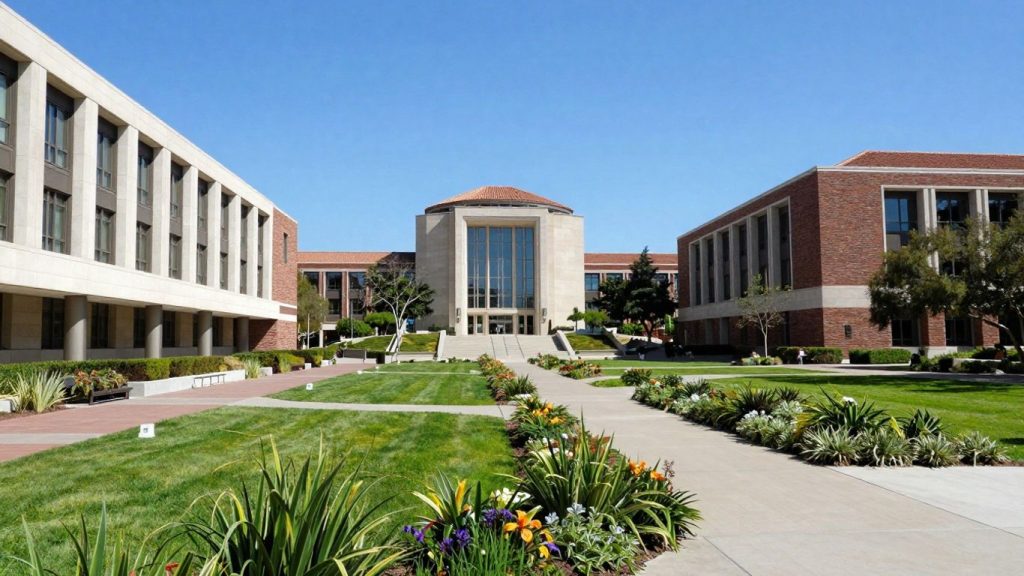
The California Institute of Technology, often simply called Caltech, is a place where some of the most forward-thinking science and engineering work happens. It’s a relatively small school, but it packs a big punch in terms of innovation and education. This article takes a look at what makes Caltech such a special spot for learning and discovery, from the way professors and students work together to the big ideas that come out of this institute.
Key Takeaways
- Caltech offers students incredible chances to join in research, working with top-notch teachers and using advanced tools.
- The school encourages students and professors to work across different fields, helping them solve hard problems together.
- Undergraduates are deeply involved in research from the start, contributing to significant scientific projects.
- Caltech has a huge effect on science globally, with many major discoveries and Nobel Prize winners coming from the institute.
- The institute supports students who want to start their own companies, giving them help and connections to make their ideas real.
A Hub For Groundbreaking Research At The California Institute Of Technology
Caltech is a place where big ideas take shape and turn into real scientific progress. It’s not just about learning from books; it’s about actively participating in discovery. The institute is set up to make sure that both the people who teach here and the students who learn here have the best possible environment to push the boundaries of what we know.
Extraordinary Faculty And State-Of-The-Art Facilities
The professors at Caltech are leaders in their fields. Many have received major awards, like Nobel Prizes, and they are constantly working on research that changes how we see the world. To help them with this important work, Caltech provides access to some of the most advanced equipment and labs you can find. Think of labs filled with the latest technology, where complex problems are tackled every day, leading to new solutions. This combination of top scientists and excellent resources means that significant scientific breakthroughs aren’t just hoped for; they happen regularly.
Interdisciplinary Research Initiatives
One of the things that makes Caltech stand out is how it encourages people to work across different subjects. The idea is that by bringing together experts from various departments, unexpected and important discoveries can happen. This means a biologist might work with a computer scientist, or a physicist might team up with an engineer. This mixing of different skills and viewpoints is where some of the most exciting work emerges, allowing Caltech to address major global issues that need many different kinds of thinking.
Undergraduate Involvement In Cutting-Edge Projects
At Caltech, getting involved in research isn’t just for graduate students or professors. Undergraduates are encouraged to jump into real research projects right from their first years. A large number of undergraduates actively take part in hands-on research, working alongside faculty on projects that are pushing the limits of scientific knowledge. This early experience with the research process is incredibly helpful. It gives students practical skills and a direct chance to contribute to scientific progress. It’s an opportunity to be part of discoveries that could change entire fields, and many students find this involvement very rewarding.
Caltech’s approach to research is built on the idea that direct engagement leads to true understanding. By immersing students in practical application and research early on, the institute prepares them to face and solve the world’s most difficult problems.
Here’s a look at how this hands-on approach is structured:
- Early Research Involvement: Undergraduates are integrated into research labs and projects from their early academic careers.
- Project Proposals: Students can write proposals for research projects, often in collaboration with professors.
- Funding Opportunities: Programs like the Summer Undergraduate Research Fellowships (SURF) provide funding and support for student research, with a high percentage of applicants receiving awards.
This focus on practical experience means that Caltech students are not just learning about science; they are actively doing it, contributing to the very advancements that define the institute.
The Unique Academic Environment At The California Institute Of Technology
Caltech isn’t just about attending lectures; it’s a place where learning is an active, collaborative process. The entire setup is designed to help students truly grasp concepts, not just memorize them. This creates a special atmosphere that shapes how students approach problems and think critically.
Interdisciplinary Collaboration Across Departments
One of the most striking aspects of Caltech is how readily people from different fields work together. You’ll often find physics students discussing ideas with biology majors, or engineering students teaming up with computer scientists. This mixing of diverse perspectives is a fertile ground for new ideas. It’s like fitting together different puzzle pieces to reveal a larger picture that wouldn’t be visible otherwise. This cross-pollination of knowledge helps everyone tackle complex issues from multiple angles.
Small Class Sizes and Close Faculty Interaction
Forget about massive lecture halls. At Caltech, classes are kept small. This means professors get to know their students personally. You can ask questions without feeling lost in a crowd, making it much easier to have genuine conversations and receive feedback that’s actually useful. This close connection with instructors is a significant benefit for learning and getting guidance.
A Culture of Trust and Academic Integrity
There’s a strong emphasis on trust and honesty, often referred to as the Caltech Honor Code. This principle is built on the expectation that students will act with integrity in their academic work and in their interactions with others. This cultivates an environment where everyone can concentrate on learning and discovery without concerns about unfair practices.
This focus on trust allows students a significant degree of autonomy in their academic pursuits, encouraging personal responsibility and a mature approach to their education.
Here’s a look at how this environment supports student growth:
- Project-Based Learning: Coursework frequently includes practical assignments, experiments, and group projects that mimic real scientific work.
- Access to Advanced Facilities: Students use state-of-the-art laboratories and equipment, gaining experience with industry-standard tools.
- Early Research Involvement: Undergraduates are integrated into research labs and projects from their initial years, contributing to ongoing scientific endeavors.
Global Reach And Collaborative Endeavors
Collaborations with NASA’s Jet Propulsion Laboratory
Caltech has a really special, long-standing partnership with NASA’s Jet Propulsion Laboratory (JPL). This connection opens up some incredible research possibilities, especially in space exploration, studying planets, and designing spacecraft. Students and researchers here get to use JPL’s top-tier equipment and even contribute to actual space missions. It’s a fantastic way for future scientists and engineers to gain practical experience and be part of our journey to understand the universe.
International Observatory Network
Caltech is deeply involved in a global network of astronomical observatories. This collaboration allows researchers to access and share data from telescopes located all around the world. Think about it: this gives us a much broader view of the cosmos than any single location could ever provide. This shared resource is super important for making significant discoveries in astronomy and astrophysics.
Active Engagement With International Research Networks
Caltech doesn’t just operate within its own campus. It actively builds bridges with institutions and scientists worldwide. This global perspective is key to tackling complex problems that often require different viewpoints and shared resources. The institute’s commitment to pushing the boundaries of knowledge means its discoveries often have wide-reaching effects, influencing research agendas and technological developments across the globe. This collaborative spirit helps ensure that scientific progress is a shared effort, benefiting everyone.
Here’s a look at some key areas of collaboration:
- Space Science: Joint projects with JPL and international space agencies on missions exploring planets, stars, and galaxies.
- Astronomy: Participation in global telescope networks like the W. M. Keck Observatory and the Atacama Large Millimeter/submillimeter Array (ALMA).
- Advanced Technologies: Collaborations on developing new technologies with research centers and industries in different countries.
Caltech’s work often has a wide impact, shaping research and technology globally. This cooperative spirit helps ensure that scientific progress is a collective effort, benefiting everyone.
Cultivating Future Innovators And Entrepreneurs
Resources for Startup Development
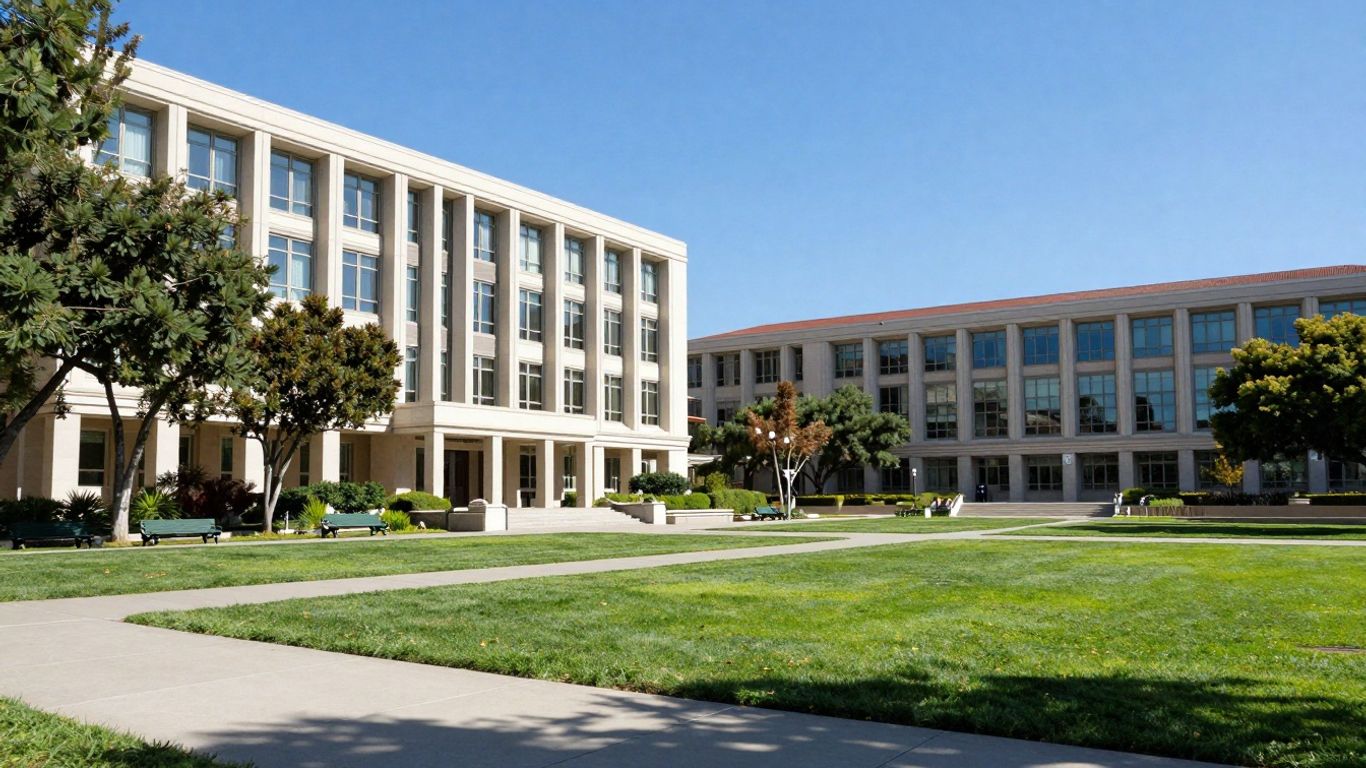
Caltech doesn’t just focus on academic learning; it actively supports students who want to turn their ideas into actual businesses. The institute provides a range of resources to help get these ventures off the ground. Think of it as a launchpad for new ideas. The Career Achievement, Leadership, and Exploration (CALE) initiative, for example, offers specific help for students looking to commercialize their research or start a company. They provide workshops, advice, and even help connect students with potential funding sources. It’s all about giving aspiring entrepreneurs the tools they need to succeed.
Valuable Mentorship Programs
Having someone experienced to guide you can make a huge difference when starting a business. Caltech connects students with people who have already built successful companies or have deep industry knowledge. These mentors offer advice, share what they’ve learned, and help students figure out the tricky parts of launching a venture. It’s like having a seasoned guide for your entrepreneurial journey.
Strong Industry Connections and Opportunities
Caltech has solid relationships with many companies in the tech and science industries. These connections can open doors for students who want to start their own businesses. The institute helps students connect with potential investors, partners, and even early customers. They also host events where students can present their ideas and meet professionals from various industries. This creates a supportive environment where new ideas can grow and find their footing.
Caltech’s approach goes beyond just academics. It’s about preparing students for the real world by giving them the practical support and connections needed to innovate and build businesses. This focus helps graduates make a significant impact in their chosen fields and beyond.
Here’s a look at how Caltech supports its budding entrepreneurs:
- Workshops and Training: Sessions focused on business planning, market analysis, and pitching ideas.
- Networking Events: Opportunities to meet investors, industry leaders, and potential collaborators.
- Incubation Support: Access to resources and spaces that can help early-stage companies develop.
- Legal and Financial Advice: Guidance on intellectual property, funding structures, and business law.
Exploring The Brinson Exploration Hub

A Collaboration for Transformative Discovery
The Brinson Exploration Hub represents a significant joint effort, bringing together the deep scientific knowledge and research capabilities of the California Institute of Technology (Caltech) with the unparalleled expertise of NASA’s Jet Propulsion Laboratory (JPL). This partnership is designed to push the boundaries of what we know and what we can achieve in exploration, whether it’s here on Earth, in the vastness of space near our planet, or in the furthest reaches of the cosmos. The hub aims to usher in a new era of discovery by focusing on projects that take fresh, innovative approaches.
Embracing Fresh Approaches to Exploration
At its core, the Brinson Exploration Hub is about rethinking how we explore. It champions the integration of new technologies, the demonstration of novel capabilities, and the adoption of a faster pace, much like that seen in the commercial industry. This means looking for new ways to implement projects and forging new types of partnerships and collaborations. The goal is to create opportunities for groundbreaking scientific findings that can have a real impact on society.
Here are some of the key strategies the Brinson Exploration Hub employs:
- Infusion of New Technologies: Actively incorporating the latest technological advancements into exploration projects.
- Demonstration of Novel Capabilities: Showcasing and developing new ways to conduct exploration and gather data.
- Adoption of Commercial Pace: Learning from and adapting the agile methods of the commercial sector to speed up innovation.
- New Methods of Implementation: Developing and applying innovative techniques for carrying out exploration missions.
- New Modes of Partnership and Collaboration: Building diverse alliances to tackle complex challenges.
The Brinson Exploration Hub is more than just a research center; it’s a dynamic engine for discovery, driven by a commitment to bold ideas and collaborative spirit. It seeks to answer humanity’s biggest questions through imaginative and practical exploration.
A Lasting Impact
As we’ve seen, Caltech is more than just a university; it’s a dynamic center for scientific progress and technological advancement. From its hands-on approach to research, where undergraduates dive into real projects early on, to its strong encouragement of collaboration across different fields, Caltech consistently pushes the boundaries of what’s possible. The institute’s deep connections with organizations like NASA’s Jet Propulsion Laboratory and its global network of research partners further amplify its influence. By also supporting students in turning their innovative ideas into businesses, Caltech is not only shaping the future of science and engineering but also cultivating the next generation of leaders and entrepreneurs. It’s a place where curiosity meets capability, leading to discoveries that impact the world.
Frequently Asked Questions
What makes Caltech a special place for science and technology?
Caltech is known for its brilliant teachers and amazing tools. It’s a smaller school, but it does big things in science and technology. Many important discoveries have come from here, and it’s a place where new ideas are always being explored.
How do students get involved in research at Caltech?
Students at Caltech get to jump into real research projects very early on, even as undergraduates. They work side-by-side with professors, using cool equipment and helping with discoveries that could change the world.
What is the relationship between Caltech and NASA’s Jet Propulsion Laboratory (JPL)?
Caltech has a very strong and long-lasting connection with JPL. This partnership allows students and researchers to work on exciting space exploration projects, use advanced technology, and even be part of real space missions.
Does Caltech help students who want to start their own companies?
Yes, Caltech offers a lot of support for students who dream of starting businesses. They provide training, connect students with experienced mentors, and help them find ways to get funding and reach out to important people in the business world.
What is the academic environment like at Caltech?
The classes at Caltech are usually small, which means students can talk closely with their professors and get personal attention. The school also encourages students from different science and engineering fields to work together on problems, leading to creative solutions.
What is the Brinson Exploration Hub?
The Brinson Exploration Hub is a special project where Caltech and JPL team up to find new ways to explore. They use new technologies and work in different ways to make big discoveries, whether it’s exploring Earth, space nearby, or the deep parts of space.

Peyman Khosravani is a seasoned expert in blockchain, digital transformation, and emerging technologies, with a strong focus on innovation in finance, business, and marketing. With a robust background in blockchain and decentralized finance (DeFi), Peyman has successfully guided global organizations in refining digital strategies and optimizing data-driven decision-making. His work emphasizes leveraging technology for societal impact, focusing on fairness, justice, and transparency. A passionate advocate for the transformative power of digital tools, Peyman’s expertise spans across helping startups and established businesses navigate digital landscapes, drive growth, and stay ahead of industry trends. His insights into analytics and communication empower companies to effectively connect with customers and harness data to fuel their success in an ever-evolving digital world.










