Perplexity sets its sights on one of Google’s crown jewels, as the US government intensifies efforts to break up the tech giant. Will this spark the AI Search engine race for all?

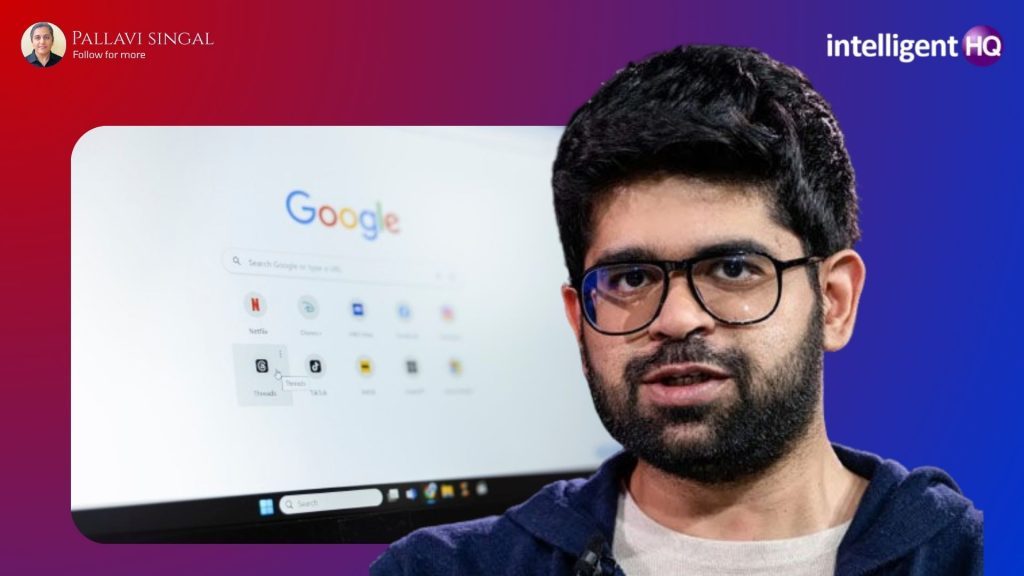
In a surprising move that has sent ripples through the tech industry, Aravind Srinivas, CEO of Perplexity AI, has made a $34.5 billion offer to acquire Google’s Chrome browser. This bid is more than double Perplexity’s own valuation, which stands at $18 billion, after it recently raised $100 million during its funding round in July.
According to the reports, Perplexity has stated that its $34.5 billion bid includes a commitment to maintain the core engine of Chrome, Chromium, as open source. Additionally, the company has pledged to continue investing approximately $3 billion into the browser.
Furthermore, Perplexity has assured that, should the acquisition be successful, there will be no changes to user defaults. Google will remain the default search engine on Chrome, rather than switching to Perplexity’s AI-powered search.
The Growing Impact of AI on Browsing
Perplexity’s offer comes at a time when Google’s position as the dominant web browser and search engine is increasingly under fire, both from competition and legal scrutiny. With over three billion users, Chrome is a crucial part of Google’s empire, encompassing search, ads, and cloud services. However, Perplexity’s founder, Srinivas, believes the rise of AI-powered browsers like Perplexity’s “Comet” could signal the end of Chrome’s era.
Srinivas argues that AI is fundamentally transforming how people access and consume information online. Perplexity’s latest AI-driven browser, Comet, is designed to integrate powerful AI features directly into the browsing experience.
The “sidecar” functionality of Comet allows users to get real-time assistance with tasks like scheduling, summarising information, and even shopping – all from within the browser.
What’s Next for Google?
Google, already facing antitrust challenges from the U.S. Department of Justice, has yet to respond publicly to Perplexity’s bid. The tech giant has been embroiled in an ongoing legal battle, with regulators pushing for the company to sell its Chrome browser due to monopolistic practices.
Srinivas believes that with the rise of AI and the evolving nature of how we use the internet, Google’s traditional search engine and browser models are becoming obsolete.
Perplexity’s Disruptive Vision
In some of his previous statements, Aravind has highlighted that he envisions a future where AI-powered browsers are the norm. He sees a world where traditional search engines are replaced by AI agents that perform complex tasks directly within the browser interface.
Interestingly, this shift paves way to a fundamental change in how digital tools will work together to serve users’ needs, besides challenging Google’s search-based ad revenue model.
According to Srinivas, Perplexity wants to provide a more dynamic browsing experience through its AI-powered workflows. He believes this will allow users to bypass the classic search interface in favor of in-context AI prompts and automation.
Is it not true then that Perplexity is positioning itself as a frontrunner in the AI-driven search race?
Will We See a New Era of AI Browsing?
As we see Perplexity gaining traction and building its user base, it’s clear that the company is setting its sights on an ambitious future. Whether or not Google will entertain the $34.5 billion offer remains to be seen, but one thing is certain: the competition in the AI and web browsing space is intensifying, and traditional models may soon be a thing of the past.
Perplexity’s disruption could be a catalyst for significant change, and the outcome of this offer may well define the future of AI-powered web experiences.
Keep an eye on this space – the AI revolution is just beginning.

Pallavi Singal is the Vice President of Content at ztudium, where she leads innovative content strategies and oversees the development of high-impact editorial initiatives. With a strong background in digital media and a passion for storytelling, Pallavi plays a pivotal role in scaling the content operations for ztudium’s platforms, including Businessabc, Citiesabc, and IntelligentHQ, Wisdomia.ai, MStores, and many others. Her expertise spans content creation, SEO, and digital marketing, driving engagement and growth across multiple channels. Pallavi’s work is characterised by a keen insight into emerging trends in business, technologies like AI, blockchain, metaverse and others, and society, making her a trusted voice in the industry.