
Artificial intelligence has come a long way, from early computer programs to the sophisticated systems we see today. It’s changing how we work, live, and interact with the world around us. This article looks at how AI has evolved, its impact across different fields, and where it might be heading next, even towards creating human-like robots.
Key Takeaways
- AI’s journey started with simple programs and has grown through machine learning and deep learning into powerful generative tools.
- Industries like manufacturing, healthcare, finance, and education are all seeing big changes thanks to AI.
- The way we interact with AI is changing, moving from clunky old systems to more personalized and helpful experiences.
- There are real concerns with AI, like bias in its programming, the spread of fake information, and keeping our personal data safe.
- The future points towards more advanced AI, potentially leading to humanoid robots and even faster innovation, but we need to think carefully about the ethics involved.
The Genesis And Evolution Of Artificial Intelligence
Early Milestones In AI Development
The journey of artificial intelligence, or AI, didn’t just begin with the chatbots we see today. Its roots stretch back to the mid-20th century, a time when the very idea of machines that could ‘think’ was a subject of intense fascination and debate. A significant early step was taken in 1950 when Alan Turing proposed his famous test, a way to gauge if a machine could exhibit intelligent behavior indistinguishable from that of a human. This thought experiment really got the ball rolling for serious discussions about machine intelligence.
Then, in the summer of 1956, a pivotal event occurred: the Dartmouth Summer Research Project on Artificial Intelligence. It was here that the term ‘artificial intelligence’ was officially coined by John McCarthy and other leading thinkers. This gathering wasn’t just about naming the field; it was about setting the agenda, laying the groundwork for AI as a distinct area of scientific study. Early programs, like Christopher Strachey’s checkers game in 1952, showed that computers could indeed play games, a simple yet important demonstration of programmed logic.
The early days were marked by a blend of theoretical exploration and practical, albeit basic, demonstrations of computational logic. It was a time of defining the problem and taking the first tentative steps towards solving it.
The Rise Of Machine Learning And Deep Learning
As the field progressed, the focus shifted from simply programming explicit rules to creating systems that could learn from data. This is where machine learning (ML) really began to take shape. A key development was the creation of the first trainable neural network, known as the Perceptron, demonstrated in 1957. These networks, inspired by the structure of the human brain, allowed computers to adjust their internal workings based on the information they received, rather than being strictly programmed for every scenario.
This evolution continued with significant breakthroughs. In 1997, IBM’s Deep Blue famously defeated chess grandmaster Garry Kasparov. This wasn’t just a game; it was a powerful statement about AI’s growing capacity for complex problem-solving and strategic thinking. Later, in 2011, IBM Watson’s victory on Jeopardy! showcased AI’s ability to process natural language and access vast amounts of information to provide answers in a human-like way. These events highlighted the increasing sophistication of machine learning algorithms.
Generative AI’s Transformative Impact
The most recent and perhaps most visible wave of AI evolution has been driven by generative AI. A major turning point was the introduction of the transformer architecture in 2017, a breakthrough that significantly improved how AI systems handle sequential data, like text. This innovation paved the way for large language models (LLMs).
OpenAI’s release of ChatGPT in November 2022 marked a watershed moment for public awareness and adoption of generative AI. Its ability to generate human-like text, answer questions, write code, and much more, captured global attention. This wasn’t just a technological leap; it democratized access to advanced AI capabilities, showing millions what these systems could do. Since then, numerous other generative AI tools have emerged, capable of creating not just text, but also images, audio, and other forms of content, fundamentally changing how we interact with and utilize artificial intelligence.
AI’s Expanding Role Across Industries
Artificial intelligence is no longer a concept confined to research labs; it’s actively reshaping how businesses operate across a wide spectrum of sectors. From the factory floor to the doctor’s office, AI is becoming an integral part of daily operations, driving efficiency and opening up new possibilities.
Transforming Manufacturing and Healthcare
In manufacturing, AI has been a quiet workhorse for years. Think of robotic arms on assembly lines, performing repetitive tasks with precision. Beyond automation, AI-powered sensors are now predicting equipment failures before they happen, reducing downtime and saving costs. This predictive maintenance is a game-changer for keeping production lines running smoothly.
Healthcare is also seeing a significant AI influence. AI’s ability to sift through vast amounts of data helps in identifying diseases earlier and more accurately. It’s also speeding up the complex process of drug discovery. Imagine virtual nursing assistants helping monitor patients remotely, providing a new layer of care and support.
Revolutionizing Finance and Education
The financial world is using AI to detect fraudulent transactions, making banking safer for everyone. AI also assists in conducting audits and assessing loan applications, streamlining processes that once took considerable human effort. For investors, AI can analyze millions of data points in moments, helping to gauge risk and make more informed decisions.
Education is another area ripe for AI transformation. AI tools can help digitize learning materials, identify plagiarism, and even gauge student engagement. This allows for a more personalized learning experience, adapting to individual student needs and helping educators understand who might be struggling or bored.
Enhancing Customer Service and Transportation
Customer service is being redefined by AI-powered chatbots and virtual assistants. These tools can handle a large volume of customer inquiries 24/7, providing quick answers and freeing up human agents for more complex issues. This leads to faster response times and a generally smoother customer experience.
In transportation, AI is behind the development of autonomous vehicles, promising safer and more efficient travel. It’s also optimizing logistics and traffic management systems, helping to reduce congestion and improve the flow of goods and people.
The integration of AI across these diverse industries highlights a significant shift. It’s not just about automating tasks; it’s about augmenting human capabilities, improving decision-making, and creating entirely new service models. This widespread adoption suggests AI is moving from a specialized tool to a foundational element of modern business operations.
Here’s a look at how AI is making its mark:
- Manufacturing: Predictive maintenance, quality control automation, supply chain optimization.
- Healthcare: Disease diagnosis, drug discovery acceleration, personalized treatment plans, patient monitoring.
- Finance: Fraud detection, algorithmic trading, credit scoring, risk management.
- Education: Personalized learning paths, automated grading, plagiarism detection, administrative support.
- Customer Service: Chatbots, virtual assistants, sentiment analysis, personalized recommendations.
- Transportation: Autonomous vehicles, route optimization, traffic management, predictive logistics.
The Shifting Paradigm Of AI User Experience
Remember the days of clunky software and endless menus? That’s largely a thing of the past thanks to how AI is changing how we interact with technology. We’ve moved from rigid, pre-set ways of doing things to systems that feel more intuitive and helpful, almost like they know what we need before we do. This evolution is making AI much more accessible and useful for everyone.
From Legacy Systems To Just-In-Time AI
Think about older computer programs. You had to follow a specific path, clicking through menus and submenus, often needing to know the exact term for what you were looking for. It required a lot of mental effort and a good understanding of how the system was organized. Data was often presented in static ways, and the system didn’t adapt much to your specific situation.
Now, compare that to modern AI. Instead of navigating complex structures, AI can often bring the right tools or information directly to you, right when you need them. It’s like having a helpful assistant who anticipates your next step. This means less time spent searching and more time doing. The system adapts to you, not the other way around.
Simplifying Interactions With Algorithmic Personalization
AI is getting really good at understanding what each person needs. It learns from how you use a system and then tailors the experience. This means you might see different options or suggestions than someone else, all based on your past actions and preferences. It simplifies things by cutting out the noise and showing you what’s most relevant. This personalized approach makes using complex systems feel much easier and more natural.
The goal is to make technology work for us, reducing the mental load and making tasks more efficient. By understanding individual user patterns, AI can present information and tools in a way that feels custom-made, leading to a smoother and more productive experience.
Improving Employee Experience Through AI
For businesses, this shift in AI user experience is a big deal, especially for employees. When AI tools are easy to use and provide timely help, people can do their jobs better and with less frustration. Imagine an HR system that automatically suggests the right training module based on your current project, or a customer service platform that instantly pulls up relevant customer history. This kind of
Navigating The Risks And Challenges Of AI
Artificial intelligence is transforming daily life and work in remarkable ways, but it also brings real concerns that need our attention. As more people and companies use advanced AI systems, understanding their possible side effects is important to keep society safe and fair. Let’s break down some of the biggest challenges tied to AI technology.
Addressing Human Biases In AI Systems
AI learns from data created by people, so it’s not surprising that it sometimes picks up and duplicates human mistakes or prejudices. Bias in AI can lead to unfair results, especially in sensitive areas like hiring, lending, or law enforcement. For instance, facial recognition software has been criticized for being less accurate with people of color, sometimes causing harmful consequences.
Key strategies to reduce bias in AI systems:
- Use diverse and well-balanced datasets for training algorithms
- Regularly audit and test AI models for biased outcomes
- Involve people from different backgrounds in building and reviewing AI solutions
Everyone deserves to benefit from AI without feeling left out or unfairly treated. Careful design and ongoing checks can help make AI safer for all.
Combating Deepfakes And Misinformation
Advanced AI tools can now create fake images, audio, and video that look very real. Deepfakes make it tougher to tell fact from fiction, putting both personal reputations and national security at risk. In the wrong hands, these digital forgeries have been used to commit fraud, spread false news, and even manipulate politics.
Ways to tackle the challenges of deepfakes:
- Develop technology that can spot altered audio and visual media
- Educate the public on how to identify suspicious content
- Create clear laws and rules for sharing and making deepfakes
| Threat | Possible Impact |
|---|---|
| Political Fraud | Spread of false information |
| Financial Scams | Loss of money and resources |
| Privacy Breaches | Damage to reputation |
Ensuring Data Privacy In The Age Of AI
AI systems often need huge amounts of data to learn and make decisions. This means they may handle personal details that must be kept safe.
A few major concerns about data privacy and AI:
- Companies sometimes use private or sensitive data to train AI models without clear consent
- Data leaks can expose millions of people’s information at once
- Poor data handling might put both individuals and organizations at risk
Trust in AI depends on responsible data use. Transparent methods and strong security help protect people’s privacy as technology keeps moving ahead.
The Future Trajectory: From AI To Humanoid
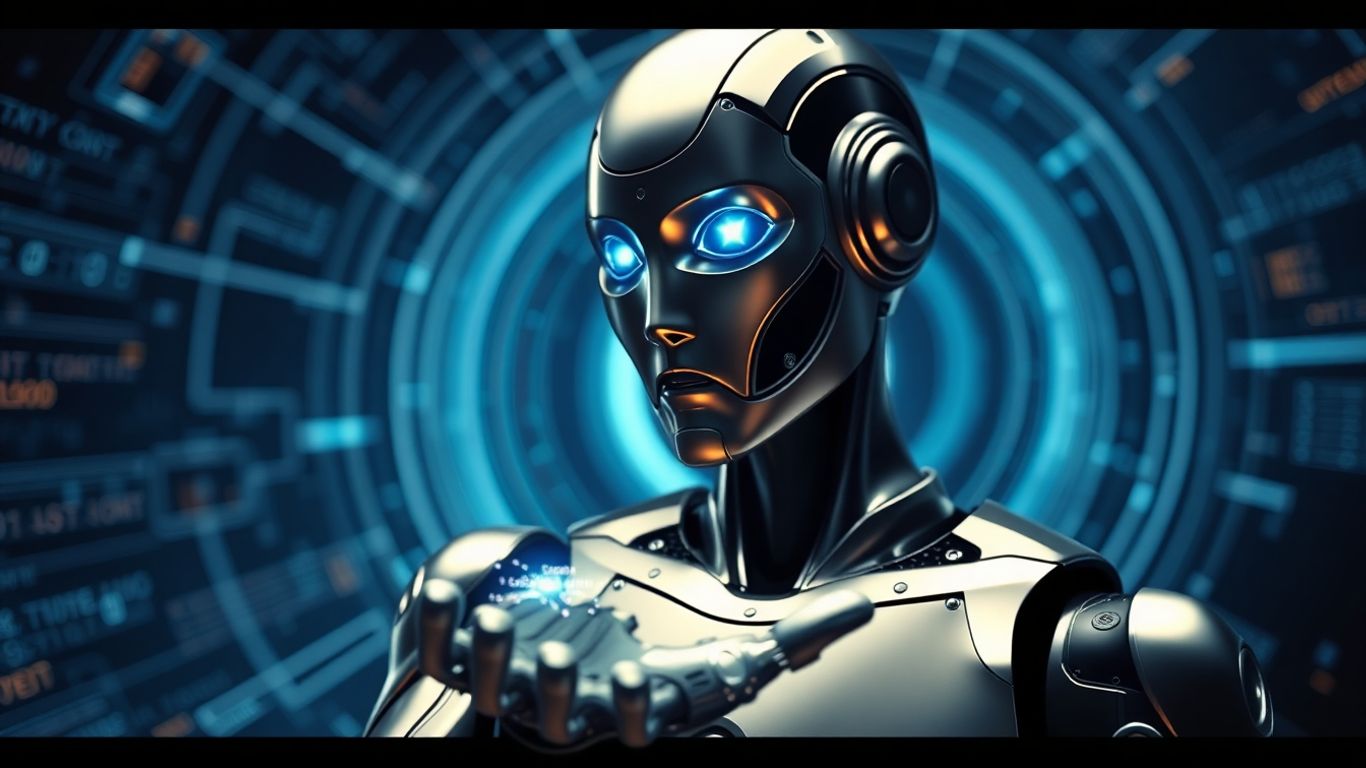
Artificial intelligence is no longer just a concept confined to research labs; it’s rapidly becoming an integral part of our daily lives. From the algorithms that suggest our next movie to the systems that manage complex logistics, AI’s influence is expanding at an unprecedented pace. This evolution is not just about smarter software; it’s about creating more capable and adaptable systems that can interact with the world in increasingly sophisticated ways. We’re seeing AI move beyond data analysis and into more direct forms of assistance, touching everything from personal care to household management and workplace efficiency. The rise of generative AI tools, like those that can produce text, images, and even code, has significantly broadened the possibilities and public awareness of what AI can achieve.
AI’s Growing Influence On Everyday Life
The integration of AI into our daily routines is becoming more pronounced. Think about how AI powers personalized recommendations, optimizes traffic flow in cities, and even assists in medical diagnoses. These applications, once futuristic, are now commonplace. The trend suggests a future where AI acts as a ubiquitous assistant, handling routine tasks and providing insights that were previously inaccessible. This expansion is driven by advancements in machine learning and the increasing availability of data, allowing AI systems to learn and adapt more effectively. For instance, AI is playing a role in Africa’s digital future, with initiatives aiming to transform key sectors through intelligent systems.
The Potential For Accelerated Innovation
As AI systems become more advanced, they are poised to accelerate the pace of innovation across all fields. AI can process and analyze vast datasets far quicker than humans, identifying patterns and generating hypotheses that can lead to breakthroughs in science, medicine, and technology. Generative AI, in particular, is opening new avenues for creativity and problem-solving, allowing researchers and developers to explore more possibilities in less time. This collaborative dynamic between human ingenuity and artificial intelligence promises to drive progress at a rate we’ve never seen before.
Considering The Ethical Implications Of Advanced AI
As AI capabilities grow, so does the importance of considering the ethical dimensions. The development of more advanced AI, including the potential for humanoid robots, brings with it a host of questions. We need to think carefully about:
- Bias in AI: How do we prevent AI systems from inheriting and amplifying human biases present in training data?
- Job displacement: What are the societal impacts as AI takes over more complex tasks?
- Autonomy and control: What level of autonomy should advanced AI systems have, and how do we maintain human oversight?
- Privacy concerns: How do we protect personal data when AI systems require vast amounts of information to function?
The ongoing development of AI necessitates a proactive approach to ethical considerations. Establishing clear guidelines and robust oversight mechanisms is paramount to ensure that AI’s advancement benefits humanity as a whole, rather than creating new divides or risks.
The journey from basic algorithms to potentially humanoid forms of AI is a complex one, filled with both immense promise and significant challenges. It requires careful planning, continuous learning, and a commitment to responsible development to ensure this powerful technology serves our collective future.
Emerging Trends In AI And Human Intelligence

We’re seeing some really interesting shifts in how AI is developing, especially when it comes to working alongside human intelligence. It’s not just about building smarter machines anymore; it’s about creating systems that can collaborate and augment our own abilities in new ways. This evolution is happening fast, and it’s reshaping what’s possible across many fields.
Deep Tech Advancements Driving Differentiation
One of the biggest trends is how companies are using advanced
The Road Ahead for AI
As we’ve seen, artificial intelligence has moved from a concept in science fiction to a practical tool impacting many parts of our lives. From helping us with daily tasks to changing how businesses operate, AI’s presence is growing. Tools like ChatGPT are making AI more accessible, and we’re seeing new developments all the time. While there are exciting possibilities, it’s also important to think about how we use this technology responsibly. The journey of AI is still unfolding, and its future will be shaped by the choices we make today.
Frequently Asked Questions
What is artificial intelligence?
Artificial intelligence, or AI, is like giving computers a brain so they can think and learn, similar to how humans do. It helps machines perform tasks that usually need human smarts, like understanding what we say, recognizing pictures, and making decisions.
How has AI changed over time?
AI started with simple computer programs playing games. Now, with things like machine learning and deep learning, AI can beat chess masters and win quiz shows. The newest big thing is generative AI, which can create text, pictures, and more, like ChatGPT.
Which industries are using AI the most?
AI is popping up everywhere! It’s helping make factories run better, doctors find diseases faster, banks catch fraud, and schools create personalized learning plans. Even how we shop and get around is being changed by AI.
What are the main worries about AI?
People worry that AI might take away jobs, show unfairness because of the data it learns from, and spread fake news with things like deepfakes. Keeping our personal information safe is also a big concern.
Will AI take over the world?
Whether AI becomes a threat depends on how we use it. If used wrongly, it could cause harm. But if we’re careful and focus on using AI for good, it can help us solve big problems and make life better.
What’s next for AI?
AI is becoming a bigger part of our daily lives. It’s helping us write, code, and learn. In the future, AI could help with taking care of people, doing chores, and making workplaces safer, making everything more efficient.

Peyman Khosravani is a seasoned expert in blockchain, digital transformation, and emerging technologies, with a strong focus on innovation in finance, business, and marketing. With a robust background in blockchain and decentralized finance (DeFi), Peyman has successfully guided global organizations in refining digital strategies and optimizing data-driven decision-making. His work emphasizes leveraging technology for societal impact, focusing on fairness, justice, and transparency. A passionate advocate for the transformative power of digital tools, Peyman’s expertise spans across helping startups and established businesses navigate digital landscapes, drive growth, and stay ahead of industry trends. His insights into analytics and communication empower companies to effectively connect with customers and harness data to fuel their success in an ever-evolving digital world.