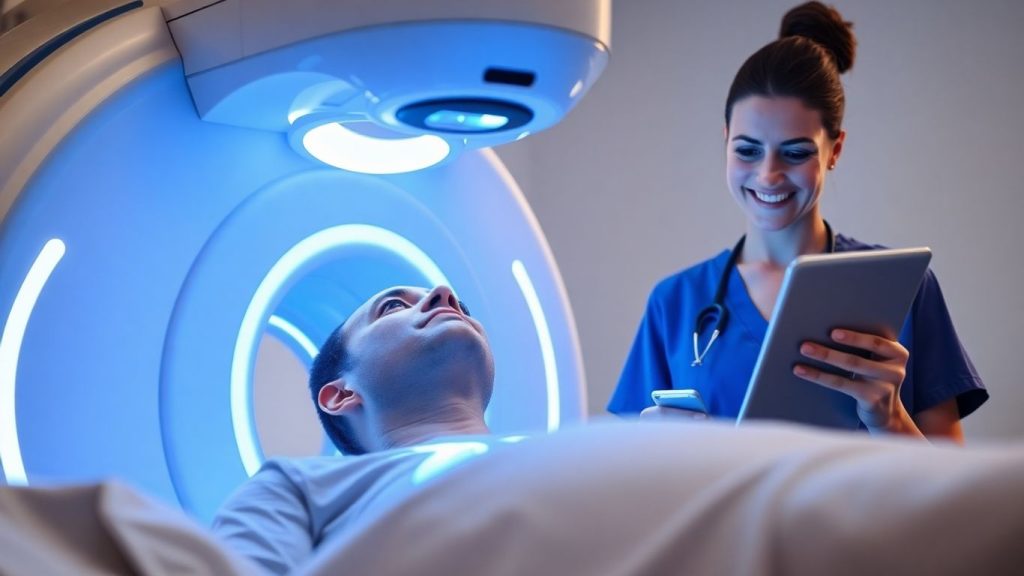
Hospitals are increasingly turning to advanced technology, particularly artificial intelligence, to combat the growing issue of nurse burnout and enhance the early detection of critical illnesses like cancer. This technological integration aims to streamline workflows, improve diagnostic accuracy, and ultimately lead to better patient outcomes while supporting healthcare professionals.
Key Takeaways
- AI-powered tools are proving effective in identifying subtle changes in medical scans, leading to earlier cancer diagnoses.
- Hospitals are leveraging technology to reduce the administrative burden on nurses, a significant factor contributing to burnout.
- The adoption of AI is seen as an enhancement to, rather than a replacement for, the expertise of medical professionals.
Enhancing Cancer Detection with AI
Christ Hospital is among the early adopters of artificial intelligence technology that has demonstrated remarkable success in detecting cancer in its nascent stages. The AI system analyzes medical scans, such as X-rays and CT scans, to identify potential abnormalities that might be missed by the human eye. This technology has been instrumental in flagging subtle changes in growths over time, allowing for timely intervention.
One patient, Mark Olding, shared his experience where an AI system detected a change in a lung nodule from a scan in 2023 to a follow-up scan in 2024. This early detection, before the cancer progressed to stage one, highlights the life-saving potential of this technology. Christ Hospital reported a significant increase in early-stage cancer diagnoses, rising from an above-average 56% to an impressive 70% since implementing the AI system.
Addressing Nurse Burnout Through Technology
Beyond diagnostics, hospitals are exploring technological solutions to alleviate the pressures contributing to nurse burnout. While specific details on burnout reduction technologies were not elaborated in the provided sources, the general trend indicates a move towards automation of routine tasks, improved communication systems, and enhanced data management. By reducing the administrative load and streamlining clinical workflows, technology can free up nurses to focus more on direct patient care, thereby improving job satisfaction and reducing stress.
The Future of Healthcare Technology
The integration of AI and other advanced technologies in healthcare is not intended to replace the critical role of doctors and nurses. Instead, these tools are designed to augment their capabilities, providing them with more accurate information and efficient processes. This collaborative approach between human expertise and artificial intelligence promises a future where healthcare is more precise, proactive, and sustainable, benefiting both patients and the dedicated professionals who care for them.
Sources
- Christ Hospital catches cancer early using AI technology, FOX19 | Cincinnati.

Founder Dinis Guarda
IntelligentHQ Your New Business Network.
IntelligentHQ is a Business network and an expert source for finance, capital markets and intelligence for thousands of global business professionals, startups, and companies.
We exist at the point of intersection between technology, social media, finance and innovation.
IntelligentHQ leverages innovation and scale of social digital technology, analytics, news, and distribution to create an unparalleled, full digital medium and social business networks spectrum.
IntelligentHQ is working hard, to become a trusted, and indispensable source of business news and analytics, within financial services and its associated supply chains and ecosystems