It’s fascinating, isn’t it? The way we can now conjure images from mere words. You type a description, a feeling, a concept, and within moments, a digital canvas blooms with something entirely new. This is the realm of ai generated imagery, and it’s opening up a universe of creative possibilities. Think about it: you have an idea, maybe for a unique piece of art to adorn your living room, a striking visual for a presentation, or even a design for a tattoo. Traditionally, bringing that vision to life might involve sketching, painting, or graphic design skills, not to mention time and resources. But now, tools are changing the game. They’re essentially digital muses, trained on vast libraries of existing art and imagery, ready to interpret your textual cues. What’s truly remarkable is the sheer variety you can achieve. Want a hyper-realistic portrait? A whimsical cartoon? A landscape in the style of Van Gogh? You can specify it. The reference material I looked at highlighted how you can simply enter a prompt, pick an art style, and watch the AI bring your idea to life. It’s like having a personal art studio at your fingertips, capable of producing everything from digital artworks and ai generated imagery to logo designs and even avatars for your online profiles. And it’s not just about creating something from scratch. These AI tools can also act as powerful photo editors, helping you refine existing images or transform them into something entirely different. For content creators, this means a significant boost in efficiency. Imagine needing a specific image for a blog post or a social media campaign – instead of searching stock photo sites or commissioning an artist, you can generate it yourself, tailored precisely to your needs.
Key Takeaways
- AI image generation has moved from a novelty to a standard tool in many creative fields, with significant market growth and user adoption.
- Understanding how AI image generators work, based on learned visual patterns from vast datasets, is key to effective use.
- Major platforms like Midjourney, DALL-E, and Stable Diffusion offer different strengths, from artistic quality to user control.
- Mastering prompt engineering involves translating abstract ideas into concrete visual descriptions that AI can interpret.
- The use of ai generated imagery raises important legal and ethical questions regarding copyright, training data, and the impact on creative professionals.
The Evolving Landscape Of AI Generated Imagery
It’s fascinating how quickly the digital landscape is evolving, isn’t it? We’re seeing AI move beyond just crunching numbers and into the realm of pure visual creation. Think about it – what was once the exclusive domain of artists and photographers is now becoming accessible to anyone with an idea and a prompt. The rapid evolution over the past few years shows no signs of slowing, and several clear trends are emerging that will shape the next generation of tools.
From Novelty To Necessity
I’ll never forget the first time I generated an image with AI. It was early 2023, and I typed something ridiculously simple into Midjourney—”a cat wearing a space helmet on Mars”—fully expecting a blurry, distorted mess. What I got back stopped me mid-scroll. The image wasn’t just recognizable. It was beautiful. The lighting was cinematic, the details were crisp, and honestly, it looked like something a professional digital artist might have spent hours creating. That moment changed everything for me. Not because the technology was perfect (it wasn’t), but because I realized we’d crossed a threshold. Creating professional-quality images was no longer locked behind years of design training or expensive software licenses. Anyone with an idea and an internet connection could now bring visual concepts to life in seconds. We’re not talking about generating quirky novelty images anymore—though you can certainly still do that. We’re talking about tools that professional designers, marketers, filmmakers, and businesses use daily to create everything from product photography to concept art to marketing campaigns.
Market Growth And User Adoption
Statistics only capture part of what’s happening. The real transformation is in how these tools have democratized visual creativity. A small business owner can now generate professional product photos without hiring a photographer. A writer can create book cover art. According to recent industry data, Stable Diffusion alone commanded 80% of the AI-generated image market as of 2024, producing 12.59 billion images. Midjourney reached over 10 million active users by mid-2026, with daily image generations exceeding 500 million. The AI image generator market itself reached $418.5 million in 2024 and projects expansion to $60.8 billion by 2030—a staggering growth rate that reflects how quickly this technology has moved from experimental to essential.
| Market Segment | 2024 Value (USD) | 2030 Projection (USD) |
|---|---|---|
| AI Image Generation | $418.5 million | $60.8 billion |
Democratizing Visual Creation
It’s a fantastic way to inject some unique flair into presentations, social media, or even just for fun. Then there’s the more sophisticated side, like image-to-image AI. This is where you can take an existing photo – maybe a landscape shot, a product photo, or even a sketch – and transform it into something entirely new. It’s like having a digital chameleon, capable of changing a daytime scene to night, or turning a photograph into a vibrant pop art illustration. The technology analyzes the original image, understands its patterns and style, and then generates variations based on your input. It’s a powerful tool for artists and designers looking to explore different aesthetics or for anyone wanting to give their photos a unique artistic twist. Some of these tools even offer virtual try-on features for clothes, which is a pretty neat way to experiment with fashion without leaving your couch. Innovative eyewear designs, particularly statement sunglasses, are significantly influencing modern fashion trends and shaping future directions. These accessories have evolved beyond their traditional protective function to become key style elements [f9f7].
The impact looks different for fine artists than commercial illustrators, for photographers than graphic designers. What seems clear is that AI image generation isn’t disappearing. The technology works, it’s economically compelling for many use cases, and it’s becoming integrated into standard creative workflows.
Understanding The Core Technology
How AI Image Generators Work
At their heart, most modern AI image generators operate using a fascinating process known as "diffusion models." While the name might sound complex, the underlying idea is quite accessible. Imagine taking a clear photograph and slowly adding random static, like on an old television screen, until the original image is completely obscured by noise. A diffusion model is trained to do the opposite: it starts with pure visual noise and, guided by your text prompt, gradually removes that noise to reveal a coherent image.
Synthesizing New Realities
This ability to create something from nothing, or rather from noise, stems from the extensive training these models undergo. They are fed millions, sometimes billions, of image-text pairs scraped from the internet. Through this process, the AI learns to associate words with visual elements. It learns that the word "sunset" often correlates with specific color gradients and horizon lines, or that "cyberpunk" typically involves neon lights and futuristic cityscapes. It’s not a human-like understanding, but rather a sophisticated grasp of statistical relationships between language and visual patterns.
The Power Of Learned Visual Patterns
The sophistication of these models has grown significantly. For instance, Stable Diffusion 3.5 Large, released in late 2024, features an 8.1 billion-parameter model. Midjourney’s V7, updated in April 2025, also brought notable improvements in how it interprets prompts and generates images. These aren’t just larger models; they are more adept at processing information. Midjourney’s recent Style Creator updates, for example, focus on open-ended exploration, allowing users to create mood boards and bookmark styles, shifting the experience towards a more collaborative process rather than just a command-and-response system.
The core innovation lies in the model’s ability to reverse a noise-adding process, guided by textual descriptions, to construct entirely new visuals based on learned associations from vast datasets.
Navigating The Major AI Image Platforms
The world of AI image generation in 2026 is populated by several key players, each offering a distinct approach to bringing your visual ideas to life. While many platforms exist, three stand out for their capabilities, user bases, and impact on the creative landscape: Midjourney, DALL-E, and Stable Diffusion. Understanding their unique strengths and weaknesses is key to selecting the right tool for your project.
Midjourney: The Artistic Powerhouse
Midjourney has rapidly become a favorite among artists and designers, celebrated for its ability to produce aesthetically striking and often breathtaking images. It excels at generating visuals with a strong artistic sensibility, consistently delivering results that feel composed and intentional. Even with simple prompts, Midjourney often produces images with a professional polish, showcasing a keen sense of lighting, color, and composition.
- Strengths: Exceptional artistic quality, intuitive aesthetic sense, strong community engagement (primarily via Discord).
- Considerations: Primarily accessed through Discord, which can be a learning curve for new users. Less direct control over fine-grained details compared to other platforms.
- Best for: Creating concept art, illustrations, and visually rich imagery where artistic expression is paramount.
Midjourney’s recent updates, including V8’s focus on new datasets and improved UI, continue to push the boundaries of creative output. Its style creation and character consistency features are particularly noteworthy for maintaining visual coherence across multiple generations.
Midjourney seems to have an innate understanding of what makes an image visually appealing, often producing results that feel more like art than algorithm.
DALL-E: Conversational Creativity
DALL-E, particularly with its integration into platforms like ChatGPT, offers a more conversational and accessible approach to image generation. This makes it incredibly user-friendly, allowing for iterative refinement through natural language dialogue. It’s a powerful tool for quickly translating abstract ideas into concrete visuals.
- Key Features: Seamless integration with text-based AI assistants, ease of use for beginners, good for rapid ideation.
- Limitations: Can sometimes be less artistically refined than Midjourney, and customization options might be more limited.
- Ideal for: Marketing teams needing quick ad variations, writers visualizing scenes, or anyone who prefers a dialogue-based creation process.
DALL-E’s strength lies in its ability to understand and respond to nuanced, conversational prompts, making the creative process feel more like a collaboration.
Stable Diffusion: Control And Community
Stable Diffusion stands out for its flexibility and the high degree of control it offers users. As an open-source model, it has cultivated a large and active community that contributes to its development and creates specialized versions. This platform is ideal for those who need precise control over the generation process or wish to fine-tune models for specific tasks.
- Advantages: Unparalleled control over parameters, extensive customization through custom models, strong community support, options for local installation for data privacy.
- Challenges: Can have a steeper learning curve, requiring more technical understanding for optimal results.
- Suitable for: Developers, researchers, and users with specific technical requirements or those who generate images at a very large scale.
While Stable Diffusion might require more effort to master, the payoff is significant for those who need to generate thousands of images or require absolute precision. Platforms like DreamStudio, Leonardo.ai, and Playground AI offer user-friendly interfaces for accessing its power.
Choosing the right platform often depends on your specific needs. Many professionals find that using a combination of these tools yields the best results, leveraging each platform’s unique strengths for different stages of the creative process.
Mastering The Art Of Prompt Engineering
Translating Concepts Into Visuals
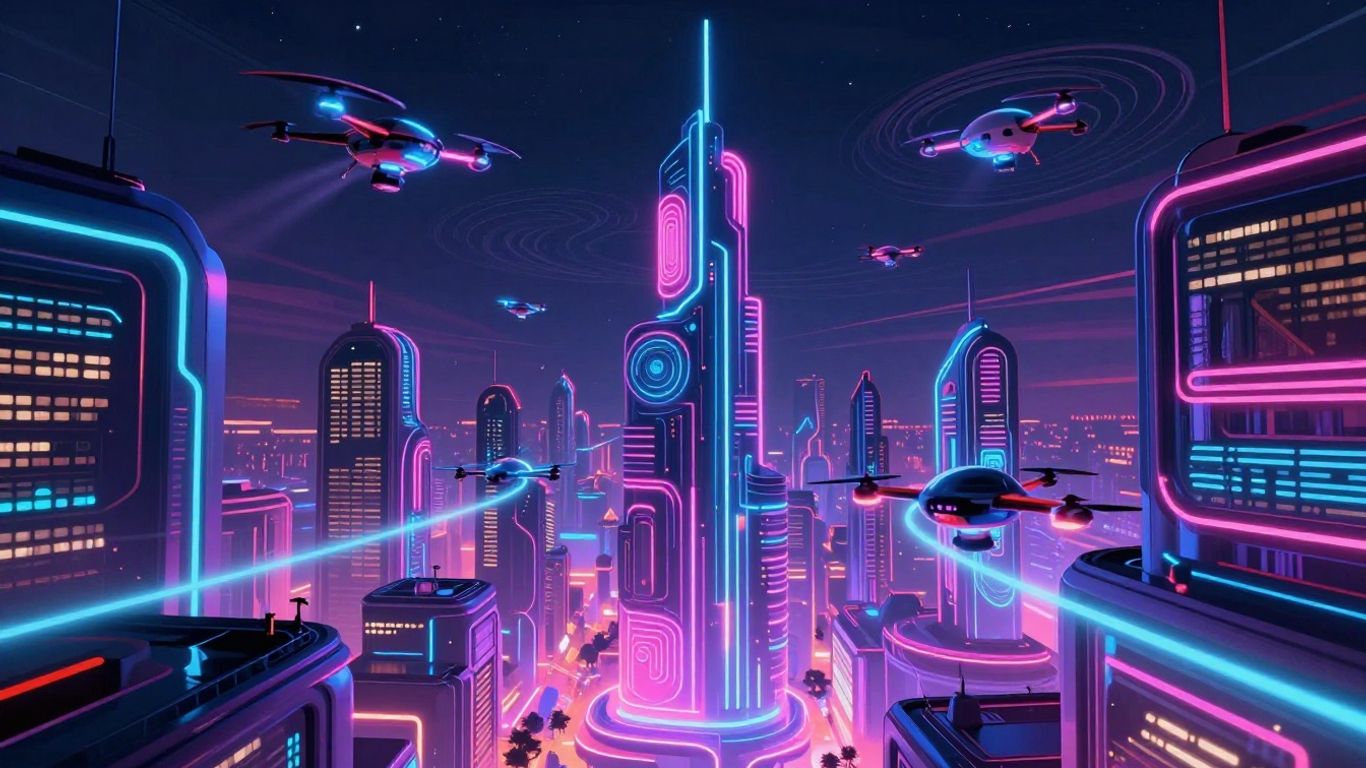
Getting the AI to create the image you have in mind starts with how you talk to it. This isn’t about magic words, but about giving the AI clear instructions. Think of it like describing a scene to someone who can’t see it. You need to paint a picture with words. Start with the main subject – what is the image about? Is it a "fluffy cat," a "busy city street," or a "serene mountain lake"? Be specific about what’s important. If you want a "fluffy ginger cat," that’s better than just "cat." Then, add details about the style. Do you want it to look like a "photograph," an "oil painting," a "cartoon," or something else entirely? Mentioning styles like "cyberpunk," "watercolor," or "minimalist" helps guide the AI’s output. Don’t forget about the setting and mood. Is it "daytime," "nighttime," "raining," "sunny," "calm," or "chaotic"? Describing the lighting, like "soft morning light" or "harsh neon glow," makes a big difference.
Iterative Refinement And Collaboration
Rarely will the first image generated be exactly what you pictured. The real skill comes in refining your requests. It’s a back-and-forth process. You start with a basic idea, see what the AI produces, and then adjust your prompt based on the results. If the image is too cluttered, you might add terms to simplify it. If it’s not detailed enough, you’ll add more descriptive words. Many AI tools allow for "negative prompts" – telling the AI what you don’t want. For example, if you’re trying to generate a landscape and keep getting people in the shot, you can add "people, figures" to the negative prompt. This helps clean up the output and steer it closer to your vision. It’s like a conversation where you guide the AI step-by-step.
Working With AI Strengths
AI image generators are amazing at creating things that don’t exist and mimicking styles. They can combine concepts in ways humans might not think of. Want to see a "robot gardening on the moon"? An AI can do that because it understands robots, gardening, and the moon, and can blend them. They’re also good at adopting specific artistic styles if you describe them well. However, they can still struggle with certain things. Hands have historically been a challenge, though newer models are much better. Text can also be tricky; while some AIs can now render readable text, it’s not always perfect. Understanding these limitations helps you frame your prompts more effectively. Instead of asking for something the AI might struggle with, focus on its strengths. For instance, instead of trying to get a perfect, complex scene with many interacting elements, break it down or focus on a simpler, more impactful composition.
The process of creating images with AI is less about finding the perfect, single prompt and more about a dialogue. You provide an initial idea, observe the AI’s interpretation, and then offer more specific guidance to shape the outcome. This iterative approach, combined with an awareness of the AI’s capabilities and limitations, is key to achieving compelling visual results.
Here are some common elements to consider when crafting your prompts:
- Subject: The main focus of the image (e.g., "a majestic dragon").
- Style: The artistic or photographic look (e.g., "in the style of Van Gogh," "cinematic photograph").
- Setting/Environment: Where the subject is located (e.g., "perched on a snowy mountain peak").
- Lighting & Atmosphere: The mood and light conditions (e.g., "under a stormy, dramatic sky").
- Composition: How the image is framed (e.g., "wide shot," "close-up portrait").
- Details: Specific elements to include or emphasize (e.g., "with glowing red eyes," "intricate scales").
- Negative Prompts: Elements to exclude (e.g., "no humans," "not blurry").
Practical Applications In Creative Workflows
AI image generation is moving beyond being a novelty and is now a practical tool for many creative fields. It helps speed up processes and opens up new possibilities that were previously too time-consuming or expensive.
Concept Development and Ideation
For artists, designers, and writers, AI can be a fantastic brainstorming partner. Instead of spending hours sketching out dozens of initial ideas, you can use AI to generate a wide range of visual concepts quickly. This allows for exploration of different directions and styles early in the creative process. The AI outputs can serve as inspiration or a starting point, helping to overcome creative blocks and discover unexpected visual solutions.
- Generate numerous variations of a character or object.
- Visualize abstract ideas or complex scenes.
- Explore different artistic styles for a project.
The ability to rapidly iterate on concepts means that creative professionals can explore a much broader spectrum of possibilities before committing significant resources to a particular direction. This accelerates the initial ideation phase dramatically.
Storyboarding and Pre-visualization
In film, animation, and game development, AI image generators are changing how stories are visualized before production begins. Creating detailed storyboards or pre-visualization sequences traditionally required specialized artists and considerable time. Now, directors and producers can generate visual representations of scenes, camera angles, and character placements quickly. This helps communicate the vision to the team more effectively and allows for easier adjustments to framing and composition.
Generating Marketing and Product Assets
Businesses are finding AI image generation incredibly useful for creating marketing materials and product visuals. Instead of relying solely on stock photos or expensive photoshoots, companies can now generate custom imagery tailored to their brand and message. This includes visuals for social media, blog posts, advertisements, and even product mockups. The speed and cost-effectiveness of AI allow for more frequent content updates and A/B testing of different visual approaches.
- Creating lifestyle images for products in various settings.
- Producing unique graphics for social media campaigns.
- Generating custom illustrations for blog articles and website content.
This capability significantly lowers the barrier to entry for creating professional-looking visual content, allowing smaller businesses and individual creators to compete more effectively in the digital space.
Addressing The Legal And Ethical Considerations
As AI image generation becomes more common, we have to talk about the tricky parts. It’s not all smooth sailing, and there are some big questions we need to think about. This technology is moving fast, and the rules and ideas about what’s right are still catching up.
Copyright Ownership Of AI Creations
One of the biggest questions is who actually owns the images that AI creates. Right now, in the United States, if an image is made entirely by AI with no real human input, it might not be protected by copyright. This is because copyright law usually requires a human creator. However, if a person uses AI as a tool and guides it with their own creative ideas, the resulting image might be copyrightable. This area is still being figured out in the courts, and different countries might have different rules.
The Training Data Dilemma
Most AI image generators learned how to create pictures by looking at billions of images from the internet. This included artwork, photos, and illustrations, often used without the original creators’ permission. Many artists are understandably upset about their work being used to train systems that can then copy their unique styles. Several lawsuits are currently underway, and their outcomes will really shape how these AI tools can be used legally in the future.
- Artist Concerns: Many creators feel their work is being used unfairly to build tools that could eventually compete with them.
- Platform Responses: Some platforms, like DALL-E, have stopped generating images in the style of living artists by name. Others allow creators to opt out of having their work used for future training.
- Open Source Challenges: With tools like Stable Diffusion, which are open-source, it’s harder to control how training data is used, even if official versions try to be careful.
The core of the ethical debate often comes down to fairness and respect for the original creators whose work forms the foundation of these powerful new tools. Balancing innovation with the rights of artists is a complex challenge.
Impact On Creative Professionals
It’s clear that AI image generation is changing things for people who work in creative fields. Some jobs, like creating generic stock photos or basic illustrations, are facing new competition. However, new roles are also appearing. People who can use these AI tools effectively, art directors who can speed up their concept work, and small businesses that can now afford custom visuals are all seeing benefits.
- Job Market Shifts: Entry-level design and illustration roles may see reduced demand.
- New Skill Development: Demand is growing for professionals who can effectively prompt and refine AI-generated images.
- Accessibility: Businesses of all sizes can now access visual content that was previously out of reach due to cost.
The future likely involves AI as a collaborative tool rather than a complete replacement for human creativity. How professionals adapt and integrate these technologies will be key to their success in the evolving creative landscape.
The Evolving Canvas: What’s Next?
As we wrap up our look at AI-generated imagery in 2026, it’s clear this technology isn’t just a passing trend. It’s fundamentally changing how we create and interact with visuals. From making complex design accessible to small businesses to offering new ways for artists to explore ideas, the impact is widespread. While questions about copyright and the future of creative jobs remain, the tools themselves continue to get better and more integrated into our lives. The real skill now is learning to work with these systems, translating our ideas into prompts that bring out the best in the AI. The creative frontier is expanding, and it’s exciting to think about what new visual landscapes we’ll explore next.
Frequently Asked Questions
What exactly are AI-generated images?
AI-generated images are pictures created by computer programs called artificial intelligence. You give the AI a description in words, and it uses what it has learned from looking at millions of other images to make a brand-new picture that matches your words. It’s like telling a story and having a super-fast artist draw it for you instantly.
How do I get started making AI images?
Getting started is easier than you might think! You’ll need to use a website or app that offers AI image creation. Most of them let you type in what you want the picture to be. Think about what you want to see and describe it clearly. Many platforms offer free trials or limited free use, so you can experiment without paying anything at first.
Are AI images copyrighted?
This is a tricky question right now. In some places, like the United States, if a computer makes an image all by itself with no human creative input, it might not be protected by copyright. However, if a person uses the AI as a tool and guides it with their own creative ideas, the resulting image might be copyrightable. The rules are still being figured out by laws.
Can AI create images in the style of famous artists?
Yes, AI can often create images that look like they were made by famous artists. This is because the AI has studied many examples of that artist’s work during its training. You can usually include the artist’s name or a style description in your text prompt to guide the AI.
What is ‘prompt engineering’?
Prompt engineering is the skill of writing good descriptions for the AI. It’s about learning how to talk to the AI so it understands exactly what you want. This means using clear words, describing details, and sometimes trying different ways of saying things to get the best possible picture. It’s like giving very specific instructions to a talented artist.
Will AI art replace human artists?
It’s unlikely that AI art will completely replace human artists. Instead, many artists are finding ways to use AI as a new tool to help them create. AI can help with ideas, speed up parts of the creative process, or create visuals that would be too difficult or expensive otherwise. It’s more likely to change how artists work rather than get rid of their jobs.
Peyman Khosravani is a seasoned expert in blockchain, digital transformation, and emerging technologies, with a strong focus on innovation in finance, business, and marketing. With a robust background in blockchain and decentralized finance (DeFi), Peyman has successfully guided global organizations in refining digital strategies and optimizing data-driven decision-making. His work emphasizes leveraging technology for societal impact, focusing on fairness, justice, and transparency. A passionate advocate for the transformative power of digital tools, Peyman’s expertise spans across helping startups and established businesses navigate digital landscapes, drive growth, and stay ahead of industry trends. His insights into analytics and communication empower companies to effectively connect with customers and harness data to fuel their success in an ever-evolving digital world.