The world of artificial intelligence is moving fast, and conversational AI, or ai chat apps, are leading the charge. These tools can help with writing, research, brainstorming, and just about anything else you can think of. It can be a lot to keep up with, so we’ve put together a guide to some of the top ai chat apps you should know about for 2025. Whether you’re a student, a professional, or just curious, there’s likely an app here that can make your life a bit easier.
Key Takeaways
- ChatGPT remains a top choice for its versatility and wide range of uses, from creative writing to coding help.
- Google Gemini offers strong integration with Google’s ecosystem and excels at understanding context and multimodal inputs.
- Microsoft Copilot is built into many Microsoft products, making it a convenient assistant for work tasks.
- Claude is known for its more natural conversation style and its ability to handle longer texts.
- Perplexity AI focuses on providing accurate, cited answers to your questions, acting like a research assistant.
1. ChatGPT
When you think about AI chatbots, ChatGPT is probably the first one that comes to mind. Developed by OpenAI, it’s become a household name for a reason. It’s really good at understanding what you’re asking and giving you pretty detailed answers. Whether you need help writing an email, brainstorming ideas, or just want to chat about a topic, ChatGPT can handle it.
One of the things that makes ChatGPT stand out is its ability to generate human-like text. It can write stories, poems, code, and even scripts. It feels like you’re talking to a knowledgeable person, not just a program. This makes it super useful for all sorts of tasks, from creative writing to getting quick explanations on complex subjects.
Here’s a quick look at what makes it a top pick:
- Versatility: It can adapt to many different writing styles and tasks.
- Accessibility: It’s generally easy to use, even if you’re new to AI.
- Continuous Improvement: OpenAI regularly updates the model, making it smarter over time.
It’s a powerful tool for anyone looking to explore the capabilities of conversational AI. You can find out more about its development and features on the OpenAI website.
While ChatGPT is impressive, it’s important to remember that it’s still an AI. It doesn’t have personal experiences or emotions. The information it provides should always be checked, especially for critical matters. Think of it as a very advanced assistant, not a replacement for human judgment.
2. Google Gemini
Google’s answer to the evolving AI landscape is Gemini, a family of models designed to be multimodal from the ground up. This means Gemini can understand and work with different types of information, like text, images, audio, video, and code, all at once. It’s not just about processing text; it’s about a more holistic way of understanding the world.
Gemini comes in different sizes to suit various needs. There’s Gemini Ultra, the largest and most capable model for complex tasks; Gemini Pro, a balanced model for a wide range of applications; and Gemini Nano, designed for on-device tasks, making AI more accessible on your phone or other personal devices.
The real strength of Gemini lies in its ability to reason across different types of data. For instance, you could show it a video and ask questions about what’s happening, or provide an image and have it describe the scene in detail. This makes it incredibly versatile for creative projects, research, and even everyday problem-solving.
Here’s a quick look at what makes Gemini stand out:
- Multimodality: Understands and processes text, images, audio, video, and code simultaneously.
- Scalability: Available in different versions (Ultra, Pro, Nano) for diverse applications, from data centers to mobile devices.
- Advanced Reasoning: Capable of complex problem-solving and understanding nuanced information across various data types.
- Integration: Being a Google product, expect deep integration with other Google services, making it a natural fit for many users.
Google is also working on making Gemini accessible through various platforms, including Google AI Studio and Vertex AI, allowing developers and businesses to build with it. For the average user, you’ll likely encounter Gemini powering features within Google Search, Workspace apps, and Android devices, making your interactions with technology more intuitive and helpful.
While still relatively new, Gemini represents a significant step towards AI that can perceive and interact with the world in a way that’s closer to human understanding. Its ability to handle multiple data formats at once is a game-changer for how we might use AI in the future.
3. Microsoft Copilot
Microsoft Copilot is more than just a chatbot; it’s an AI assistant integrated across many of Microsoft’s products. Think of it as a helpful sidekick that lives within Windows, Microsoft 365 apps like Word, Excel, and PowerPoint, and even the Edge browser. Its main goal is to make your daily tasks easier and more productive by understanding your context and providing relevant assistance.
Copilot’s strength lies in its deep integration with the Microsoft ecosystem. This means it can access and work with your documents, emails, calendar, and other data (with your permission, of course) to give you personalized help. For instance, you can ask it to summarize a long email thread, draft a document based on a few bullet points, or create a presentation from an outline.
Here’s a look at what Copilot can do in different areas:
- Microsoft 365: Draft emails, summarize meetings, create charts in Excel, generate presentation slides.
- Windows: Help you adjust settings, launch apps, or find information on your PC.
- Edge Browser: Summarize web pages, help you write content, or answer questions about what you’re reading.
It’s built on advanced AI models, similar to those powering other leading chatbots, but its real advantage is how it connects these capabilities to your everyday work and digital life. This makes it a powerful tool for anyone who spends a lot of time using Microsoft software.
Copilot aims to be a natural extension of your workflow, reducing the time spent on repetitive tasks and freeing you up to focus on more creative and strategic work. It learns from your interactions to become more helpful over time.
While it’s still evolving, Microsoft Copilot is shaping up to be a significant player in the AI assistant space, especially for businesses and individuals already invested in the Microsoft suite of tools.
4. Claude
Claude, developed by Anthropic, stands out in the AI chat landscape with a strong focus on safety and helpfulness. It’s designed to be a reliable assistant, aiming to provide accurate and harmless responses.
Claude’s conversational style is often described as more natural and less robotic than some other models. This makes interacting with it feel more like talking to a person. It’s particularly good at handling longer pieces of text, making it a solid choice for tasks like summarizing documents or analyzing lengthy articles.
Here are some of the things Claude is good at:
- Text Summarization: Condensing long articles or reports into key points.
- Creative Writing: Assisting with drafting emails, stories, or other written content.
- Question Answering: Providing information based on its training data.
- Coding Assistance: Helping with basic code generation and explanation.
When it comes to safety, Anthropic has put a lot of effort into making Claude aligned with human values. They call this approach ‘Constitutional AI,’ where the AI is trained to follow a set of principles.
Claude’s development prioritizes ethical considerations, aiming to create an AI that is not only intelligent but also responsible and beneficial to users. This careful approach influences its responses and interactions.
While Claude is a powerful tool, it’s still under development, and like all AI, it can sometimes make mistakes or provide information that isn’t quite right. It’s always a good idea to double-check important information it gives you.
5. Perplexity AI
Perplexity AI is a bit different from the other chatbots on this list. Instead of just giving you an answer, it acts more like a search engine that uses AI to find and summarize information for you. Think of it as a super-smart research assistant. When you ask a question, Perplexity doesn’t just pull from its own knowledge base; it actually goes out and searches the web in real-time. It then presents you with a concise answer, complete with citations so you can see exactly where the information came from. This makes it fantastic for fact-checking or when you need to understand a topic quickly and reliably.
One of the standout features is its focus on accuracy and transparency. You can see the sources it used, which is a big deal when you’re trying to learn something new or verify facts. It’s like having a librarian who can instantly find and present the most relevant books, along with their bibliographies.
Here’s a quick look at what makes Perplexity stand out:
- Real-time web search: It doesn’t rely solely on pre-trained data.
- Cited sources: Every answer comes with links to where the information was found.
- Focus modes: You can tailor searches for academic papers, Wolfram Alpha, YouTube, and more.
- Follow-up questions: It suggests related questions to help you explore a topic further.
The ability to provide direct links to sources is what truly sets Perplexity AI apart in the crowded AI chatbot space. It builds trust and allows users to dig deeper into subjects that interest them.
Perplexity AI is designed to be a conversational answer engine. It aims to provide direct, accurate answers to your questions by searching the internet and synthesizing information from multiple sources. This approach helps users get up to speed on topics without having to sift through numerous search results themselves.
6. Character.AI
Character.AI is a bit different from the other AI chat apps on our list. Instead of focusing on general knowledge or task completion, it lets you chat with AI characters. Think of it like stepping into a story where you can talk to anyone – historical figures, fictional characters, or even custom-made personalities.
The core idea is to create a space for imaginative conversations. You can find pre-made characters or even build your own, giving them specific traits and backstories. This makes it a really fun tool for creative writing, role-playing, or just exploring different conversational styles. It’s not about getting factual answers, but about engaging in a dynamic dialogue.
Here’s a quick look at what makes Character.AI stand out:
- Vast Character Library: Access thousands of AI characters created by the community, covering a huge range of interests and personalities.
- Character Creation Tools: Design your own AI companions by defining their personality, greeting, and even example dialogues.
- Group Chats: Engage in conversations with multiple AI characters simultaneously, adding another layer of complexity and fun.
- Focus on Role-Playing: Ideal for users interested in interactive storytelling and exploring different scenarios.
While it’s not the place for serious research or getting help with coding, Character.AI excels at providing an entertaining and interactive experience. It’s a great way to see how AI can be used for creative expression and playful interaction. If you’re curious about how AI can mimic different personalities, this is a good place to start exploring different conversational styles.
The platform encourages users to experiment with AI’s potential for entertainment and creative engagement. It’s less about factual accuracy and more about the experience of talking with a unique AI persona.
7. Poe
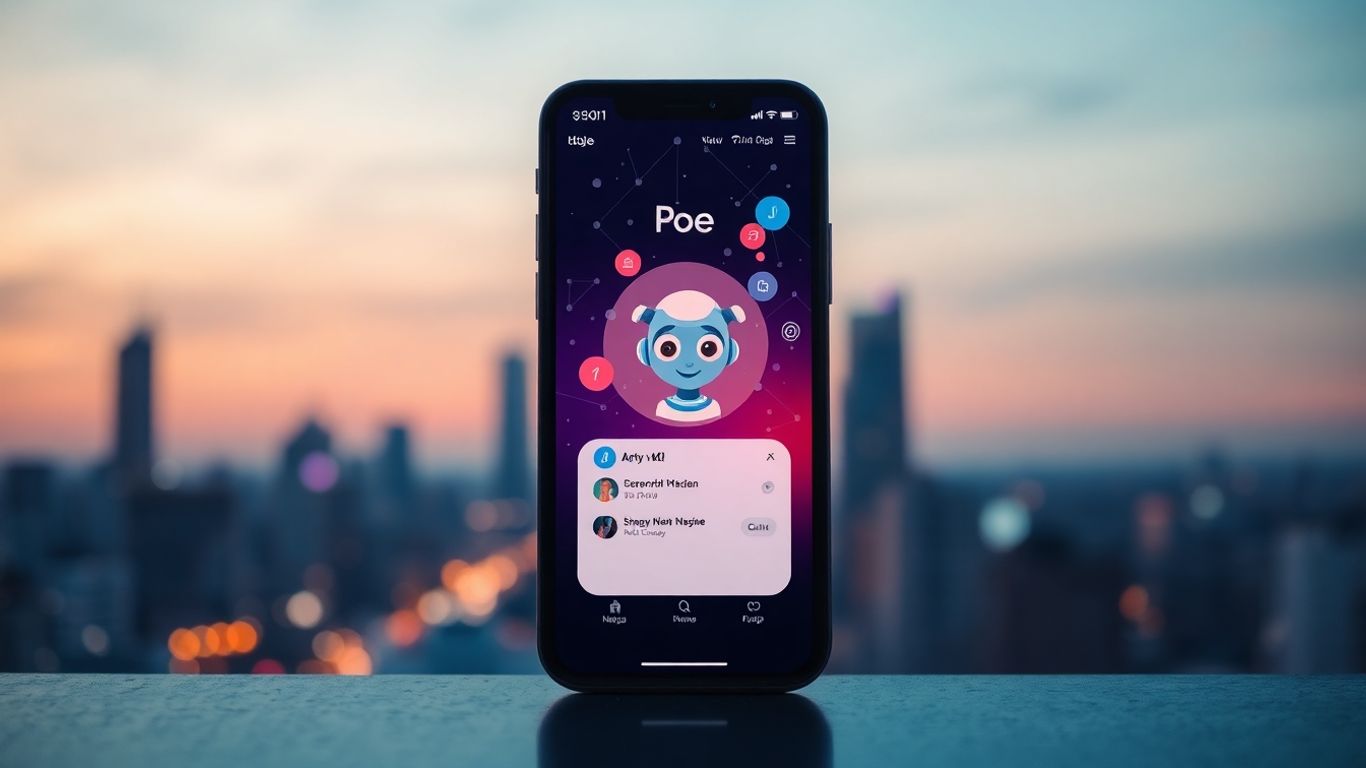
Poe, developed by Quora, acts as a central hub for interacting with various AI models. Instead of just one AI, Poe lets you switch between different chatbots, each with its own strengths. Think of it like a digital playground where you can try out several AI personalities without needing separate accounts for each.
The main draw of Poe is its accessibility to multiple AI models in one place. This means you can compare how different AIs handle the same prompt, which is pretty neat for understanding their quirks and capabilities. You can find models like Claude, ChatGPT, and even some specialized bots created by the Poe community.
Here’s a quick look at what makes Poe stand out:
- Model Variety: Access to a range of popular and niche AI models.
- Custom Bots: Users can create and share their own bots based on specific instructions.
- Cross-Platform: Available on iOS, Android, and the web, so you can chat on the go.
- Subscription Options: Offers a free tier with limitations and paid plans for more extensive use.
It’s a great tool if you’re curious about what different AI models can do or if you want a single app to manage your AI conversations. You can even set up bots for specific tasks, like summarizing articles or brainstorming ideas, making it quite adaptable for different needs.
Poe simplifies the experience of using multiple AI assistants. Instead of downloading several apps or visiting different websites, you can access a curated selection of AI models through a single interface. This consolidation is particularly helpful for users who want to experiment with various AI technologies without the hassle of managing multiple platforms.
8. Pi
Pi is a bit different from the other AI assistants you might be using. Developed by Inflection AI, Pi is designed to be a personal AI, focusing on being supportive and conversational. Think of it less like a tool for getting quick answers and more like a friendly companion you can chat with about your day, your thoughts, or anything that’s on your mind. It’s built to listen and respond in a way that feels natural and empathetic.
Its primary goal is to be a helpful and kind conversationalist.
Pi excels in situations where you might want to brainstorm ideas, process your feelings, or just have a relaxed chat. It’s not really geared towards complex coding tasks or generating lengthy articles, but it shines when it comes to providing a listening ear and offering thoughtful responses. The interface is clean and simple, making it easy to start a conversation right away.
Here’s what makes Pi stand out:
- Empathetic Responses: Pi is trained to understand and respond to emotional cues, making conversations feel more human.
- Personalized Interaction: It remembers past conversations to a degree, allowing for a more tailored experience over time.
- Focus on Well-being: The AI is programmed to be encouraging and supportive, which can be a nice change of pace.
While many AI tools are focused on productivity and information retrieval, Pi carves out a unique space by prioritizing emotional connection and personal support. It’s a great option if you’re looking for an AI that feels more like a friend than a digital assistant.
Getting started with Pi is straightforward. You can access it through its website or dedicated mobile apps. Just open the app or site, and you can begin typing your thoughts or questions. It’s designed to be accessible and easy to use for anyone, regardless of their technical background.
9. Jasper Chat

Jasper Chat is part of the larger Jasper AI platform, which is primarily known for its content creation tools. Think of Jasper Chat as the conversational sidekick to its writing assistant. It’s built with marketers and content creators in mind, aiming to help them brainstorm ideas, draft copy, and refine their messaging.
Jasper Chat excels at generating marketing-focused content, from social media posts to ad copy. It understands the nuances of brand voice and can adapt its output to fit different tones. If you’re already using Jasper for writing articles or product descriptions, integrating Jasper Chat into your workflow makes a lot of sense. It’s designed to be intuitive, so you don’t need to be an AI expert to get started.
Here’s a look at what Jasper Chat brings to the table:
- Content Ideation: Stuck on what to write about? Jasper Chat can help brainstorm blog post topics, social media campaign ideas, or even video scripts.
- Copywriting Assistance: Need to craft compelling ad copy, email subject lines, or product descriptions? Jasper Chat can generate multiple options for you to choose from.
- Content Refinement: Already have a draft? Jasper Chat can help you rephrase sentences, improve clarity, or expand on existing points.
- Brand Voice Consistency: You can train Jasper Chat on your brand’s specific tone and style, helping to maintain consistency across all your communications.
While it’s a powerful tool for content professionals, its focus is quite specific. If your primary need is general conversation or complex problem-solving outside of content creation, other AI models might be a better fit. However, for anyone looking to streamline their content workflow and get AI-powered assistance with writing, Jasper Chat is a strong contender.
Jasper Chat is integrated into a broader ecosystem designed to support content creation. Its strength lies in its ability to understand and generate text tailored for marketing and business communication, making it a practical tool for professionals in these fields.
10. Writesonic Chatsonic
Writesonic’s Chatsonic is another strong contender in the AI chat app space, aiming to blend conversational AI with real-time data. Think of it as a chatbot that can actually access current information, which is a pretty big deal when you need up-to-date answers.
Chatsonic distinguishes itself by integrating Google Search capabilities directly into its responses. This means it’s not just relying on its training data, which can become outdated. If you ask about recent news, current events, or the latest product reviews, Chatsonic can pull that information and present it to you in a conversational format.
Here’s a look at some of its key features:
- Real-time Data Access: Connects to Google Search to provide current information.
- Content Creation Tools: Beyond just chatting, it can help draft articles, social media posts, and marketing copy.
- Image Generation: Integrates AI art generation, allowing you to create visuals based on text prompts.
- Multiple Personas: You can often choose different AI personalities to interact with, tailoring the conversation style.
While many AI chatbots are trained on data up to a certain point, Chatsonic’s ability to fetch live information makes it particularly useful for tasks requiring the most current details. It’s built on top of GPT-4, so it has a solid foundation for understanding and generating human-like text. This makes it a good choice if you’re looking for an AI assistant that’s both knowledgeable about the past and aware of the present.
Chatsonic tries to bridge the gap between a static knowledge base and a dynamic, ever-changing world. Its connection to live search results is its main selling point, making it a practical tool for research and staying informed.
For writers, marketers, or anyone who needs to stay on top of current trends, Chatsonic offers a practical way to get information and even generate content based on that live data. It’s a tool that aims to be more than just a chatbot; it’s positioned as a productivity assistant.
Looking Ahead with AI Chat
As we wrap up our look at the top AI chat apps for 2025, it’s clear that these tools are becoming a bigger part of our daily lives. Whether you’re looking for help with work, a study partner, or just someone to talk to, there’s an app out there for you. The technology is still growing, and we can expect even more interesting developments in the future. It’s worth trying out a few to see which one fits your needs best. Keep exploring, and see how AI chat can help you.
Frequently Asked Questions
What exactly is an AI chat app?
Think of an AI chat app as a super smart computer program you can talk to. It uses artificial intelligence, or AI, to understand what you type or say and then responds back like a person would. These apps can help you with homework, write stories, answer questions, and much more, making them like helpful digital assistants.
Are these AI chat apps free to use?
Many AI chat apps offer a free version that lets you try out their basic features. However, to get the most advanced tools, faster responses, or extra abilities, you might need to pay for a premium subscription. It’s like getting a special membership for more cool stuff.
Can AI chat apps make mistakes?
Yes, even though AI is very advanced, it’s not perfect. Sometimes, AI chat apps can give wrong information or misunderstand what you’re asking. It’s always a good idea to double-check important facts they provide, especially for schoolwork or serious topics.
How do these apps learn and get smarter?
These AI apps learn by studying huge amounts of text and data from the internet. The more information they process, the better they become at understanding language, answering questions, and creating text. It’s like they go to a giant digital school to learn everything they can.
Is my personal information safe when using these apps?
Most reputable AI chat apps have privacy policies that explain how they handle your information. Generally, they aim to protect your data. However, it’s wise to be mindful of what personal details you share and to review the app’s privacy rules before you start chatting.
Which AI chat app is best for creative writing?
For creative writing, apps like ChatGPT and Claude are often recommended because they excel at generating imaginative text, stories, and poems. Character.AI is also fantastic if you want to chat with AI characters that have distinct personalities, which can spark new ideas.








![7 Best AI Development Companies for Data AI Solutions: Comprehensive Overview [2026]](https://www.intelligenthq.com/wp-content/uploads/2026/10/7-Best-AI-Development-Companies-for-Data-AI-Solutions-Comprehensive-Overview-2026-330x220.webp)