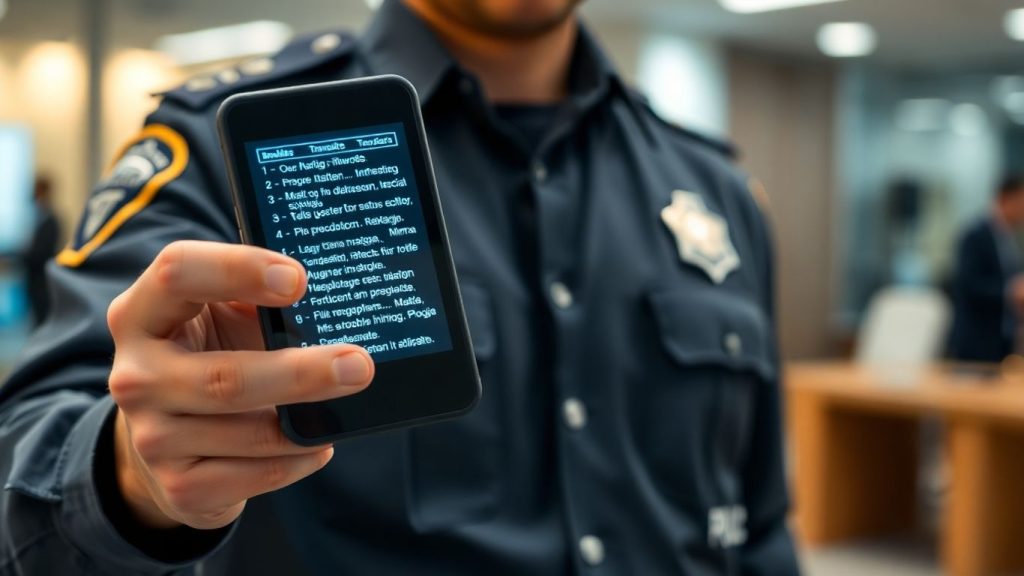
A groundbreaking artificial intelligence translation technology is revolutionizing how local police departments interact with diverse communities. This innovative tool is proving invaluable in bridging language barriers, enhancing communication, and improving the effectiveness of law enforcement operations. Immigration and Customs Enforcement (ICE) has expressed significant interest in adopting this technology nationwide.
Key Takeaways
- Enhanced Communication: The AI technology facilitates real-time translation, allowing officers to communicate more effectively with individuals who speak different languages.
- Improved Community Relations: By breaking down language barriers, the technology fosters better understanding and trust between law enforcement and the communities they serve.
- Operational Efficiency: Faster and more accurate communication leads to more efficient police work, from initial calls to investigations.
- Potential for Wider Adoption: Federal agencies like ICE are recognizing the benefits and considering broader implementation.
Bridging the Language Gap
In increasingly diverse communities, language barriers can pose significant challenges for law enforcement. Traditional methods of translation can be slow and cumbersome, potentially delaying critical interactions. This new AI-powered system offers a rapid and accessible solution, providing officers with instant translation capabilities directly on their devices.
How the Technology Works
The AI technology utilizes advanced natural language processing to understand and translate spoken or written language in real-time. This allows officers to engage in conversations with individuals who do not speak English, ensuring that vital information is accurately conveyed and understood. The system is designed to be user-friendly, enabling officers to quickly deploy it in various situations, from traffic stops to community outreach events.
Benefits for Law Enforcement and Communities
The implications of this technology are far-reaching. For police officers, it means a more confident and capable approach to interacting with a wider range of individuals. For communities, it signifies a more inclusive and accessible law enforcement presence. The ability to communicate clearly and effectively can de-escalate tense situations, ensure accurate reporting of incidents, and build stronger relationships between the police and the public.
Federal Interest and Future Prospects
Given its success at the local level, federal agencies such as Immigration and Customs Enforcement (ICE) are closely monitoring the development and deployment of this AI translation technology. The potential for nationwide adoption suggests a future where language is no longer a significant impediment to effective law enforcement and public safety.
Sources

Founder Dinis Guarda
IntelligentHQ Your New Business Network.
IntelligentHQ is a Business network and an expert source for finance, capital markets and intelligence for thousands of global business professionals, startups, and companies.
We exist at the point of intersection between technology, social media, finance and innovation.
IntelligentHQ leverages innovation and scale of social digital technology, analytics, news, and distribution to create an unparalleled, full digital medium and social business networks spectrum.
IntelligentHQ is working hard, to become a trusted, and indispensable source of business news and analytics, within financial services and its associated supply chains and ecosystems