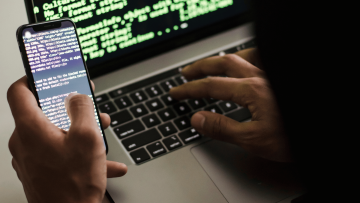
Imagine an adult protective services investigator sitting at a kitchen table while an older resident’s son scrolls through a smartphone app. On the screen is a history of refrigerator activity from the previous week.
The app suggests the refrigerator hasn’t been opened in days. A recent interior photo shows little food inside. Neither detail proves neglect, but together they could raise questions about whether the resident has been receiving adequate meals.
It’s a hypothetical scenario, but it illustrates a possibility for families and attorneys handling elder neglect and guardianship matters. Connected appliances may hold information that helps investigators understand what happened inside a home.

The In-Home Caregiver Case
Consider a paid aide responsible for preparing meals and checking on an older adult living at home. A dispute arises over whether the caregiver provided the services listed on a timesheet. If the household has a refrigerator that records door activity, those logs might provide additional context. A period without recorded activity could raise questions about meal preparation, particularly when compared with the caregiver’s reported hours.
But a refrigerator log isn’t proof that someone went without food. Meals might have been delivered, prepared elsewhere, or stored outside the refrigerator. The device could also have missed activity or failed to retain complete records.
The National Institute of Justice identifies food-related concerns, unexplained malnutrition, and inconsistencies in care records among potential indicators of elder mistreatment. Appliance data could supplement that evidence, but it cannot replace an investigation into the resident’s actual care.
The Adult Child Managing a Parent’s Household
A second scenario involves an adult child who moves in to help an aging parent, manages household expenses, and becomes responsible for meals. Over time, the parent’s weight drops, and relatives begin questioning whether basic needs are being met.
Here, refrigerator data could cut both ways. Records showing regular use might support an account of routine food preparation. An extended period of inactivity, combined with grocery receipts, medical records, or evidence of missing funds, might raise additional concerns.
Neither pattern establishes neglect on its own. In a guardianship dispute, the more important question is whether the available evidence demonstrates that the older adult’s needs are being met and whether a change in decision-making authority is warranted.
What the Fridge Actually Knows
Smart refrigerators vary considerably in what they record. Some offer interior cameras or connected-app features, while others provide little historical information that would help an investigation.
Depending on the model and configuration, potentially relevant information might include:
- Door activity. Some connected appliances track openings or send alerts, although a complete historical log may not be available.
- Interior images. Certain models capture refrigerator contents, potentially showing changes in stored food over time.
- Account information. Connected devices may retain information about linked accounts, applications, or household activity.
- Cloud records. Some information may be stored remotely, but availability and lawful access depend on the manufacturer’s systems and policies.
A digital evidence manual’s discussion of smart homes identifies connected refrigerators as potential sources of digital evidence, including app activity and calendar information. That doesn’t mean every refrigerator produces a reliable inventory history or that its records will be admissible in court.
The Data Has a Short Shelf Life
One challenge with connected-device evidence is preservation. Information may be overwritten, deleted, or retained for different periods depending on the device and service. A family might discover that the records it hoped to review are no longer available.
If neglect is suspected, documenting the concern promptly matters. Families can preserve information they are authorized to access, including relevant screenshots and available exports, while avoiding changes that could compromise the records.
An attorney may also help determine whether additional evidence can be preserved or lawfully requested from a manufacturer. The process isn’t always straightforward, and a preservation request doesn’t guarantee that historical data exists.
Where This Changes the Case
Elder neglect can be difficult to establish when an older adult cannot fully describe what happened and documentation is incomplete. Medical records, caregiver notes, financial information, and witness accounts may all help investigators evaluate the situation.
A smart refrigerator could contribute another piece of that picture. Its records might support a caregiver’s account, contradict a claimed routine, or point investigators toward questions they hadn’t considered.
But the appliance isn’t an independent witness to whether someone ate, received medication, or was properly supervised. Its data needs context, authentication, and careful interpretation.
For families concerned about an older relative’s care, the value of smart-home information lies in what it can help clarify—not what it supposedly proves on its own. The refrigerator may remember certain household activities. Determining what those activities mean still requires people to investigate.