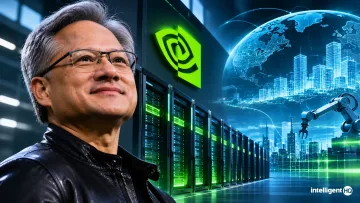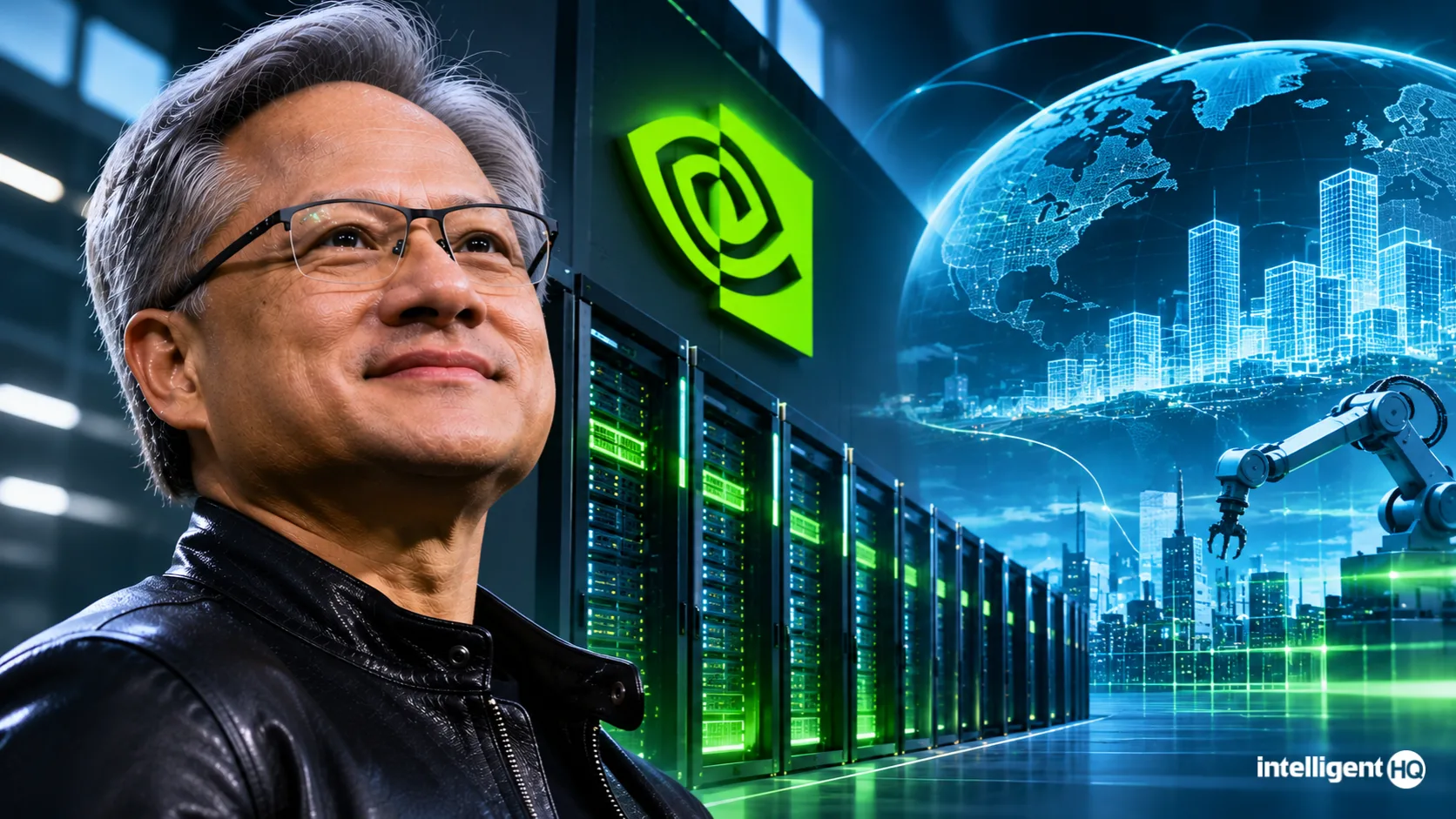
On 23 November 2026, NVIDIA’s board unanimously reinstated Jensen Huang as President, CEO and Board Director, effective immediately. After two turbulent weeks, the company at the centre of the AI revolution has its founder back in charge.
For the technology industry, the question is not only who leads NVIDIA, but what his return means for the AI roadmap that so many companies, governments and startups now depend on.
NVIDIA’s place in the AI stack
NVIDIA’s influence now reaches across what it calls the five-layer cake of AI: energy, chips, infrastructure, models and applications. Its GPUs, networking, software and simulation platforms underpin everything from large language models to robotics and digital twins.
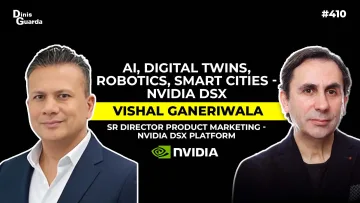
At NVIDIA GTC Berlin 2026, Dinis Guarda interviewed three of the company’s leaders, and their perspectives show how broad that role has become:
- Michael Kagan, NVIDIA’s CTO, explained how the unit of computing has grown from a single chip to the data centre itself, and argued that every country and every enterprise will need its own AI factory.
- Tobias Halloran, Director of Startups at NVIDIA Inception, described a programme supporting more than 40,000 startups, open to founders with minimal requirements.
- Vishal Ganeriwala, Senior Director of Product Marketing, described AI factories as token generators, “electricity in and tokens out”, designed and tested as digital twins before they are built.
This is the ecosystem that watched closely as NVIDIA’s leadership changed hands twice in under two weeks.
Why continuity matters
Technology roadmaps at NVIDIA’s scale are built years in advance, across chip architectures, software platforms and partnerships with cloud providers, governments and enterprises. Leadership uncertainty can ripple through that entire ecosystem.
Huang’s return, with Harvey C. Jones remaining Chair and Colette Kress continuing as CFO, signals continuity for NVIDIA’s strategy across AI factories, sovereign AI, physical AI and accelerated computing. For the thousands of startups and partners building on NVIDIA’s platforms, that stability is significant.
Governance for AI’s infrastructure companies
The reinstatement also brings new oversight. NVIDIA says an independent committee of directors is investigating reports that Huang was the target of a foreign intelligence effort. A new National Security and Export Control Committee will oversee trade compliance and national security risks, and a new Chief Compliance Officer will report to the board’s Nominating and Corporate Governance Committee. The board also said senior US government officials confirmed that Huang’s return poses no national security risk.
These measures reflect a broader shift. As AI companies become critical infrastructure, they face governance expectations closer to those of utilities and defence suppliers than of traditional technology firms. Export controls, national security and supply chains are now central to their operations.
What to watch next
- Product and platform momentum across AI factories, robotics and physical AI.
- The outcome of the independent investigation and ongoing government inquiries.
- Export control policy, particularly around China and AI chip exports.
- Ecosystem confidence, among startups, cloud partners and governments building sovereign AI.
NVIDIA’s founder is back. The next chapter will show whether stronger governance can keep pace with one of the most influential companies in technology.
Sources
- NVIDIA Board Reinstates Jensen Huang as President, CEO and Board Director, NVIDIA Newsroom, 23 November 2026
- NVIDIA Corp, Form 8-K: Board Reinstates Jensen Huang, US Securities and Exchange Commission, 23 November 2026
- Jensen Huang Offered to Come Back and Nvidia Gained $90 Billion in 10 Minutes, 24/7 Wall St via Webull, November 2026