
When someone talks to a voice AI agent, several things happen in under a second. The agent has to hear the words, understand them, decide on a reply and then say it out loud.
Here, orchestration is the part that keeps all of these steps working together, a bit like a conductor keeping an orchestra in time.
So, this guide looks at 3 platforms that handle this coordination for you, explaining how each one runs a conversation.
Telnyx Vs Vapi Vs LiveKit At A Glance
| Telnyx | Vapi | LiveKit | |
| Main Approach | Phone network, speech and AI in one stack | Managed platform for voice agents | Open source framework plus cloud |
| Ways To Build | No-code builder or APIs | Configuration and APIs | Python or Node.js code |
| Where Agents Talk | Phone calls | Voice calls | Apps, browsers and phone calls |
1. Telnyx
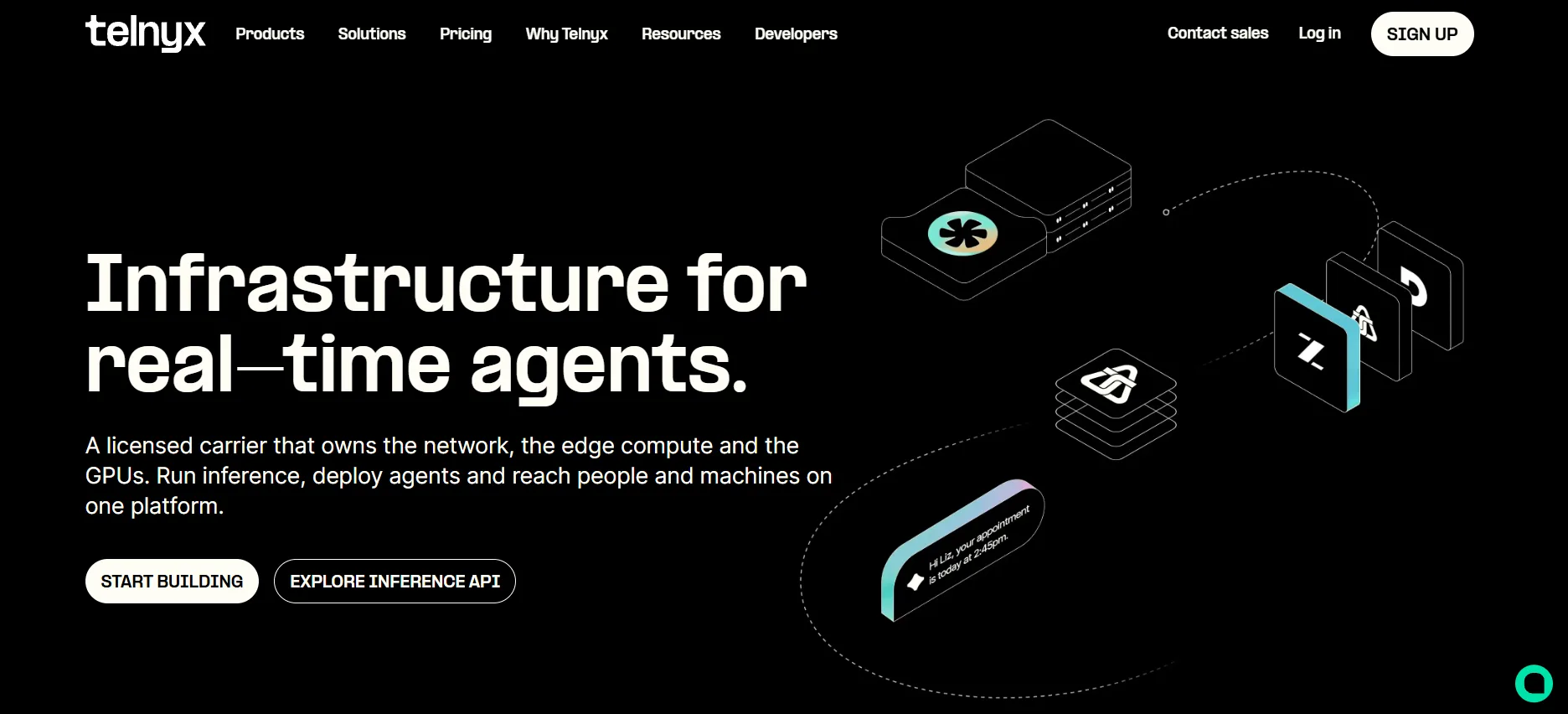
Telnyx is a voice AI platform that replaces several separate vendors with one system, covering the phone line, speech and AI models.
How Orchestration Works On Telnyx
With many setups, each step of a call is handled by a different company, and the voice has to travel between them.
Telnyx keeps telephony, speech-to-text, the AI model, text-to-speech and orchestration in a single stack instead. Moreover, this means teams work with one platform instead of stitching together around five different vendors.
This matters when comparing voice AI orchestration tools, because every extra handoff between services is one more place where a conversation can slow down.
Setting up an agent is simple too. You choose the models, voice and infrastructure the agent runs on, and once it’s live, the agent can speak, route calls and take actions on its own.
Strengths That Stand Out
- Owned end-to-end: The carrier network, the AI computing and the orchestration in between all belong to Telnyx, so the audio never has to leave the network to reach a model.
- Fast replies: The AI runs right next to Telnyx’s telephony points, which, as Telnyx claims, keeps the round trip for each reply under 200 milliseconds.
- Strong compliance: Telnyx is SOC 2 Type II, HIPAA, PCI DSS, ISO 27001 and GDPR compliant, with infrastructure deployed in the EU.
- No-code builder: The AI Assistant Builder lets you describe how the agent should behave in plain language, then test it in a browser simulator before going live.
- Easy model switching: OpenAI-compatible endpoints mean you can change providers without rewriting your code.
- Ready-made connections: More than 30 pre-built integrations across 13 categories link agents to CRMs, analytics and automation tools.
- Choice of voices: One text-to-speech API gives access to voice engines like ElevenLabs, MiniMax and Resemble AI, without locking you in.
A Good Match For
Teams that want the phone line and the AI orchestration handled by one provider.
2. Vapi
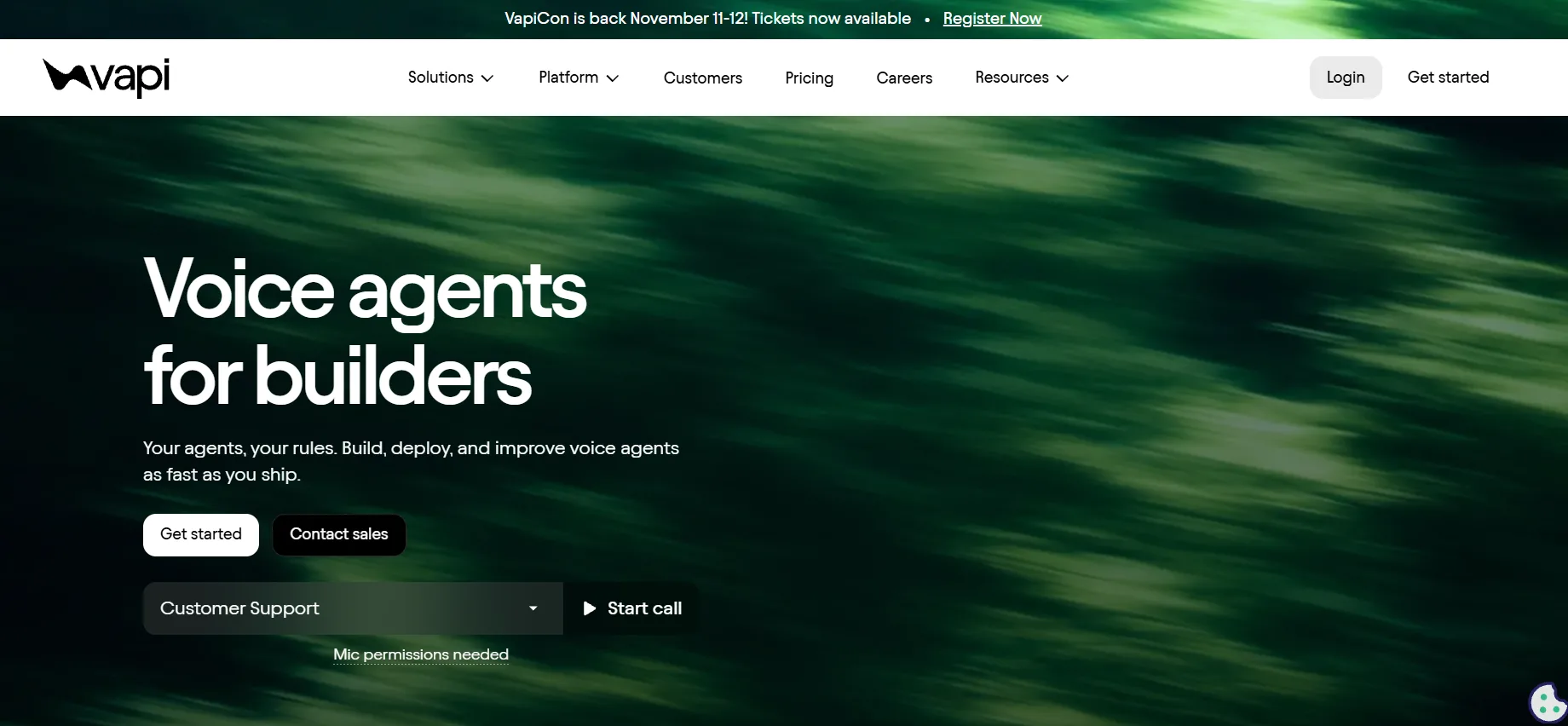
Vapi is a voice agent platform made for builders who want to set up, launch and improve agents quickly.
How Orchestration Works On Vapi
Vapi brings orchestration and real-time monitoring together on one platform. From there, you configure the agent’s voice, the way the conversation flows, the phone setup and the tools it connects to. Therefore, you can focus on how the agent should talk, while Vapi takes care of the infrastructure behind it.
Once the agent is live, Vapi tracks how every call goes. This helps you see what’s working, notice what isn’t and keep improving the experience over time.
Strengths That Stand Out
- Built-in guardrails: Conversation guardrails help stop the AI from making things up and protect the integrity of your data.
- Room to grow: The platform can scale up to millions of calls.
- Secure access: SSO, OAuth and role-based access controls let teams manage who can do what.
- Hands-on help: Enterprise customers can get a dedicated engineer who works with their team to launch.
A Good Match For
Teams that want a managed platform to launch and fine-tune voice agents without running the infrastructure.
3. LiveKit
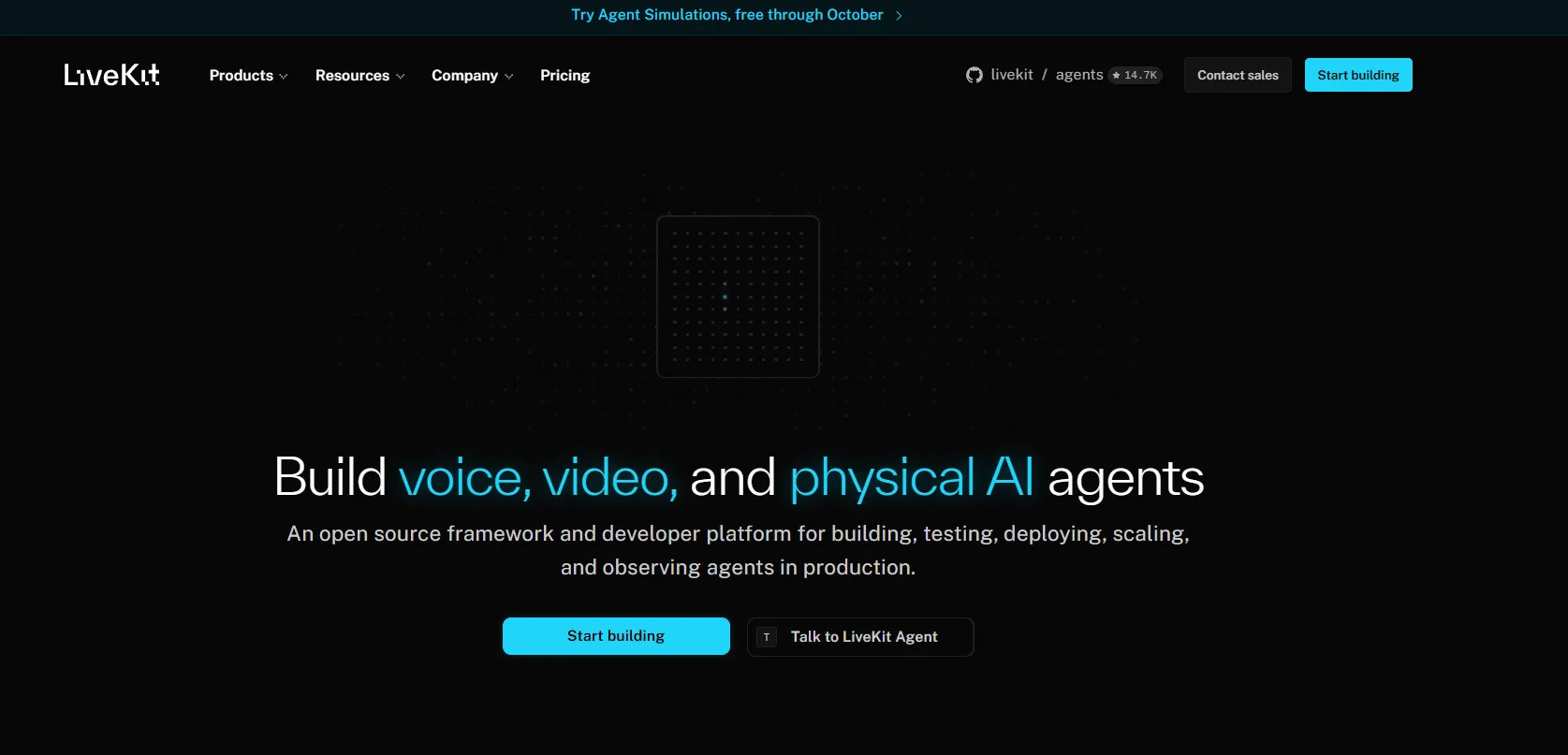
And finally, LiveKit is an open source framework and developer platform for building voice, video and physical AI agents.
How Orchestration Works On LiveKit
LiveKit breaks a conversation into four simple steps. First, a person speaks to the agent through an app, a browser or a phone call. Then their speech streams to the agent, the agent runs your own business logic and finally it answers back.
To make this feel natural, LiveKit says it handles turn detection and interruptions automatically, so the agent knows when you’ve finished talking and when you jump in.
Developers write the agent in Python or Node.js and can then deploy it on LiveKit Cloud.
Strengths That Stand Out
- One gateway for models: An inference gateway gives access to speech-to-text, language and text-to-speech models.
- Phone support: Phone numbers and SIP integrations let agents make and take calls.
- Global reach: Agents run across 19+ regions worldwide.
- Session insights: Full observability shows what happens in every agent session.
A Good Match For
Developer teams that want full control in code and agents that work beyond phone calls.
Wrapping Up
Voice AI orchestration is what turns separate tools into one smooth conversation, and each of these platforms handles it in its own way.
Telnyx fits teams that want agents linked to their CRM and other tools without custom work. Vapi suits teams that want to launch fast and keep improving. LiveKit works for developers who want to build in code and run agents in 19+ regions.
So, think about where your callers reach you and how much your team wants to build itself, then pick the platform that matches.