
NVIDIA researchers have completed a record-scale simulation of a 104-qubit fault-tolerant quantum computing system using Europe’s JUPITER supercomputer, validating an approach that could reduce physical qubit requirements by 90% and accelerate the development of practical quantum technologies.
NVIDIA has announced a breakthrough in quantum computing research, completing what it describes as the largest comprehensive simulation of a fault-tolerant quantum computing system to date.
The achievement, announced on October 19, 2026, was carried out using JUPITER, Europe’s first exascale supercomputer, located at the Jülich Supercomputing Centre in Germany.
Running on NVIDIA GH200 GPUs, researchers simulated a 104-qubit quantum processor in sufficient detail to investigate how a realistic fault-tolerant system could perform complex quantum computations under the influence of physical noise.
The simulation also validated a promising technique known as magic state cultivation, which NVIDIA says could require 90% fewer physical qubits than previous approaches.
The development marks an important intersection between accelerated classical computing and the effort to build reliable, commercially useful quantum computers.
Why fault tolerance is one of quantum computing’s biggest challenges
Quantum computers use quantum bits, or qubits, to process information in ways that differ fundamentally from conventional computers. These systems could eventually become valuable for certain classes of problems in chemistry, materials science, optimisation and scientific simulation.
However, developing useful quantum computers remains technically difficult because qubits are highly sensitive to disturbances from their environment.
Noise, unwanted interactions and imperfect operations introduce errors that can disrupt calculations before they produce reliable results.
Fault-tolerant quantum computing attempts to overcome these limitations through error-correction techniques, allowing complex computations to continue even when individual physical components experience errors.
Achieving this reliability has historically required substantial hardware overhead. A single protected logical qubit can require many physical qubits, depending on the architecture and error-correction method.
Reducing that overhead is therefore one of the most important challenges in the development of scalable quantum computers.
NVIDIA validates a more efficient quantum computing approach

NVIDIA’s latest work focuses on magic state cultivation, a technique designed to help prepare the specialised quantum states needed for certain fault-tolerant computations.
These states are essential for performing operations that extend beyond the limited set of calculations more easily protected by conventional quantum error-correction methods.
The technique offers a potential way to reduce the amount of physical hardware required to achieve useful fault-tolerant performance.
According to NVIDIA, its simulation validates an approach that could use 90% fewer physical qubits than previous methods.
This is a comparison involving the proposed fault-tolerant computing approach, not a claim that NVIDIA has already built a physical quantum computer with 90% fewer qubits.
By simulating the system in detail, researchers can investigate its behaviour, measure the effects of noise and refine proposed architectures before committing to expensive hardware development.
The approach may reduce the amount of experimentation required on physical quantum processors and provide more detailed evidence for future engineering decisions.
JUPITER demonstrates the role of classical supercomputers in quantum research
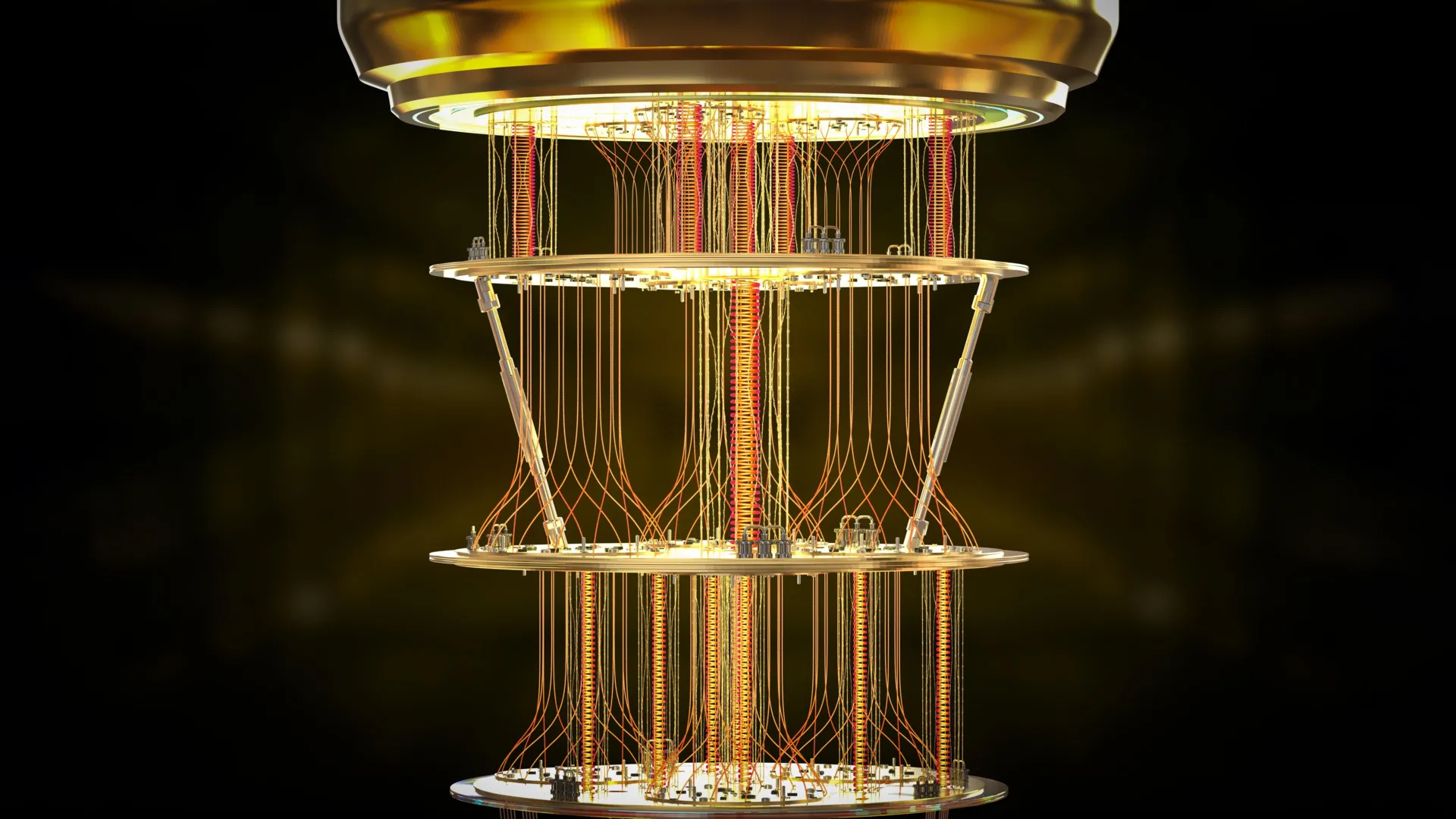
An important aspect of the announcement is that the breakthrough was achieved through classical high-performance computing infrastructure.
JUPITER, based at the Jülich Supercomputing Centre, is Europe’s first exascale supercomputer and provides the computational resources required for exceptionally demanding scientific workloads.
The NVIDIA research used the system’s GH200 GPU architecture to simulate a fault-tolerant quantum processor at a scale and level of detail that the company describes as unprecedented.
Unlike running a quantum algorithm on physical quantum hardware, this process uses conventional computing resources to model the behaviour of a quantum system.
Such simulations are extremely computationally demanding because the mathematical information required to represent quantum systems can grow rapidly as the number of qubits increases.
Nevertheless, high-performance simulation remains an important tool for validating proposed architectures, studying error correction and identifying technical limitations before hardware is constructed.
The research illustrates how classical accelerated computing and quantum computing can play complementary roles rather than existing only as competing technological approaches.
Could quantum computing become commercially practical sooner?
The commercial significance of fault-tolerant quantum computing lies in its potential ability to solve certain problems that remain extremely challenging for conventional computing systems.
In pharmaceutical research, future quantum computers may enable more advanced simulations of molecular interactions and chemical processes.
In materials science, quantum simulation could support the investigation of new materials and their properties, including applications in energy systems and advanced manufacturing.
Financial institutions are also exploring whether quantum algorithms could eventually contribute to selected modelling and computational workloads.
These possibilities remain longer-term research objectives, however. NVIDIA’s announcement does not demonstrate that quantum computers are already delivering these advantages in commercial production.
Instead, the research addresses a foundational engineering problem: how to make reliable quantum computation more achievable with fewer physical resources.
If techniques such as magic state cultivation perform effectively on future quantum hardware, they could help reduce some of the practical barriers to scaling fault-tolerant systems.
Accelerated computing becomes an important research foundation
The announcement also underlines NVIDIA’s expanding role in advanced computing research.
The company’s GPUs are widely used for AI model development, scientific computing and simulation. Quantum research introduces another potential application for large-scale accelerated computing infrastructure.
Researchers can use such systems to test theoretical designs, investigate different noise scenarios and assess whether proposed algorithms or error-correction methods can operate within realistic engineering constraints.
This creates a feedback loop between classical supercomputing and quantum hardware development.
Instead of depending entirely on experimental quantum devices, scientists can use simulation to narrow the range of promising designs and identify potential failure points earlier.
As quantum processors grow in complexity, access to advanced simulation technologies could become increasingly valuable to research laboratories, hardware developers and academic institutions.
What comes next for fault-tolerant quantum computing?
The next challenge is translating insights from detailed simulations into advances on physical quantum processors.
Researchers will need to demonstrate that proposed error-correction approaches can operate reliably on real hardware, with performance that justifies their complexity and associated costs.
Improvements in qubit stability, control systems, error correction and hardware architecture will remain essential.
NVIDIA’s 104-qubit simulation does not remove these challenges, but it provides researchers with a more detailed way to investigate them.
For the quantum computing industry, the achievement suggests that progress will depend not only on building more qubits, but also on finding more efficient methods to protect and use them.
The long-term significance of the research may therefore lie in the relationship it establishes between computational simulation and quantum engineering.
As more ambitious quantum processors are developed, high-fidelity classical simulation could become an increasingly important part of the process of designing, testing and validating their capabilities.
Sources
- NVIDIA Runs Record Simulation of Fault-Tolerant Quantum Computing at Jülich Supercomputing Centre (19 October 2026) https://investor.nvidia.com/news/press-release-details/2026/NVIDIA-Runs-Record-Simulation-of-Fault-Tolerant-Quantum-Computing-at-Jlich-Supercomputing-Centre/default.aspx
- NVIDIA GTC Berlin 2026 News and Announcements https://blogs.nvidia.com/gtc-berlin-2026-news/