For businesses managing equipment across multiple sites, simply knowing a valuable asset’s current location is invaluable. Vehicles, machinery and tools move constantly between depots, job sites and subcontractors, and for decades the honest answer to “Where is our equipment right now?” was often a shrug.
Thanks to asset tracking, that question has largely been solved. What’s changing now is the question businesses are starting to ask next: not just where an asset is, but what it’s about to do, when it will need attention, and how it should be deployed tomorrow.
This shift is where asset tracking is heading, and it’s worth understanding both how far the visibility layer has come and what it will take for the predictive layer to follow.
Enhancing visibility
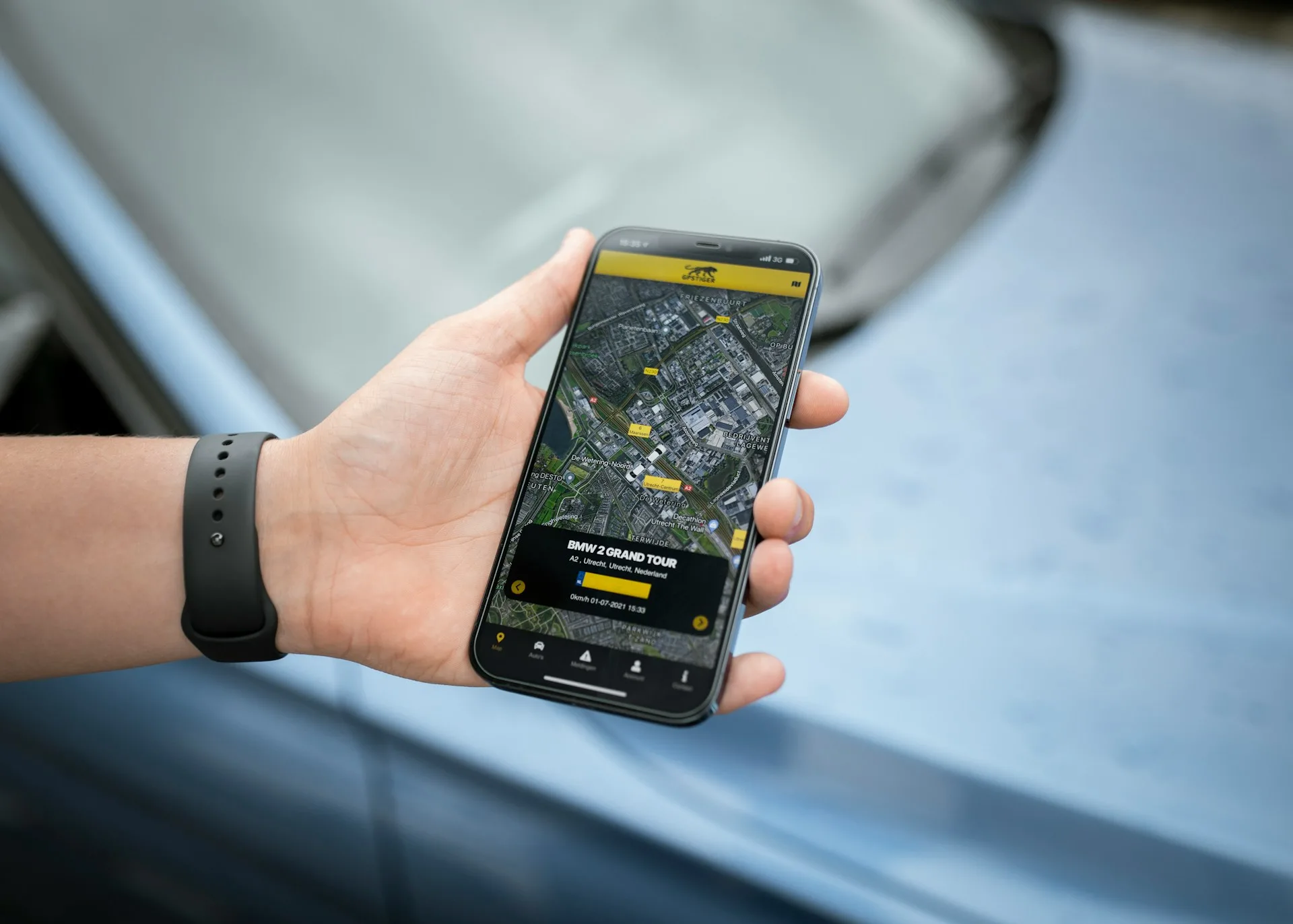
Real-time location tracking has matured quickly over the years. Rather than relying on a single GPS signal, modern trackers combine real-time GPS, giving usable location accuracy. Updates arrive roughly every minute, geofences trigger instant alerts on tamper or unauthorised movement, and a single dashboard pulls together everything from a toolbox to a fleet vehicle.
Trackers now come in different types for different assets. Unpowered items such as shipping containers and plant equipment need battery-powered units that last for years. Generators and HVAC units can run a tracker off their own power supply. Heavy machinery on construction sites needs hardened units that can survive dust, water, and impact.
The right tracking system won’t treat ‘asset tracking’ as just one product. Instead, it treats it as a layer that fits a genuinely wide range of physical things: unpowered items, powered equipment, heavy machinery, and small high-value inventory, which don’t all move or fail the same way.
Businesses across construction, transport and logistics, utilities, vehicle rental and insurance can use this kind of visibility to deter theft, cut replacement costs through faster recovery, and make better calls about where equipment needs to sit next. It’s telling that organisations with genuinely complex, distributed estates — DHL, the NHS, Severn Trent, United Utilities and Openreach among them — have converged on the same basic requirement: one dashboard, real-time, for every asset that moves.
Why visibility alone has a ceiling
A location dot can show that an excavator has been idle on site for three days, but not why, or what that idle time is costing. A geofence alert tells you a machine left the yard at 2 am, but by then it’s already gone. Tracking reports what has happened or is happening now, and someone still has to look at the data, work out what it means and decide what to do.
That’s fine at small scale. It breaks down once an organisation is running hundreds or thousands of tracked assets across dozens of sites, because the volume of raw location and usage data quickly exceeds what any operations team can meaningfully watch in real time.
The data is being captured, including usage history, audit trails of who accessed a machine, motion and tamper events, and utilisation patterns across job sites. But capturing it and acting on it intelligently are two different problems.
This is, in effect, the same ‘dark data’ challenge that has shown up elsewhere in physical-world business intelligence: rich, structured information is being generated constantly, and most of it is reviewed only after something has already gone wrong.
From visibility to prediction
AI works on top of existing tracking systems rather than replacing them. A modern platform already records location by the minute, motion and tamper events, usage history and a log of who used each piece of equipment. Machine learning models can find patterns in that data, which means tracking can start to answer questions such as which machines are underused, which are likely to fail, and which movements look like theft.
Instead of an alert after a machine has already been moved without authorisation, a model trained on historical movement patterns can flag anomalous behaviour before it fits a known theft pattern. Instead of finding out a generator has failed on site, usage and runtime data can feed predictive maintenance models that flag which unit is statistically likely to need servicing next, before it becomes downtime on a job that’s already behind schedule. Instead of manually reviewing utilisation reports across job sites, a business can get standing recommendations on which equipment is sitting idle in one location while another site is paying to hire the same class of asset.
The underlying data doesn’t change. What changes is whether a person has to go looking for the insight, or whether the insight arrives already surfaced.
This mirrors a pattern playing out with other equipment that collects data. Wherever a sensor has been generating structured data, such as a camera, a tracker, or badge reader, the next step is rarely more sensors. It’s software that finally puts the existing stream of data to work.
Asset tracking, having spent the past decade solving the hardware and connectivity side of “Can we see it?” is now positioned to go through the same transition.
What this looks like in practice
For the industries that have adopted real-time tracking most aggressively (construction, logistics, utilities, rental and insurance), the move to prediction is less a leap than a natural next step, because the discipline of instrumenting assets is already in place.
The businesses best placed to use this are the ones already tracking their assets closely. A construction firm geofencing its excavators and cranes could use that data to predict which machine is most likely to need maintenance before the next big pour. For logistics operators, pallet and container data can show where utilisation bottlenecks are forming before they cause a missed delivery. Insurers already use tracker data to recover stolen vehicles, and the movement patterns behind those recoveries are exactly what predictive theft models are built from.
None of this requires ripping out existing infrastructure. It requires treating the tracking layer not as an end in itself, but as the sensing foundation that predictive tools are built on top of. This is as much as businesses are learning to treat other underused physical-world data streams as the raw material for the next generation of operational intelligence, rather than as a byproduct to be reviewed only after the fact.
The trajectory is clear
Asset tracking spent its first era answering “Where is it?” and did so well enough that visibility is now table stakes for any business managing distributed equipment. The next era will be defined by what’s done with everything that visibility has been quietly capturing all along: usage patterns, movement history, tamper events and utilisation data that, until recently, mostly sat unused between the moment they were logged and the moment something went wrong.
AI is becoming the default way businesses interpret their tracking data. That shift favours companies whose data is already clean and consistent, because an AI model can only work with what it’s given. Adding more trackers won’t help if the data behind them is patchy.