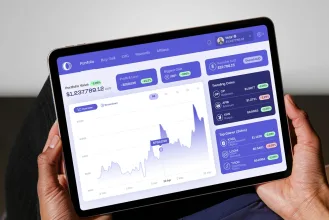
Most teams shopping for a Google Maps rank tracker start from a vendor’s feature list instead of their own requirements, and the two rarely match. A vendor page can make almost any tool look complete. A marketing team running five locations, or an agency reporting to a dozen clients, needs something narrower: a way to know whether the tool actually measures what the business thinks it’s measuring, and whether that measurement will still hold up once a client asks why their “top ranking” hasn’t produced a single new call.
That mismatch is usually discovered after the contract is signed, not before. The fix is evaluating a rank tracker against a fixed set of criteria before comparing brand names.
Rank Tracking Splits Into Three Very Different Categories of Tool
Not every product marketed as a “rank tracker” is solving the same problem.
- Single-point checkers. These query rank from one fixed location, usually the business address. Fast and cheap, but a business that draws customers from a 15-mile radius has no idea how it ranks 10 miles away, only at its own front door.
- Geo-grid trackers. These scan rank across a grid of points spread over a defined service area, producing a heatmap instead of one number. This is the category built for how customers actually search: from wherever they happen to be, not from a business’s exact coordinates.
- Agency and enterprise dashboards. Built around managing many locations or client accounts at once, with white-label reporting, bulk scanning, and team permissions layered on top of whichever tracking method sits underneath.
A business evaluating a purchase needs to know which category it’s actually looking at, since the pricing, the setup effort, and the resulting data all follow from that choice.
What the Best Google Maps Rank Trackers Actually Measure
Once a tool is confirmed to be a genuine geo-grid tracker rather than a single-point checker, the real evaluation starts. A handful of criteria separate a tool that produces defensible reporting from one that produces a number nobody can act on.
Grid density and custom service areas. A wider grid with more points, drawn around the business’s actual service radius rather than a generic city boundary, catches ranking gaps a single average score hides entirely.
Scan type flexibility. A one-time scan is fine for an initial audit. A business tracking progress over months needs recurring scans on a schedule, and a service-area business with no storefront, a mobile locksmith or a home-cleaning franchise, needs a scan type built for that model specifically, not a workaround bolted onto a storefront-first tool.
Competitor visibility at the point level. Knowing the overall average rank is far less useful than being able to click a specific underperforming neighborhood and see exactly which competitors are dominating it and why.
Whether the tool actually separates two different rankings that get reported as one. This is the criterion most listicle-style buying guides skip, and it’s the one most likely to produce a bad decision. Here’s the plain version: a Google Maps rank tracker measures where a business shows up inside the Maps app itself, a ranking driven heavily by how close the searcher is standing. That is not the same number as where the business shows up in the 3-Pack on the main Google search results page, a ranking driven more by review signals and overall prominence than by proximity. A business can hold a strong Maps position and a weak 3-Pack position at the same time, and most single-metric dashboards report only the one that happens to look better.
| Criterion | What to check | Why it matters |
| Grid density & service area | Custom, drawable radius vs. fixed city boundary | Determines whether the data reflects where customers actually are |
| Scan type coverage | One-time, recurring, and service-area-business (no storefront) options | Matches the tracking method to the business model, not the other way around |
| Point-level competitor detail | Click-through to see who’s winning each specific area | Turns a number into something a team can act on |
| Proximity vs. prominence separation | Does the tool report Maps rank and Local Pack rank as two distinct figures, or blend them | Prevents a false “we’re ranking well” read that a client discovers is wrong months later |
| Reporting and export | White-label output, bulk scans, multi-location rollups | Determines whether the tool scales past a single location |
The Metric Most Rank Trackers Get Wrong
The proximity-versus-prominence gap deserves its own section because it’s the criterion vendors are least likely to explain clearly, since explaining it honestly means admitting their own dashboard might be reporting an incomplete picture.
A business that ranks #1 in Google Maps at its own address but doesn’t appear in the 3-Pack when a customer searches without specifying a location has a real, measurable gap between two things that get casually described as “the same ranking.” A handful of newer platforms, including Local Pack tracking tools like the one built into Local Dominator, run both scans in parallel specifically so a business or agency can see the two figures side by side instead of assuming they move together. What your Maps rank doesn’t show is worth a closer read for any team that has only ever looked at one side of that split.
Weighing These Criteria Differently as a Multi-Location Brand or Agency
A single-location business can often tolerate a simpler tool, since there’s only one service area and one set of competitors to track. That calculation changes fast once a brand or agency is managing several locations or client accounts.
At that scale, the reporting layer matters as much as the scanning method. A grid scan with excellent data but no white-label export, no bulk-scan scheduling, and no way to roll multiple locations into one dashboard view creates a manual reporting burden that erases most of the time the tool was supposed to save. An agency evaluating tools for client work should weight the reporting and multi-location criteria at least as heavily as raw scan accuracy, since the accuracy advantage of one tool over another rarely survives contact with a spreadsheet built by hand every month.
Turning This Into an Actual Shortlist
Criteria alone don’t pick a tool, they narrow the field. Once a team knows it needs a true geo-grid tracker, with SAB scan support, point-level competitor detail, and a clear Proximity-versus-Prominence split, a tool-by-tool breakdown against those specific criteria is a faster way to shortlist than working through eight vendor homepages from scratch.
Frequently Asked Questions
Is a Google Maps rank tracker the same as a Local Pack tracker? No. A Google Maps rank tracker measures proximity-based visibility inside the Maps app. A Local Pack tracker measures 3-Pack visibility on the main search results page, which behaves differently and is driven more by prominence signals than distance from the searcher.
Does a single-point rank check tell a business anything useful? It tells a business its rank at one specific location, which is a reasonable starting point but not a substitute for grid-based tracking once the business serves an area wider than its own front door.
How often should Google Maps rankings be checked for a multi-location business? Recurring, scheduled scans catch drift that a one-time snapshot misses, especially across several locations where a single algorithm update can move different offices in different directions at once.
Local Dominator is a local-SEO and AI-search visibility platform built by a team of agency veterans and local-SEO pros. It helps marketing agencies and local businesses track and improve how they rank across Google Maps, search results, and AI answer engines from one dashboard, with rolling credits, bulk actions, and transparent, no-hidden-fee pricing.