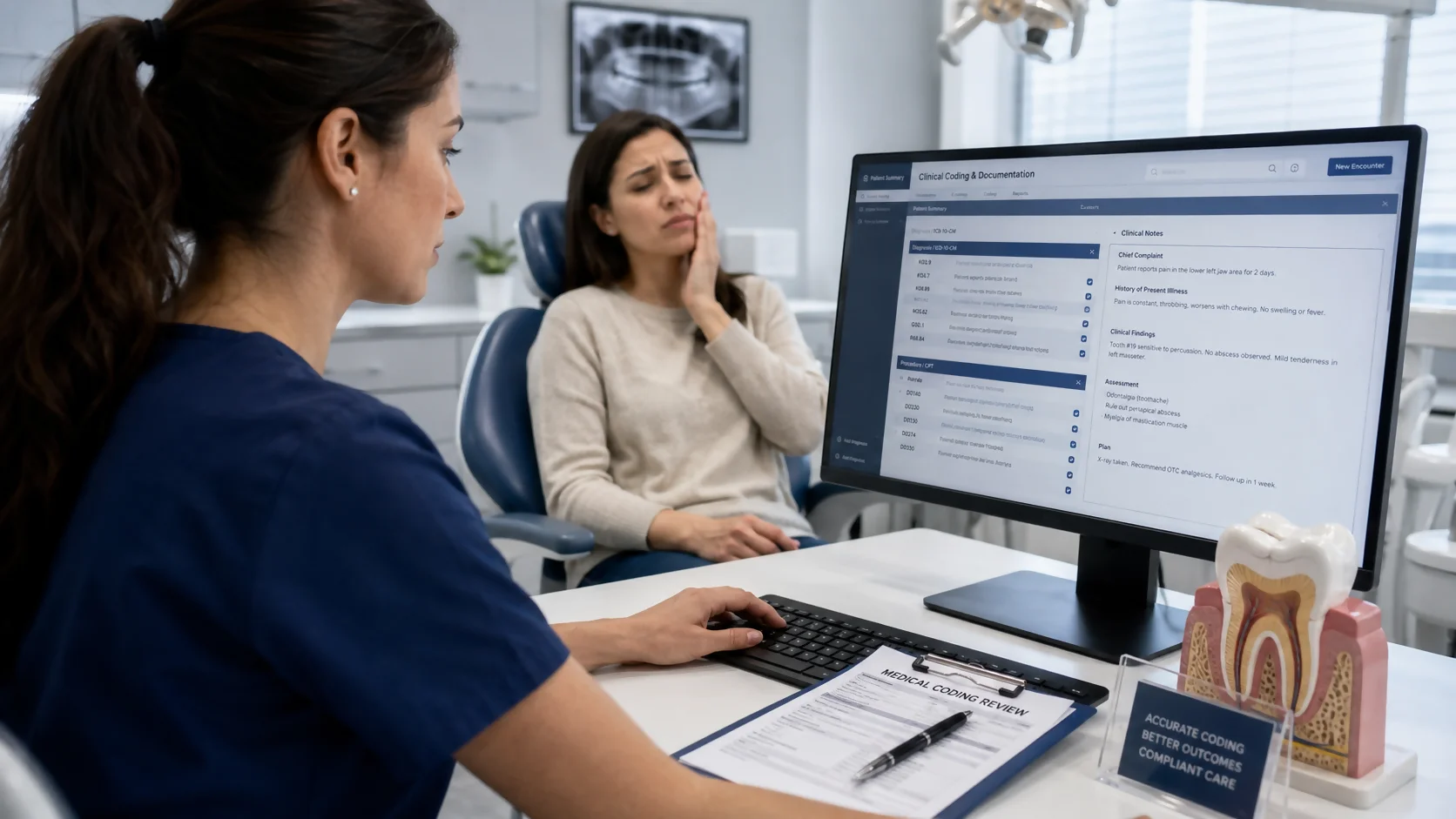
Accurate coding for toothache and orofacial disorders bridges clinical care, billing, and epidemiology. Coders and clinicians who collaborate to capture diagnostic nuance reduce denials, improve patient records, and support appropriate care pathways. This article outlines practical best practices for coding orofacial pain, emphasizing documentation, selection logic, and risk management strategies that apply across dental and medical settings.
Prioritize Definitive Diagnoses Over Symptoms
When the clinician can identify a specific cause—such as pulpitis, periapical abscess, temporomandibular disorder, or trigeminal neuralgia—that definitive diagnosis should be coded in preference to a symptom code. Symptom codes are useful for initial visits or when imaging and tests are pending, but continued use of symptom codes once a cause is established undermines data quality and can trigger audits. Ensure clinical notes explicitly state the diagnostic rationale: exam findings, imaging results, and response to treatments. If a tooth-specific etiology is identified, reference the dental record and operative findings to support code selection rather than defaulting to a generic orofacial pain symptom code.
Capture Laterality, Chronicity, and Severity
ICD-10 and related classification systems often distinguish laterality and chronic versus acute presentations. Notes should record whether pain is left, right, bilateral, recurrent, chronic, or acute. Chronic orofacial pain frequently requires different treatment pathways and can have implications for durable medical equipment, prolonged analgesic management, or multidisciplinary care. Document duration, frequency, and intensity using standard pain scales. When clinically relevant, indicate severity and functional impact—such as difficulty eating or sleeping—to support medical necessity for procedures, imaging, or specialist referral.
Differentiate Dental from Medical Causes
Orofacial pain can originate from dental pathology, neuropathic processes, musculoskeletal disorders, or referred pain from sinus or cervical sources. Coders should ensure alignment between the treating provider’s specialty and the coded diagnosis. For dental practice encounters, link diagnoses to dental procedures and tooth identifiers where applicable. In medical settings, provide clarity when a dental process is managed by a non-dental clinician, and document any dental referrals. When multiple potential etiologies are present, code the primary cause of the encounter and include secondary codes for comorbid conditions, such as sinusitis or neuropathy.
Use Supporting Codes and Modifiers Appropriately
Beyond primary diagnosis codes, supplement records with relevant signs and symptoms, external cause information when trauma is involved, and encounter codes that reflect initial versus subsequent visits. Z-codes can document factors influencing health status, such as a history of orofacial pain or a need for follow-up care. When procedural coding interfaces with diagnostic selection—such as endodontic procedures versus TMJ surgery—ensure the rationale for intervention is clear and consistent with the diagnosis code. Accurate sequencing of codes matters; list the diagnosis that most closely matches the reason for the visit and the service provided.
Document Diagnostic Testing and Imaging Findings
Imaging, pulp testing, and specialized evaluations like trigeminal nerve assessments provide essential evidence. Coders should note the presence and outcome of radiographs, CT scans, or MRIs, and link observed pathology to the chosen diagnosis code. When a test rules out a suspected cause, document that outcome and any resulting change in the working diagnosis. Properly annotated imaging reports and inclusive clinical notes reduce ambiguity and strengthen defenses against payor queries.
Maintain Consistency Between Clinical Notes and Billing
Discrepancies between the clinician’s narrative and submitted claims are a leading cause of denials. Standardize templates to prompt documentation of onset, laterality, diagnostic tests, and treatment responses. Encourage clinicians to avoid vague phrases like “rule out” as the definitive reason for billing; instead, clarify whether the visit was for evaluation, management, ongoing treatment, or definitive therapy. When telehealth is used for pain assessments, explicitly capture limitations of the virtual exam and any follow-up plans for in-person diagnostics.
Prepare for Audits and Utilization Reviews
Orofacial pain claims attract scrutiny when high-cost imaging or specialist procedures are billed without clear justification. Build auditable charts by linking each billed service to specific findings that support medical necessity. Maintain an internal review process where complex cases are reviewed by senior coders or clinical advisors before submission. Use documentation checklists that reflect payer policies for pain management and imaging to preempt common reasons for retrospective denials.
Invest in Education and Interdisciplinary Communication
Coding accuracy improves when coders understand clinical subtleties and clinicians understand coding implications. Regular cross-disciplinary training sessions help clinicians learn which details to capture and coders learn how clinical decisions translate into codes. Encourage direct queries from coders to clinicians for ambiguous cases rather than assuming. Creating a shared glossary of orofacial pain terms and mapping them to preferred codes reduces variation and supports consistent data capture.
Leverage Technology Wisely
Clinical decision support tools and natural language processing can flag ambiguous language and suggest candidate codes, but they must be used as aids rather than replacements for clinical judgment. Ensure any automated suggestions are reviewed for clinical appropriateness and local payer rules. Maintain version control and auditing on templates to prevent erroneous propagation of outdated coding guidance. When integrating dental and medical records, reconcile terminology differences so that the coded diagnosis reflects the clinician’s intent regardless of the system used.
Monitor Trends and Quality Metrics
Track denial reasons, repeat visits for unresolved pain, and referrals to specialists as quality indicators. Use that data to refine documentation practices and target educational gaps. Longitudinal coding trends can reveal systemic issues, such as over-reliance on symptom codes for chronic conditions or inconsistent use of laterality. Periodic chart reviews with feedback loops help sustain improvements.
When searching for coding guidance or examples for dental-related pain, remember to reference authoritative classification resources and payer-specific guidelines. For focused research on symptom coding and mapping in clinical systems, consult resources that discuss dental pain icd 10 and how symptom descriptors align with definitive diagnoses. Applying these best practices will improve claim accuracy, support patient care continuity, and provide better data for clinical decision-making and public health surveillance.