Accountability sounds great until someone turns it into a clipboard attack.
Nobody wants a boss who checks every move, questions every choice, and treats adults like lost interns. Teams need standards. They also need room to think. The trick is building a system where people own the work without a manager hovering like a drone over every blade of grass.
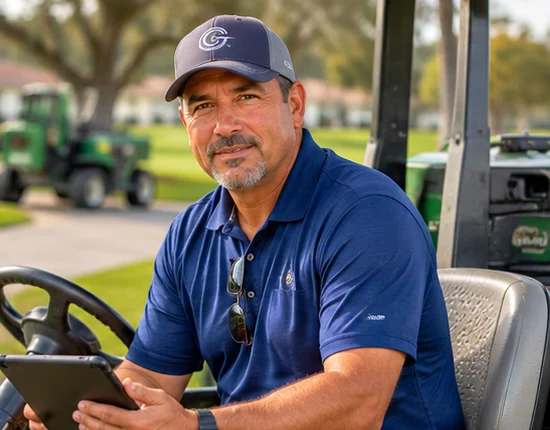
Ramon Aparece, Jr. knows this balance well. As Golf Course Superintendent at Palm Vista Country Club in Palm Beach County, Florida, he oversees a 27-hole championship layout, a staff of 32 full-time and seasonal employees, and a $2.8 million annual maintenance budget. His work depends on precision. Turf health, irrigation, weather shifts, hurricane planning, drainage, and daily course conditions all have to line up. One missed step can show up fast.
That makes accountability more than a workplace buzzword. It is how the operation runs.
“I learned early that you cannot inspect every sprinkler head yourself and still lead the whole course,” Aparece says. “At some point, the system has to carry the standard.”
That is the core idea. Accountability without micromanaging is not soft management. It is a structured trust.
Start With Clear Standards
People cannot be accountable for mysterious goals.
A strong manager says what good looks like before the work starts. That includes timing, quality, safety, communication, and the reason behind the task.
On a golf course, “check the greens” is too vague. A better instruction is: check moisture levels before play, flag dry spots, report anything outside the target range, and update the team before the morning cut.
That level of clarity removes guesswork.
“I tell crew members what result we need, not every footstep they need to take,” Aparece says. “If the greens need to be ready by first tee time, they need to know the moisture target, the mowing plan, and who to call if something looks off.”
In office terms, that means defining the outcome, the deadline, the decision owner, and the red flags. It also means writing fewer “just checking in” messages. Those messages are often micromanagement wearing a tiny hat.
Use Checkpoints, Not Chase-Downs
Micromanagers constantly check because they do not trust the process. Better leaders build checkpoints into the work.
A checkpoint is planned. A chase-down is reactive.
For example, a superintendent may not need to watch a crew member repair an irrigation head. But they do need a morning update, a completion note, and a flag if the repair affects play.
That model works in any team setting. Set a review rhythm before the work begins. Daily for urgent work. Weekly for ongoing work. After each milestone for project work.
Gallup reported that global employee engagement fell to 21% in 2024. Manager engagement also dropped, with managers seeing the sharpest decline. The message is simple. Managers are stretched, and teams are feeling it. More hovering will not fix that. Better rhythms will.
“I like short check-ins with a purpose,” Aparece says. “If a meeting does not help us make a decision, remove a blocker, or improve tomorrow’s work, it probably does not need to happen.”
That is a useful filter. A check-in should answer three questions: What is done? What is stuck? What needs a decision?
Anything more becomes meeting mulch.
Make Ownership Visible
Accountability grows when ownership is obvious.
Every task should have one clear owner. Not five “helpers.” Not a vague department. One person who knows they are responsible for moving it forward.
That does not mean they do all the work alone. It means they own the follow-through.
On a golf course, irrigation, mowing, bunker prep, drainage checks, and equipment staging may all have different owners. If heavy rain hits, the team should know who is checking low areas, who is protecting pump stations, and who is managing debris response.
“When a storm is coming, unclear ownership gets expensive fast,” Aparece says. “We assign equipment movement, pump station checks, fuel levels, and crew call times before the weather turns. Nobody should be asking, ‘Who had that?’ when the wind picks up.”
This is where many teams fail. They discuss work but do not assign work. They agree in spirit. Then deadlines slide because everyone thought someone else had it.
Use names. Use dates. Use simple tracking. Fancy tools do not matter if nobody updates them.
Coach the Decision, Not the Personality
When work misses the mark, weak managers attack the person. Strong managers inspect the decision path.
Ask what information was available. Ask what assumption failed. Ask where the process broke. Ask what will change next time.
That keeps accountability practical.
Aparece uses this approach with course conditions. If an area dries out, the useful question is not, “Why did you mess this up?” The useful question is, “Did we miss the moisture reading, the weather change, the sprinkler coverage, or the timing?”
“When turf fails, it usually leaves clues,” he says. “People are the same. If someone misses something, I want to know where the system let them drift.”
That does not remove responsibility. It makes responsibility useful.
A blame-heavy culture creates silence. People hide problems. They delay bad news. They hope the issue disappears. Spoiler: it does not.
A strong accountability culture makes early warnings normal.
Give People Room to Solve
Micromanaging often comes from fear. The manager thinks, “If I do not control this, it will fail.”
That fear creates a weird loop. The manager over-controls. The team stops thinking. The manager sees less initiative. Then the manager controls even more.
Break the loop by giving people real decisions.
Start small. Let team members choose the task sequence, suggest fixes, lead a short briefing, or own a single recurring process. Then expand responsibility as judgment improves.
Harvard Business Review has noted that companies perform better when leaders empower, encourage, and coach employees rather than manage through constant orders. That tracks with what good operators see on the ground.
“If I train someone to read turf stress, I cannot jump in every time they bend down to check a spot,” Aparece says. “I need to let them make the call, then talk through it after.”
That is how judgment gets built. Not through speeches. Through reps.
Measure What Matters
Accountability gets messy when teams track too many things or the wrong things.
Pick simple measures tied to the work. For a golf course, that may include turf quality, water use, repair response time, equipment readiness, member feedback, and storm recovery time.
For other teams, it may include delivery time, client response speed, error rates, customer satisfaction, or completed milestones.
Metrics should guide behavior. They should not become a scoreboard for public shaming.
“When we reduced water use at Gulf Dunes, the number mattered,” Aparece says. “But the real work was daily. We checked irrigation zones, changed turf in rough areas, and used reclaimed water where it made sense. The 28% reduction came from habits, not one big announcement.”
That is a key point. Accountability is not a poster. It is a loop: set the standard, do the work, measure the result, adjust the system.
Build Trust Before Pressure Hits
Anyone can claim they trust their team on a calm Tuesday. Real trust shows up during pressure.
Extreme weather has shaped Aparece’s thinking about leadership. During hurricane preparation, there is no time for confusion. Equipment must move. Pump stations need protection. Crew schedules must be clear. Debris plans need to be ready.
“During Hurricane Ian, the value of planning showed up before the cleanup started,” he says. “The crews knew where the equipment had to go. They knew which areas would flood first. That saved us time when the course was under stress.”
The lesson applies anywhere. Do not wait for a crisis to define roles. Do not wait for a deadline to explain quality. Do not wait for failure to teach communication.
Build the muscle early.
Replace Hovering With Better Questions
A manager trying to avoid micromanaging does not need to disappear. That creates a different problem.
The goal is not hands-off. The goal is useful involvement.
Ask better questions:
What do you need from me?
What could block this?
What decision are you making next?
What standard are you using?
What would make this easier next time?
These questions create ownership. They also keep the manager informed without taking over the work.
Aparece puts it plainly: “If I ask every crew member, ‘Did you do it exactly my way?’ I get compliance. If I ask, ‘What did you see, what did you decide, and what do you need?’ I get thinking.”
That is the difference.
How Great Leaders Stay Involved Without Taking Over
Accountability without micromanaging requires structure. It needs clear standards, visible ownership, planned check-ins, useful metrics, and honest feedback.
It also requires restraint.
Managers must resist the urge to grab the wheel every time the road gets bumpy. Teams learn by making decisions, reviewing outcomes, and improving the next run.
The best leaders are not absent. They are precise. They show up at the right moments. They teach the standard. They remove blockers. They let people build skills.
As Aparece says, “The course does not get better because one person controls everything. It gets better when the whole team knows the standard and takes pride in meeting it.”
That is accountability without the clipboard attack.