One of the few completely free options to join the real financial markets without risking real money is a demo trading account. See the price action of various instruments, get familiar with a trading platform, and begin developing an understanding of the market without any real cash.
The problem is that most people don’t make use of this time well. Some take it lightly and take positions that they would never take with their own money. Some spend some weeks studying charts and end up believing that they know more than they do. Both ways are not very productive in creating anything of value.
Here’s a candid assessment of what makes demo trading not only a sort of warm-up run but also actually educational.
Understanding What a Demo Account Actually Offers
The first step to making the most out of a demo trading account is knowing what it is and the limitations it will have. It is important to consider both sides of that picture, and failure to do so results in unrealistic expectations.
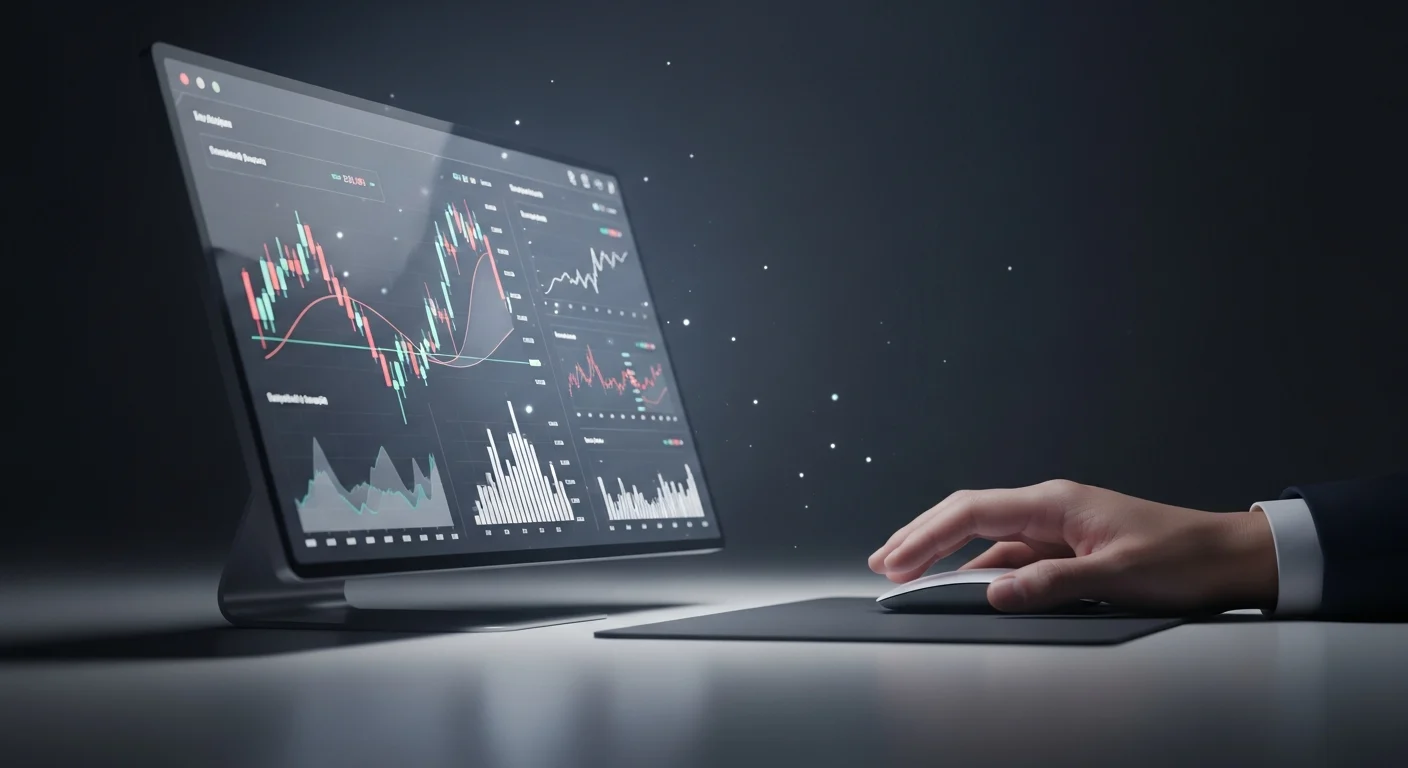
The majority of demo platforms provide access to real-time or live market information, including various asset classes (e.g., stocks, commodities, indices, cryptocurrencies, etc.) as determined by your broker. See what happens when an oil price chart moves during a big inventory release or how a currency pair moves before and after a central bank decision, but without any financial risk involved. It is a significant asset to real market behavior, even in an artificial market, to build pattern recognition.
What Can Be Realistically Practiced
In particular, demo accounts are a great way to gain platform literacy. This includes:
- Placing, changing and canceling various order types (market, limit, stop)
- Using charts of different time frames
- Knowing how margin, leverage and account equity are displayed
- Familiarizing yourself with the layout of the interface without putting money on the line
Sounds simple enough, but getting platform basics wrong (especially during a fast-moving session) is easy to do and expensive to correct! To take away this friction during demo time makes good use of the tool.
Apart from the platform, demo accounts are used for seeing the real-time behavior of different instruments, such as their real-time volatility, spread and sensitivity to macro events. This familiarity cannot be gained by reading alone and will take some time to develop.
Limitations of the Simulation
The greatest disadvantage of demo trading is also its biggest advantage: It has no real monetary risk. Virtual or simulated financial conditions versus real financial conditions have been studied with respect to decision-making, and it has been found that a person becomes more risky and makes different decisions under simulated financial conditions as compared to real financial conditions. This is not a design issue; it’s a real-life fact about human risk perception.
There’s also an execution gap. Many demo environments execute orders at the exact price quoted, but in real markets, orders may fill at different prices, partially fill, or the spread may widen, especially during volatile times. It’s easy and natural to think of the demo results as what they’d be in live trading, but it is a mistake.
Practices that are Likely to Make Demo Practice More Effective
Time on a demo account is not necessarily fruitful. By itself, passive observation of trades – watching trades being played out without any setup to learn from them – is not typically insight that translates. The following are some approaches that seem to enhance the analytically useful experience.
Treating the Virtual Balance as a Fixed Resource
One of the easiest adjustments that make a huge difference in the quality of demo practice is to make the virtual balance real. Most of the platforms permit resetting or recharging the account anytime, taking out all accountability from the procedure. As if you could not recover it after it’s lost, decision making is more careful, even when there is no real risk involved.
Keeping a Trade Journal Throughout the Course
Structured learning is correlated with manually recording trades beyond what a platform has automatically recorded. If you record your thoughts regarding a trade prior to the trade and then look back at the outcome of the trade, patterns emerge that would not otherwise be noticed.
It is not necessary for a journal entry to be long in order to be useful. The key components to be captured are:
- Market conditions when making entry
- The rationale for the decision.
- The actual results compared to the expected results
- Any notable difference between the plan and how it played out
This creates a log of your own decision-making over the weeks. That’s better than any external market signal, as it’s tailored to your way of thinking.
Observing a Range of Market Conditions, Not Just Calm Ones
Trends in the markets are not always nice and clean. Volatility patterns change, liquidity decreases and events create price action that is far from normal. When trading a demo account, only use it during a dull market in a direction.
Watching your analysis under high volatility conditions, such as a big economic report, geopolitical event or unexpected central bank move, will give you a clearer indication of the true nature of markets and the quality of your thinking during such times.
Prioritizing Depth Over Variety
Switching rapidly from one instrument to another and from one way to another is like learning. It rarely is. It is better to spend more time with one market before moving on to another, as this allows for more transferable understanding to be gained than sampling many markets. Knowledge about the typical behavior of a specific instrument – its average spread, liquidity, and its sensitivity to news – can only be gained by observing it regularly over time.
Reviewing Performance with Basic Structure
It is good to have a quantitative review of demo results periodically. A win rate analysis (overall gain/loss ratio) can show the characteristics of a person’s trading behavior, which may not be apparent on any given trade. The patterns found in the demo stage are much cheaper compared to the same patterns when trading in a live account.
The Confidence Gap Between Demo and Live Trading
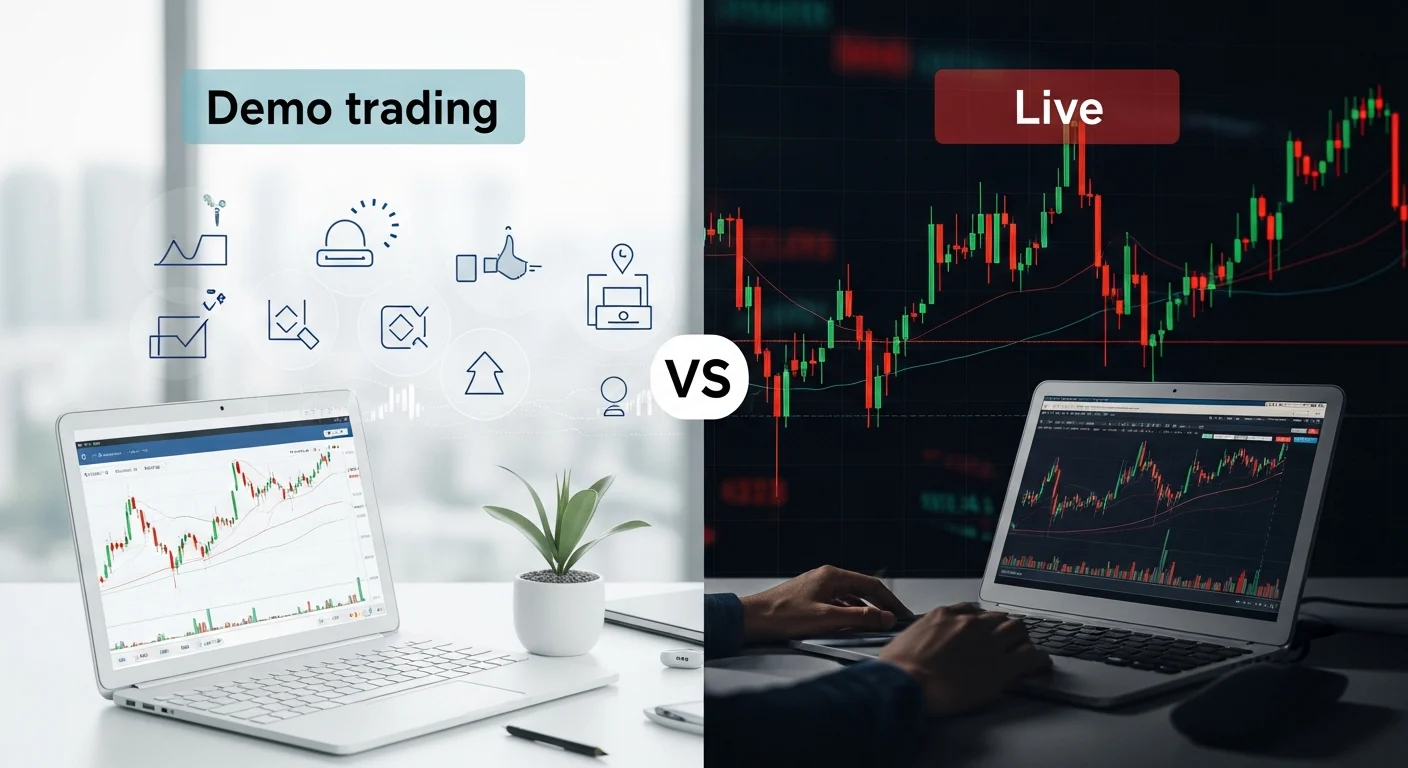
It’s not uncommon for people to think they are much better than they actually are because of demo trading. Research in financial behavior has shown that a meaningful change in financial behavior can happen when people trade with real money and that those who perform well in a simulated environment with low stakes may often not do the same when trading real money. You cannot experience the psychological impact of actual monetary losses through simulation, and that can affect decision-making.
This doesn’t mean demo success is meaningless, though. A good demo may indicate that a method or approach has analytical coherence. But what it does not validate is whether or not the same level of decision-making quality will be rendered under real financial pressure.
The real power of demo practice is to eliminate unnecessary technical mistakes and develop more conscious habits, not to confidently predict what will happen during live performance.
Common Patterns That Limit Learning on Demo Accounts
The majority of the challenges that keep students from learning in the demo phase are not technical, but behavioral. It’s normal and important to be aware of these trends:
- Overtrading. Having many more positions than is warranted through any particular approach simply because it doesn’t cost much to be wrong.
- Ignoring transaction costs. Calculating results at advertised prices without allowing for spreads or commissions and therefore making the demo results appear much better than live results would be.
- Resetting the balance after tough times. This removes the capability to discover from falls, where frequently the most valuable information may be found.
- Using unrealistic position sizes. Jobs that are disproportionately represented in the notional balance misrepresent the risk/return in a big way.
- Abandoning approaches too quickly. Adjusting trading approach after a few failed trades, before sufficient data can be analyzed to gain any insight.
If not recognized in the demo trading, then these tendencies can be carried over in live trading. To recognize them early is actually helpful if taking action based on the recognition takes time.
Gauging Whether Demo Practice Is Producing Real Learning
Sometimes, a demo account does not show progress, even in terms of results obtained from trades. The following markers may point to the fact that the experience is providing valuable learning or not much.
| Area | Signs of Productive Learning | Signs of Limited Progress |
| Record-keeping | Consistent manual journaling | Relying solely on platform history |
| Position sizing | Proportional and consistent | Highly variable or unrealistic |
| Market focus | Building depth in specific instruments | Frequent switching between markets |
| Response to losses | Analytical review of what happened | Resetting balance or abandoning approach |
| Cost awareness | Factoring in spreads and fees | Calculating results at quoted prices only |
| Review habits | Regular structured performance reviews | Primarily focused on placing trades |
A movement from right (in most of these areas) to left is a sensible indicator that the demo phase is being put to good use. It’s a flawed indicator, but much better than determining whether the virtual account is making money.
Retail Trading in a Wider Statistical Perspective
It would be good to put demo practice into a more realistic context. Retail client data from regulators indicate that most retail investors who trade leveraged products experience a loss over time, a trend that is remarkably consistent despite the dramatic progress in education, tools and platforms and access to market information. Stability is in itself a source of information.
Some of causes of avoidable error can be solved by demo accounts if they are used in a proper manner. They don’t get the same feeling when you have real money on the line, and they don’t change the overall statistics of retail trading results. This does not in any way mean that this should dissuade anyone from using them, it’s only a realistic description of their contribution.
Keeping Expectations Grounded
A demo account is not a qualification; it’s a useful tool. When used thoughtfully, it can help establish technical familiarity, bring out patterns in your own decision-making, and can be used to approach markets with more structure than what you started with. What it cannot do is completely equip you for the live trading market or be a solid indicator of how things are going to go when you’re using the big time.
The best way to trade demos is to think of it as a continuous process of self-evaluation and not just a process of self-learning about the market.
Disclaimer
The information provided in this article is general in nature and intended for informational and educational purposes only and not as financial or investment advice. Many retail investors lose money when trading leveraged financial instruments such as CFDs and forex. Simulated demo results and past performance cannot be a guarantee of future real-world results. Preliminary to making any type of profession, thoroughly review your economic goals, experience level, and threat tolerance. Always consult a qualified independent financial adviser if you’ve any doubts about the product being appropriate for you.