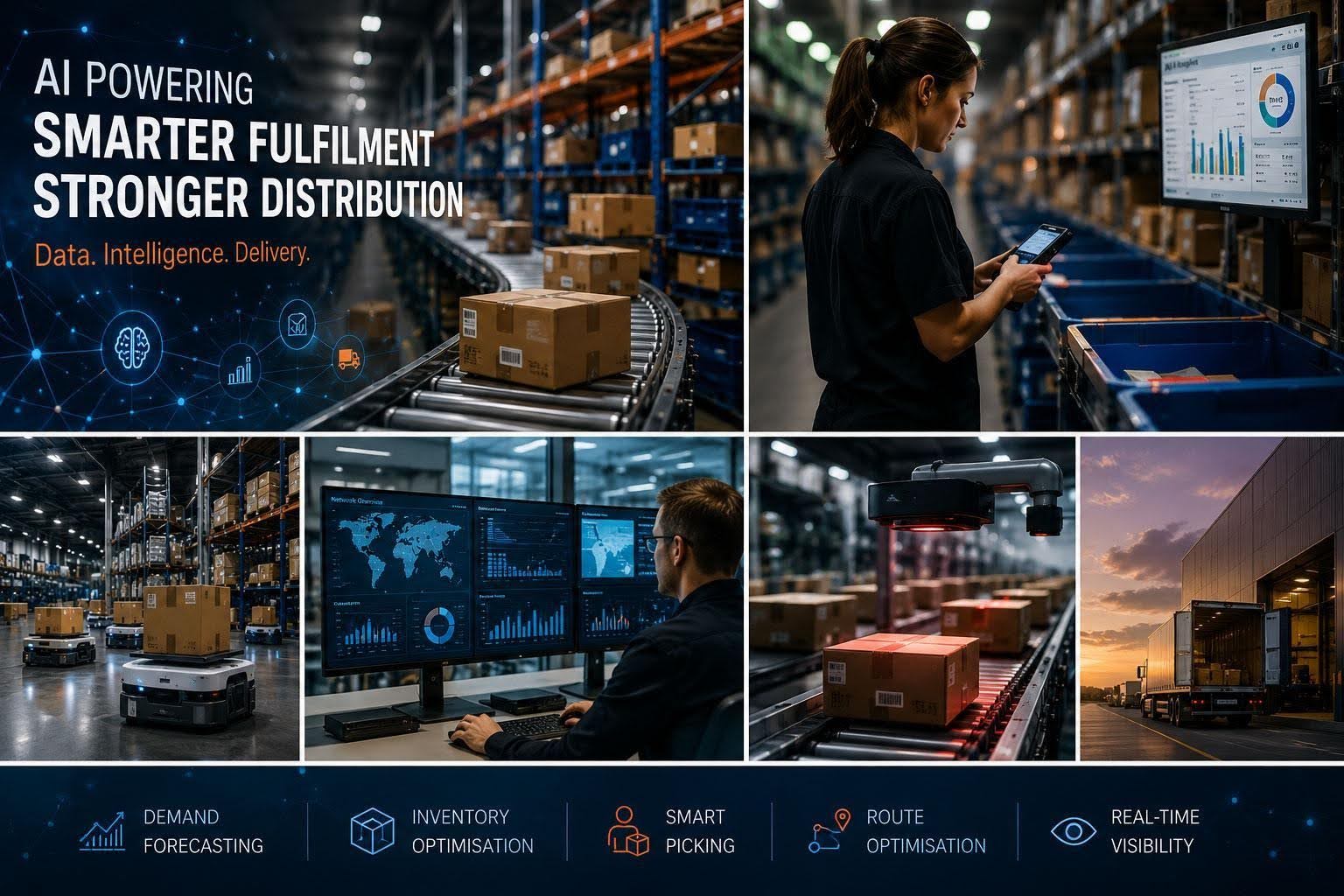
The Pressure on Modern Fulfilment and Distribution Systems
Modern fulfilment and distribution systems operate under far greater pressure than they did even a decade ago. Rising ecommerce demand, shorter delivery expectations, inventory volatility, and rising operational costs have forced businesses to rethink how logistics infrastructure operates in increasingly complex distribution environments.
Consumers now expect rapid delivery, real-time tracking visibility, accurate stock availability, and consistent fulfilment performance regardless of seasonal fluctuations or regional demand spikes. Businesses managing ecommerce operations must maintain that level of responsiveness while also controlling warehousing pressure, transportation costs, inventory coordination, and returns management across multiple operational layers.
Operational complexity has increased significantly as a result. Warehousing networks now process broader product ranges, higher order volumes, and shorter fulfilment windows than many traditional systems originally designed to support. Courier integration, inventory allocation, stock forecasting, and fulfilment coordination all now require faster operational decision-making under tighter commercial constraints.
Returns infrastructure has also become more demanding. Reverse logistics creates additional pressure on warehouse capacity, inventory visibility, and order-processing workflows, particularly during peak trading periods or promotional cycles. Businesses managing high-volume ecommerce environments frequently experience operational bottlenecks when fulfilment systems cannot respond quickly enough to changing demand.
At the same time, distribution inefficiencies have become more commercially visible. E-commerce News UK recently reported that more than 85% of UK fulfilment warehouses may adopt AI-assisted automation by 2030 as businesses respond to labour shortages, rising fulfilment pressure, and growing e-commerce demand. Delayed replenishment cycles, inaccurate inventory forecasting, fragmented operational visibility, and slower fulfilment coordination can quickly affect customer satisfaction, delivery performance, and operational profitability.
Many businesses, therefore, recognise that traditional operational models alone can no longer support the level of responsiveness modern e-commerce environments require. As fulfilment networks become more interconnected and operational pressure continues to increase, businesses are turning to AI-assisted systems to improve visibility, coordination, forecasting accuracy, and workflow responsiveness across logistics infrastructure.
Rather than replacing operational expertise, AI increasingly functions as a support layer within fulfilment and distribution systems. Businesses now use intelligent operational tools to process larger volumes of data, identify inefficiencies earlier, improve workflow visibility, and support faster operational decision-making in more complex supply chain environments.
Why Traditional Fulfilment Systems Are Under Pressure

Traditional fulfilment systems evolved around predictability. Businesses forecasted demand months in advance, operated through relatively stable inventory cycles, and managed distribution networks built around slower retail expectations. Modern e-commerce conditions rarely provide that level of operational stability.
Consumer buying behaviour now shifts far more rapidly across categories, channels, and regions. Promotional spikes, seasonal fluctuations, influencer-driven purchasing trends, and changing market conditions can alter inventory demand patterns within days rather than months. Businesses operating through rigid fulfilment structures often struggle to respond effectively when operational conditions move at this pace.
Inventory coordination has become particularly challenging. Businesses managing large product catalogues across multiple sales channels must maintain accurate stock visibility while coordinating replenishment timing, warehouse allocation, returns handling, and fulfilment speed simultaneously. Even minor forecasting inaccuracies can create operational disruption across wider distribution systems.
Warehousing pressure has intensified alongside this complexity. Fulfilment centres now process significantly higher order volumes while operating under shorter dispatch expectations and tighter inventory turnaround windows. During seasonal peaks or promotional periods, warehouse congestion can rapidly affect picking efficiency, dispatch coordination, and delivery consistency.
Returns processing introduces another operational challenge. Reverse logistics now occupies a much larger role within ecommerce infrastructure because returned inventory must move quickly through inspection, restocking, redistribution, or disposal workflows. Delays in returns processing can affect stock visibility and warehouse capacity throughout wider fulfilment systems.
Fragmented operational visibility also creates inefficiencies across traditional fulfilment environments. Businesses relying on disconnected inventory platforms, manual coordination systems, or delayed reporting structures often struggle to maintain accurate operational oversight when distribution networks become more complex.
Rising customer expectations continue amplifying these pressures. Consumers now expect accurate delivery windows, real-time tracking communication, and rapid order fulfilment as standard service requirements rather than premium features. Businesses unable to maintain operational responsiveness under these conditions often experience higher customer dissatisfaction and increased retention pressure.
Supply-chain disruption has further exposed operational weaknesses across many industries. Labour shortages, transportation delays, regional logistics disruptions, and fluctuating supplier timelines have demonstrated how vulnerable rigid operational systems can become when fulfilment networks lack responsiveness or visibility.
As a result, many businesses are moving away from purely reactive operational models. Instead of relying entirely on manual coordination and static forecasting systems, operators increasingly seek infrastructure that supports faster operational decision-making and greater workflow visibility across fulfilment environments.
How AI Is Changing Operational Decision-Making
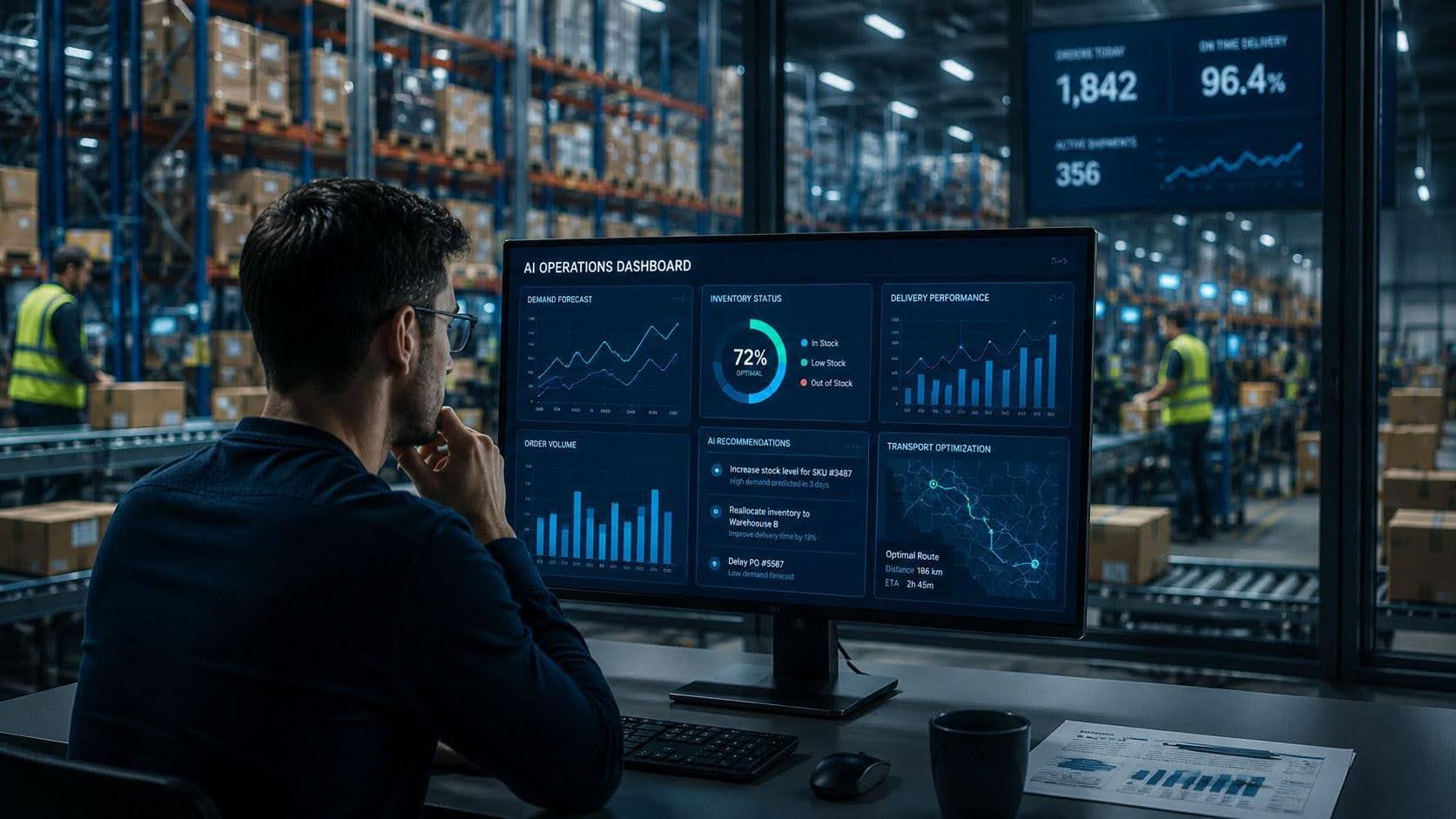
AI-assisted systems are increasingly reshaping how businesses manage operational decision-making across fulfilment, logistics, and distribution environments. Rather than functioning purely as automation tools, many AI systems now support operational intelligence by helping businesses process larger volumes of real-time data more efficiently.
Predictive analytics plays a major role in this shift. Businesses increasingly use AI-assisted forecasting systems to analyse purchasing patterns, inventory movement, seasonal fluctuations, and fulfilment performance to improve operational planning. More accurate forecasting allows operators to reduce inventory inefficiencies while responding faster to changing demand conditions.
Demand planning has become significantly more responsive as a result. Traditional forecasting models often relied heavily on historical averages and longer-term inventory assumptions. AI-assisted systems can now evaluate a wider range of operational variables simultaneously, including regional demand shifts, customer purchasing behaviour, promotional activity, and fulfilment performance trends.
Inventory visibility has improved as well. Businesses operating across multiple warehouses, fulfilment partners, or ecommerce platforms increasingly rely on AI-supported inventory systems to maintain more accurate real-time stock coordination. Improved infrastructure visibility helps businesses reduce allocation errors, improve replenishment timing, and maintain stronger consistency in fulfilment across distribution networks.
AI-assisted systems can identify bottlenecks within fulfilment processes, flag slower operational stages, and improve logistical coordination between warehousing, transportation, and inventory management systems. Businesses processing large order volumes often benefit from faster operational adjustments because intelligent systems can surface inefficiencies earlier than manual monitoring alone.
Operational responsiveness has also improved through stronger data coordination. Businesses no longer need to rely entirely on delayed reporting cycles when managing fulfilment performance or inventory movement. AI-supported systems can provide more immediate operational insights, allowing teams to react faster to distribution issues or changing inventory conditions.
Many businesses are also using AI-assisted systems to improve operational prioritisation. Fulfilment managers can evaluate shipping urgency, warehouse capacity, inventory availability, and delivery coordination more efficiently when intelligent systems help organise operational data across multiple workflows simultaneously.
Importantly, AI does not remove the need for operational expertise. Experienced logistics teams still make strategic decisions regarding fulfilment coordination, inventory allocation, supplier management, and customer service. AI-assisted systems instead help operational teams process information faster while improving visibility across increasingly complex fulfilment environments.
Businesses that successfully adopt these systems often treat AI as operational support infrastructure rather than as a standalone decision-making technology. Strong fulfilment performance still depends heavily on experienced operational oversight, effective workflow management, and human judgement within rapidly changing distribution conditions.
AI Inside Warehousing, Logistics, and Distribution
AI-assisted systems are now deeply integrated into warehousing, logistics, and distribution infrastructure across many fulfilment environments. Businesses increasingly rely on intelligent operational tools to improve coordination, reduce inefficiencies, and maintain stronger visibility across rapidly moving distribution networks.
Warehouse coordination has become one of the clearest examples of this shift. Fulfilment centres process large volumes of inventory movement simultaneously, often across multiple product categories, courier networks, and dispatch schedules. AI-assisted warehouse systems help operators prioritise stock allocation, improve picking efficiency, and reduce delays caused by fragmented workflow coordination.
Grand View Research estimates that the global AI in warehousing market was valued at approximately $11.2 billion in 2024 and could exceed $45 billion by 2030 as e-commerce businesses continue investing in warehouse automation, fulfilment visibility, and operational coordination systems.
Stock allocation has become more responsive as well. Businesses managing inventory across regional fulfilment centres increasingly use AI-supported systems to identify where stock should move based on demand forecasting, transportation timelines, and warehouse capacity. More accurate allocation reduces unnecessary transfers while improving delivery responsiveness across broader distribution infrastructure.
Route optimisation has also evolved significantly. Business Insider has reported that last-mile delivery may account for roughly 41% of total logistics costs, increasing pressure on businesses to improve route coordination, delivery visibility, and transportation efficiency across fulfilment networks. Logistics operators now use AI-assisted systems to analyse delivery routes, traffic conditions, regional demand patterns, and courier performance to improve transportation efficiency. Better route coordination helps businesses reduce delivery delays while improving fuel efficiency and operational consistency.
Predictive maintenance systems are becoming increasingly valuable within warehouse environments, too. Fulfilment infrastructure depends heavily on conveyors, sorting systems, scanning equipment, and warehouse automation tools operating reliably under constant pressure. AI-supported maintenance systems can identify performance irregularities earlier, helping businesses reduce downtime and prevent larger operational disruptions before they affect fulfilment capacity.
Delivery coordination has improved through stronger operational visibility. Businesses increasingly rely on AI-assisted systems to monitor dispatch timing, courier performance, regional congestion, and delivery exceptions in real time. Improved operational visibility enables fulfilment teams to respond more efficiently when delays or disruptions occur across logistics networks.
Operational automation support has also reduced administrative friction across many fulfilment environments. AI-assisted workflow systems can help organise shipping documentation, update inventory records, flag fulfilment anomalies, and coordinate operational reporting more efficiently, allowing fulfilment teams to focus more heavily on exception management and operational oversight.
Importantly, businesses achieving the greatest operational improvements rarely rely on automation alone. Effective fulfilment environments still depend heavily on experienced warehouse teams, logistics coordinators, and operations managers capable of responding to operational nuance that automated systems may not fully understand.
Human oversight remains especially important during periods of disruption. Seasonal demand spikes, courier instability, inventory discrepancies, supplier delays, and returns congestion often require operational judgement that extends beyond automated optimisation alone. AI-assisted systems can improve visibility and workflow speed, but experienced operators still determine how businesses respond operationally under pressure.
Where AI Adds Value — and Where Human Judgement Still Matters
AI-assisted systems are highly effective at accelerating operational workflows, improving visibility, and reducing repetitive coordination tasks across fulfilment environments. Businesses managing complex distribution networks increasingly benefit from faster forecasting, stronger inventory oversight, and improved workflow responsiveness because intelligent systems can process operational data far more quickly than traditional manual structures.
Operational friction often decreases significantly when businesses effectively integrate AI-supported coordination tools. Fulfilment teams can identify slower operational stages earlier, monitor inventory movement more accurately, and respond faster to disruptions affecting warehousing or logistics performance. Faster operational insight allows businesses to make more informed decisions under increasingly compressed fulfilment timelines.
Customer communication has improved as well. AI-assisted systems can help businesses maintain more accurate delivery updates, identify fulfilment delays earlier, and coordinate inventory availability more efficiently across e-commerce platforms. Improved visibility often reduces customer frustration by enabling businesses to provide more reliable fulfilment information throughout the delivery process.
Despite these advantages, operational expertise remains essential. AI systems operate most effectively when experienced teams guide decision-making and properly interpret operational context. Fulfilment environments involve variables that intelligent systems cannot always evaluate fully, particularly during periods of disruption or rapidly changing operational conditions.
Customer experience considerations still require human judgement, particularly in fulfilment environments where operational nuance can quickly affect customer trust and delivery performance. In a recent editorial piece published in Print Monthly, Matt Brussels from The T-Shirt Bakery noted that AI’s greatest operational advantage often lies in reducing friction within complex workflows rather than replacing creative or operational expertise.
Faster visibility, earlier issue detection, and improved coordination can significantly improve responsiveness, but experienced human oversight still defines quality and operational decision-making across fulfilment systems. Delayed shipments, damaged inventory, courier disputes, or fulfilment exceptions often involve operational nuance that extends beyond algorithmic optimisation. Experienced teams understand how operational decisions affect customer trust, commercial relationships, and long-term fulfilment performance.
Quality control also depends heavily on human oversight. Automated systems can identify anomalies, flag inconsistencies, or surface operational trends, but experienced operators still determine how businesses respond practically. Operational teams frequently make judgment calls based on supplier reliability, regional delivery behaviour, warehouse capacity constraints, or customer service priorities, all of which still require experienced human oversight.
AI systems also depend heavily on data quality and operational structure. Businesses operating through fragmented workflows or inconsistent reporting systems may struggle to achieve meaningful operational improvements if the underlying infrastructure remains poorly coordinated. Intelligent systems improve operational visibility most effectively when businesses already maintain strong fulfilment foundations.
Many businesses, therefore, approach AI integration gradually rather than replacing existing operational structures entirely. Successful operators typically combine intelligent systems with experienced fulfilment oversight, allowing technology to support operational responsiveness without removing strategic decision-making from experienced teams.
The strongest operational environments increasingly combine workflow intelligence with human expertise. AI can accelerate visibility and improve coordination, but fulfilment performance still depends heavily on operational judgement, commercial awareness, and experienced logistics management across increasingly complex distribution systems.
How Businesses Are Integrating AI Without Replacing Operational Expertise

Businesses that successfully integrate AI often focus on improving operational coordination rather than removing human involvement from fulfilment systems entirely. Most operators recognise that intelligent systems create the greatest value when they support experienced teams managing increasingly complex distribution environments.
E-commerce operations now rely heavily on workflow visibility across inventory movement, fulfilment coordination, warehouse performance, and delivery infrastructure. AI-assisted systems help businesses process larger operational datasets more efficiently while improving responsiveness in forecasting and coordination of fulfilment across multiple operational layers.
Inventory management has become a major focus area for AI integration. Businesses increasingly use intelligent forecasting systems to improve stock allocation, identify replenishment timing pressure earlier, and reduce inventory inefficiencies caused by fragmented operational visibility. Faster inventory insights allow operations teams to respond more effectively to changing demand conditions without relying entirely on static forecasting models.
Production coordination has evolved alongside these changes. Businesses operating across more responsive fulfilment environments increasingly require stronger coordination between inventory availability, production scheduling, warehousing, and delivery infrastructure. AI-assisted systems help operational teams maintain stronger visibility across these interconnected workflows.
Businesses operating within custom apparel fulfilment environments are increasingly using AI-assisted systems to improve inventory visibility, operational oversight, and fulfilment responsiveness across increasingly complex ecommerce networks.
Operational transparency has also improved significantly through AI-supported systems. Businesses can monitor fulfilment performance, warehouse coordination, inventory movement, and transportation efficiency more accurately when intelligent systems consolidate operational data across multiple layers of the infrastructure.
Importantly, businesses that successfully integrate AI rarely position technology as a replacement for operational teams. Instead, operators increasingly treat AI as infrastructure support that improves responsiveness, visibility, and coordination while allowing experienced fulfilment professionals to focus on strategic operational management.
Operational expertise continues to shape supplier relationships, logistics coordination, customer communication, inventory prioritisation, and fulfilment decision-making in complex environments. AI systems can surface operational insight more efficiently, but experienced teams still determine how businesses respond commercially and strategically.
This balanced approach is becoming increasingly common across fulfilment and distribution infrastructure. Businesses now recognise that intelligent systems perform most effectively when combined with strong operational oversight, adaptable workflows, and experienced logistics management that can respond to rapidly changing fulfilment conditions.
AI Is Reshaping Infrastructure, Not Replacing Expertise
AI-assisted systems are becoming an increasingly important part of fulfilment and distribution infrastructure across modern e-commerce operations. Businesses operating under growing logistical pressure are using intelligent operational tools to improve visibility, responsiveness in forecasting, workflow coordination, and fulfilment efficiency across increasingly complex distribution environments.
Operational adaptability is becoming more valuable as fulfilment expectations continue accelerating. Businesses capable of combining intelligent workflow systems with experienced operations management are often better positioned to respond quickly to inventory disruptions, delivery pressures, and changing customer expectations.
As AI-assisted operational systems become increasingly normalised across fulfilment infrastructure, competitive advantage may depend less on access to automation itself and more on how effectively businesses integrate intelligent systems into operational decision-making.
Automation alone, however, does not create strong fulfilment performance. Warehousing coordination, logistics oversight, customer communication, inventory prioritisation, and operational decision-making still depend heavily on experienced teams capable of interpreting operational nuance under real-world conditions.
The broader operational shift remains clear. AI is increasingly functioning as infrastructure support inside fulfilment and distribution systems rather than as a replacement for operational expertise itself.
Businesses that successfully balance intelligent systems with experienced operational oversight will likely maintain stronger fulfilment resilience, better workflow responsiveness, and more adaptable distribution infrastructure as e-commerce operations continue becoming more operationally complex over time.