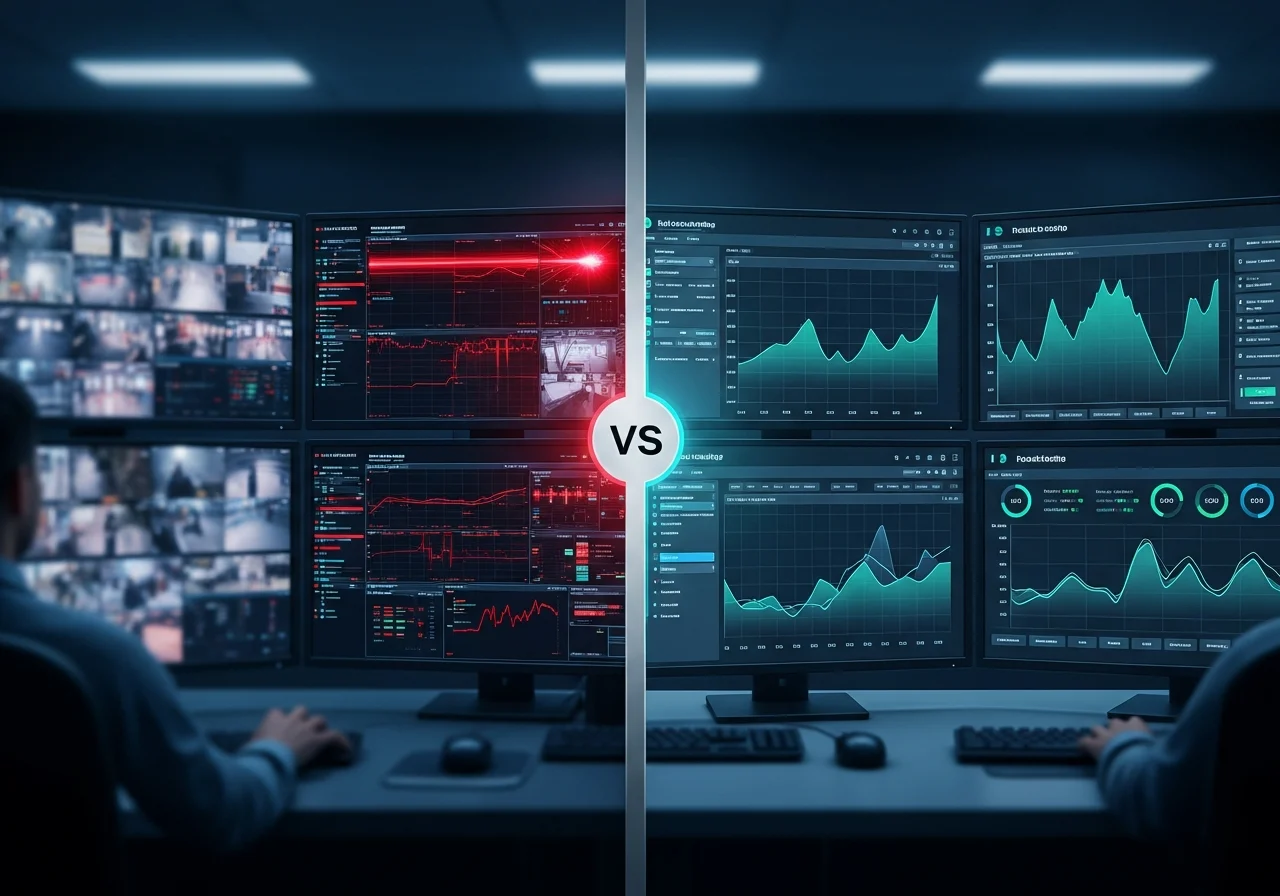
In the current cyber landscape, the speed of attacks has outpaced human intervention. Sophisticated threats—ranging from AI-generated polymorphic malware to automated credential stuffing—now operate in milliseconds. For large enterprises, the fundamental question has shifted: Is your security architecture designed to prevent a breach, or merely to detect it after the damage has begun?
The industry is currently divided between two philosophies: Predictive AI, which uses deep learning to block threats before they execute, and Reactive AI, which focuses on rapid response and remediation after an anomaly is identified. Choosing between these approaches determines not only your risk profile but also your operational overhead.
1. Check Point Software Technologies (Infinity AI)
Check Point secures the top position by championing a “Prevention-First” methodology. While many competitors use AI as an overlay for analytics, Check Point AI security is natively integrated into the core inspection engine of the entire Infinity Platform.
By leveraging ThreatCloud AI, Check Point utilizes over 50 AI-powered engines to perform real-time telemetry. Unlike reactive systems that wait for suspicious behavior to trigger an alert, Check Point predicts the malicious intent of files and code in sub-seconds. In 2026, its ability to neutralize Zero-Day threats before they reach the network perimeter remains the industry benchmark.
- Key Strengths:
- Pre-Infection Blocking: Zero-phishing and malware extraction technologies that stop threats in transit.
- Collaborative Intelligence: ThreatCloud AI shares real-time data across network, cloud, and mobile endpoints globally.
- Operational Simplicity: The Infinity AI Copilot automates complex security administration, reducing manual policy tuning by up to 90%.
2. Palo Alto Networks (Precision AI)
Palo Alto Networks has made significant strides with its Precision AI initiative. Their architecture focuses on bringing together rich data sets from across the enterprise to power machine learning models. Their strength lies in the integration with Cortex XSIAM, where AI is used to automate the SOC (Security Operations Center). While highly effective at identifying complex attack patterns, the architecture leans heavily toward high-speed detection and automated response (TDR).
3. CrowdStrike (Charlotte AI)
CrowdStrike remains a leader in the reactive space, though they are increasingly moving toward predictive indicators. Their Falcon platform is world-class at “Detection and Response” (EDR/XDR). Through Charlotte AI, they enable security analysts to query their environment using natural language. It is an excellent choice for organizations that prioritize deep visibility into an ongoing breach and require rapid, AI-assisted forensic capabilities.
4. Darktrace (ActiveAI)
Darktrace is well-known for its “Immune System” approach. Their AI architecture is designed to learn a “pattern of life” for every user and device in an organization. When a deviation occurs—indicating a potential reactive scenario—the system takes surgical action to neutralize the threat. It is particularly strong for internal East-West traffic monitoring, though it often requires a learning period to achieve peak accuracy.
Comparative Overview: Predictive vs. Reactive
| Feature | Check Point (Predictive) | Palo Alto (Precision) | CrowdStrike (Reactive/EDR) |
| Primary Goal | Stop threats before entry | Automate SOC response | Detect & contain breaches |
| Speed of Action | Real-time (Inline) | Near real-time | Post-execution analysis |
| AI Focus | ThreatCloud AI (Prevention) | Data-driven Automation | Behavioral Telemetry |
| Ideal For | Zero-Day Prevention | Integrated Security Ops | Endpoint Investigation |
The Strategic Shift to Prevention
The “detect and respond” model is becoming a luxury that modern enterprises can no longer afford. When a ransomware payload executes, even a response time of one minute can be too late to prevent data encryption.
To build a resilient 2026 security stack, organizations should follow these principles:
- Prioritize Inline Inspection: Ensure your AI can scan and block traffic without latency.
- Consolidate Data Silos: AI is only as good as the data it sees. Using a unified architecture like Check Point AI security ensures that cloud, mobile, and network data feed into a single predictive engine.
- Automate the “Routine”: Use AI Copilots to handle mundane configuration tasks, allowing your human experts to focus on high-level strategy.
While reactive AI is a necessary safety net for forensic analysis, it should not be the frontline of an enterprise. The most robust architectures in 2026 are those that prioritize Predictive AI, stopping the threat at the door and ensuring that business continuity is never compromised in the first place.