There’s a specific kind of Sunday that Albanian families in the US know well. Someone’s in the kitchen, the smell of whatever’s slow-cooking has been there since morning, and Albanian TV (TV Shqip app) is on in the living room — not as background noise, but as an actual presence. A news program, a music show, something familiar. The kids might not be watching, but they can hear it. That’s usually enough.
A lot gets lost in the move. Language fades gradually, food shortcuts get made, and gatherings shrink. But some things hold on with surprising stubbornness. These are five of them.
1. The Sunday Meal That Runs Too Long
It doesn’t matter if it’s a family of four or a full extended gathering. The Albanian Sunday meal follows its own schedule, and that schedule has never been in a hurry. Dishes come out in stages. Conversation restarts three times after someone says it’s time to go. Coffee appears when everyone thought they were already finished.
For Albanian families abroad, the long meal is one of the few traditions that doesn’t require translation or explanation. Everyone just knows what it is. Second-generation kids who grew up rolling their eyes at it often find themselves recreating it without thinking.
2. Hospitality That Doesn’t Ask First
Walk into an Albanian household without warning, and within a few minutes, there’s coffee in front of you. Nobody asked if you wanted any. That’s not an oversight — the question itself would feel odd. You’re a guest, the coffee is already made, and the order of those two things isn’t up for discussion.
It’s one of the harder habits to explain to American friends or coworkers, but it’s also one of the few that seems to survive the move almost completely intact. People who grew up in the US, spoke mostly English at school, lost track of a lot of other things — they still do this. The hospitality reflex apparently doesn’t need much maintenance to keep running.
3. Watching Albanian TV Together
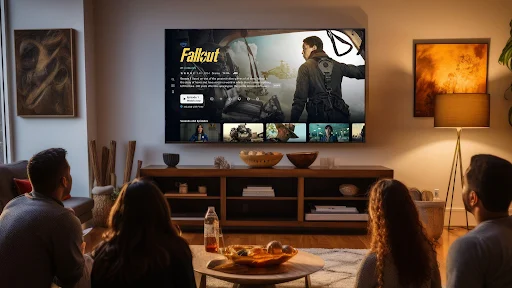
Albanian television in diaspora households isn’t just on in the background. News programs get discussed. Someone rewinds a segment to show a teenager something they missed. A music show from home runs during a holiday meal, and an older family member recognizes the song immediately. Most of this happens on the main screen in the living room, though the Smart TV has made it easier for households that upgraded their sets in recent years.
In many homes, this experience is now supported by devices like a shqip TV box, making access to familiar channels even more seamless across different setups.
For families using TVALB—the leading provider of Albanian television and entertainment in the United States and Canada —the access to 250+ Albanian-language channels means it is still a real, functioning part of daily life—not something that requires effort to set up or maintain. Time-shift features mean a parent who worked a double shift can still catch the evening news at midnight. A kid doing homework in their room can have something playing on a tablet without taking over the main TV.
4. The Name Day Matters as Much as the Birthday
In many Albanian families, the name day — the feast day of the saint whose name you share — is observed as seriously as a birthday, sometimes more so. People call. Families gather. There’s usually food involved.
This tradition has held up remarkably well in the US and Canada, partly because it doesn’t require anything outside the family to sustain it. It’s internal. A calendar, a phone call, a gathering. Second-generation Albanian-Americans who grew up with it tend to keep it, even when they’ve let other traditions lapse.
5. The Expectation That Elders Decide How the Evening Goes
In Albanian households, a grandparent’s preferences around television, seating, and conversation timing aren’t really up for negotiation. This isn’t authoritarianism — it’s a particular kind of respect that gets communicated without being stated. The TV might get changed for the grandchildren during the day, but when the grandparent is in the room, the room adjusts.
Younger Albanian-Americans sometimes describe this as one of the more disorienting things to explain to friends outside the culture. But within the household, it mostly operates without friction. It’s just how the evening works.
“Some traditions fade because they need infrastructure that no longer exists. The ones that stick are usually the ones that never required a conscious decision to keep going — they just ran quietly in the background until one day a second-generation kid realizes they’ve been doing it too, without ever being taught.