The development of AI is faster than ever before, yet the development of AI systems also brings up the issue of data privacy with serious concerns. Lots of organizations are using sensitive datasets to train machine learning models, which can reveal sensitive information in case they are not managed appropriately. There is also the development of technologies such as Zero-Knowledge Proofs (ZKPs) that are capable of helping to resolve this issue.
Many discussions about secure blockchain infrastructure and privacy technologies-including analyses of OKX security features,highlight how cryptographic systems can protect sensitive data without sacrificing usability. ZKPs, together with AI, pave the way to a novel generation of privacy-aware machine learning systems.
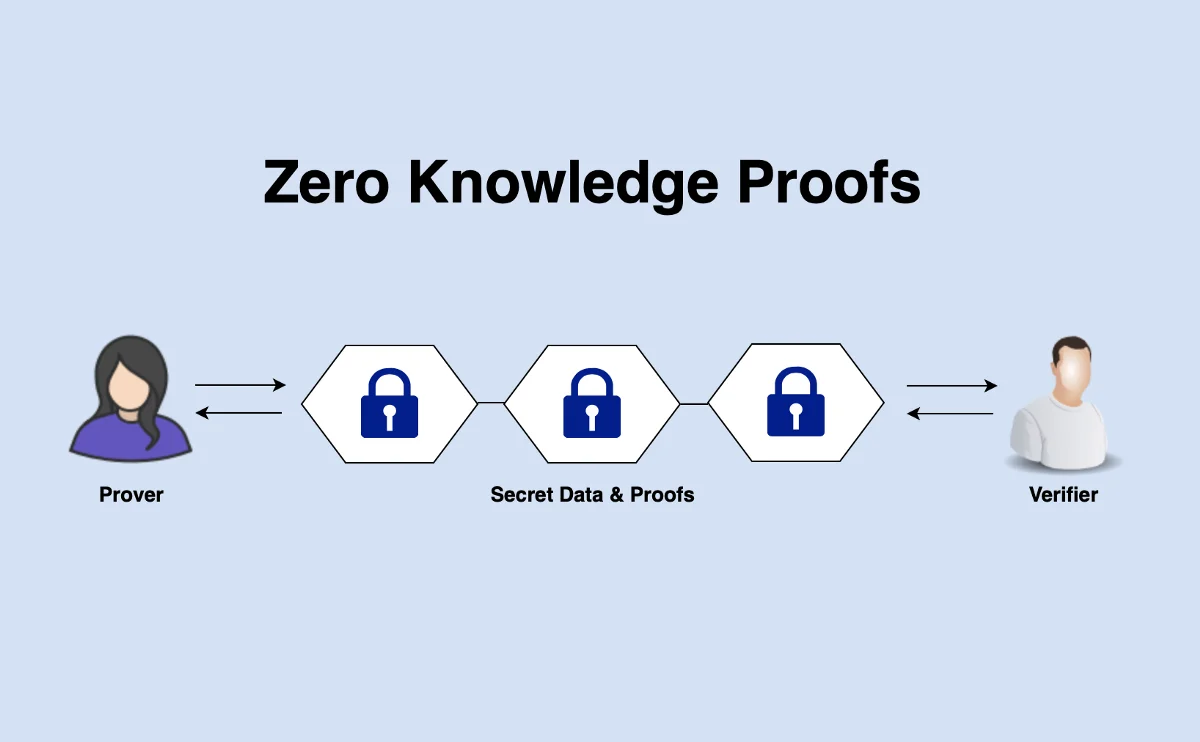
Knowledge Zero-Knowledge Proofs (ZKP)
Zero-Knowledge Proofs are cryptographic methods which permit the expression of the truth of a statement by one side without the data being disclosed. The prover does not provide the real information, he/she creates a mathematical proof that confirms the assertion.
An example of such a system would be to demonstrate that data of a user satisfies some conditions without making such data visible. This has made ZKPs a core technology in blockchain privacy, identity verification and safe computation.
More recently, implementations like zk-SNARKs and zk-STARKs of ZKP have become fully matured, allowing programs to be verified faster and with more scalable applications.
Why AI Needs More Privacy Solutions
Artificial intelligence is dependent on data. Machine learning algorithms can demand very large datasets of user activity, finances, health information or identity data.
Nonetheless, this reliance on data poses an inherent contradiction: the more data AI systems are fed on the higher the chances of abuse of privacy.
Some of the key challenges are:
- Sensitive information during training.
- Sharing information at inter-organizational levels.
- Regulatory compliance qualifications.
- Risk of data leaks or misuse
These issues are partially solved by conventional methods, including anonymization or encryption. In most instances, the data has to be decrypted to be computed thus exposing it to threats.
The use of ZKP to Improve Privacy-Preserving Machine Learning
ZKPs present a new concept of AI systems: verifying computations without inputs. Participants do not need to provide raw data, they can demonstrate that their data is correct to a model.
This solution enables machine learning piping to run with enhanced privacy assurances.
Verifiable Model Training
Through ZKPs, organizations would be able to demonstrate that an AI model was trained using valid data without the data being disclosed. This brings transparency and trust at the same time keeping confidentiality.
To illustrate, an AI-based healthcare model would ensure that patient information was not abused, and no information about them is disclosed.
Collaborative Learning can be secured
Collaborative machine learning is useful in so many industries. Banks, hospitals and research institutions on many occasions would like to jointly train models but cannot share raw datasets with one another because of privacy regulations.
ZKPs enable the participants to place encrypted information and produce proofs that authenticate the training process.
It allows the development of AI in cooperation without breaching the privacy limits.
Trustworthy AI Predictions
The other useful application is in checking AI outputs. Using ZKPs, a system might be capable of demonstrating that an AI model adhered to certain rules in making predictions.
This fact is particularly useful in highly controlled industries with the algorithmic decisions that should be traceable and transparent.
Practical Implementations that are coming up in 2026
ZKP and AI are still in their early days together but already some applications are showing promise.
Healthcare Data Protection
The most sensitive types of information include medical datasets. The ZKP-based systems enable hospitals to train diagnostic models without any interference with patient data.
Scientists are able to work internationally without revealing personal information.
Financial Risk Analysis
AI has become an important tool in fraud detection, credit scoring, and risk management by financial institutions. Artificial intelligence systems built on ZKP would ensure that the data on sensitive transactions is not leaked, though they would still make successful predictions.
The method decreases the risk of control and enhances the quality of models.
Decentralized AI Networks
ZKPs are used to verify computations that are done by distributed nodes in decentralized ecosystems. Through AI work, it is possible to verify cryptographically without disclosing proprietary algorithms or datasets.
It is becoming popular in AI infrastructure based on blockchain models.
Issues of ZKP and AI Combination
However, it is not an easy task to combine ZKPs and machine learning, even though it has potential.
Computational Overhead
Creating zero-knowledge proofs of giant AI models may need a considerable amount of computation. An effective research problem that is under investigation is to train and verify deep neural networks.
Nevertheless, the current advances in the proof systems and hardware acceleration are slowly eliminating these restrictions.
Scalability Concerns
Millions of parameters and huge datasets are frequently processed using AI models. These computations can be quite challenging to translate into the circuits that are compatible with ZKP.
There is the development of new cryptographic structures to streamline this process.
Developer Expertise
The development of cryptography and machine learning hybridized building systems needs expert expertise on both sides. Such talent shortage is an impediment to adoption at the moment.
With the maturity of tools and frameworks, developers will have simpler options to deploy privacy-enforcing AI architectures.
The importance of ZKP-AI Combination
The intersection of Zero-Knowledge Proofs and artificial intelligence is a significant change in the mechanism of data-driven systems.
Organizations can not decide between innovation and privacy, but they can attain both. ZKPs enable AI models to take advantage of big data and preserve sensitive data.
This change may transform the process of information sharing within companies, joint work on AI models, and global privacy standards.
The Future of AI that will conserve privacy
It is probable that in the coming decade, privacy will be a leading characteristic in the adoption of AI. Governments are coming up with tougher laws on data protection and consumers are becoming more demanding on their personal data.
Such technologies as ZKPs give a feasible way out.
Privacy-preserving machine learning can become a widespread feature, not a niche technology, as the efficiency and the infrastructure to support this type of approach improves.
Conclusion
Zero-Knowledge Proofs are changing the nature of interplay between privacy of data and artificial intelligence. ZKPs empower the creation of a potent model of secure machine learning by enabling systems to validate computations without disclosing sensitive inputs.
Despite the technical issues, AI and ZKP can transform the healthcare industry, as well as the financial sphere, among many others. Privacy-saving AI may prove to be one of the most critical technological advances of the decade as more studies are conducted and users change their behaviour to embrace it.