It’s pretty wild when you stop and think about how much technology has changed things, right? From the way we talk to each other to how we get around, it feels like there’s a new gadget or system popping up all the time. This article looks at some of the big ones, the 100 examples of technology that have really made a mark on our world. We’ll cover everything from the phones in our pockets to some pretty advanced stuff that’s changing science and health. It’s a look at how innovation keeps pushing things forward, sometimes in ways we never expected.
Key Takeaways
- The Apple iPhone, introduced in 2007, significantly advanced the mobile revolution, integrating numerous functions and paving the way for the widespread use of smartphones.
- Wi-Fi, invented in 1997, freed users from wired internet connections, enabling mobile computing and the development of the Internet of Things.
- The Internet of Things (IoT) connects everyday devices, allowing them to share information and automate tasks, transforming homes and industries.
- Social networking platforms, like Facebook, launched in 2004, have reshaped how people connect and share information globally.
- Advancements in areas such as 3D printing, quantum computing, and medical innovations like the HPV vaccine are continuously altering industries and improving lives.
1. Apple iPhone
It’s hard to imagine life before the iPhone, isn’t it? When Apple introduced it in 2007, it wasn’t the very first smartphone, but it really changed the game. Before the iPhone, mobile phones were mostly for calls and maybe some basic texting. The iPhone brought the internet, music, and a whole new way to interact with technology right into our pockets.
Think about it: the touch screen, the apps, the way it connected to the internet so easily. It basically took all the cool stuff we used to do on computers and put it on a device that fit in your hand. This wasn’t just about making calls anymore; it was about having a portable computer, a camera, a music player, and a gateway to the online world all in one.
The iPhone’s impact on how we communicate, work, and entertain ourselves is pretty massive. It paved the way for countless other smartphones and apps, and it fundamentally shifted our expectations of what a mobile device could do. It’s become a tool for everything from ordering groceries to navigating new cities, and it’s hard to remember a time when we didn’t have that kind of power readily available.
The introduction of the iPhone marked a significant turning point in personal technology, merging communication, information access, and entertainment into a single, user-friendly device that reshaped daily life for billions.
Here’s a quick look at how it changed things:
- Communication: Texting, email, social media, and video calls became standard, moving beyond simple voice calls.
- Information Access: The mobile internet meant instant access to news, maps, and any information imaginable, anytime, anywhere.
- Entertainment: Music, videos, and games were no longer confined to dedicated devices; they were all on the phone.
- Productivity: Apps for work, organization, and creativity turned the phone into a mobile office and studio.
2. Wi-Fi
Remember the days of being tethered to a wall by an Ethernet cable just to get online? It feels like a distant memory, doesn’t it? That’s largely thanks to Wi-Fi, the technology that untethered us and fundamentally changed how we connect to the internet. Invented in the late 1990s, Wi-Fi, short for Wireless Fidelity, allowed devices to communicate wirelessly, creating a network without the need for physical wires.
Initially, Wi-Fi was a bit clunky. You’d need a router and a special adapter, often called a dongle, for your laptop. But even then, the freedom to move around your home or office while staying connected was revolutionary. It wasn’t just about convenience; it paved the way for a whole new generation of devices and services.
Here’s a quick look at how Wi-Fi evolved:
- Early Days (Late 1990s): The first Wi-Fi standards (like 802.11) offered speeds comparable to early dial-up connections, but without the wires. It was enough to check email and browse basic websites.
- Steady Improvements (2000s): Newer standards brought faster speeds and better reliability. Devices like laptops and early smartphones started including Wi-Fi capabilities as a standard feature.
- Ubiquitous Connectivity (2010s-Present): Wi-Fi is now in almost everything – phones, tablets, smart TVs, game consoles, and even appliances. Speeds have increased dramatically, supporting high-definition streaming and complex online activities.
Wi-Fi’s impact extends far beyond just browsing the web; it’s a cornerstone of the Internet of Things (IoT), enabling countless devices to communicate and share data without human intervention. From smart home devices that control your lights and thermostat to industrial sensors monitoring equipment, Wi-Fi provides the invisible network that makes it all possible.
The widespread adoption of Wi-Fi has made constant connectivity the norm. It’s hard to imagine a modern home, office, or public space without it. This pervasive wireless access has reshaped our expectations for how and where we can access information and interact with the digital world.
3. Internet of Things
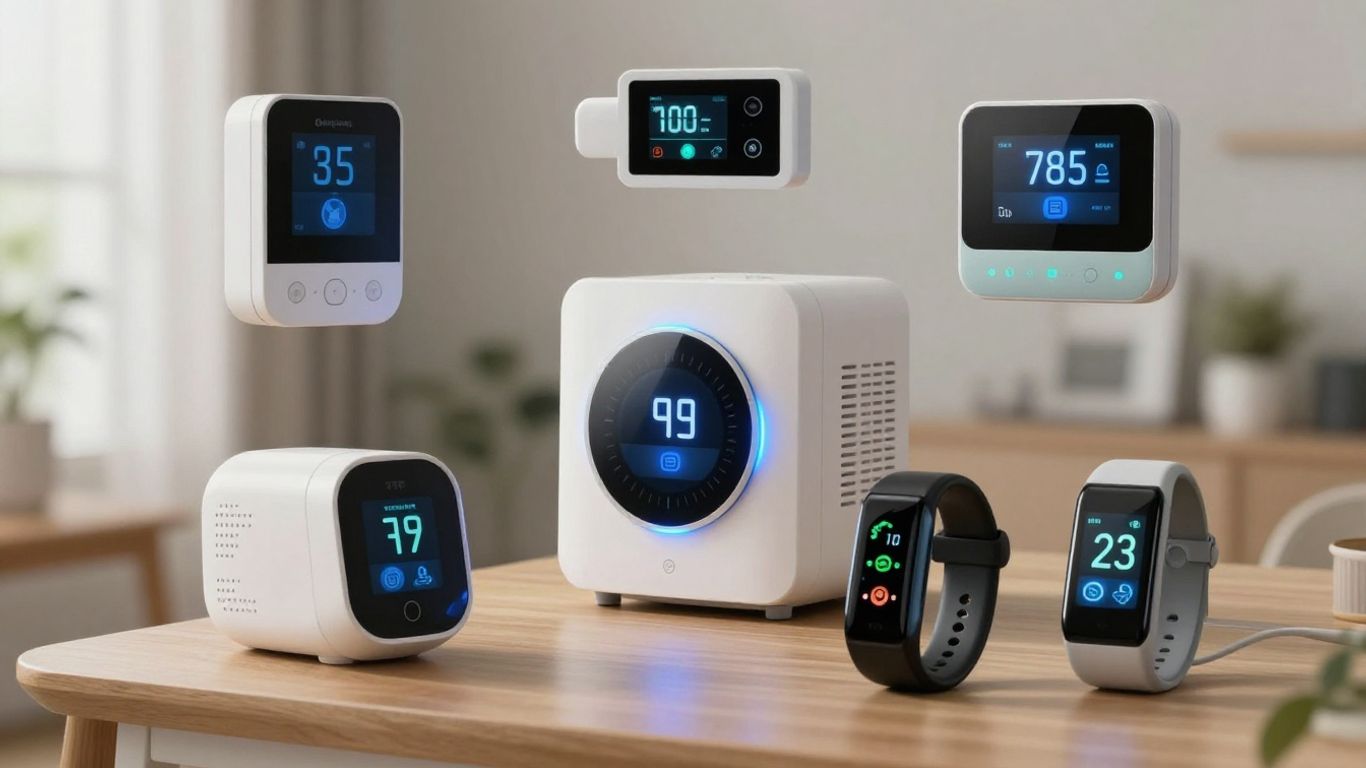
Remember when your toaster was just a toaster? Well, things have changed. The Internet of Things, or IoT, is basically about connecting everyday objects to the internet. Think of your fridge ordering milk when you’re low, or your thermostat adjusting the temperature before you even get home. It’s a huge network of devices, from smartwatches to industrial sensors, all talking to each other and sharing information.
This connectivity allows for some pretty neat automation and data collection. For instance, smart home devices can learn your routines and make life more convenient. In industries, IoT sensors can monitor equipment performance, predict maintenance needs, and improve efficiency.
Here’s a quick look at how IoT is showing up:
- Smart Homes: Lights, thermostats, security cameras, and appliances that you can control remotely or that operate automatically.
- Wearables: Fitness trackers and smartwatches that monitor your health and activity, often syncing data to your phone.
- Smart Cities: Systems that manage traffic flow, monitor air quality, and optimize energy usage in urban areas.
- Industrial IoT (IIoT): Sensors on factory floors to track production, manage supply chains, and ensure safety.
The sheer number of connected devices is growing rapidly, transforming how we interact with our environment.
While the convenience is undeniable, the expansion of IoT also brings up questions about data privacy and security. As more devices collect information about our habits and surroundings, it’s important to consider how that data is protected and used.
4. Facebook
Launched in 2004, initially for college students, Facebook rapidly transformed how people connect online. It quickly surpassed earlier social platforms, becoming a dominant force in digital communication. Today, it’s a primary way billions stay in touch with friends and family worldwide.
Beyond personal connections, Facebook’s business model is heavily reliant on advertising. In 2023, the platform generated substantial revenue from its advertising services, making it a significant player in the digital marketing landscape. This model has influenced many other social networking sites that followed, offering various ways for users to interact, share content, and even find employment opportunities.
With a user base numbering in the billions, Facebook’s impact on global communication and information sharing is undeniable. It has paved the way for a generation of social media, shaping how we interact and consume information daily. The platform’s evolution continues to influence trends in online communities and digital content creation, much like how video diaries are becoming a new way to showcase work in other industries [b7f7].
Key aspects of Facebook’s influence include:
- Facilitating global connections and maintaining relationships.
- Pioneering a successful advertising model for social platforms.
- Inspiring the development of numerous other social networking services.
- Becoming a major source of news and information for many users.
The platform’s vast network and data collection capabilities have also raised discussions about privacy and the spread of information, highlighting the complex role social media plays in modern society.
5. 3D Printer
The 3D printer, also known as additive manufacturing, is a technology that builds objects layer by layer from a digital design. Think of it like building something with tiny, precise layers of material, rather than carving it out of a block or molding it. This process allows for incredible detail and complexity that was previously impossible or extremely difficult to achieve with traditional manufacturing methods.
Initially, 3D printing was mostly used for creating prototypes. Companies could quickly print out models of new products to test and refine designs before committing to expensive mass production. This significantly sped up the development cycle and reduced costs. But the technology has moved far beyond just prototypes.
Today, 3D printers are used in a wide range of fields:
- Medicine: Creating custom prosthetics, surgical guides, and even printing human tissue for research.
- Aerospace: Manufacturing lightweight, complex parts for aircraft and spacecraft.
- Automotive: Producing specialized car components and prototypes.
- Consumer Goods: Making everything from custom jewelry and footwear to household items.
The ability to create intricate shapes and customized items on demand is what makes 3D printing so revolutionary. It opens up possibilities for personalized products and on-site manufacturing, reducing waste and lead times. As the technology continues to advance, becoming faster and more affordable, its impact on how we design, produce, and consume goods will only grow.
The materials used in 3D printing are also expanding, moving beyond plastics to include metals, ceramics, and even food-grade substances. This versatility means that almost anything imaginable could potentially be printed in the future.
6. Quantum Processor
Quantum processors are a really big deal in the world of computing. Unlike the processors in your phone or laptop that use bits representing either a 0 or a 1, quantum processors use quantum bits, or qubits. These qubits can be a 0, a 1, or both at the same time, thanks to a quantum phenomenon called superposition. This allows them to handle a massive amount of information simultaneously.
Think of it like this: a regular computer has to check every single path in a maze one by one to find the exit. A quantum computer, using superposition, can explore many paths at once. This makes them incredibly powerful for certain types of problems.
Here’s a look at what makes them so special:
- Superposition: Qubits can exist in multiple states at once, dramatically increasing processing power.
- Entanglement: Qubits can be linked together, so the state of one instantly influences the state of another, no matter the distance.
- Interference: Quantum algorithms use interference to amplify correct answers and cancel out incorrect ones.
These processors are still in their early stages, but they hold the potential to revolutionize fields like medicine, materials science, and artificial intelligence. For instance, a Google-designed quantum processor called Sycamore famously completed a calculation in 200 seconds that would take the fastest supercomputers 10,000 years. That’s a mind-boggling leap in capability.
While today’s quantum computers are complex and often require super-cooled environments, the progress being made suggests a future where these powerful machines tackle problems currently beyond our reach.
Companies and research institutions are investing heavily in quantum computing, recognizing its potential to solve complex challenges. The race is on to build more stable and scalable quantum processors, paving the way for breakthroughs we can only begin to imagine.
7. HPV Vaccine
It’s pretty amazing to think about how far we’ve come in preventing diseases. One of the biggest wins in recent medical history has to be the HPV vaccine. For a long time, scientists knew that certain types of Human Papillomavirus (HPV) were the main culprits behind cervical cancer. Specifically, strains 16 and 18 were linked to a huge chunk of cases.
While regular screenings helped, the real game-changer arrived in 2008 when the HPV vaccine was added to national health programs. Now, it’s available in tons of countries and given to both girls and boys. This isn’t just about cervical cancer anymore; it helps prevent other HPV-related cancers and even genital warts.
The impact has been significant, with studies showing a massive drop in cervical cancer rates among young women.
Here’s a quick look at what the vaccine targets:
- Human Papillomavirus (HPV): A very common group of viruses.
- High-Risk Strains: Particularly HPV 16 and 18, which are strongly linked to cancers.
- Prevention: Protects against several types of cancer and other conditions caused by HPV.
The goal now is to get rid of cervical cancer altogether, which sounds almost unbelievable but is becoming a real possibility thanks to widespread vaccination and ongoing screening efforts.
It’s a fantastic example of how science and public health can work together to make a real difference in people’s lives.
8. Natural Cycles
Natural Cycles is a digital tool that helps people understand their fertility. It’s a bit like a smart calendar for your body, using daily temperature readings and other data to predict when a person is most likely to get pregnant. This information can then be used to either try for a baby or to prevent pregnancy.
This approach is different from many other birth control methods because it doesn’t involve hormones. Instead, it relies on tracking the natural patterns of a person’s menstrual cycle. The app uses an algorithm to analyze these patterns, identifying fertile days with a good degree of accuracy. It was the first digital contraceptive to be approved by the US Food and Drug Administration (FDA), which means it’s considered a regulated medical device.
Here’s a simplified look at how it works:
- Daily Temperature Tracking: Users take their basal body temperature first thing in the morning before getting out of bed.
- Data Analysis: The app’s algorithm processes this temperature data, along with information about menstrual cycles.
- Fertility Prediction: Based on the analysis, the app indicates fertile and non-fertile days.
While the technology is quite advanced, the idea is to make family planning more accessible and give individuals more control over their reproductive health. It’s a good example of how technology can be applied to personal health in a non-invasive way.
The effectiveness of Natural Cycles, like any method of contraception, depends on consistent and correct use. It’s important for users to understand how the app works and to follow its guidance carefully to achieve the desired outcome, whether that’s pregnancy prevention or conception.
9. Tissue Engineering
Imagine a future where damaged organs can be repaired or replaced not with donor parts, but with new tissues grown from your own cells. This isn’t science fiction anymore; it’s the reality of tissue engineering.
This field focuses on creating biological substitutes to restore, maintain, or improve tissue function. It’s like being a biological architect, using cells as building blocks and scaffolds as the blueprints. Scientists take a patient’s own cells, often stem cells, and guide them to grow into specific tissues. Because these tissues are made from the patient’s own material, the risk of the body rejecting them is significantly reduced.
Here’s a look at how it works:
- Cell Sourcing: Obtaining the right cells, usually stem cells, from the patient.
- Scaffolding: Using a biocompatible structure, often a porous material, to provide a framework for cells to grow on.
- Seeding and Growth: Placing the cells onto the scaffold and providing the right conditions for them to multiply and differentiate into the desired tissue type.
- Implantation: Once the tissue has matured, it can be implanted into the patient.
We’ve already seen successes with simpler tissues like skin and cartilage. More complex structures, such as artificial ears and even windpipes, have been grown and successfully transplanted. The ultimate goal is to be able to grow entire organs, like kidneys or hearts, to address the critical shortage of donor organs. While that’s still a significant challenge, the progress in this area is truly remarkable, offering hope for treating a wide range of conditions.
The ability to grow human tissue in a lab from a patient’s own cells opens up incredible possibilities for medicine. It moves us away from relying on external sources for transplants and towards personalized regenerative therapies. This approach has the potential to revolutionize how we treat injuries and diseases that were once considered permanent.
10. Self-Repairing Materials
Think about how often things break. Your phone screen cracks, a car bumper gets scratched, or a bridge develops a tiny fissure. For a long time, the only solution was to repair or replace the damaged item. But what if materials could fix themselves? That’s the idea behind self-repairing materials, a fascinating area of science that’s starting to change how we make and use things.
These materials are designed with built-in mechanisms that allow them to mend damage automatically. It’s not magic; it’s clever chemistry and engineering. Imagine a paint that, after getting a scratch, can flow into the gap and harden again, making the scratch disappear. Or concrete that can seal its own cracks, preventing further damage and extending the life of structures like bridges and roads. This technology is already being used in some applications, offering a more sustainable approach to manufacturing and maintenance.
Here’s a look at some ways these materials work:
- Microcapsule-based repair: Tiny capsules filled with a healing agent are embedded within the material. When a crack forms, it ruptures these capsules, releasing the agent which then fills and seals the crack. Often, a catalyst is also present to help the agent harden.
- Vascular networks: Similar to how blood vessels work in our bodies, these materials have internal channels or networks. When damage occurs, a healing fluid can be pumped through these channels to the damaged area.
- Intrinsic self-healing: Some materials are designed with molecular structures that can reform bonds after being broken, allowing them to heal without the need for added capsules or fluids.
The development of self-repairing materials holds significant promise for reducing waste and conserving resources. By extending the lifespan of products and infrastructure, we can lessen the demand for new manufacturing, which often consumes a lot of energy and raw materials. This shift towards more durable and resilient products could lead to a more sustainable future.
While still an evolving field, the potential is huge. From electronics that can fix their own circuits to coatings that can mend themselves, self-repairing materials are paving the way for products that last longer and require less intervention, ultimately saving us time, money, and resources.
11. Aerosol Spray Can
It’s easy to take for granted, but the aerosol spray can has quietly revolutionized how we apply everything from paint to hairspray. The basic idea, patented by Norwegian engineer Erik Rotheim back in 1927, involves a pressurized can holding a liquid product and a propellant. When you press the nozzle, the pressure forces the liquid and propellant out, creating a fine mist.
Initially, the technology didn’t take off immediately. It wasn’t until 1941 that it found a significant practical use when American soldiers used it to spray insecticides in bug-infested areas. The mixture back then was a blend of sesame oil, pyrethrum, and Freon-12, packed into a 16-ounce "bug bomb."
Over time, the aerosol can evolved, becoming a staple in households and industries. Its convenience is undeniable, offering a quick and even application for a wide range of products.
Here’s a look at some common applications:
- Personal Care: Hairsprays, deodorants, dry shampoos, and shaving creams.
- Home Maintenance: Paints, varnishes, cleaners, and lubricants.
- Automotive: Car waxes, touch-up paints, and degreasers.
The development of the aerosol can is a great example of how a simple concept, when paired with the right application and timing, can become an indispensable tool in everyday life. It transformed product delivery, making tasks quicker and more efficient for millions.
While early formulations sometimes raised environmental concerns, modern aerosols have seen improvements in their propellants and overall design, continuing their legacy as a practical and widely used technology.
12. Super Soaker
Remember those sweltering summer days when the only thing that could break the heat was a good old-fashioned water fight? For a generation of kids, that experience was completely redefined with the arrival of the Super Soaker. This wasn’t just any squirt gun; it was a game-changer. Launched in 1989, the Super Soaker transformed backyard battles into epic water warfare.
What made the Super Soaker so special? For starters, it was invented by Lonnie Johnson, a NASA engineer. This background lent the toy a certain technical credibility, even if its primary purpose was fun. Unlike its predecessors, which often dribbled more water than they sprayed, the Super Soaker offered impressive range and power. It utilized a pressurized reservoir system, allowing for a sustained and forceful stream of water that could drench opponents from a surprising distance. This innovation quickly made it a must-have item, selling millions of units within its first few years.
The impact was immediate and widespread:
- Increased Range: The pressurized system allowed for much longer shots than traditional water guns.
- Higher Capacity: Larger reservoirs meant longer playtimes without constant refilling.
- Enhanced Power: The forceful stream made water fights more dynamic and exciting.
The Super Soaker wasn’t just a toy; it was a technological leap in recreational water weaponry. It brought a level of performance and excitement to a simple childhood pastime that was previously unimaginable, proving that even playthings can benefit from clever engineering.
Its success wasn’t just about better performance; it tapped into a desire for more engaging outdoor play. The Super Soaker became a symbol of summer fun, sparking countless memories of neighborhood skirmishes and friendly rivalries. It demonstrated how a well-designed product, even one as seemingly simple as a water gun, could capture the imagination and become a cultural phenomenon.
13. IBM Simon
Before the iPhone and even before the term "smartphone" was common, there was the IBM Simon Personal Communicator. Introduced in 1992, this device was a true pioneer, blending the functions of a mobile phone with those of a personal digital assistant (PDA). It was a bold step, showing the world what a connected, portable device could be.
The Simon wasn’t just a phone; it was a pocket-sized computer. It featured a monochrome LCD touchscreen that you could operate with a stylus or your finger. This allowed for a range of applications that were quite advanced for the time. Think of it as a very early ancestor to the devices we carry today.
Here’s a look at some of the features it packed:
- Calendar and Address Book: For managing appointments and contacts.
- Notepad and Calculator: Basic productivity tools.
- Email and Fax Capabilities: Allowing for communication beyond just voice calls.
- World Time Clock: Useful for a globally connected world, even back then.
- Predictive Text Input: A precursor to modern keyboards.
The IBM Simon was one of the first devices to combine a mobile phone with PDA features, laying the groundwork for the modern smartphone. While it was expensive at launch, costing around $899 with a service contract, its innovative approach to personal communication and computing was undeniable. It might seem basic by today’s standards, but the Simon was a significant leap forward, demonstrating the potential of integrating multiple technologies into a single, portable unit.
14. GRiD Compass
Before laptops became the everyday tools we know today, there was the GRiD Compass 101. Released in 1982, this machine was a real game-changer for portable computing. It introduced the now-familiar clamshell design, which allowed the screen to fold down over the keyboard, protecting it during transport.
The GRiD Compass wasn’t just about its form factor; it packed some serious tech for its time. It featured a bright orange electroluminescent display with a resolution of 320×240 pixels, a relatively speedy Intel 8086 processor, and even a built-in 1,200 bit/s modem for communication. This was pretty advanced stuff back then.
Here’s a look at some of its key features:
- Clamshell Design: Revolutionized portable computer ergonomics.
- Electroluminescent Display: Provided a clear, readable screen.
- Integrated Modem: Allowed for early forms of data transfer.
- Rugged Construction: Designed for use in demanding environments, including space.
While it was quite expensive and primarily used by the military and NASA, the GRiD Compass laid the groundwork for all the laptops that followed. It showed the world that a powerful computer could be made portable and user-friendly, setting a standard that companies are still building on today.
15. Sycamore
In the complex world of computing, a significant leap forward was made with Google’s Sycamore processor. This quantum processor achieved something remarkable: it completed a calculation in just 200 seconds that would have taken the most powerful supercomputers an estimated 10,000 years. This event, which occurred in 2019, marked a major milestone in quantum computing, demonstrating its potential to tackle problems far beyond the reach of classical computers.
Quantum computing operates on principles of quantum mechanics, using qubits that can represent both 0 and 1 simultaneously (superposition) and become linked (entanglement). This allows quantum computers to explore a vast number of possibilities at once, leading to dramatic speedups for certain types of problems.
While Sycamore is a research prototype, its success highlights the rapid progress in the field. Companies like Honeywell are also pushing boundaries, predicting substantial performance increases in their quantum computers year after year. This suggests a future where quantum computing could revolutionize fields like drug discovery, materials science, and complex system optimization.
The development of processors like Sycamore represents a shift in computational power, opening doors to solving problems previously considered intractable. It’s a testament to human ingenuity and the ongoing quest to push the limits of what’s possible with technology.
16. Festival D1000
The Festival D1000, a name that might not immediately ring a bell for everyone, represents a significant, albeit niche, advancement in the field of high-performance computing. It’s not a consumer gadget or a widely adopted software, but rather a specialized piece of hardware designed for intense computational tasks. Think of it as a super-specialized tool for scientists and engineers who need to crunch massive amounts of data.
This machine was developed with a focus on parallel processing, meaning it can handle many calculations simultaneously. This capability is what makes it stand out. While your average computer tackles problems one step at a time, the D1000 is built to divide complex problems into smaller pieces and solve them all at once. This approach is particularly useful in areas like:
- Scientific simulations: Modeling weather patterns, astrophysical events, or molecular interactions.
- Complex data analysis: Processing large datasets from experiments or observations.
- Advanced rendering: Creating detailed visual effects for movies or architectural designs.
The core innovation of the Festival D1000 lies in its architecture, which allows for an unprecedented level of inter-processor communication, minimizing bottlenecks that often plague similar systems. This design choice means that even when dealing with incredibly intricate problems, the system can maintain a high degree of efficiency. It’s a testament to how specialized hardware can push the boundaries of what’s computationally possible.
While not a household name, the Festival D1000 exemplifies the ongoing quest for greater computational power. Its existence highlights the need for tailored solutions in fields where standard computing power simply isn’t enough to tackle the most demanding challenges facing researchers and innovators today.
17. Featherweight
Before the era of bulky, heavy sewing machines, there was the Singer Featherweight. Introduced in 1933, this machine was a game-changer for home sewers. Its lightweight design, weighing in at just 11 pounds, made it incredibly portable. This was largely thanks to its construction using aluminum, a material not commonly used in appliances at the time.
The Featherweight wasn’t just light; it was also built to last. Singer produced this model for an impressive 35 years, selling over three million units between 1933 and 1968. It became a staple in many households, allowing people to sew wherever they pleased, whether it was a dedicated sewing room or the kitchen table.
Key features that made the Featherweight so popular included:
- Compact size for easy storage.
- Durable aluminum body.
- Reliable performance for various fabric types.
- Simple operation, even for beginners.
The innovation behind the Featherweight wasn’t just about making a sewing machine smaller and lighter. It was about rethinking how people could interact with technology in their homes, making complex tasks more accessible and less intimidating. This focus on user experience and practicality set a new standard.
Even today, vintage Featherweights are sought after by sewing enthusiasts for their quality and charm. They represent a significant step in making domestic technology more user-friendly and adaptable to everyday life.
18. Hi-Fi Receiver
Before streaming services and digital music took over, there was a time when listening to music at home meant investing in a good sound system. This is where the hi-fi receiver really made its mark. Hi-fi, short for high fidelity, refers to sound reproduction that aims to be as close as possible to the original recording. Think of it as the heart of your home audio setup.
What exactly is a hi-fi receiver? It’s essentially an all-in-one component that combines several audio functions. Typically, it includes a tuner for picking up radio signals, a pre-amplifier to boost weak audio signals, and a power amplifier to drive your speakers. This integration made setting up a quality sound system much simpler and more accessible for people.
The 1950s saw a real boom in home audio, and the hi-fi receiver played a big part in that. Companies like Harman Kardon, founded by Sidney Harman and Bernard Kardon, were instrumental. They introduced one of the first integrated hi-fi receivers, the Festival D1000, which brought together these key components into a single unit. This meant you didn’t need separate boxes for every function, making high-quality sound more affordable and easier to manage.
Key components you’d find in a classic hi-fi receiver:
- Tuner: Receives AM and FM radio broadcasts.
- Preamplifier: Controls volume, tone (bass, treble), and selects input sources (like a turntable or tape deck).
- Power Amplifier: Takes the signal from the pre-amplifier and makes it strong enough to power speakers.
The pursuit of high-fidelity sound transformed how people experienced music at home, moving beyond basic radio broadcasts to a more immersive and detailed listening experience. It was about capturing the nuances and dynamics of a performance, bringing the concert hall or studio into the living room.
While modern audio systems have evolved with digital technologies, the principles behind the hi-fi receiver—clarity, accuracy, and a robust amplification chain—continue to influence audio design today. It was a significant step in making high-quality sound a common part of everyday life.
19. Quick-Release Ski Binding

The quick-release ski binding is one of those inventions that probably saved thousands of legs and knees—if not lives—since its arrival in the ski world. This safety mechanism lets ski boots detach from the skis when too much force is applied, helping prevent serious injuries. Before these bindings, a simple fall could leave a skier with a broken leg, twisted knee, or even worse trauma, because the boots just wouldn’t come off the skis no matter what.
Why did it take so long for people to invent this? Skiing used to be a totally different sport—bindings were meant to keep you attached at all costs. But in the 1930s, after too many accidents, inventors started working on ways for the boot to release during sudden twists or impacts.
Key Features of Quick-Release Ski Bindings
- Automatically disconnects the boot from the ski during falls
- Helps reduce the risk of fractures and ligament injuries
- Adjustable release settings based on skier’s weight and skill level
Benefits in Numbers
| Feature | Before Quick-Release | After Quick-Release |
|---|---|---|
| Serious Leg Injuries | High | Lower |
| Boot Detachment Rate | Rare | Frequent (safe) |
| Customizability | Low | High |
The development of quick-release ski bindings is a clear example of technology making a fast-paced, risky activity much safer for people of all backgrounds."
20. Dream Engineering
For a long time, dreams were seen as just random brain noise, something not worth much scientific attention. But the 21st century has really changed that. We’re now looking into our sleeping minds with a lot more interest, and it turns out, dreams might be doing more for us than we ever thought.
Scientists are exploring how dreams help us sort through tough emotions and get ready for challenges we might face when we’re awake. There’s also a connection being made between dreaming and creativity; our minds can come up with novel solutions to problems while we sleep. Some research even looks at how talking about dreams can help build and keep relationships strong.
Beyond understanding, there’s a more active side emerging: dream engineering. This involves using things like smells, sounds, or even gentle suggestions to influence what happens in our dreams. This ability to interact with our dream states opens up new possibilities for personal growth and understanding.
The idea that we can actively shape or influence our dreams, rather than just passively experiencing them, is a significant shift. It moves dreams from being a mysterious byproduct of sleep to a potential area for exploration and even intervention.
While the idea of directly controlling dreams is still developing, the growing scientific interest is helping us see dreams not just as a nightly occurrence, but as a valuable part of our mental and emotional lives.
21. GPT
Generative Pre-trained Transformer, or GPT, represents a significant leap in artificial intelligence, particularly in how machines understand and generate human-like text. It’s built upon a neural network architecture called the ‘transformer,’ which was introduced in 2017. This architecture is designed to process sequences of data, like words in a sentence, and predict what comes next.
Think of it like this: you give GPT a starting point, a ‘prompt,’ and it uses its training to figure out the most likely words to follow, building sentences and paragraphs one word at a time. The real magic happens when these models are trained on massive amounts of text data, allowing them to learn grammar, facts, reasoning abilities, and even different writing styles.
Here’s a simplified look at how it works:
- Training: GPT models are fed vast libraries of text from the internet, books, and other sources. This is where they learn patterns, context, and information.
- Prompting: A user provides an input, which can be a question, a command, or the beginning of a story.
- Generation: Based on the prompt and its training, GPT generates a response by predicting the most probable sequence of words.
- Refinement: For more advanced versions, techniques like reinforcement learning from human feedback are used to make the output more helpful and aligned with user intent.
GPT’s capabilities have expanded rapidly. Early versions showed promise, but models like GPT-3, released in 2020, surprised many with their ability to perform tasks they weren’t explicitly programmed for. This led to a surge of interest and investment, with companies exploring its use in everything from writing assistance and customer service to coding and creative content generation.
The development of GPT has shifted the landscape of AI, moving from specialized tasks to more general language understanding and creation. It’s a technology that’s rapidly finding its way into many applications, changing how we interact with information and technology.
While GPT is incredibly powerful, it’s important to remember it’s a tool. Its outputs are based on patterns in the data it was trained on, and it doesn’t possess true understanding or consciousness. Still, its impact on communication, information access, and creative processes is undeniable.
22. Laptop
Before the laptop, if you wanted a personal computer, it pretty much stayed put. You’d have a desktop, a monitor, a keyboard, and all that jazz. Then came the idea of making a computer portable. It wasn’t an overnight thing, mind you. Early attempts, like the IBM 5100 in 1975, were more like small, self-contained computers with tiny screens, not quite what we picture as a laptop today.
The real game-changer for the modern laptop design was the GRiD Compass 101. It came out in the early 1980s and had that now-familiar clamshell shape – you know, the screen folds down over the keyboard. It wasn’t exactly a powerhouse by today’s standards, with a basic processor and a small screen, but it laid the groundwork for everything that followed.
Laptops have come a long way since then. They’ve gotten thinner, lighter, and way more powerful. We’ve seen them evolve from niche tools for specific professionals to everyday devices for students, workers, and pretty much everyone.
Here’s a quick look at how they’ve changed:
- Processing Power: Early laptops had processors that struggled with simple tasks. Today’s laptops can handle complex software, video editing, and even gaming.
- Screen Technology: From small, low-resolution monochrome displays to vibrant, high-definition touchscreens, the visual experience has transformed.
- Connectivity: Initially limited, laptop connectivity now includes fast Wi-Fi, Bluetooth, and a wide array of ports for peripherals.
- Battery Life: We’ve moved from needing to be plugged in constantly to having laptops that can last a full workday on a single charge.
The laptop has fundamentally changed how and where we work and play. It brought computing power out of offices and into living rooms, coffee shops, and airplanes, making information and productivity accessible almost anywhere.
23. Smartphone
It’s hard to imagine life without the device that fits in our pocket, but the smartphone is a relatively recent invention that has completely changed how we live, work, and connect.
While early mobile phones focused mainly on calls, the concept of a ‘smartphone’ began to take shape in the 1990s. Devices like the IBM Simon Personal Communicator, released in 1992, offered features like email and fax capabilities, hinting at the potential for more than just voice communication. However, it was the introduction of the Apple iPhone in 2007 that truly revolutionized the market. This device, along with its many competitors that followed, moved computing power and internet access from our desks into our hands.
Smartphones have become incredibly versatile tools. They serve as our primary connection to the internet, our cameras, our music players, our navigation systems, and so much more. The app ecosystem that has grown around them offers solutions for nearly every aspect of modern life.
Here’s a look at how smartphones have integrated into our daily routines:
- Communication: Beyond calls and texts, we use instant messaging apps, video calls, and social media to stay in touch.
- Information Access: News, weather, research, and learning are all readily available with a few taps.
- Productivity: Mobile apps allow us to manage schedules, edit documents, and even conduct business on the go.
- Entertainment: Streaming services, games, and social media provide endless entertainment options.
- Daily Tasks: From banking and shopping to controlling smart home devices, smartphones streamline everyday activities.
The impact of the smartphone is undeniable. It has democratized access to information and communication on a global scale, fundamentally altering social interactions and economic landscapes. Its evolution continues, promising even more integrated and personalized experiences in the future.
| Feature Category | Common Uses |
|---|---|
| Communication | Calls, Texting, Email, Social Media, Video Calls |
| Information | News, Search Engines, Weather, Navigation, Education |
| Productivity | Calendar, Notes, Document Editing, Banking, Shopping |
| Entertainment | Music Streaming, Video Streaming, Gaming, Social Media |
| Utilities | Camera, Flashlight, Alarms, Smart Home Control |
24. Social Networking
Remember when connecting with people online meant typing out long emails or maybe joining a niche forum? It feels like a different era now, doesn’t it? Social networking platforms have completely changed how we interact, share information, and even see the world. What started with simple profiles and friend lists has evolved into complex ecosystems where billions of people share their lives, opinions, and experiences in real-time.
These platforms have become central to modern communication. They allow us to maintain relationships with friends and family across distances, discover new communities based on shared interests, and stay updated on current events. For many, social media is the primary way they consume news and engage in public discourse. It’s also a powerful tool for businesses and creators to reach audiences and build brands.
Here’s a look at how social networking has grown:
- Early Days: Sites like Friendster and MySpace paved the way, introducing the concept of online profiles and social connections.
- The Facebook Era: Facebook’s launch and subsequent opening to the public marked a significant shift, making social networking mainstream.
- Diversification: Today, a wide array of platforms exist, catering to different needs – from photo sharing (Instagram) and short videos (TikTok) to professional connections (LinkedIn) and real-time conversations (Twitter).
- Global Reach: Billions of users worldwide are now part of this interconnected digital space.
The rapid growth and integration of social networking into daily life have reshaped personal communication, community building, and information dissemination on a global scale. It’s a dynamic space that continues to evolve, influencing culture, politics, and commerce.
While the benefits of staying connected are clear, the impact of social networking is a complex topic. It has brought people closer but also raised questions about privacy, information accuracy, and mental well-being. Understanding its evolution helps us appreciate its current role and anticipate its future direction.
25. 3D Printing and more
3D printing, also known as additive manufacturing, has moved from a niche hobby to a significant force in how we create things. It’s the process of building a three-dimensional object layer by layer from a digital design. Think of it like building with digital LEGOs, but with a huge variety of materials.
Initially, 3D printing was mostly used for making prototypes. Companies could quickly create models of new products to test them out before committing to mass production. This saved a lot of time and money. But the technology has grown a lot since then.
Today, 3D printing is used in many fields:
- Manufacturing: Creating custom parts, tools, and even end-use products that are lighter and stronger than traditionally made items. This is especially useful for complex shapes that are hard to make with older methods.
- Healthcare: Producing custom prosthetics, implants, and even working on printing human tissues and organs for transplants. This could change how we treat injuries and diseases.
- Construction: Building houses and other structures using large-scale 3D printers, which can speed up building times and reduce waste.
- Consumer Goods: Making personalized items like shoes, jewelry, and home decor.
The potential for 3D printing to reshape industries is immense. It allows for on-demand production, reduces material waste, and opens up possibilities for designs that were previously impossible.
The ability to create complex, customized objects directly from digital files is a game-changer. It means we can make things closer to where they are needed, reducing shipping and making production more flexible. This shift is leading to new business models and a more personalized approach to product creation.
Beyond 3D printing, the landscape of technology is constantly evolving. We’re seeing rapid advancements in areas like artificial intelligence, quantum computing, and advanced materials. These fields, much like 3D printing, are moving from theoretical concepts to practical applications that are changing our daily lives and the way industries operate.
Looking Ahead
As we’ve seen through these 100 examples, technology has a way of weaving itself into the fabric of our daily lives, often in ways we don’t even notice. From the smartphones in our pockets that connect us to the world, to the medical advancements that keep us healthier, these innovations have truly reshaped how we live, work, and interact. It’s pretty amazing to think about how much has changed, and it makes you wonder what the next big thing will be. One thing’s for sure: technology isn’t slowing down, and it will continue to bring new tools and possibilities that will shape our future in ways we can only begin to imagine. It’s an exciting time to be alive and witness these changes firsthand.
Frequently Asked Questions
What is the Internet of Things (IoT)?
The Internet of Things, or IoT, is like giving everyday objects a voice. It means that devices like your lights, fridge, or even your watch can connect to the internet and talk to each other without you needing to do anything. This lets them share information and work together to make our lives easier, like turning on your lights automatically when you get home.
How did the iPhone change things?
Before the iPhone, we used many separate gadgets for different things, like a camera for photos, a GPS for directions, and a music player for songs. The iPhone brought all these features, plus many more apps, into one device. It made the internet easily accessible from anywhere and completely changed how we communicate, work, and play.
What makes Wi-Fi so important?
Wi-Fi is the magic that lets us connect to the internet wirelessly. Imagine being tied to a computer with a long cable – that’s what it was like before Wi-Fi! Invented in 1997, it freed us to move around while staying online. Today, it’s everywhere, making our smartphones, laptops, and smart homes work smoothly.
How is 3D printing different from regular printing?
Regular printing puts ink on paper to create a flat image. 3D printing, on the other hand, builds objects layer by layer from materials like plastic or metal. It’s like building a sculpture from the ground up, allowing us to create everything from toys and tools to parts for machines.
What is a quantum processor?
A quantum processor is a super-powerful type of computer chip that works in a very different way than the processors in our phones or laptops. It uses the strange rules of quantum physics to solve incredibly complex problems much faster than even the best regular computers. Think of it as a super-brain for tackling the world’s toughest challenges.
Why is the HPV vaccine significant?
The HPV vaccine is a major breakthrough in health, especially for women. It protects against the Human Papillomavirus (HPV), a virus that can cause certain types of cancer, like cervical cancer. Since its introduction, it has dramatically lowered cancer rates in young people, offering a powerful way to prevent serious diseases.