How Ariel N. Rad Built a Career on Depth, Not Hype
In a field shaped by trends and fast attention, Dr. Ariel N. Rad took a slower, more focused and intentional path.
He did not try to offer everything. He chose to master a few highly meticulous skills well. Over time, that decision shaped his career, his practice, and his reputation in plastic surgery.
“I realised early on that doing fewer things well mattered more than doing everything,” he says.
That idea — depth over breadth — became a core operating principle.
Training at Johns Hopkins: Where the Standard Was Set
Dr. Rad completed his residency at Johns Hopkins. The environment was demanding. Expectations were clear. Precision was not optional.
“Hopkins taught me that excellence is a habit,” he explains. “It’s not a moment. It’s repetition done correctly and many thousands of iterations. This creates nuance of understanding and technique.”
During training, he worked extensively in microvascular reconstructive surgery. He treated patients recovering from cancer surgery. That experience shaped how he viewed the human face.
“You learn to respect anatomy very quickly,” he says. “You can’t force tissue to behave. You work with it.”
That early exposure to complex reconstruction influenced his later work in aesthetic surgery. He began to see facial rejuvenation as structural design rather than surface change.
From Reconstruction to Focused Aesthetic Practice
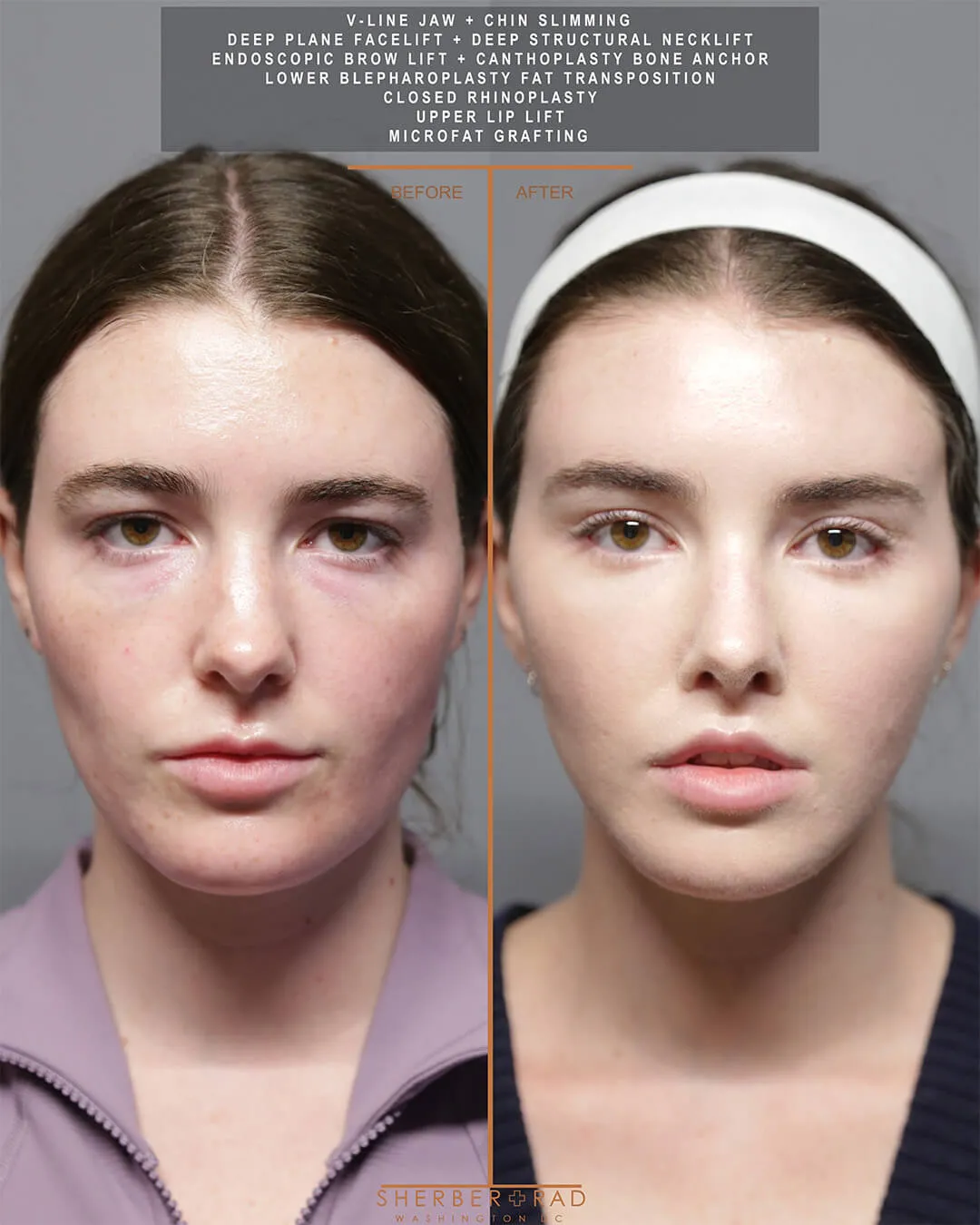
As his career developed, Dr. Rad narrowed his focus to facial aesthetic surgery. He did not expand into body contouring or trend-driven treatments. Instead, he refined deep-plane and endoscopic facelift techniques.
Over the course of two decades, he performed more than 3,000 facelifts.
“Mastery comes from repetition,” he says. “You see patterns. You learn restraint.”
The deep-plane facelift became central to his work. Unlike surface tightening, it addresses deeper support structures. The goal is durability and natural movement.
“Good surgery doesn’t announce itself,” he says. “It lets someone feel like themselves again.”
Founding SHERBER+RAD: An Integrated Model
In 2014, Dr. Rad and his wife, dermatologist Dr. Noëlle Sherber, launched SHERBER+RAD in downtown Washington, D.C.
The idea was simple but uncommon: integrate dermatology and facial plastic surgery into one coordinated system.
“Skin and structure are connected,” Dr. Rad explains. “Care should reflect that.”
Patients move through private cabanas instead of open waiting rooms. A confidential entrance protects discretion. Surgical and dermatologic plans are aligned.
The model reduced fragmentation. It improved continuity. It created clarity for patients.
“We designed the practice around calm, unhurried attention and exceptional care which simply takes time,” he says. “Speed doesn’t improve outcomes.”
A Practice Built on Word of Mouth
SHERBER+RAD did not rely on aggressive marketing. Growth came through referrals.
“We never chased scale,” Dr. Rad says. “We focused on consistency and focusing intensely on what we do best.”
Patients returned for long-term planning. Many referred colleagues and family. Over time, the practice became known among professionals and diplomats who valued privacy and natural results.
One operational principle stood out: saying no.
“If expectations are unrealistic or safety is compromised, I decline,” he says. “Saying no is part of responsible care.”
That discipline protected both patients and the practice’s standards.
How Ariel N. Rad Stays Ahead in Aesthetic Medicine
In a market influenced by social media and rapid cycles, Dr. Rad avoids reacting to noise.
“I don’t chase fast data,” he says. “Trends may come and go, but anatomy doesn’t change and this is where I maintain focus through all the noise.”
He reviews surgical outcomes regularly. He tracks complication rates and revision rates. He studies long-term results, not short-term impressions.
Innovation, in his view, often means refinement rather than invention.
“Small adjustments matter more than flashy ideas,” he says.
What Makes His Approach Different?
Several themes define his operating model:
- Narrow procedural focus
- Hospital-based surgical settings
- Integrated dermatology collaboration
- Long-term patient planning
- Clear boundaries on scope
These are not dramatic strategies. But they compound.
“Most success looks boring up close,” he says. “It’s repetition done well.”
Leadership Through Systems, Not Volume
Dr. Rad does not describe himself as disruptive. He describes himself as disciplined, prioritising structure over scale. He refines systems rather than expanding services and maintains high expectations for his and his team’s performance. This approach fundamentally serves patients well.
“Restraint creates clarity,” he says. “Clarity improves decisions.”
That mindset has shaped his career. It has also influenced how he advocates for higher standards in aesthetic medicine.
He emphasises board certification. He encourages patients to verify credentials. He stresses that aesthetic procedures are still medical procedures.
“The face is complex,” he says. “Decisions should not be impulsive.”
Looking Forward
When asked about the future, Dr. Rad does not talk about expansion.
“More refined, not larger,” he says.
He plans to continue focusing on facial surgery, mentorship, and raising standards in his field. The goal is not volume. It is precision.
Dr. Ariel N. Rad’s career shows how steady systems, clear boundaries, and disciplined repetition can bring big ideas to life. Not through spectacle, but through structure and focus.
And in a fast industry, that may be the most durable idea of all.