The Institute Technology Massachusetts, often called MIT, is a place known for pushing boundaries. It’s a school that has been around for a while, and it’s had a big hand in how a lot of our modern technology works. From the stuff that helped win wars to the everyday tools we use, MIT has played a part. This article takes a look at what makes this institute so special, from its history of new ideas to how it’s shaping what comes next in science and industry.
Key Takeaways
- MIT has a long history of making important contributions to technology that we still use today.
- The institute is recognized globally for its high standards in education and research.
- MIT focuses on research that tackles big world problems, like climate change and health issues.
- Undergraduate students get hands-on experience through programs like SuperUROP, working on real projects.
- The school emphasizes turning research discoveries into practical applications that can help people.
A Legacy of Innovation at the Institute Technology Massachusetts
Foundational Contributions to Modern Technology
The Massachusetts Institute of Technology, often called MIT, has a history that’s deeply woven into the fabric of modern technological advancement. Since its beginning, the institute has been a place where big ideas are not just discussed but actively brought to life. Think about it: without the work done here, we might not have things we use every day, like email, GPS, or even the medical imaging technology that helps doctors see inside us. It’s pretty wild to consider how many everyday conveniences and life-saving tools have roots in the research and development that happened on this campus.
MIT’s influence isn’t just about inventing new gadgets; it’s about laying the groundwork for entire fields of study and industry. The foundational work in areas like computing, materials science, and engineering has shaped how we approach problem-solving across the board. This institution has consistently pushed the boundaries of what’s possible, creating a ripple effect that continues to influence technological progress globally.
The impact of MIT’s early contributions is hard to overstate. It provided the intellectual soil from which countless innovations grew, transforming industries and improving lives in ways that were unimaginable just a generation before.
Shaping the Future Through Research
MIT doesn’t just rest on its historical laurels; it’s constantly looking ahead. The research happening here today is aimed at tackling some of the world’s most pressing issues. Whether it’s developing new ways to generate clean energy, finding cures for diseases, or creating smarter artificial intelligence, the focus is always on what’s next and how it can benefit society.
Here’s a look at some key areas where MIT research is making a difference:
- Energy and Climate: Developing sustainable energy sources and strategies to combat climate change.
- Healthcare: Advancing medical treatments, diagnostics, and understanding of complex diseases.
- Artificial Intelligence: Pushing the limits of AI for practical applications and ethical considerations.
- Materials Science: Creating new materials with unique properties for various industries.
This forward-thinking approach means that the discoveries made at MIT today are likely to be the technologies that define our future.
Impact on Global Industries
The innovations that emerge from MIT don’t stay within the university walls. They spread out, creating new companies, transforming existing industries, and generating economic growth worldwide. Many successful tech companies and startups have been founded by MIT alumni or have their origins in research conducted at the institute. This entrepreneurial spirit is a significant part of MIT’s legacy, turning academic breakthroughs into tangible products and services that affect millions.
Consider the sheer number of companies that owe their existence or significant advancements to MIT’s influence. It’s a testament to the practical application of knowledge and the drive to solve real-world problems. The economic impact is substantial, creating jobs and driving innovation across sectors like biotechnology, software, aerospace, and more.
Academic Excellence and Global Recognition
Top Rankings in World University Assessments
MIT consistently stands out in global university rankings, a testament to its unwavering commitment to academic rigor and groundbreaking research. In the QS World University Rankings for 2025, MIT secured the top position globally, achieving a perfect score. This recognition is bolstered by its perfect scores in Academic Reputation and Employer Reputation, indicating that both scholars and industry leaders hold MIT’s educational quality in the highest regard. Similarly, Times Higher Education (THE) World University Rankings 2025 places MIT at second globally, highlighting its sustained excellence across critical assessment metrics. These high placements aren’t just numbers; they reflect a deep-seated dedication to providing an education that is respected and sought after worldwide.
Commitment to Teaching Quality and Student Support
At MIT, the focus on teaching quality is evident. The institution scores exceptionally high in this area, reflecting a dedication to providing students with top-tier instruction. This commitment extends to student support, with a favorable student-to-staff ratio that allows for more personalized academic attention. This environment helps students feel supported as they tackle challenging coursework and research.
The university’s approach to education prioritizes not only the transmission of knowledge but also the development of critical thinking and problem-solving skills, preparing students for complex challenges beyond the classroom.
Fostering a Diverse and International Community
MIT actively cultivates a vibrant and diverse student body, drawing talent from across the globe. A significant percentage of its students come from outside the United States, contributing a rich tapestry of perspectives and experiences to the campus. This international outlook is further reflected in its faculty, bringing a wide range of teaching styles and global insights to the learning environment. This mix creates a dynamic atmosphere where students learn from each other as much as they do from their professors, preparing them for an interconnected world.
Pioneering Research and Development

MIT is a place where big ideas are not just encouraged, they’re actively pursued. The institute is a hub for groundbreaking research that pushes the boundaries of what we know and what we can do. This isn’t just about theoretical concepts; it’s about tackling real-world problems with innovative solutions.
Advancing Scientific Frontiers
At MIT, researchers are constantly exploring new territories in science and technology. This involves everything from understanding the fundamental building blocks of the universe to developing next-generation materials. For instance, work is being done to create detectors that can spot single photons, a technology that could significantly speed up communications, even over vast distances like between Earth and the moon. This kind of work requires meticulous attention to detail, often involving complex fabrication processes and extreme conditions, like temperatures near absolute zero.
Interdisciplinary Approaches to Complex Problems
Many of the challenges facing us today don’t fit neatly into one academic box. MIT excels at bringing together experts from different fields to collaborate on these complex issues. Whether it’s engineering a solution for climate change or finding new ways to combat diseases, the institute encourages a cross-pollination of ideas. This means a biologist might work with a computer scientist, or a materials scientist might team up with a medical doctor. This collaborative spirit is key to making significant progress.
Translating Discoveries into Real-World Solutions
What’s the point of a discovery if it stays in a lab? MIT places a strong emphasis on taking research findings and turning them into practical applications that can benefit society. This could involve developing new medical treatments, creating more efficient energy sources, or designing smarter technologies. The journey from a lab bench to a product in the real world is often long and challenging, but it’s a path MIT researchers are committed to.
The process of research is often iterative, involving many steps and adjustments. It’s not always a straight line from problem to solution, but rather a back-and-forth exploration to fill the space between the initial idea and the final outcome.
Undergraduate Research Opportunities
MIT provides a really unique environment for students to get involved in research, even before they graduate. It’s not just about sitting in lectures; it’s about actively participating in the discovery process. The programs here are designed to put undergraduates right alongside graduate students and faculty, tackling questions that haven’t been answered yet.
The SuperUROP Program Experience
The Advanced Undergraduate Research Opportunities Program, or SuperUROP, is a standout opportunity. It’s like a supercharged version of the regular UROP program, giving students a more extended and in-depth research experience. Students typically spend about 10 hours a week in a lab, working on a project that often spans the entire academic year. This isn’t just a short-term thing; it’s a serious commitment that allows for real progress and learning.
Hands-On Learning and Skill Development
SuperUROP is all about getting your hands dirty, metaphorically speaking. You’re not just reading about science; you’re doing it. This involves everything from running complex simulations to, in some cases, working with delicate equipment that requires extreme care. For instance, one student described handling a centimeter-square chip packed with nanomaterials, a process that involved temperatures just above absolute zero and required careful handling to avoid contamination. It’s this kind of practical, hands-on work that builds a solid foundation of skills.
- Problem Definition: Learning to identify and clearly define a research problem.
- Experimental Design: Developing methodologies to test hypotheses.
- Data Analysis: Interpreting results and drawing conclusions.
- Communication: Presenting findings through papers, posters, and presentations.
The experience of conducting research as an undergraduate can significantly shape career paths. It provides a realistic preview of graduate studies and research careers, helping students make informed decisions about their future academic and professional journeys.
Mentorship and Collaborative Research
What makes these programs so effective is the strong emphasis on mentorship. Undergraduates are paired with faculty, postdocs, and graduate students who guide them through the research process. This isn’t just about getting answers; it’s about learning how to ask the right questions and how to find solutions independently. Mentors often use methods like the Socratic approach, prompting students to think critically and discover answers for themselves. This collaborative environment means students are never truly alone; they have a support system to help them navigate the complexities of research.
The goal is to move beyond textbook problems and engage with the messy, iterative nature of real-world scientific inquiry.
Fabrication and Practical Application
Deep Dive into Fabrication Techniques
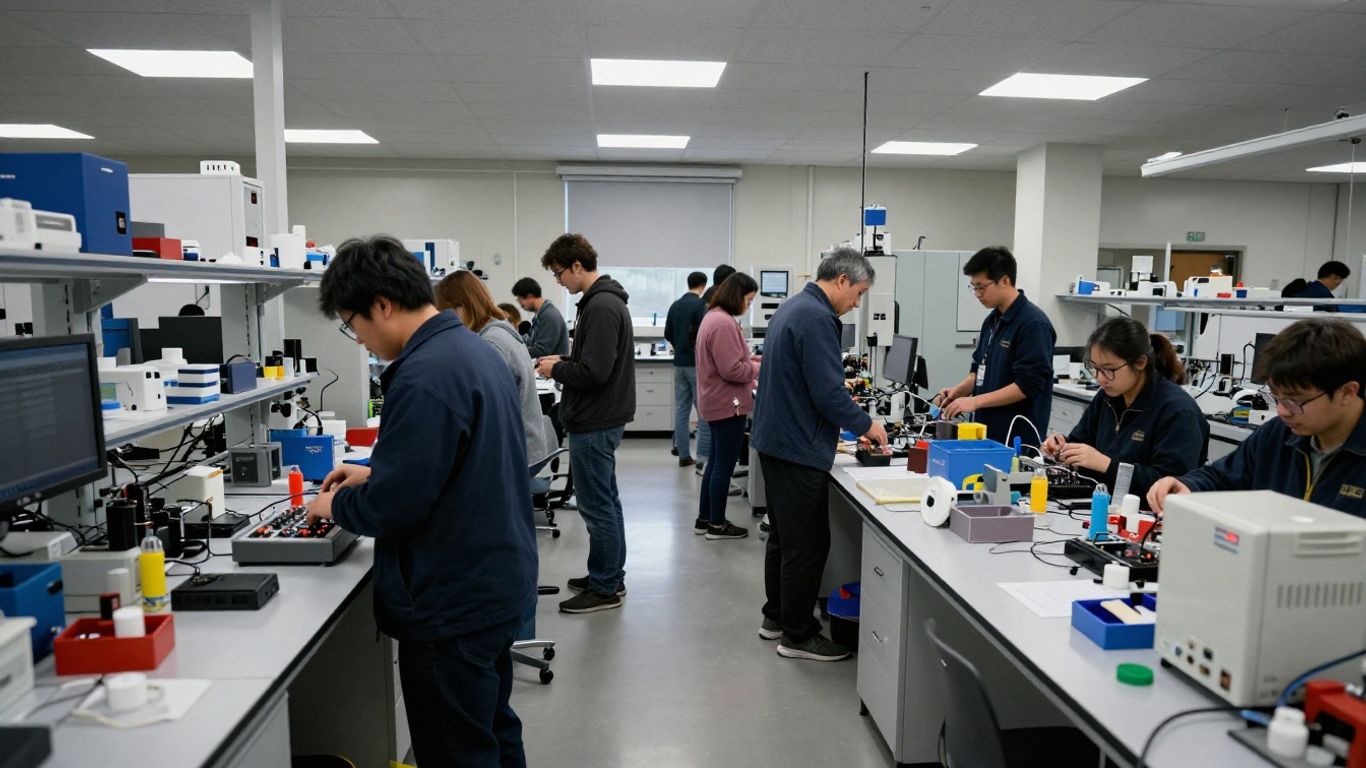
MIT provides students with incredible opportunities to get hands-on with their ideas. It’s not just about theory here; it’s about making things real. The Institute has a strong focus on fabrication, meaning students learn how to build, test, and refine their designs. This involves everything from working with advanced machinery to understanding the properties of different materials. Think of it as a place where concepts transform into tangible objects, pushing the boundaries of what’s possible.
Empowering Students to Create
Students at MIT are given the tools and the space to bring their innovations to life. Programs like the Pappalardo Apprenticeship help students gain practical skills in machining and tool use. It’s more than just learning a craft; it’s about building confidence. As one student put it, they didn’t just learn how to make things, they learned how to make anything. This mindset shift is key to the MIT experience, encouraging a proactive approach to problem-solving and invention.
Bridging Theory and Practice
MIT excels at connecting what’s learned in the classroom with real-world application. The SuperUROP program, for instance, is a prime example. Students spend significant time in labs, working on research projects that have practical outcomes. They learn to communicate their findings, not just to experts, but to their peers as well. This process involves:
- Developing project proposals in the fall.
- Creating research posters to share initial findings.
- Crafting one-minute elevator pitches to explain their work concisely.
- Writing detailed eight-page papers in the spring to document their progress and results.
This structured approach helps students solidify their understanding and gain valuable communication skills, which are important no matter where their careers take them. It’s about taking complex ideas and making them understandable and actionable.
Addressing Global Challenges
MIT doesn’t just focus on what’s happening inside its labs; it’s deeply involved in tackling some of the world’s biggest problems. Think about big issues like climate change, developing new ways to fight diseases, and getting people ready to lead the charge in solving these complex situations. It’s about using what they learn and create to make a real difference.
Energy and Climate Solutions
The institute is a hub for developing new ideas to combat climate change and find better energy sources. Researchers are looking into everything from making solar power more efficient to exploring advanced battery storage. They’re also working on ways to remove carbon dioxide from the atmosphere and create more sustainable industrial processes. The goal is to create practical, scalable solutions that can be used worldwide.
Innovations in Healthcare and Disease Research
MIT is at the forefront of medical breakthroughs. Scientists are studying how diseases work at a molecular level, looking for new ways to diagnose illnesses earlier and develop more effective treatments. This includes work on vaccines, understanding complex infections, and using technology to improve patient care. They’re also exploring how to make healthcare more accessible and affordable.
Preparing Future Leaders and Innovators
Beyond the technical work, MIT is dedicated to shaping the next generation of problem-solvers. They run programs that help students develop critical thinking and leadership skills. This includes initiatives that support veterans transitioning to academic life and programs that encourage interdisciplinary collaboration. The aim is to equip individuals with the knowledge and mindset needed to address future global issues effectively.
Looking Ahead
As we wrap up our look at the Massachusetts Institute of Technology, it’s clear that MIT is more than just a school; it’s a place where big ideas take shape and push the world forward. From its top rankings to the hands-on research opportunities like SuperUROP, the institute consistently shows its commitment to innovation and learning. Whether it’s tackling global challenges like climate change or exploring the frontiers of science, MIT’s impact is felt far and wide. It’s a dynamic environment that continues to shape the future, one discovery and one student at a time.
Frequently Asked Questions
What is the main focus of the Massachusetts Institute of Technology (MIT)?
MIT is a world-renowned university that focuses on science and technology. It’s known for its cutting-edge research and for educating students who become leaders and innovators in many different fields.
How does MIT rank among other universities globally?
MIT is consistently ranked as one of the top universities in the world. It often holds the number one spot in major university rankings, showing its strong reputation for academics and research.
What kind of research does MIT conduct?
MIT researchers work on a wide range of important topics, from developing new energy solutions and tackling climate change to making breakthroughs in healthcare and understanding diseases. They often combine different fields of study to solve complex problems.
Are there special programs for undergraduate students at MIT?
Yes, MIT offers excellent opportunities for undergraduates to get involved in research. Programs like SuperUROP allow students to work closely with professors and graduate students on real research projects, giving them hands-on experience.
How does MIT help students turn ideas into real things?
MIT has amazing facilities and a strong focus on ‘making.’ Students are encouraged to use workshops and labs to build and test their ideas, bridging the gap between learning in the classroom and creating practical solutions.
What kind of impact does MIT have on the world?
MIT’s discoveries and innovations have a huge effect globally. Its alumni and research have led to technologies we use every day, created countless companies, and continue to shape industries and address major world challenges.