In wearable engineering, you simply don’t have the luxury of spare space. You have to pack processors, haptics, and radios into an enclosure that fights you every step of the way—all while preserving enough room for the one thing users actually care about: a battery that lasts all day.
In this environment, stacking traditional rigid PCBs with wire harnesses is a dead end. A connector might look small on a datasheet, but inside a 10mm casing, it represents a massive obstruction. It eats up vertical Z-axis space, complicates assembly, and introduces a weak link in the mechanical structure.
This drives the aggressive shift toward rigid-flex circuits. It is not just about shrinking the footprint; it is about integration. By fusing stiff, component-bearing sections with flexible tails, the PCB becomes a 3D structural element. You can fold the circuitry around the battery or line the curvature of the casing, turning previously unused volume into functional space.
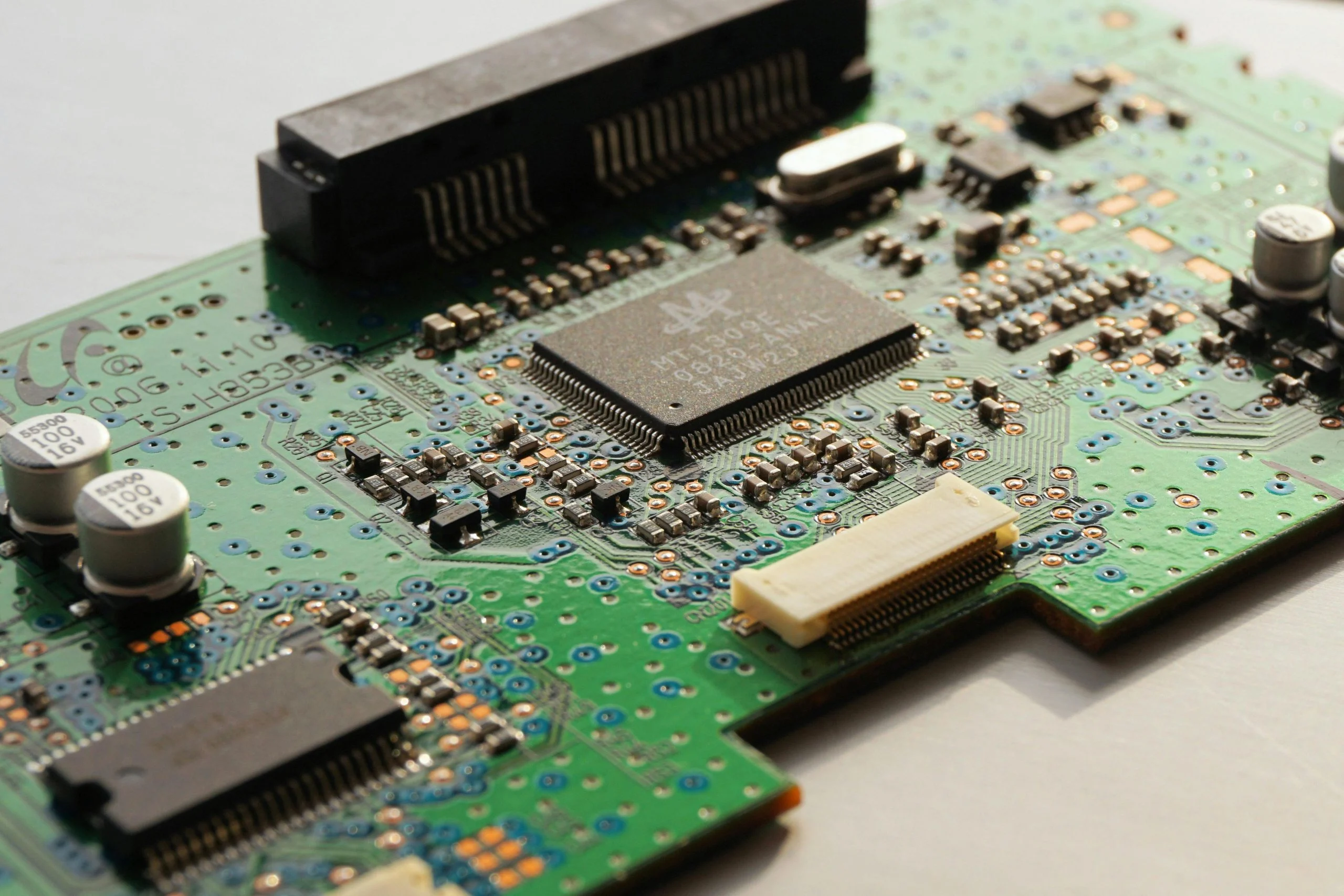
Solving Tight Space Constraints
Wearable design is an exercise in extreme miniaturization. Wrist anatomy does not offer flat planes, yet traditional boards force you into boxy layouts that leave air gaps—wasted opportunities for battery capacity.
Rigid-flex designs tackle this by eliminating physical connectors and bulky ribbon cables. This approach typically yields a system volume reduction of up to 50% by removing:
- The Connector Bodies: Physical headers that occupy height and board area.
- Cable Routing: The awkward slack needed for assembly.
- Keep-Out Zones: The empty space required around connectors for mating and unmating.
Consider a smart ring architecture. It requires a board that loops under the display and wraps around the power cell. Replacing board-to-board connectors with an integrated flex section can reclaim roughly 60% of the PCB area. That is real estate you immediately give back to the battery team to extend runtime.
Ensuring Reliability in Motion
Unlike a server sitting in a climate-controlled rack, a wearable lives in a hostile environment. It is on a gym floor, vibrating on a bike handle, or getting knocked against doorframes. Internal designs relying on soldered wires or snap-fit connectors invite fatigue failure. Vibration effectively works these connections loose over time.
Rigid-flex architecture removes these failure points by drastically reducing the interconnect count. Board A is not plugged into Board B; they are one continuous unit.
The material choice is critical here. While standard electro-deposited (ED) copper on rigid boards will micro-fracture under repeated torque, the flexible sections in a properly designed rigid-flex PCB use Rolled Annealed (RA) copper. This grain structure is engineered to endure hundreds of thousands of dynamic flex cycles without work hardening.
Note for designers: Pay close attention to IPC-6013 standards. If your design puts circuitry in a strap that flexes daily, you need a stack-up rated for dynamic bending, not just static installation.
Designing Shapes That Fit the User
Organic forms do not have right angles. Forcing a rectangular PCB into a curved watch chassis results in a bulky product that feels foreign on the skin.
Rigid-flex technology breaks the “flat-plane” mindset. It allows engineers to place high-density BGAs on stiff sections while using thin flex layers as hinges. This lets the electronics drape like fabric, conforming snugly to the housing.
This capability allows a mainboard to sit flat under the chassis while twisting 90 degrees to connect side-mounted biosensors. This contouring is the secret to making modern devices thinner, lighter, and truly ergonomic. You are no longer forcing components to fit a board; you are designing a board that fits the device.
Overcoming Manufacturing Complexity
The engineering benefits are undeniable, but the fabrication curve is steep. You are bonding materials with vastly different physical properties, which creates a minefield for the inexperienced. Without precise process control, three main risks arise:
- CTE Mismatch: Rigid FR-4 and flexible Polyimide expand at different rates under heat. Poorly managed lamination cycles lead to internal stress and delamination.
- Registration Drift: Layer alignment must be precise. Even a minor shift during imaging can compromise the connection between the rigid and flex layers.
- Moisture Damage: Polyimide acts like a sponge. If not baked out correctly, trapped moisture turns to steam during reflow, causing the board to swell or “popcorn” from the inside.
This is why rigid-flex PCB manufacturing cannot be treated as a commodity purchase. A prototype that passes simulation can easily fail on the factory floor if the material behaviors are not accounted for. Specific choices in layer stack-up, laser drilling parameters, and coverlay placement are non-negotiable.
Because of these risks, you need a partner who acts more like a technical consultant than a print shop. This is where experts like JarnisTech prove their worth. By getting involved early in the design phase (DFM), experienced manufacturers can flag stack-up imbalances before they become yield killers. It is an industry rule: a perfect schematic is worthless if it cannot be built at scale. Rigid-flex gives you the performance you need, but only if you respect the complexity of the build.