In today’s classrooms, technology isn’t just a fancy add-on; it’s become a pretty big deal. It’s changing how students learn and how teachers teach. Thinking about the 10 advantages of technology for students, it’s clear that these tools can really make a difference. They can make lessons more interesting, help students learn in ways that work best for them, and even get them ready for jobs down the road. Let’s take a look at some of the key ways technology is shaping education for the better.
Key Takeaways
- Technology makes learning more interesting and interactive, grabbing students’ attention better than old methods.
- It allows for learning that’s tailored to each student’s pace and style, so no one gets left behind.
- Digital tools make it easier for students to work together on projects, even when they’re not in the same room.
- Students get access to a huge amount of information and learning materials from all over the world.
- Using technology in school helps students develop skills they’ll need for future jobs and for everyday life.
1. Enhanced Student Engagement
Technology has really changed how students interact with their schoolwork. Gone are the days of just passive listening; now, learning can be a much more active process. Think about it: instead of just reading about ancient Rome, students can take a virtual tour of the Colosseum. This kind of immersive experience makes subjects come alive in ways that textbooks alone can’t.
Interactive tools are key to capturing attention in today’s classrooms. When students can click, drag, and manipulate elements on a screen, they’re not just looking at information, they’re doing something with it. This active involvement helps them connect with the material on a deeper level. It’s like the difference between watching a cooking show and actually trying to make the dish yourself – you learn so much more by doing.
Here are a few ways technology boosts engagement:
- Gamification: Turning lessons into games with points, levels, and rewards makes learning feel less like a chore and more like fun. Platforms like Kahoot! or Quizlet Live turn review sessions into exciting competitions.
- Simulations and Virtual Labs: For science classes, this means conducting experiments without needing expensive equipment or worrying about safety. Students can explore complex processes in biology or chemistry in a risk-free digital space.
- Interactive Whiteboards and Apps: These tools allow for real-time polling, drawing, and annotation, making lessons dynamic and responsive to student input. Teachers can instantly see where students might be struggling.
The shift towards more interactive learning means students are more likely to stay focused and remember what they’ve learned. It taps into their natural curiosity and desire to explore.
This active participation doesn’t just make learning more enjoyable; it also helps students develop a better grasp of the subject matter. When students are engaged, they’re more motivated to learn and explore further, which can lead to a more positive overall attitude towards education. It’s a powerful way to build a strong foundation for future academic success, much like building a solid base in financial services.
Instant feedback is another big win. When students get immediate responses to their answers or actions, they know right away if they’re on the right track. This helps them correct mistakes quickly and builds confidence as they see their progress.
2. Personalized Learning Paths

Technology really changes how students learn by letting them go at their own speed and focus on what they need. Instead of everyone doing the same thing at the same time, digital tools can adapt. This means a student who grasps a concept quickly can move ahead, while someone who needs more time gets extra practice or a different explanation. It’s like having a tutor for every student, but it’s built right into the learning materials.
Think about how this works in practice. Adaptive learning platforms are a great example. These systems track a student’s progress and adjust the difficulty of questions or the type of content presented. If a student is struggling with fractions, the platform might offer more practice problems or a video tutorial. If they’re acing it, it might introduce more complex concepts or related topics. This kind of tailored approach helps keep students engaged because they’re not bored by material that’s too easy or frustrated by material that’s too hard. It makes learning feel more achievable and relevant to each individual.
Here’s how personalized paths can make a difference:
- Individualized Pace: Students can spend more time on challenging topics and less time on those they already understand.
- Targeted Support: Teachers can identify specific areas where students need help and provide focused interventions.
- Varied Content Delivery: Information can be presented in different formats (videos, text, interactive exercises) to match different learning styles.
- Student Agency: Learners can have some choice in what they study or how they demonstrate their knowledge, increasing motivation.
This flexibility is a big step up from traditional classroom settings. It acknowledges that every student is different and learns in their own way. By using technology to create these custom learning journeys, we can help students build confidence and a stronger foundation in their studies. It’s about meeting students where they are and guiding them forward effectively. For more on how different platforms can support this, you might find discussions on financial discussions on Reddit surprisingly relevant to understanding how varied approaches can cater to diverse needs.
3. Improved Collaboration Tools
Technology has really changed how students can work together. Gone are the days when group projects meant everyone had to be in the same room at the same time. Now, with various digital platforms, students can connect and contribute to assignments from anywhere. Think about tools like shared documents where multiple people can edit a paper simultaneously, or online whiteboards that allow for brainstorming sessions even when miles apart. These platforms make it easier for students to share ideas, give each other feedback, and build on each other’s work.
These digital tools help students develop important teamwork and communication skills that are super useful for future jobs.
Here are some ways technology boosts collaboration:
- Shared Documents: Platforms like Google Docs or Microsoft 365 allow students to co-author reports, presentations, and other projects in real-time. Everyone can see changes as they happen, making it simple to track contributions and avoid duplicate work.
- Online Discussion Forums: These spaces give students a place to ask questions, share insights, and discuss topics outside of class time. It’s a great way for quieter students to participate and for everyone to learn from different perspectives.
- Video Conferencing Tools: Apps such as Zoom or Google Meet enable virtual group meetings, presentations, and even study sessions. This brings a face-to-face element to remote collaboration, making it feel more personal.
- Collaborative Whiteboards: Tools like Miro or Mural let students brainstorm visually, sketching out ideas, organizing thoughts, and creating mind maps together, much like they would on a physical whiteboard.
Using these tools effectively means students learn to navigate different communication styles and project management approaches. It prepares them for a world where teamwork often happens across distances and digital interfaces, making them more adaptable professionals.
Getting comfortable with these kinds of digital teamwork environments is a big part of preparing for the modern workplace. Learning to use these tools now means students will be better equipped when they enter careers that rely heavily on remote collaboration tools.
4. Access to Diverse Resources
Gone are the days when learning materials were confined to dusty textbooks and the school library. Technology has thrown open the doors to a universe of information, making knowledge more accessible than ever before. Students can now tap into a vast array of resources with just a few clicks, moving beyond the limitations of traditional materials.
Think about it: instead of just reading about ancient Rome, students can take virtual tours of the Colosseum, watch documentaries featuring leading historians, or explore interactive timelines. Science classes can utilize online simulations that allow students to conduct experiments that would be too dangerous or expensive in a physical lab. For literature, there are countless e-books, author interviews, and critical analyses available, offering different perspectives on a single work.
This wide availability means that learning isn’t limited to what’s on the school’s shelves. It supports curiosity and allows students to explore topics in greater depth, following their own interests. The internet provides a direct link to primary sources, expert opinions, and up-to-the-minute discoveries, making learning a dynamic and current process.
Here’s how this access plays out:
- Digital Libraries: Access to millions of e-books, academic journals, and research papers.
- Educational Videos: Platforms like YouTube and dedicated educational sites offer lectures, tutorials, and documentaries.
- Interactive Simulations: Virtual labs and models for subjects like science, math, and engineering.
- Online Archives: Museums, historical societies, and government bodies often provide digital access to their collections.
This broad access helps level the playing field, giving students in different locations and circumstances the chance to engage with high-quality materials that might otherwise be out of reach. It encourages independent research and self-directed learning, key skills for any student.
5. Development of Digital Literacy
In today’s world, knowing how to use a computer or a tablet is just the start. Students need to become digitally literate, which means they can do more than just operate devices. They need to learn how to find information online and figure out if it’s trustworthy. This also includes understanding how their data is used and how to use new tools, like AI, in a smart and safe way. Getting good at these skills early on helps students use technology responsibly and thoughtfully throughout their lives.
Think about it: when students are asked to research a topic, they don’t just look at the first result. They learn to compare different sources, check for bias, and put together information from various places. This critical thinking is a big part of digital literacy.
Here are some key areas that make up digital literacy:
- Information Evaluation: Learning to assess the credibility and accuracy of online content.
- Digital Communication: Using various platforms to share ideas and collaborate effectively.
- Online Safety and Privacy: Understanding how to protect personal information and behave ethically online.
- Responsible AI Use: Learning to interact with and understand artificial intelligence tools.
When schools actively teach these skills, students are better prepared for what comes next, whether that’s college or a job. They become more confident and capable users of technology, ready to face the digital challenges and opportunities ahead.
6. Fostering Creativity and Innovation
Technology opens up a whole new world for students to explore their imaginative sides. It’s not just about using computers; it’s about giving students tools to build, design, and invent things they might not have been able to before. Think about graphic design software that lets them create visual art, or coding platforms where they can build their own simple games. These aren’t just fun activities; they’re ways for students to express unique ideas and see them come to life.
Digital tools allow students to move from being passive consumers of information to active creators. This shift is incredibly important for developing problem-solving skills and a forward-thinking mindset. When students are given the freedom to experiment with different digital mediums, they learn to think outside the box and come up with novel solutions.
Here are a few ways technology helps spark creativity:
- Digital Art and Design: Programs for drawing, animation, and graphic design let students visualize and produce artwork.
- Coding and Robotics: Learning to code or build simple robots teaches logical thinking and how to bring abstract concepts into reality.
- Multimedia Creation: Tools for video editing, podcasting, and digital storytelling allow students to share their narratives and perspectives in engaging ways.
The ability to experiment without the constraints of traditional materials, coupled with the instant feedback digital tools provide, accelerates the learning cycle for creative projects. This iterative process is key to innovation.
This kind of exploration can even lead students to discover passions they never knew they had, potentially shaping their future paths, much like how some institutions are recognized for shaping the future of fields like fashion top 10 institutions.
When students are encouraged to use technology to create, they develop a sense of agency and confidence in their ability to bring new ideas into the world.
7. Interactive Multimedia Lessons
Remember when learning mostly involved textbooks and lectures? Technology has changed that. Now, lessons can be much more dynamic. Interactive multimedia lessons bring subjects to life by combining text, images, audio, and video. Think of it like a digital textbook that can talk, show you things, and even let you play along.
These lessons go beyond just presenting information. They often include elements where students can actively participate. This might mean answering questions directly within the lesson, manipulating objects on screen to understand a concept, or even taking quick quizzes that give immediate feedback. This active involvement helps students pay closer attention and remember what they’ve learned.
Here’s how these lessons work in practice:
- Visual Appeal: Engaging graphics and animations make complex ideas easier to grasp.
- Auditory Learning: Narration and sound effects can reinforce key points and cater to auditory learners.
- Kinesthetic Interaction: Drag-and-drop activities, simulations, and interactive diagrams allow students to learn by doing.
- Real-time Feedback: Many platforms provide instant responses to student actions, helping them correct misunderstandings right away.
Using these tools means teachers can see how students are doing as they are learning, not just after. This allows for quick adjustments to teaching if many students are struggling with a particular part of the lesson.
Tools like interactive whiteboards and specialized educational software are great for this. They turn a passive viewing experience into an active learning adventure. This approach is particularly helpful for subjects that benefit from visualization, like science or history, making abstract concepts more concrete and memorable for everyone.
8. Preparation for Future Careers
The world of work is changing fast, and technology is a big part of that. By using various digital tools in school, students get a head start on skills that employers are looking for. Think about it: many jobs today require people to be comfortable with computers, software, and online communication.
When students learn to use things like presentation software, data analysis tools, or even basic coding, they’re building a foundation for their future careers. It’s not just about knowing how to use a specific app; it’s about developing a general comfort level with technology that makes them adaptable. This adaptability is key because new technologies pop up all the time, and being able to learn them quickly is a major advantage.
Here are some ways technology helps prepare students for what comes next:
- Digital Communication: Learning to communicate effectively through email, video calls, and collaborative platforms prepares students for professional interactions.
- Problem-Solving with Tech: Using software to solve problems, whether it’s designing a project or analyzing data, builds critical thinking skills needed in many fields.
- Familiarity with Industry Tools: Exposure to software and hardware used in various industries gives students a practical edge.
- Understanding Automation and AI: As these technologies become more common in workplaces, early exposure helps students understand their potential and how to work alongside them.
The workplace of tomorrow will likely be even more tech-driven than today’s. Giving students hands-on experience with digital tools now means they’ll be better equipped to step into those roles and contribute from day one. It’s about making them ready for jobs that might not even exist yet.
This kind of preparation goes beyond just technical skills. It also helps students develop a mindset that embraces change and continuous learning, which is incredibly important for long-term career success.
9. Differentiated Instruction
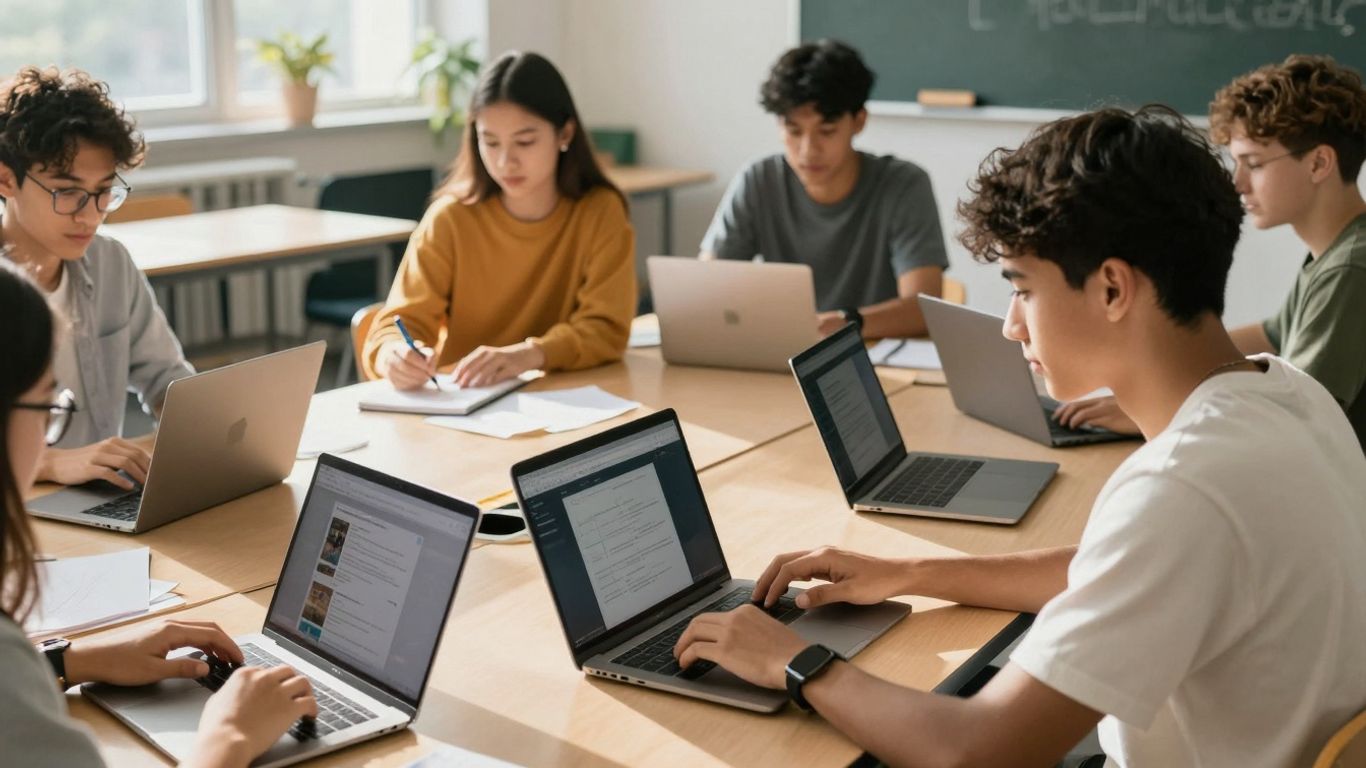
Technology really helps teachers make lessons fit each student better. Think about it: not everyone learns at the same speed or is interested in the same things. With digital tools, a teacher can give one student extra practice on a math concept they’re struggling with, while another student who already gets it can move on to a more advanced problem. Adaptive learning software is pretty neat for this; it can actually change the difficulty of questions on the fly based on how the student is doing. This means no one gets left behind, and no one gets bored.
It’s not just about adjusting difficulty, either. Teachers can assign different reading materials or videos to students based on what they already know or what sparks their curiosity. This way, everyone is working on something that’s just right for them.
Technology makes it possible for teachers to act more like guides, pointing each student down the best path for their learning journey, rather than trying to herd everyone down the same road.
Here’s how it can work:
- Adaptive Software: Programs that adjust content difficulty based on student performance.
- Varied Digital Resources: Assigning different articles, videos, or interactive exercises based on student needs.
- Flexible Grouping: Using online tools to facilitate small group work while others complete independent digital tasks.
This approach ensures that every student receives the support and challenge they need to succeed. It’s a big shift from the one-size-fits-all model, making learning more effective and fair for everyone in the classroom.
10. Building a Love for Learning
Technology has a unique way of making learning feel less like a chore and more like an adventure. When lessons are interactive and engaging, students naturally become more curious and eager to explore. Think about how many students are already drawn to screens; by using technology in the classroom, we meet them where they are.
This approach can transform how students view education. Instead of just memorizing facts, they can experiment with digital tools that let them create, design, and solve problems. This hands-on experience is often more memorable and enjoyable than traditional methods.
Here are a few ways technology sparks this enthusiasm:
- Interactive Simulations: Students can conduct virtual science experiments or explore historical sites without leaving their desks.
- Gamified Learning Platforms: Turning lessons into games with points and challenges makes practice feel like play.
- Creative Software: Tools for art, music, or coding allow students to express themselves and see the results of their efforts instantly.
When learning is fun and relevant, students are more likely to develop a genuine interest that lasts well beyond the classroom. This intrinsic motivation is key to lifelong learning.
Technology can make abstract concepts tangible and exciting. When students can see, manipulate, and interact with information, their engagement deepens, leading to a more positive and lasting connection with the subject matter.
By integrating technology thoughtfully, educators can help students discover the joy of learning and build confidence in their ability to understand and interact with the world around them.
Looking Ahead
As we’ve seen, technology offers a wealth of benefits for students today. It makes learning more interesting and helps everyone learn in their own way. Plus, it gets students ready for the jobs of the future. By using these tools smartly, we can help students do better in school and in life. It’s all about finding the right balance and making sure technology supports good teaching, not replaces it. The goal is to create classrooms where students are excited to learn and explore, building skills that will serve them well for years to come.
Frequently Asked Questions
How does technology make learning more interesting for students?
Technology makes learning more interesting by turning lessons into fun, interactive experiences. Think of games, virtual reality trips, or cool videos that make tough subjects easier to understand and remember. It’s like playing a game while you learn!
Can technology help students learn at their own speed?
Yes, absolutely! Technology can create special learning paths for each student. If you need more time on a topic, it can give you extra practice. If you’re ready for a challenge, it can offer harder stuff. It’s like having a tutor that knows exactly what you need.
How does technology help students work together?
Digital tools allow students to team up on projects even if they aren’t in the same room. They can share ideas, write together, and give each other feedback instantly, just like they would in person. This helps build teamwork skills.
What kind of learning materials can students access with technology?
Technology opens up a world of information! Students can find e-books, watch educational videos, explore online libraries, and use special programs that act like science labs or historical simulations. It’s like having the biggest library and museum right at your fingertips.
Why is learning to use technology important for future jobs?
Most jobs today and in the future will require using computers and digital tools. By learning with technology now, students get comfortable with the programs and skills they’ll need for careers, whether it’s in coding, design, or just using everyday office software.
Does technology help students become more creative?
Definitely! Technology gives students tools to create things they couldn’t before. They can make digital art, design websites, create animations, or even build simple robots. This helps them express their ideas and become creators, not just people who use technology.