65% of students already rely on AI tools, and 50% of future jobs demand advanced digital skills; education must fuse technology, creativity and ethics. The challenge for Industry 4.0 is clear: will we educate fast enough to remain human-led?
“Out-educate today, out-compete tomorrow”. This pithy slogan, invented by one of the advisors for President Barack Obama, should be the rallying cry for all emerging markets all over the world.
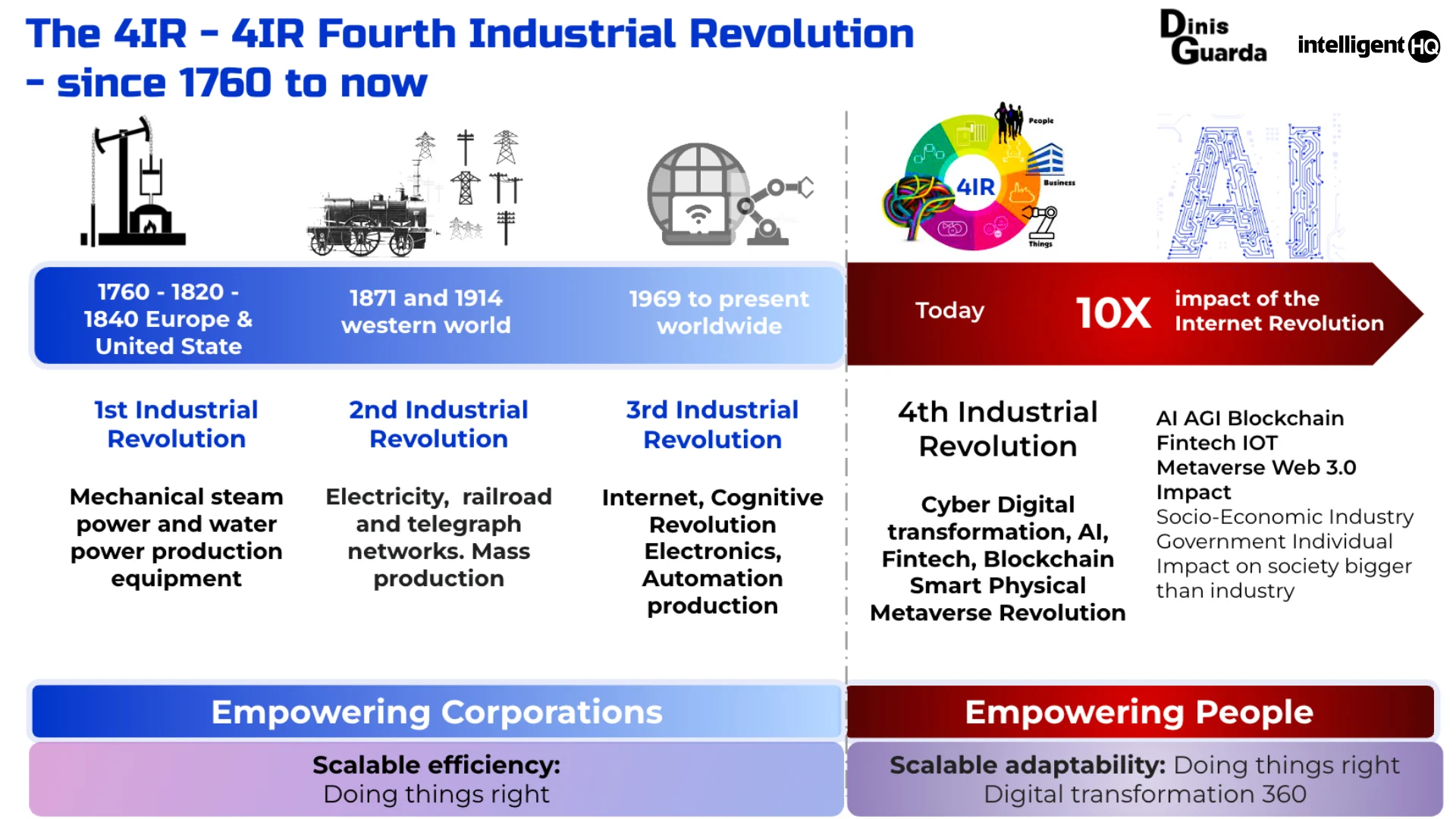
But we are living in a time of 4th Industrial Revolution, so what should a revolutionary education system look like? Perhaps blockchain, AI and other technologies can help to provide the answer?
Perhaps. Why the current education system is broken – Sir Ken Robinson.
It has been noted by Nicholas Negroponte, when he was director of MIT Medialab that the current education system is outdated. He uses a clever comparison, comparing a time-travelling surgeon to a teacher. One would be lost: New instruments, theatre, drugs.
The other would be fine: Rows of chairs, blackboard (or whiteboard) at the front. Sir Ken Robinson, meanwhile, has a similar discourse but highlights the roots of the current education system, which worked for the industrial revolution but has never quite kept up ever since. The Education Rebel alliance also, Graham Brown Martin is also an outspoken critic of.
I’ll illustrate this with an example from Salman Khan’s Ted Talk.
“Imagine you were building a house.
After buying the land, you hired a contractor to come in to make the foundation for the next 3 weeks.
3 weeks later, an inspector comes in and says that the work is 80% complete.
80% is a B, not bad, let’s go ahead and build the rest of the house on top of the foundation.
A year later, after trying to build the second floor of the house, the floor splinters, and the house collapses.
This might seem like a ridiculous example, because who would build a house on a foundation that’s only 80% complete? Nearly every teacher in America.”
A huge reduction in empathy in schools may be a reflection of society at large’s use of mobile phones, social media platforms, e-sports and a test-based rather than team-based atmosphere. That is before we get to prescription meds, exercise and food quality!
Where education and innovation merge: The possibilities and networks
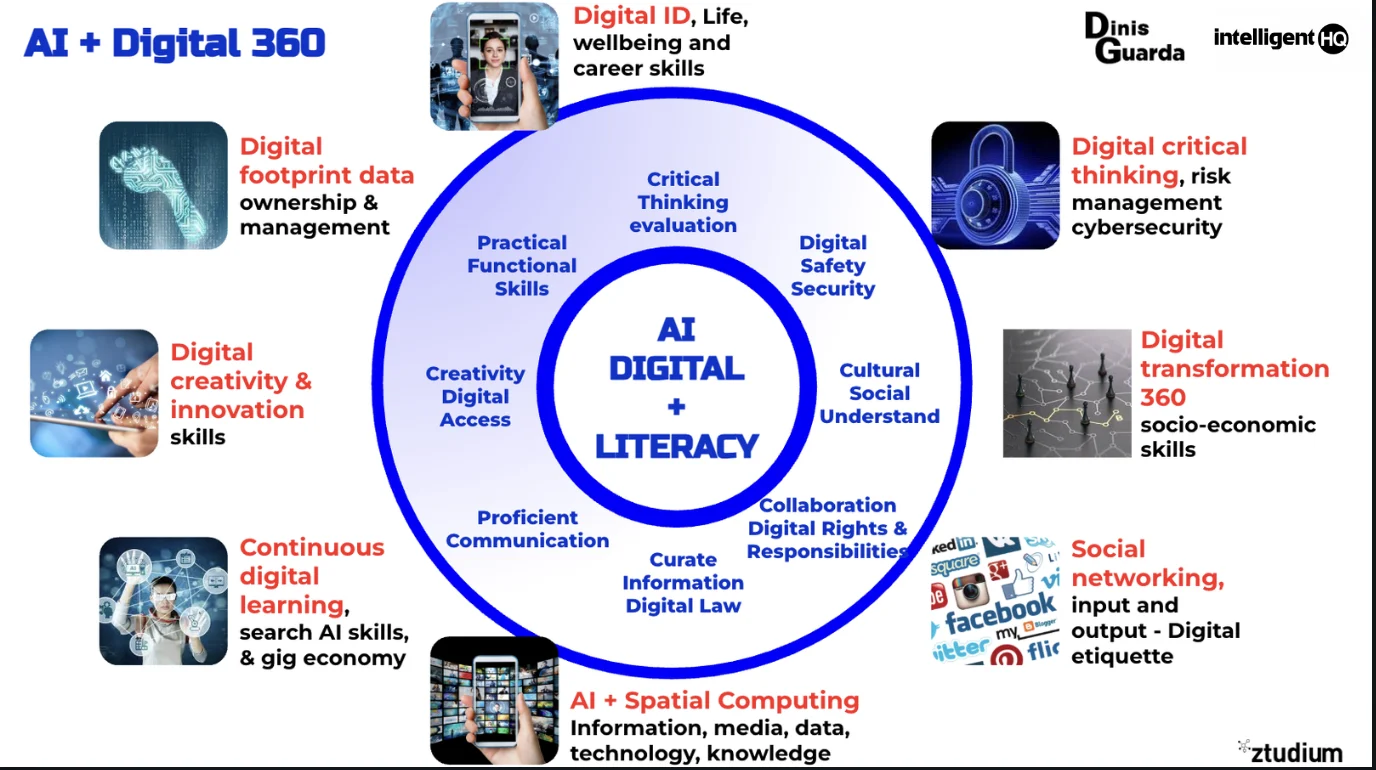
There are some very important networks across the globe which are interested in education. The trick until now has been to jump on bandwagons in order to be funded. From sexual health in the 70s to the UN Sustainable Development Goals nowadays.
The 4th Industrial Revolution represents an opportunity for the big tech companies to join the movement. And many of them have. The Gates Foundation is very active. As is Facebook, the Silicon Valley Community Foundation
Worst-case scenarios of education do not change. Implications for morals and ethics
If we do not revolutionise education, then we will likely perish.
As noted by the philosopher Noam Chomsky at MIT, the dissonance between technology and our morals means that for the first time in history self self-annihilation is possible for the human race. If we get education wrong now, then within ten years, there will be major geopolitical forces unleashed in the world. Without a moral compass or ethical horizon, things could go horribly wrong. Perhaps they already are…
Extremes in politics and populism seem to be mirrored by the environment and climate change. Meanwhile, the general public knows more than ever about all of these big issues, but slacktivism and a lack of empathy generally mean that the general public is apathetic.
There is a huge imbalance in terms of digital inclusion and exclusion in the world today. It will only take a small percentage of the 55 million children in the world currently outside of formal school to gain access to the 4th Industrial Revolution in education to materialise. They are a huge untapped resource, so in terms of sustainability and the future of the planet, they could have the biggest say.
What will happen if education 4.0 becomes a thing?
The upside
However, if we get it right, we will win…
Incorporate creativity and technology within the education system – They are as important as numeracy and literacy. On a basic economic level, if one uses the Obama maxim as a vision for education policy: “Out-educate today, out-compete tomorrow” – then if implemented well, it will result in a boost to GDP, a reduction in social tension and an increase in diverse thought. Globally.
It means that we will also have the capacity to save the planet, increase happiness and save lives.
In turn, that means preserving the maximum number of the earth’s resources for future generations. And maximising on what we have. That shared purpose will save humanity. Hanging onto that meaning in life means that other things like intolerance and aggression are less easy to grip and may slip out of our hands.
And if we get things really right, then our definition of job and identity will change, and those who spend their time helping society will have equal status to those who have commercial aims. In an ideal scenario, universal income and some kind of technology levy will pay for people to be retrained. Especially important since in the future we will all have an average of 5 to 7 professions throughout our careers.
Guarantee that humanity will be at the centre of human progress, not technology. This, in turn, means that we will enter an age of purpose. The question is, can we as a race overcome the human tendency for self-destruction and violence, which is somehow deeply rooted in our DNA, the basis of our survival instinct?
The educator’s dilemma remains: how much to focus on technical skills versus social skills within the formal education system?
Future Thinking
– Quantum and Epigenetics applied to education
The future is full of promise if education does its magic. There are plenty of frontier technologies emerging, including life sciences and biotech.