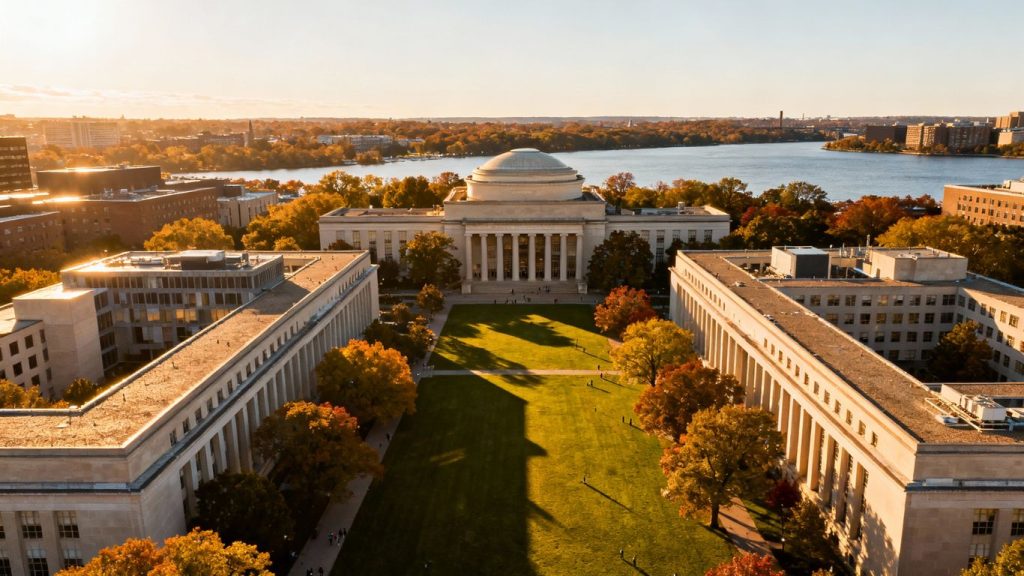
The Massachusetts Institute of Technology in Cambridge, MA, often called MIT, is a world-renowned institution. It’s a place where big ideas meet practical application, and students learn by doing. This article takes a look at what makes MIT so special, from its unique campus to its approach to education and culture. Whether you’re a prospective student, a curious visitor, or just interested in innovation, there’s a lot to explore.
Key Takeaways
- MIT’s campus in Cambridge, MA, features striking architecture like the Stata Center and the Great Dome, alongside public art installations.
- The institute’s educational philosophy, ‘Mens et Manus’ (Mind and Hand), emphasizes hands-on learning and undergraduate research opportunities.
- MIT is a hub for innovation, with extensive makerspaces and labs that encourage students to build and create.
- The culture at MIT is vibrant, marked by student life, community spirit, and a history tied to the very word ‘technology’.
- Visitors can explore the campus through guided tours or self-guided walks, and also discover attractions in nearby Cambridge and Boston.
Discovering the Massachusetts Institute of Technology Campus
Welcome to the Massachusetts Institute of Technology, a place where groundbreaking ideas take shape and innovation is a daily occurrence. As you begin to explore this renowned institution, you’ll find a campus that is as unique and forward-thinking as the minds it houses. From striking modern architecture to iconic historical landmarks, MIT’s physical space tells a story of its commitment to learning and discovery.
A Glimpse into the Stata Center
One of the most visually arresting buildings on campus is the Ray and Maria Stata Center. Designed by architect Frank Gehry, its unconventional, almost whimsical, design stands in contrast to more traditional academic structures. Completed in 2004, this building is a hub for cutting-edge research, notably housing MIT’s renowned Artificial Intelligence Laboratory. It’s a place where the future of technology is actively being shaped, with many significant contributions to AI originating from within its walls. The building itself is a conversation starter, reflecting MIT’s willingness to embrace bold and imaginative approaches.
The Iconic Great Dome and Killian Court
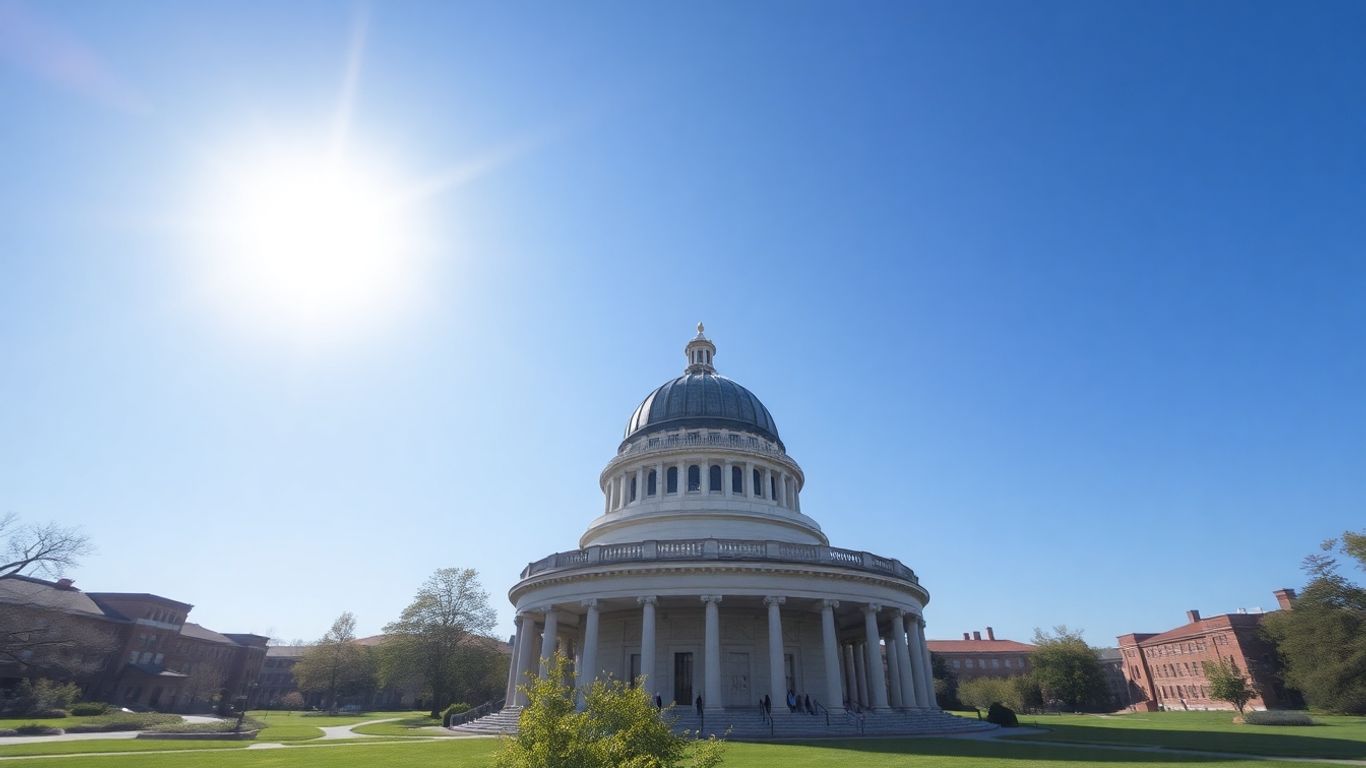
No visit to MIT is complete without experiencing the grandeur of the Great Dome, officially known as the Maclaurin Building. This majestic structure, crowned by its distinctive dome, presides over Killian Court. The court itself is a beautiful, open space, often used for commencement ceremonies and other significant events. It’s a place that feels both historic and alive, a central point on campus where students and visitors alike can pause and take in the impressive surroundings. The scale of the Great Dome is quite remarkable; it’s larger than the domes found on St. Paul’s Cathedral in London or the U.S. Capitol Building.
Exploring Public Art and Architectural Marvels
Beyond the Stata Center and the Great Dome, MIT’s campus is dotted with a fascinating array of public art and architectural gems. As you wander, you’ll encounter sculptures by renowned artists like Picasso and Calder, adding an artistic dimension to the scientific and technological environment. The campus is a testament to diverse architectural styles, featuring works by celebrated architects such as Eero Saarinen, Alvar Aalto, and I.M. Pei. Each building, from the MIT Chapel to the Dreyfus, Weisner, and Landau Buildings, contributes to the rich visual tapestry of the institute. It’s a place where the built environment actively inspires creativity and intellectual curiosity.
The campus itself is a living laboratory, showcasing a blend of historical significance and modern design. It’s a space that encourages exploration and rewards observation, with new discoveries waiting around every corner.
The Academic Heart of MIT
The ‘Mens et Manus’ Philosophy
MIT’s approach to education is deeply rooted in its Latin motto, "Mens et Manus," which translates to "Mind and Hand." This isn’t just a catchy phrase; it’s the guiding principle behind how students learn and engage with knowledge. The idea is to bridge theoretical understanding with practical application. Students are encouraged to not only absorb information but also to actively use it to create, build, and solve real-world problems. This hands-on philosophy is evident throughout the curriculum and extracurricular activities, pushing students to become active participants in their learning journey.
Undergraduate Research Opportunities
MIT offers extensive opportunities for undergraduates to get involved in research, often at a professional level. The Undergraduate Research Opportunities Program (UROP) is a prime example, supporting thousands of projects annually. It’s common for students to have participated in paid or credit-bearing research before they even graduate. This early exposure to research helps students develop critical thinking skills and contribute to advancements in various fields. It’s a chance to work alongside faculty and graduate students on cutting-edge projects.
Accessible Learning Through Online Courses
Beyond the physical campus, MIT extends its educational reach through online platforms. Through initiatives like MITx, the institute provides a wide array of free, self-paced courses. These courses cover diverse subjects, from introductory programming and entrepreneurship to biology and world music. This commitment to open learning allows individuals worldwide to access MIT’s educational resources, making advanced knowledge more attainable for a global audience. It’s a way to experience MIT’s academic rigor from anywhere.
The spirit of "Mens et Manus" means that learning isn’t confined to lectures and textbooks. It’s about the active process of discovery, creation, and problem-solving, where intellectual curiosity meets practical execution. This philosophy shapes every aspect of the MIT experience, preparing students to make a tangible impact on the world.
Innovation and Making at MIT
MIT is a place where ideas don’t just stay in textbooks; they get built, tested, and brought to life. This spirit of creation is deeply woven into the fabric of the university, driven by a philosophy that combines knowledge with practical application.
The Role of Makerspaces
MIT has a serious commitment to hands-on creation, boasting over 130,000 square feet dedicated to makerspaces, with plans for even more. These spaces are open to everyone, whether you’re just starting out or you’ve been making things for years. They provide the tools and environment for students to turn their concepts into tangible objects. Think of them as hubs where curiosity meets capability, allowing for experimentation across a wide range of disciplines.
Hands-On Learning in Labs
Beyond general makerspaces, MIT offers specialized labs where students can acquire technical skills. For instance, the metal lab allows students to learn smithing, with some even creating intricate metal armor as part of their coursework. Similarly, the glass lab is incredibly popular, attracting a high number of students for glassblowing, even though it’s not a required course. The beautiful glass art produced here often becomes part of the campus’s own decoration. These labs are where theoretical knowledge transforms into practical mastery.
The Fusion of Art and Science
At MIT, the lines between art and science often blur, leading to unique and innovative projects. Students might explore glassblowing to create delicate art pieces or learn metalworking to forge complex structures. This interdisciplinary approach means that creative expression is not separate from scientific or engineering pursuits but rather an integrated part of the learning process. This blend encourages students to think differently and approach problems from multiple perspectives.
The university’s motto, "Mens et Manus" (Mind and Hand), perfectly encapsulates this ethos. It’s not enough to simply understand a concept; the goal is to apply that understanding to create, build, and solve real-world challenges. This active engagement is what drives innovation at MIT.
Experiencing MIT’s Unique Culture
Beyond the impressive buildings and cutting-edge research, MIT cultivates a distinct atmosphere shaped by its students and history. The spirit of "Mens et Manus," or "Mind and Hand," is palpable everywhere you look. This philosophy isn’t just a motto; it’s woven into the fabric of daily life, encouraging a blend of intellectual pursuit and practical application. You’ll see this in the vibrant posters and flyers adorning hallways, announcing everything from academic lectures to student-led initiatives, offering a snapshot of the diverse interests and active engagement within the community.
Student life at MIT is characterized by a strong sense of community and shared purpose. This is perhaps most poignantly seen in memorials like "Cranes for Collier." Following the tragic loss of MIT police officer Sean A. Collier, students came together to create a powerful tribute, folding thousands of paper cranes as a symbol of remembrance and solidarity. These cranes, often displayed in prominent campus locations like the Stata Center’s Gates Atrium, serve as a constant reminder of the community’s resilience and connection.
The very word "technology" has roots tied to MIT’s founding. William Barton Rogers, the institute’s founder, coined the term by combining the Greek words ‘techne’ (skill or art) and ‘logos’ (expression of thought). This etymology underscores MIT’s long-standing commitment to the practical application of knowledge and the creation of new ideas.
MIT’s culture also embraces the fusion of art and science, providing spaces where creativity can flourish alongside technical development. Students have the opportunity to explore this intersection in various labs, some even creating intricate metalwork art as part of their academic projects. This interdisciplinary approach is a hallmark of the MIT experience, preparing students to tackle complex challenges with innovative solutions.
Here’s a look at some aspects that define MIT’s culture:
- "Mens et Manus" in Action: Students actively engage in hands-on projects, from building robots to developing software, applying classroom knowledge to real-world problems.
- Community and Remembrance: Initiatives like "Cranes for Collier" highlight the strong bonds within the MIT community and its ways of processing significant events.
- Interdisciplinary Exploration: The campus encourages the blending of different fields, allowing students to pursue interests that span both the arts and sciences.
- Innovation and Expression: From public art installations to student-run events, there’s a constant flow of creativity and new ideas being shared.
Navigating Your Visit to MIT
Planning a visit to the Massachusetts Institute of Technology can feel a bit like charting a course through a city of innovation. To help make your exploration smooth and enjoyable, MIT offers several resources for visitors. Whether you prefer a structured tour or the freedom to wander, there are ways to experience the campus.
The MIT Welcome Center
For those starting their visit, the MIT Welcome Center is a good first stop. Located at 292 Main Street, it’s conveniently situated near the Kendall/MIT MBTA subway station. Here, you can pick up a campus map, which is invaluable for finding your way around the sprawling grounds. The center also provides amenities like restrooms, water bottle filling stations, and access to Wi-Fi and power outlets, making it a practical place to regroup. The Welcome Center operates from 9 a.m. to 4 p.m. on weekdays, excluding MIT holidays.
Public Campus Tours
To gain insight from current students, consider joining a public campus tour. These tours are led by MIT students who can share their experiences and knowledge of the campus, its history, and its culture. They often highlight key buildings, significant landmarks, and provide a student’s perspective on life at the Institute. Tours typically cover a range of points of interest, offering a structured way to see the campus.
Self-Guided Exploration
If you prefer to set your own pace, a self-guided exploration is an excellent option. Armed with a campus map from the Welcome Center or an online resource, you can chart your own path. Key areas to consider include:
- The Great Dome and Killian Court: Admire the iconic architecture and the expansive courtyard, a central gathering space.
- The Stata Center: Explore the unique, modern design of this building, known for housing research labs.
- Public Art Installations: MIT’s campus features numerous sculptures and art pieces by renowned artists.
- MIT Museum: Located in Kendall Square, this museum offers exhibits on art, science, and technology.
Exploring MIT offers a chance to witness a unique blend of cutting-edge research, innovative architecture, and a vibrant academic community. Taking the time to plan your visit, whether through a guided tour or independent discovery, will allow you to appreciate the full scope of what the Institute has to offer.
Remember to check the MIT Events Calendar for any public lectures, exhibitions, or performances that might coincide with your visit, as many are open to the public and can add another dimension to your experience.
Beyond the Campus: Cambridge and Boston
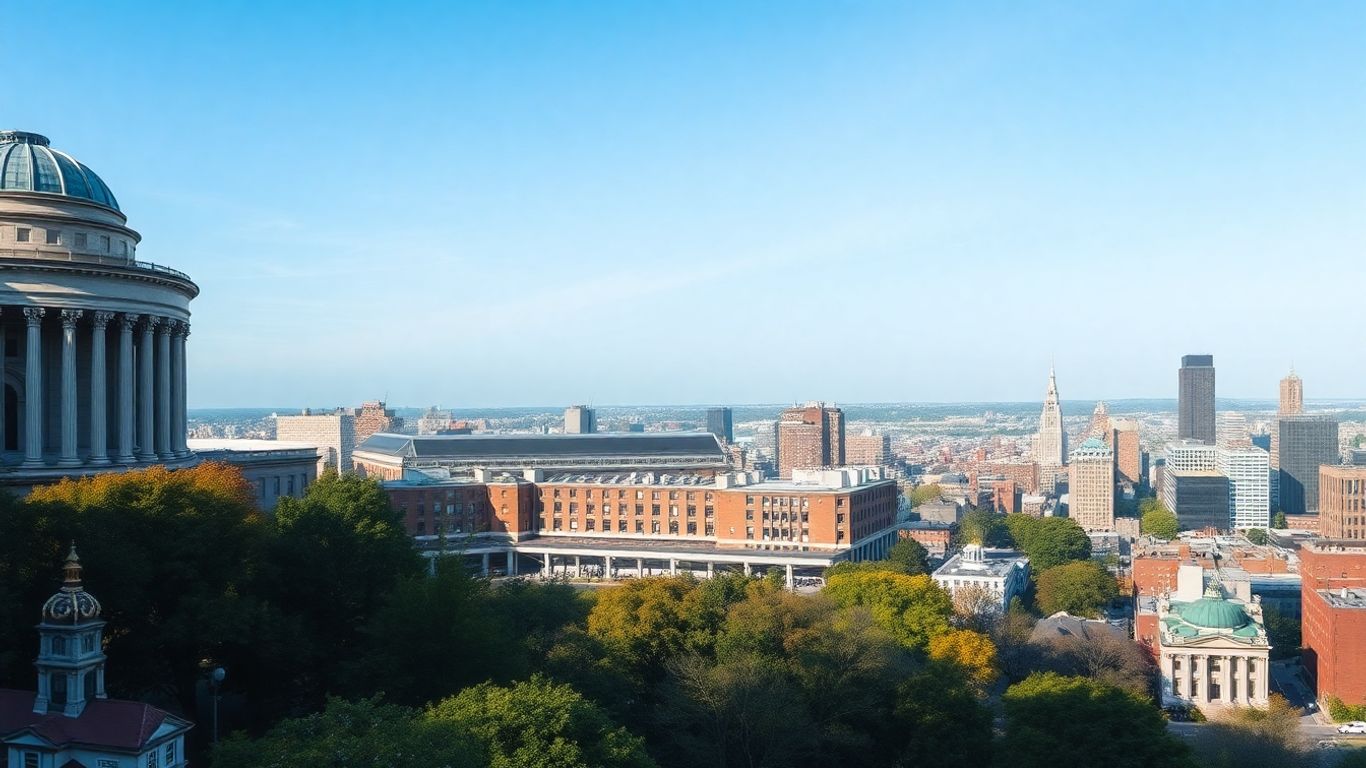
While MIT itself is a fascinating destination, its location places it right in the heart of two vibrant and historically rich cities: Cambridge and Boston. You’re not just visiting a university; you’re stepping into a region brimming with culture, history, and innovation.
Exploring Local Attractions
Cambridge offers a unique blend of academic energy and local charm. Just a short walk from MIT, you’ll find Kendall Square, a hub for biotech and tech companies, buzzing with activity. For a taste of classic New England, head across the Charles River to Boston. The Freedom Trail offers a fantastic way to connect with the city’s revolutionary past, winding through historic sites like Faneuil Hall and the Old North Church. Don’t miss the chance to experience a quintessential Boston Duck Tour, which combines a city sightseeing trip with a splashy ride on the Charles River.
Museums and Cultural Institutions
Both cities boast world-class museums catering to a wide range of interests. The MIT Museum, located conveniently in Kendall Square, is a must-visit for anyone interested in the intersection of art, science, and technology. Further into Boston, the Museum of Fine Arts houses an impressive collection spanning centuries and cultures, while the Museum of Science provides interactive exhibits that are engaging for all ages. For a look at presidential history, the John F. Kennedy Presidential Library and Museum offers a poignant glimpse into a significant era.
Historical Landmarks
Beyond the Freedom Trail, numerous landmarks tell the story of this region. Take a trip to Bunker Hill Monument for panoramic views and a sense of historical significance. If you’re a sports enthusiast, a tour of Fenway Park, America’s oldest major league ballpark, is a memorable experience. The Boston Harbor Islands also provide a unique perspective, offering historical sites and natural beauty accessible by ferry, a refreshing escape from the urban bustle.
A Lasting Impression
Visiting MIT offers a look into a place where innovation and hands-on learning are central. From its unique architecture and public art to the student-led initiatives and the spirit of discovery, the campus provides a glimpse into a world driven by curiosity and problem-solving. Whether you’re a prospective student, a curious visitor, or simply interested in the future of technology and science, MIT leaves a memorable mark, showcasing a commitment to shaping the world through education and invention.
Frequently Asked Questions
What is MIT famous for?
MIT is known for its amazing science and technology programs. It’s a place where brilliant minds come up with new ideas and inventions, especially in areas like artificial intelligence and engineering. They really focus on learning by doing, which helps students create cool things.
Can anyone visit the MIT campus?
Yes, absolutely! You can explore the MIT campus. There are guided tours led by students that share interesting stories and history. You can also take a self-guided tour to see the unique buildings and art on your own time.
What does ‘Mens et Manus’ mean?
‘Mens et Manus’ is Latin for ‘Mind and Hand.’ It’s MIT’s motto and shows their belief that learning should involve both thinking and doing. They want students to use what they learn to build, create, and solve real-world problems.
Are there places to make things at MIT?
Definitely! MIT has lots of ‘makerspaces,’ which are like workshops where students can build and create. Whether you want to work with metal, glass, or other materials, there are labs and tools available for hands-on projects.
What is the Great Dome?
The Great Dome is a very famous and large dome on the MIT campus, part of the Maclaurin building. It’s a central landmark and a special spot where important events, like graduation ceremonies, take place. It’s even bigger than the domes on some famous buildings in other countries!
Can I take classes at MIT without being a student?
MIT offers many of its courses online for free through platforms like MITx. You can learn about subjects ranging from computer science and programming to biology and entrepreneurship from the comfort of your own home.

Peyman Khosravani is a seasoned expert in blockchain, digital transformation, and emerging technologies, with a strong focus on innovation in finance, business, and marketing. With a robust background in blockchain and decentralized finance (DeFi), Peyman has successfully guided global organizations in refining digital strategies and optimizing data-driven decision-making. His work emphasizes leveraging technology for societal impact, focusing on fairness, justice, and transparency. A passionate advocate for the transformative power of digital tools, Peyman’s expertise spans across helping startups and established businesses navigate digital landscapes, drive growth, and stay ahead of industry trends. His insights into analytics and communication empower companies to effectively connect with customers and harness data to fuel their success in an ever-evolving digital world.