Remember learning history in school? Everything seemed so straightforward. Teachers knew the facts, textbooks spelled them out clearly, and we got good grades for remembering the right answers. But most of us eventually realize those stories were pretty simplified. Not because our teachers were cutting corners, but because school curriculums have to take an incredibly messy, complicated past and turn it into something students can actually digest, and teachers can actually grade.
But real history doesn’t fit into neat categories. It’s layered, contradictory, and full of details that mess with any tidy moral conclusions. And honestly, many of the most fascinating parts of East Asian history, the bits that completely change your understanding, never even make it into the textbooks.
Most people’s understanding of Japan, Korea, and China doesn’t come from textbooks. It comes from entertainment and internet culture. Anime, dramas, movies, and online discussions all create these sweeping, dramatic narratives about the region. Social media amplifies whatever’s most extreme or attention-grabbing. Real complexity gets flattened out, and what remains are oversimplified stories that just keep getting repeated until they feel true.
At some point, though, adulthood provides a correction. The books that were never assigned in school often turn out to be the ones that completely reshape how you understand things.
Finding the Books That Never Appeared on the Syllabus
Two works stand out specifically because they challenge the emotional narratives most of us absorbed growing up. They require you to slow down, focus, and genuinely reconsider assumptions you’ve carried for a long time.
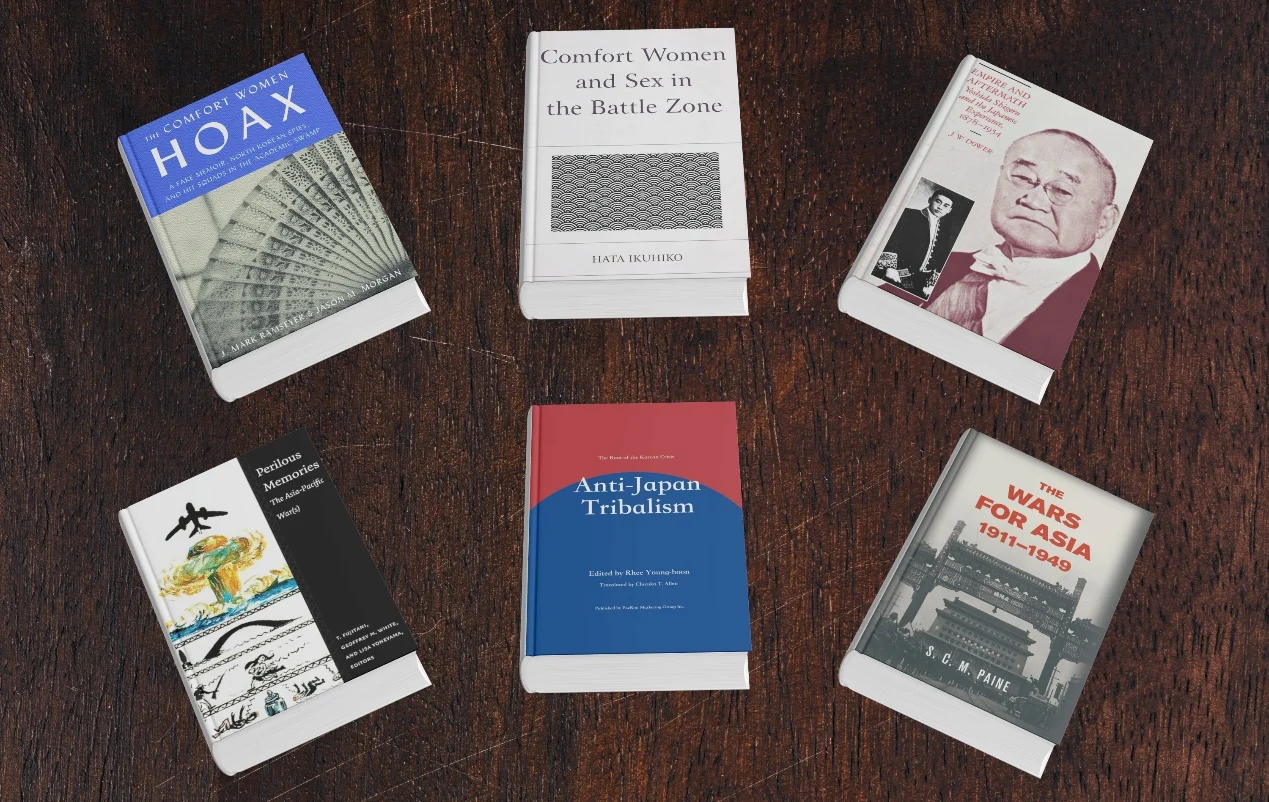
One of those books is The Comfort Women Hoax by J. Mark Ramseyer and Jason M. Morgan. It’s a study of how governments, advocacy groups, and media shape historical narratives over time. The authors don’t rely on emotional arguments or oversimplified stories. They base their analysis on actual contracts, documents, and the processes that create collective memory. The book is careful and measured, not interested in generating outrage but in understanding how narratives form and spread. The willingness to question accepted narratives is fundamental to responsible research.
Another example is Ikuhiko Hata’s Comfort Women and Sex in the Battle Zone, which examines this heavily debated topic through archival research. Hata’s approach is patient and built on primary sources. If you’re used to the dramatic way history usually gets presented, whether from school or the internet, his calm and methodical approach feels like stepping into a completely different world. Evidence takes priority over rhetoric, and history becomes a discipline to study carefully rather than a stage for emotional appeals.
Together, these books reveal something that popular discussions tend to overlook. The 20th-century history of East Asia’s most influential nations is significantly more complex than the simplified, emotionally charged narratives found in mass culture. Modernization, social change, bureaucratic structures, and extensive documentation all shaped East Asia, in ways that rarely show up in school materials. These works allow readers to understand Japan as a real, complex society with competing pressures and layered institutions, not just as some symbol or caricature.
Other Books That Shift the Way We See the Region
Readers who start with works like those from Ramseyer, Morgan, and Hata often find themselves seeking out other books that share the same commitment to nuance. These books aren’t written to provoke reactions. They’re simply trying to understand the world as it actually was, without bending the facts to fit present-day political narratives.
Take Modern Japan: A Social and Political History by Elise K. Tipton, for instance. a concise yet broad survey of Japanese social and political history from the Tokugawa era to the present. It covers popular culture, gender issues, minority discussions, and economics, providing a fuller view of Japan’s evolution.
Another is Empire and Aftermath: Yoshida Shigeru and the Japanese Experience, 1878-1954 by John W. Dower, a detailed biography of a key Japanese political figure that also captures Japan’s transition from empire to postwar society. It offers insight into Japan’s institutional transformations in the 20th century.
The Wars for Asia, 1911–1949 by S. C. M. Paine offers a thoroughly researched account of how societies across East Asia mobilized, restructured and debated priorities during the era of war and regional transformation. Rather than treating any single regional power as a monolithic actor, S. C. M. Paine’s analysis reveals how regional politics, economy, and society were shaped by internal contestation, shifting institutions, and regional pressures.
Then there’s Perilous Memories: The Asia-Pacific War(s) by Takashi Fujitani, Geoffrey M. White & Lisa Yoneyama, which examines how the narratives of the Asia-Pacific War(s) were formed and reshaped across different countries. Its essays look at how education, diplomacy, and cultural memory influence which stories become dominant, offering a clear reminder that regional history is never fixed but constantly interpreted and reinterpreted.
What School Never Told Us About Reading History
The value of these works isn’t that they overturn established beliefs but that they add complexity to them. They don’t ask for loyalty to any particular conclusion. They ask for curiosity. Schools teach students to memorize timelines. These books teach readers to examine how those timelines were constructed in the first place. Schools offer simplified explanations of wars and turning points. These books reveal the bureaucratic debates, logistical challenges, economic motives, and human experiences that lie beneath those headlines.
Schools typically present a moralized, flattened version of East Asian history. These books reveal a past grounded in documentation, institutional evolution, and pragmatic decision-making across major nations. It’s a far more human picture than the stereotypes you see passed around online.
Why These Books Matter Today
Online debates grow louder every year, with much of the noise coming from people defending oversimplified versions of the past. Works like these introduce something different: a sense of calm. They remind us that history is complicated, evidence matters, and responsible research clarifies rather than inflames. They also reveal a truth that school curricula rarely acknowledge. History is something we investigate, not something we memorize.
The more we read works grounded in documentation rather than emotion, the clearer the region’s past becomes, and the easier it is to avoid misunderstanding. Scholars may disagree, but disagreement is part of the process. The goal isn’t to replace one approved narrative with another. It’s to remain open, curious, and willing to revise our understanding as new evidence appears. East Asia, often portrayed through selective or simplified narratives, emerges in these works as a country shaped by complexity, debate, and institutional discipline. Its history, like any other, deserves to be read with nuance, not reduced to a symbol but understood as a society.