AI is the operating system of our new reality. From healthcare breakthroughs to business automation, artificial intelligence isn’t just coming; it’s already reshaping your world. Learn how this transformative force creates unprecedented opportunities and poses critical challenges.
Artificial Intelligence (AI) has become a pervasive force shaping nearly every aspect of society. The global AI market was valued at approximately $136.6 billion in 2022 and is expected to grow at a compound annual growth rate (CAGR) of 37.3%, reaching $1.81 trillion by 2030. AI is playing a crucial role in sectors like healthcare, finance, transportation, education, and entertainment, automating tasks, improving efficiency, and creating new opportunities.
But what is AI exactly? How does it work, and what does it mean for our future?
AI refers to machines and systems that can perform tasks that would typically require human intelligence. This includes problem-solving, learning, speech recognition, and even creativity. AI is based on the idea that machines can be designed to mimic human thinking and decision-making processes. While still in its early stages, its potential is vast.
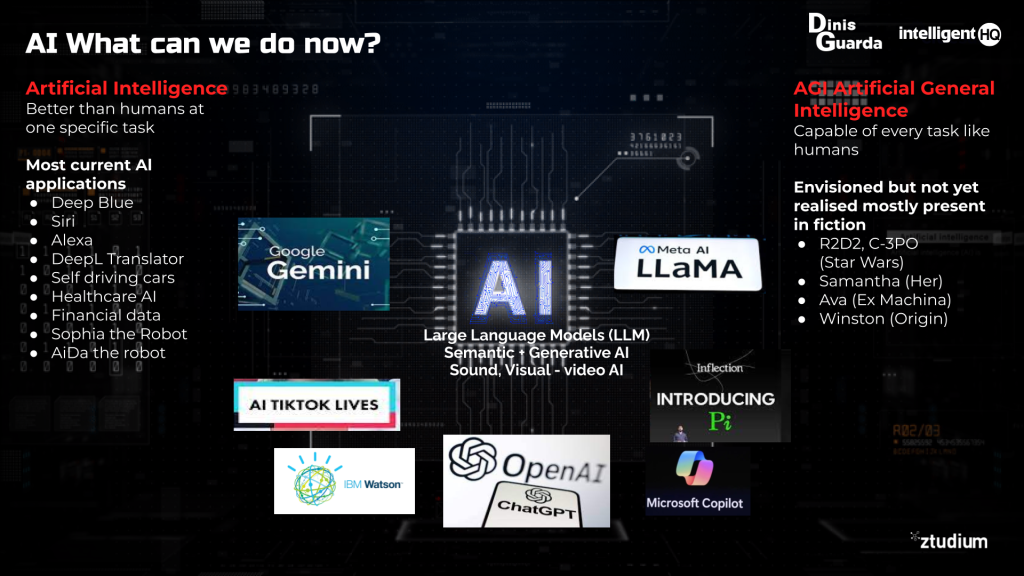
However, AI’s journey doesn’t end with these advancements. There is another thing – Artificial General Intelligence (AGI), a concept that goes beyond narrow AI to create systems capable of understanding and reasoning across a wide variety of tasks just like a human. While narrow AI is already present in our daily lives, AGI is still in the realm of research and development.
While we are not yet in the era of AGI, experts predict that we could see its development within the next 30-50 years, making its implications critical to understand today.
“AI is one of the most important things humanity is working on. It is more profound than, I dunno, electricity or fire.” Sundar Pichai
Introduction to Artificial Intelligence
Artificial Intelligence is an area of technology that’s rapidly growing, infiltrating various sectors in ways we might not even realise. Many of the platforms and services we use on a daily basis already have AI embedded in them. For instance, Facebook uses machine learning algorithms to analyse what content would interest you the most, tailoring your feed accordingly. This is just one of the many everyday applications of AI.
The scope of AI’s potential is enormous, and it’s expected to change our lives drastically in the coming years. Experts, including those at the University of Southern California, predict that AI’s widespread use in sectors like transport, health, and entertainment could become commonplace by 2050.
Despite its undeniable potential, there is still confusion about AI and its impact. People often confuse related terms like machine learning and automation, which makes the subject seem even more complicated. The fear of job losses due to automation is a constant conversation, and while some worry about AI taking over, others are excited about the possibility of more streamlined, personalised experiences.
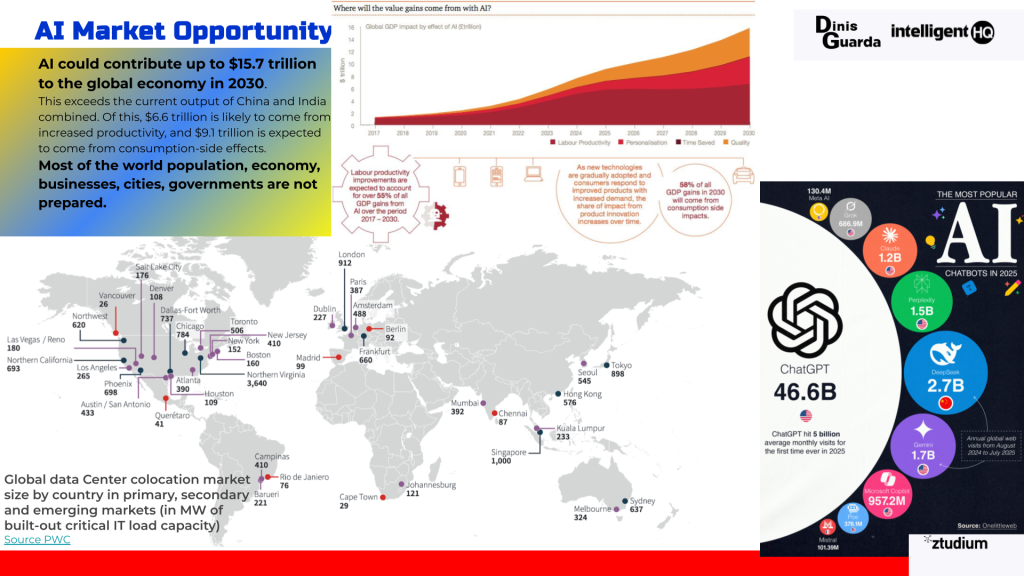
Opportunities of AI
AI holds immense promise, especially when it comes to solving problems humans can’t easily address. For example, in medicine, AI is already being used to analyse medical images to help diagnose illnesses. Additionally, it’s predicted that personalised medicine, powered by AI, could soon enable doctors to tailor treatments to the individual based on their genetic makeup, lifestyle, and environment.
In the cybersecurity field, AI is expected to prevent cyberattacks by detecting patterns in data that humans might miss. Self-driving cars, which rely heavily on AI, are already in development and might be commonplace as early as 2030, reshaping the transport sector.
AI’s role in the food industry is also expanding. For example, AI-powered systems can monitor herds of livestock with minimal human involvement, recognising individual animals through facial recognition technology.
Challenges of AI
Despite the promises, there are concerns. One significant challenge with AI is its potential to perpetuate biases. If AI is trained on flawed data, it can make biased decisions. A well-known example is AI’s use in recruitment processes, where it can perpetuate existing biases found in human hiring patterns, even in cases of discrimination.
Another challenge lies in ethical concerns. As AI makes more decisions on behalf of humans, it raises questions about accountability. For instance, should AI be allowed to make life-or-death decisions, such as those in medicine or the military? The lack of human empathy in these scenarios can be problematic.
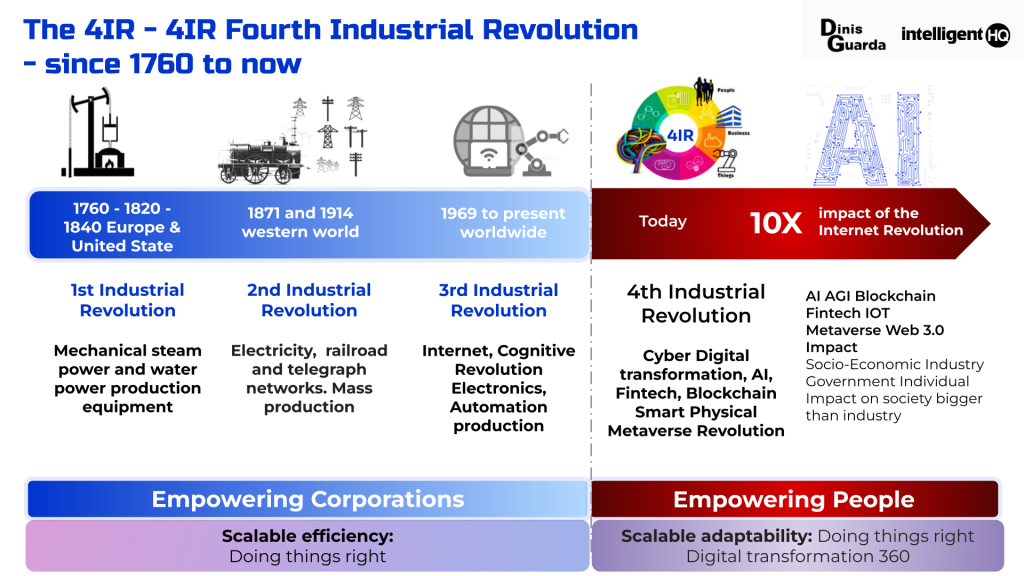
The history of AI
The roots of Artificial Intelligence trace back to World War II, with Alan Turing, one of the most influential figures in computer science. Turing’s work to crack the Enigma code was foundational in the development of AI. His 1950 paper, Computing Machinery and Intelligence, asked whether machines could think, effectively laying the groundwork for AI.
In the 1950s, a group of scientists, including John McCarthy, coined the term “Artificial Intelligence” at a conference at Dartmouth College. This period marked the beginning of serious research into making machines that could think and reason like humans.
By the 1960s, researchers were making significant strides. WABOT-1, the first humanoid robot, was developed in Japan in 1972, showcasing early attempts to bring AI to life in a physical form. However, this early progress was hindered by the limitations of hardware, leading to a period of stagnation referred to as the “AI Winter”.
The rise of machine learning
The real resurgence of AI happened in the 1980s when new machine learning techniques, developed by John Hopfield and David Rumelhart, allowed machines to learn from their experiences. These advancements laid the groundwork for the AI breakthroughs of the 1990s, with IBM’s Deep Blue defeating chess grandmaster Garry Kasparov in 1997, a significant milestone.
Fast forward to today, AI development has accelerated, partly due to improvements in computing power, greater storage capacity, and emerging technologies like quantum computing. Companies like Amazon and Google have been at the forefront of using AI to personalise user experiences and automate systems.
Understanding AI concepts: Machine learning, deep learning, and more
To truly grasp AI, it’s essential to understand the key concepts that underpin it. These terms are often used interchangeably, but they refer to distinct aspects of AI.
Artificial intelligence (AI):
AI encompasses any machine or system that can simulate human intelligence. This includes reasoning, problem-solving, decision-making, and even creative tasks like art generation. AI can be divided into three categories:
- Analytical AI: Mimics human cognitive abilities, focusing on past data to predict future outcomes.
- Human-inspired AI: Incorporates human emotions into decision-making processes.
- Humanised AI: The most advanced form, integrating cognitive, emotional, and social intelligence with self-awareness.
Machine learning (ML):
Machine learning is a subset of AI. It involves training machines to learn from data without explicit programming. Algorithms allow systems to identify patterns in data and make decisions based on those patterns. For instance, machine learning is what enables Netflix to recommend shows based on your viewing history.
Deep learning (DL):
Deep learning is a more advanced form of machine learning that uses neural networks, inspired by the human brain, to process data. Deep learning requires large amounts of data and computational power, but it has the potential to solve highly complex problems, such as recognising images, translating languages, and generating realistic speech.
AI’s role in education
Artificial Intelligence (AI) is increasingly being integrated into education, offering exciting possibilities for both teachers and students. As technology advances, AI is gradually transforming traditional learning methods, making education more personalised, efficient, and accessible. However, while AI holds immense potential, it also raises concerns about the future of jobs and the need for humans to adapt to new ways of learning and teaching.
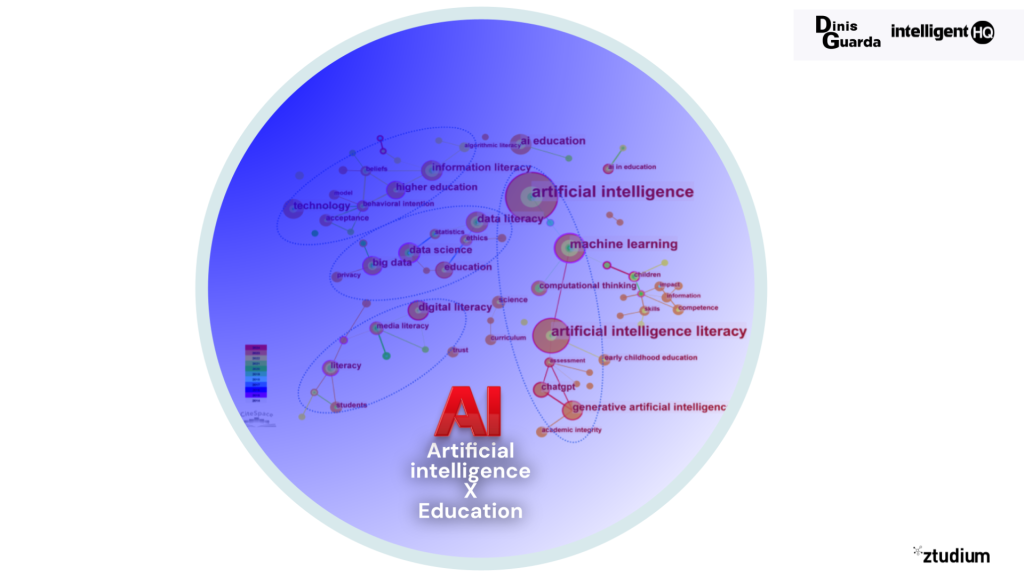
AI and collaboration tools in education
One of the most promising applications of AI in education is the potential for collaboration between AI systems and teachers. AI can automate many administrative tasks, such as grading assignments, managing class schedules, and tracking student progress. By freeing up teachers from these time-consuming tasks, AI allows educators to focus on what they do best: teaching. This collaboration not only improves efficiency but also ensures that students receive more direct attention and guidance from their teachers.
AI is already being used to automate the grading of multiple-choice tests, and in the future, it could be used to grade more complex assignments. This would give teachers more time to engage with students and help them improve their understanding of the material. For example, AI systems could automatically analyse written responses, providing instant feedback and suggestions for improvement.
AI and individualised learning
One of the biggest challenges in modern education is the “factory model” of teaching, where students are expected to learn at the same pace and in the same way. With large class sizes and limited resources, teachers often struggle to provide personalised learning experiences for each student. This is where AI can make a significant impact.
AI-powered tools are being developed to offer personalised learning experiences for students. For instance, Carnegie Learning has created an AI-driven platform that adapts to each student’s learning style and pace. The system monitors a student’s progress, identifies areas where they are struggling, and adjusts the lessons to help them master the material. This level of individualised attention would be impossible in traditional classrooms, where teachers have to manage multiple students with different needs.
AI can also assist students outside of the classroom. AI-powered tutoring systems are being developed to provide students with extra help on subjects they find challenging. Whether it’s for homework, revision, or exam preparation, these AI tools can offer real-time assistance, allowing students to learn at their own pace and in a way that suits them best.
AI and students with learning disabilities
AI is also playing a crucial role in supporting students with learning disabilities. For example, Microsoft’s Presentation Translator tool provides real-time subtitles for presentations, helping students who may have difficulty hearing or understanding spoken language. This technology allows students with hearing impairments or learning disabilities to participate fully in classroom activities and access educational content in a way that suits their needs.
Furthermore, AI can enable students who are unable to attend traditional classrooms due to illness or geographical constraints to continue their education through virtual learning tools. This opens up new possibilities for inclusive education, ensuring that all students, regardless of their circumstances, have access to quality learning.
What AI can’t do in education?
While AI has the potential to revolutionise education, there are certain areas where it falls short. AI cannot replicate the creativity, empathy, and emotional intelligence that human teachers bring to the classroom. Machines may be able to simulate creativity in tasks like playing chess or creating artwork, but they lack the true spark of human creativity. Similarly, while AI can analyse data and provide feedback, it cannot understand or respond to the emotional needs of students in the same way a human teacher can.
Human teachers will always be essential in the educational process, offering the emotional support and guidance that AI cannot provide. AI should be seen as a tool that enhances the capabilities of teachers, rather than replacing them.
How AI is impacting the entertainment industry
Artificial Intelligence (AI) is transforming many industries, and the entertainment sector is no exception. One company making great strides in this field is Magic Leap, a start-up established in 2010 by Rony Abovitz. With significant investments from Google and Alibaba Group, Magic Leap is valued at $4.5 billion, even though its first product was only launched recently. The company is revolutionising augmented reality (AR) and mixed reality (MR), technologies that blend real and virtual worlds to create immersive experiences.
AI and the wonders of magic leap
Magic Leap’s flagship product, the Magic Leap One headset, is designed to overlay 3D imagery onto the real world, creating an interactive augmented reality experience. The headset uses advanced technology called digital light fields to project virtual objects into the environment. For instance, users can interact with digital avatars or experience virtual marine life swimming through their living room. While the experience is immersive, the technology isn’t flawless. It works best in indoor environments and faces challenges in bright settings, limiting its effectiveness outdoors. Nonetheless, the Magic Leap One is a leap forward in AR, offering a glimpse into the future of entertainment.
Priced at $2,295, the Magic Leap One is a head-mounted device that comes with a controller, a computing pack, and various accessories. Although it’s lightweight, some users liken it to wearing swimming goggles. The headset offers a battery life of around three hours, but its real potential lies in how it merges the physical and virtual worlds. In practical terms, Magic Leap’s AR system could one day allow users to browse virtual shopping items or interact with 3D models of objects like a solar system, right in their living rooms.
Magic Leap and mixed reality
Building on this, Magic Leap has ventured into mixed reality (MR), where both real and virtual elements coexist and interact. One of their most ambitious projects is Mica, a virtual character launched in 2018. Mica interacts with users through body language, offering a human-like experience. She can smile, yawn, and even guide users to complete tasks in the real world. In one demonstration, Mica directed a user to hang a picture on a wall, blending the physical and virtual in a groundbreaking way.
Artificial intelligence and business
Artificial Intelligence (AI) is no longer confined to the realms of science fiction. While we may still picture flying cars and drones when thinking of AI, its presence in the business world is becoming undeniable. From improving efficiency to streamlining operations, AI is helping businesses across the globe revolutionise their processes and adapt to the demands of the digital age. In fact, businesses are now leveraging AI to enhance data analysis, automate tasks, and optimise decision-making.
The role of AI in business management
One of the major ways AI is reshaping the business landscape is through the development of AI-powered business management software. These solutions help businesses optimise their operations by analysing vast amounts of data, identifying patterns, and providing insights for more informed decision-making. Such software helps businesses eliminate errors, improve productivity, and reduce operational costs.
Take SAP, for example, a global leader in enterprise software. SAP’s AI-powered platform, HANA, is designed to help businesses store and process large volumes of data in real-time. HANA collects data from various sources—sensors, mobile devices, financial transactions, and more—and then analyses it to pinpoint patterns and discrepancies. This technology enables businesses to gain a deeper understanding of their operations and make better, data-driven decisions.
Walmart: A case study in AI implementation
One notable example of AI in business is Walmart, which uses SAP’s HANA platform to streamline its operations. With over 11,000 stores and serving 250 million customers per week, Walmart processes an enormous volume of data daily. By using HANA, Walmart is able to manage this data efficiently, identifying patterns and making quick decisions that help maintain low prices for its customers.
Walmart’s implementation of HANA has significantly improved its operational efficiency. The company can process half a billion transaction records in less than a second, which has been transformational for its operations. By automating data analysis, Walmart has become a data-driven retailer, allowing it to optimise its back-office operations and improve its overall business performance.
In addition to improving operational efficiency, Walmart is also using AI to enhance its retail experience. The company has invested in machine learning and robotics to improve its in-store and online shopping experience. Walmart is also leveraging AI to optimise delivery routes, ensuring faster and more efficient home deliveries for customers. The company’s investment in a tech incubator in Silicon Valley is driving further innovations, including the development of proprietary robotics and virtual reality applications.
Domo: Revolutionising business intelligence
Another company making waves in the AI business space is Domo, which develops AI-based business management software. Domo offers a cloud-based platform that connects data, systems, and people to improve business operations. With over $500 million in seed funding, Domo’s dashboard gathers data from third-party applications like Salesforce, Square, and Shopify, and uses AI to analyse this data in real-time. The insights generated from this analysis help businesses make data-driven decisions, spot trends, and generate reports across devices.

Dinis Guarda is an author, academic, influencer, serial entrepreneur, and leader in 4IR, AI, Fintech, digital transformation, and Blockchain. Dinis has created various companies such as Ztudium tech platform; founder of global digital platform directory businessabc.net; digital transformation platform to empower, guide and index cities citiesabc.com and fashion technology platform fashionabc.org. He is also the publisher of intelligenthq.com, hedgethink.com and tradersdna.com. He has been working with the likes of UN / UNITAR, UNESCO, European Space Agency, Davos WEF, Philips, Saxo Bank, Mastercard, Barclays, and governments all over the world.
With over two decades of experience in international business, C-level positions, and digital transformation, Dinis has worked with new tech, cryptocurrencies, driven ICOs, regulation, compliance, and legal international processes, and has created a bank, and been involved in the inception of some of the top 100 digital currencies.
He creates and helps build ventures focused on global growth, 360 digital strategies, sustainable innovation, Blockchain, Fintech, AI and new emerging business models such as ICOs / tokenomics.
Dinis is the founder/CEO of ztudium that manages blocksdna / lifesdna. These products and platforms offer multiple AI P2P, fintech, blockchain, search engine and PaaS solutions in consumer wellness healthcare and life style with a global team of experts and universities.
He is the founder of coinsdna a new swiss regulated, Swiss based, institutional grade token and cryptocurrencies blockchain exchange. He is founder of DragonBloc a blockchain, AI, Fintech fund and co-founder of Freedomee project.
Dinis is the author of various books. He has published different books such “4IR AI Blockchain Fintech IoT Reinventing a Nation”, “How Businesses and Governments can Prosper with Fintech, Blockchain and AI?”, also the bigger case study and book (400 pages) “Blockchain, AI and Crypto Economics – The Next Tsunami?” last the “Tokenomics and ICOs – How to be good at the new digital world of finance / Crypto” was launched in 2018.
Some of the companies Dinis created or has been involved have reached over 1 USD billions in valuation. Dinis has advised and was responsible for some top financial organisations, 100 cryptocurrencies worldwide and Fortune 500 companies.
Dinis is involved as a strategist, board member and advisor with the payments, lifestyle, blockchain reward community app Glance technologies, for whom he built the blockchain messaging / payment / loyalty software Blockimpact, the seminal Hyperloop Transportations project, Kora, and blockchain cybersecurity Privus.
He is listed in various global fintech, blockchain, AI, social media industry top lists as an influencer in position top 10/20 within 100 rankings: such as Top People In Blockchain | Cointelegraph https://top.cointelegraph.com/ and https://cryptoweekly.co/100/ .
Between 2014 and 2015 he was involved in creating a fabbanking.com a digital bank between Asia and Africa as Chief Commercial Officer and Marketing Officer responsible for all legal, tech and business development. Between 2009 and 2010 he was the founder of one of the world first fintech, social trading platforms tradingfloor.com for Saxo Bank.
He is a shareholder of the fintech social money transfer app Moneymailme and math edutech gamification children’s app Gozoa.
He has been a lecturer at Copenhagen Business School, Groupe INSEEC/Monaco University and other leading world universities.