Introduction
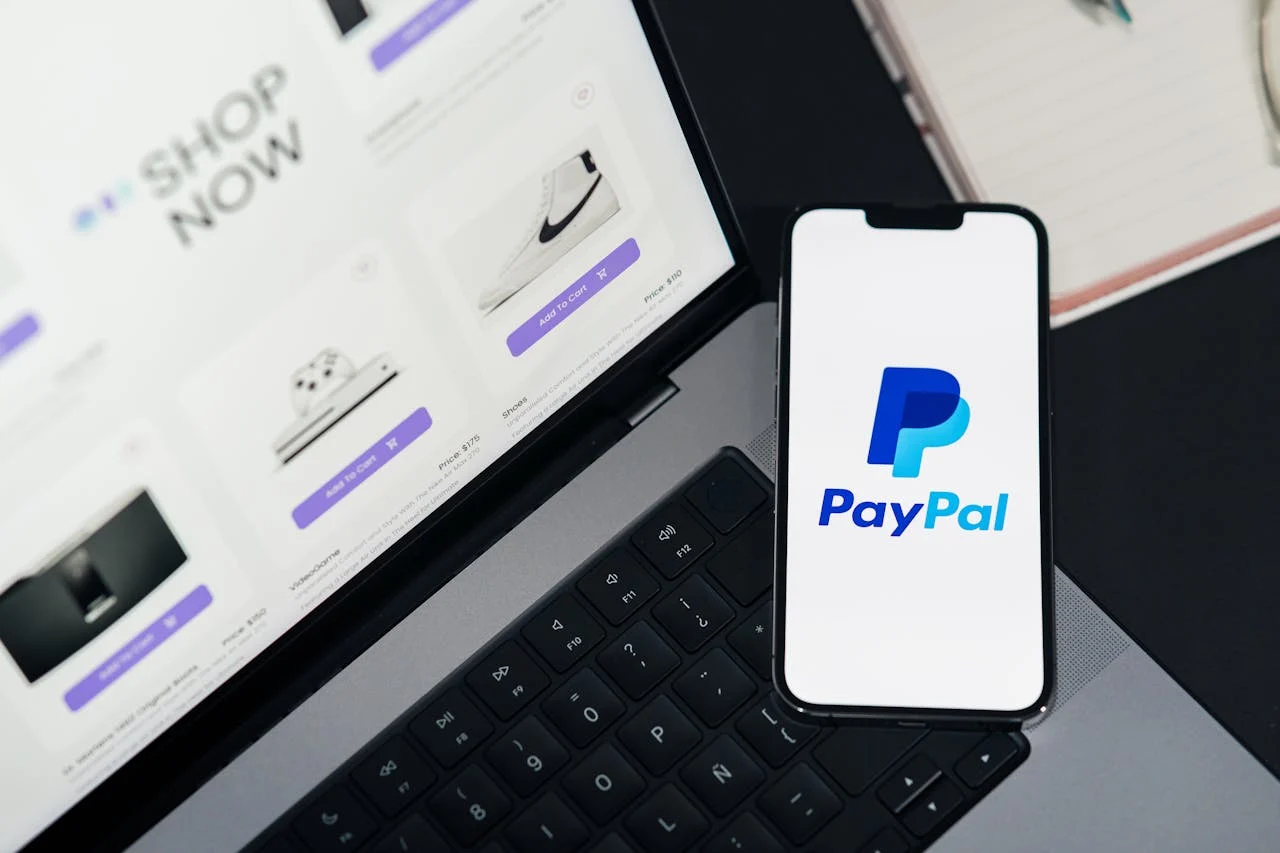
PayPal has moved further into crypto payments with a new merchant checkout tool that lets U.S. businesses accept more than 100 cryptocurrencies at checkout, while receiving proceeds in U.S. dollars or PayPal’s own stablecoin (PYUSD). The rollout — announced in late July 2025 — aims to simplify cross-border commerce, shorten settlement times and reduce fees for merchants by routing customer crypto payments through PayPal’s conversion and custody plumbing.
This article breaks down what the rollout means for merchants and customers, explains how PayPal works in this context, and shows practical ways to buy Dogecoin with PayPal or accept DOGE at checkout — including the options merchants have for immediate settlement and currency conversion. (For end users who prefer self-custody, a reputable option is the best free crypto wallet.
What PayPal announced (quick facts)
- Product name / messaging: “Pay with Crypto” / “PayPal Drives Crypto Payments into the Mainstream.”
- Scope: support for 100+ cryptocurrencies and major web3 wallets (Coinbase, MetaMask, Kraken, Binance, Exodus and others).
- Settlement: merchants receive proceeds in USD or PYUSD (PayPal’s dollar-pegged stablecoin).
- Fees: PayPal announced an introductory fee of 0.99% on crypto checkout transactions (promotional), reverting later to roughly 1.5% in many reports — pricing is subject to change by region and merchant agreement.
- Rollout: phased deployment to U.S. merchants over weeks following the July announcement.
These are the load-bearing facts that shape merchant decisions about adopting the new checkout flow.
How PayPal’s crypto checkout works (high level)
- Customer pays from an external wallet (or in-app balance) using a supported token and wallet. Popular wallets such as Coinbase Wallet, MetaMask, Kraken, OKX and Exodus are explicitly named in PayPal’s integration messaging.
- PayPal intermediates conversion: at point of sale the customer’s crypto transfer is routed through PayPal’s processor; PayPal immediately converts the incoming crypto into either PYUSD or USD based on merchant preference. That conversion happens off the merchant’s balance sheet so the seller does not need to custody crypto.
- Merchant receives settlement: merchants receive near-instant settlement in USD or PYUSD, typically faster than legacy card-based cross-border settlement and with lower headline fees.
- Reconciliation & reporting: PayPal provides standard settlement reporting, simplifying accounting and tax reporting for the merchant’s finance systems.
That model mirrors how many payment processors handle tokenized value: customer bears the crypto exposure, while the merchant receives predictable fiat (or stablecoin) value.
Can merchants (or customers) buy Dogecoin with PayPal?
Short answer: yes — but there are two paths.
- Customer pays with DOGE at checkout.
Under the new checkout, a buyer holding Dogecoin in a supported wallet can use DOGE to pay at a merchant checkout that integrates PayPal’s crypto option. PayPal will convert the incoming DOGE to USD or PYUSD and forward settlement to the merchant; the merchant does not need to accept or hold DOGE directly. Multiple outlets reported memecoins (including Dogecoin) being covered among the 100+ supported assets, although PayPal’s official rollouts emphasize major coins and stablecoins first. - Buying DOGE via PayPal or partners.
Historically, PayPal’s in-app retail buy/sell list was limited (Bitcoin, Ethereum and a few others), but PayPal also supports third-party integrations and on-ramp partners. Consumers who want to buy Dogecoin with PayPal often use partner exchanges or wallet services (Coinbase, Kraken, BitPay partners, Paybis, etc.) that accept PayPal as a funding method and then deliver DOGE to a user wallet. Several how-to guides and broker services demonstrate that using PayPal as a funding source to buy DOGE is widely available outside PayPal’s direct app.
Practical note: users and merchants should check PayPal’s live supported-coin list and local restrictions (some U.S. states still have specific rules) before assuming DOGE is available in a given flow. PayPal’s press materials list more than 100 tokens but do not publish a definitive, permanent per-token guarantee for every market.
Why this matters to merchants — three practical benefits
- Lower cross-border friction. PayPal stresses significant reductions in international payment costs by settling in PYUSD or converting instantly to USD—claims include reductions of up to 50–90% versus legacy rails in some corridors (results vary by corridor and volume).
- Faster access to funds. On-chain transfers settle quickly and PayPal’s conversion engine provides near-instant access to settled value, reducing float and reconciliation work compared to multi-day bank settlements.
- Lower technical overhead. Merchants avoid self-custody and compliance overhead; PayPal handles conversion, KYC/AML screening of crypto flows and custodian relationships. That model suits small and mid-sized merchants that do not want to manage keys.
Fees, limits and caveats
- Introductory pricing: Many outlets report a promotional 0.99% fee on Pay with Crypto transactions for the first year, moving to ~1.5% thereafter in many markets. Compare that to typical cross-border card fees that can be much higher depending on interchange and FX spreads. Always confirm contractual merchant rates with PayPal sales.
- Availability: New crypto checkout features roll out regionally; New York and other jurisdictions may have separate restrictions and timelines.
- Volatility & settlement choice: Merchants choosing to receive PYUSD (stablecoin) should understand PYUSD mechanics (reserve backing and redemption) and any liquidity considerations versus USD. Coinbase and other partners have acted to support PYUSD liquidity in the market.
How to enable Pay with Crypto for your store (step-by-step)
- Sign up for PayPal Business and verify account and KYC.
- Contact PayPal merchant onboarding or enable the Pay with Crypto toggle in merchant settings (where available). PayPal’s docs will guide required legal consent and settlement preferences.
- Choose settlement currency (USD or PYUSD) and integrate the checkout script or plugin (PayPal provides standard e-commerce connectors).
- Test checkout with supported wallets (MetaMask, Coinbase Wallet, etc.) and confirm reconciliation in your accounting system.
This process is intentionally designed to mirror standard PayPal onboarding for new payment methods.
Table — Quick comparison: PayPal crypto checkout vs card processing
| Feature | PayPal “Pay with Crypto” (merchant) | Credit card (typical) |
| Settlement currency | USD or PYUSD (merchant chooses) | Merchant’s acquiring bank currency (USD/local) |
| Typical fee (intro) | 0.99% promo (then ~1.5%) reported. | 1.5–3.5% + interchange (varies widely) |
| Settlement speed | Near-instant (minutes) after conversion. | Same-day to T+3 (cross-border slower) |
| Custody required by merchant | No — PayPal converts and settles | No (bank acquirer handles) |
| Wallets supported (buyer) | Coinbase, MetaMask, Kraken, Binance, Exodus (examples) | N/A |
Practical advice for buyers and merchants
- Buyers who want to buy Dogecoin with PayPal should verify whether PayPal’s in-app buy/sell includes DOGE in their jurisdiction, or use partner exchanges/wallets that accept PayPal as a funding option.
- Merchants should pilot Pay with Crypto on a subset of SKUs, track FX and spread impacts, and confirm PYUSD redemption paths (how quickly PYUSD can be converted to USD through PayPal or partner exchanges).
- Security: treat PYUSD and fiat settled through crypto checkout the same as other settlement methods; review settlement reports and reconciliation frequently.
For users who prefer to control keys directly, a reputable best free crypto wallet provides multi-chain custody and can be used to pay at crypto-enabled checkouts that accept external wallets.
What to watch next (pay attention to)
- Merchant uptake and volume — early adoption by major retailers will validate the economics.
- Regulatory guidance — state or federal notices could affect broadcast rollouts and coin eligibility.
- PYUSD liquidity & partnerships — how exchanges and custodians support redemption and on-ramps for PYUSD will affect merchant acceptance.
Conclusion
PayPal’s crypto checkout is a pragmatic step toward mainstream crypto payments: it lets buyers spend assets they already hold, while shielding merchants from custody and price risk. For merchants, the combination of lower cross-border costs, faster settlement and familiar PayPal reconciliation creates a compelling business case; for buyers, it widens payment choices and, in many cases, offers a straightforward path to buy Dogecoin with PayPal via third-party integrations. The rollout will be an important test of whether stablecoin-backed settlement can become a routine alternative to traditional rails in U.S. commerce.