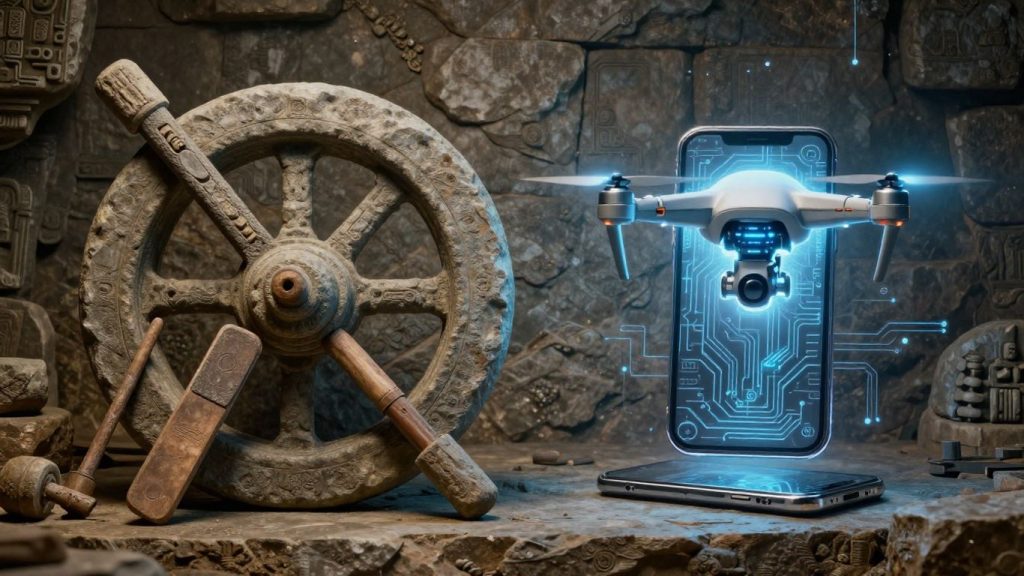
As we move through our daily lives, it’s easy to forget just how much technology surrounds us. From the simplest tools to the most complex machines, these innovations have shaped human history and continue to drive progress. This article explores a wide range of 100 examples of technology, looking back at ancient breakthroughs and forward to modern marvels that have changed the way we live, work, and interact with the world.
Key Takeaways
- The development of technology spans from ancient discoveries like fire and the wheel to modern inventions such as computers and the internet.
- Many technologies we use today have roots in innovations from centuries or even millennia ago, showing a continuous evolution of human ingenuity.
- Key technological advancements have fundamentally altered human civilization by improving survival, enabling new forms of communication, and transforming transportation.
- The creation and refinement of technologies often involve contributions from many individuals over long periods, rather than a single inventor.
- Understanding these 100 examples of technology provides insight into the progress of human society and its ongoing relationship with innovation.
1. Fire
Fire. It’s something we see every day, whether it’s a campfire, a stove burner, or even just a candle. But think about it: fire wasn’t always something humans could just make. For a very, very long time, our ancestors lived without it. The moment they figured out how to control it, well, that changed absolutely everything.
We’re not talking about a recent discovery here. Evidence suggests that early humans, even before Homo sapiens as we know them, were using fire. We’re talking about a million years ago, maybe even earlier. Imagine trying to survive without the ability to cook food, stay warm, or keep predators away. It’s hard to even picture.
The controlled use of fire was a turning point. It allowed for better nutrition through cooking, provided warmth against the cold, offered protection from wild animals, and eventually became a tool for shaping the environment and creating new materials.
What did they use it for, back in the day? A lot, actually. It wasn’t just about roasting mammoth steaks (though that was probably a big deal). Fire was used for:
- Cooking: Making food safer and easier to digest, which might have helped our brains grow bigger.
- Warmth: Surviving colder climates and extending the hours they could be active.
- Light: Pushing back the darkness and allowing for activities after sunset.
- Toolmaking: Heating up stones to make them easier to shape into sharper tools.
- Protection: Keeping dangerous animals at bay.
And it didn’t stop there. Over thousands of years, fire became a part of rituals, agriculture, and eventually, industrial processes. It’s pretty amazing to think that this natural phenomenon, once a source of fear, became one of the most important tools humanity ever developed. It’s hard to overstate just how fundamental fire was to our journey from early hominids to the complex societies we have today.
2. Wheel
It’s hard to imagine a world without the wheel. This simple yet brilliant invention has fundamentally changed how we move things and ourselves. While we often think of it for transportation, its initial use was actually quite different.
Around 3500 B.C. in Mesopotamia, the earliest known wheels weren’t attached to carts or chariots. Instead, they were used as potter’s wheels, helping craftspeople shape clay more efficiently. It took several more centuries before the wheel was combined with an axle and applied to vehicles, marking a significant leap in our ability to transport goods and people.
The true genius of the wheel lies in its combination with an axle. This pairing allows a rotating wheel to connect to a stationary object, making movement possible. Without this synergy, the wheel’s utility would be greatly limited.
Here’s a look at its impact:
- Transportation: From ox-drawn carts to modern cars and trains, the wheel is the backbone of moving heavy loads over distances.
- Machinery: Gears, pulleys, and turbines all rely on the principle of the wheel, powering everything from clocks to industrial equipment.
- Everyday Objects: Think of rolling suitcases, office chairs, and even the spinning drum in your washing machine – the wheel is everywhere.
The wheel’s development wasn’t just about the round object itself, but about understanding how it could work with a fixed axle to create motion. This seemingly basic concept paved the way for countless other innovations that shape our daily lives.
It’s a testament to human ingenuity that such a fundamental technology, born out of necessity and observation, continues to be so vital even thousands of years later.
3. Nail
It’s easy to overlook the humble nail. We see them everywhere, holding together furniture, framing houses, and securing countless objects. But before this simple metal fastener, building with wood was a much more complicated affair. Early builders had to rely on ropes, intricate joinery, or wooden pegs to connect pieces of timber. Imagine trying to construct anything substantial without the ease of a nail – it would be a slow, painstaking process.
The earliest known metal nails date back to ancient Egypt, around 3400 BC. These were likely made of bronze. Over time, the materials evolved, with iron and then steel becoming more common. For centuries, nails were made by hand, a laborious task for blacksmiths who would hammer out each individual fastener. This changed significantly in the late 18th and early 19th centuries with the invention of nail-making machines. These machines allowed for mass production, making nails far more accessible and affordable.
Nails are more than just simple connectors; they represent a significant step in construction and manufacturing. Their widespread availability and ease of use have fundamentally shaped how we build and create.
The development of the nail, from its early hand-wrought origins to its modern mass-produced form, dramatically simplified construction and enabled the creation of more complex wooden structures. It’s a testament to how a small, seemingly insignificant invention can have a profound impact on civilization.
4. Compass
Before we had GPS and satellites telling us exactly where to go, people relied on a much simpler, yet incredibly effective tool: the compass. This device, which points towards magnetic north, has been a game-changer for exploration and travel for centuries.
The earliest forms of compasses likely emerged in China, possibly as early as the 6th century BCE, using naturally magnetized stones called lodestones. These weren’t quite the spinning needles we know today; they were often spoon-shaped objects placed on a smooth bronze plate. It wasn’t until much later, around the 11th century AD, that the Chinese began suspending magnetized needles, making them much more practical for navigation.
- Early Chinese compasses used lodestone, a naturally magnetic mineral.
- The invention of the suspended magnetic needle greatly improved usability.
- By the 12th century, descriptions of magnetized needles used by sailors appeared in Europe.
This invention truly opened up the world. Sailors could venture further from shore, and explorers could chart unknown territories with greater confidence. The compass was a key factor in the Age of Discovery, enabling long-distance sea voyages that connected continents and cultures. It’s a testament to how a simple understanding of natural forces can lead to profound advancements.
While modern technology has provided us with incredibly precise navigation tools, the humble compass laid the groundwork for all of it. Its impact on trade, exploration, and our understanding of the planet is undeniable.
5. Automobile
The automobile, a machine that truly reshaped our world, didn’t just appear overnight. While Karl Benz is often credited with the first true automobile in 1886 with his Patent-Motorwagen, the idea of self-propelled vehicles goes back much further, with early steam-powered attempts in the late 1700s. It’s really a story of many minds and many innovations coming together.
Think about it: the automobile is a complex system. It relies on the wheel, of course, but also on advancements in metallurgy for its engine and chassis, the development of fuels, and eventually, electrical systems for ignition and accessories. The internal combustion engine, in particular, was a massive leap forward, turning gasoline into motion.
The real game-changer for making cars accessible to everyday people was Henry Ford’s assembly line. By perfecting this method in the early 1900s, he drastically cut down production time and cost. This meant that cars, once a luxury for the rich, could become a common sight on the roads. The Model T, introduced in 1908, is a prime example of this revolution, becoming affordable and reliable enough for many families.
Here’s a look at some key components that make an automobile work:
- Engine: The power source, converting fuel into mechanical energy.
- Transmission: Manages the engine’s power to drive the wheels at different speeds.
- Chassis/Frame: The structural backbone that holds everything together.
- Wheels and Tires: Provide contact with the road and allow for movement.
The impact of the automobile extends far beyond personal transportation. It spurred the growth of industries like oil, steel, and rubber, led to the development of vast road networks, and fundamentally changed how cities are designed and how people live and work. It connected communities and opened up new possibilities for travel and commerce.
From those early, sputtering contraptions to the sophisticated vehicles of today, the automobile’s journey is a testament to human ingenuity and the power of iterative improvement.
6. Steam Engine
The steam engine is a real game-changer, isn’t it? Before it came along, most work was done by people, animals, or water and wind power. These were all fine, but they had their limits. Think about it: you couldn’t build a factory in a place without a river, and relying on the wind is, well, unpredictable.
So, who actually invented it? It’s a bit of a tangled story. Jerónimo de Ayanz, a Spanish administrator, patented a steam-powered pump for mines way back in the early 1500s. But the first practical steam engine that really got used is usually credited to Englishman Thomas Savery in 1698. He used steam pressure to pull water out of mines. Then, Thomas Newcomen came along in 1711 with an improved version. The big leap, though, came from James Watt, a Scottish instrument maker. Around 1781, he added a separate condenser to Newcomen’s engine. This meant the cylinder didn’t have to cool down and heat up constantly, making the whole thing much more efficient. Watt later developed an engine that could rotate, and that’s what really powered the Industrial Revolution.
Here’s a quick look at the key developments:
- Early Concepts: Jerónimo de Ayanz’s mine pump (early 1500s).
- First Practical Engine: Thomas Savery’s water pump (1698).
- Improved Design: Thomas Newcomen’s atmospheric engine (1711).
- Major Efficiency Boost: James Watt’s separate condenser and rotary motion (late 1700s).
The steam engine didn’t just make work easier; it completely reshaped where and how people lived and worked. Factories could be built anywhere, not just by rivers, and trains and ships powered by steam could move goods and people faster and further than ever before. It truly kicked off the modern industrial age.
Watt’s improvements were so significant that his name is even used today to measure power – the ‘watt’. His engines became the heart of factories, powering looms and machines, and they also made trains and ships much more powerful and reliable. It’s hard to imagine the world we live in without this incredible invention.
7. Electricity
Electricity. It’s hard to imagine life without it, right? This invisible force powers our homes, our cities, and pretty much everything we do. While lightning has always been a dramatic display of nature’s electrical power, harnessing it for practical use took a long time.
People have been tinkering with electricity for centuries. Early experiments in the 18th and 19th centuries laid the groundwork. Think of scientists like Alessandro Volta, who gave us the first practical battery (the voltaic pile) around 1799. This was a big deal because it provided a steady source of electrical current, unlike the fleeting nature of lightning.
Then came Michael Faraday in 1831. He figured out the principles of electromagnetic induction, which is basically how we generate most of our electricity today. His discoveries were a game-changer, paving the way for everything from light bulbs to the massive power grids we rely on.
The journey from understanding basic electrical phenomena to building the complex systems we use daily involved countless experiments, brilliant minds, and a good dose of trial and error. It’s a testament to human curiosity and ingenuity.
Here’s a quick look at some key developments:
- Early Batteries: Devices like Volta’s pile and later improvements by others provided the first portable power sources.
- Electromagnetic Induction: Faraday’s work showed how to convert mechanical energy into electrical energy, the foundation of generators.
- The Light Bulb: While many contributed, Thomas Edison’s practical incandescent bulb in the late 1870s brought electric light into homes.
- Electric Motors: These devices convert electrical energy into mechanical motion, powering everything from fans to factory machinery.
Electricity didn’t just light up our nights; it fueled the Second Industrial Revolution and continues to drive innovation in ways we’re still discovering.
8. Steel
Steel is a material that many of us probably take for granted. It’s everywhere, from the cars we drive to the buildings we work in, but it’s not something that occurs naturally. Steel is actually an alloy, meaning it’s a mix of different metals, primarily iron with a small amount of carbon.
People have been working with metals for thousands of years, starting with things like bronze. Iron came along, but it wasn’t always the best choice because it could be brittle. The real game-changer was figuring out how to make steel. Early on, this was a bit of a trial-and-error process. Ancient Chinese metalworkers, for instance, figured out how to melt iron ore and pour it into molds to create cast iron, which had more carbon. Around the same time, Indian craftspeople developed a method using clay containers to melt iron with charcoal, resulting in a stronger, less brittle metal – steel.
But the real revolution in steel production happened in the mid-1800s. A process called the Bessemer Process, developed by Henry Bessemer, made it possible to create steel much more efficiently and in larger quantities. This was a huge deal because it dramatically lowered the cost of steel, making it as affordable as iron. Suddenly, we could build bigger and better things.
Here’s a look at how steel production changed:
- Early Methods: Heating iron with carbon, often through trial and error, to create a stronger alloy.
- Crucible Steel: Developed in India, using clay crucibles to melt iron with charcoal for a purer, stronger steel.
- Bessemer Process (1856): Blasting air through molten pig iron to remove impurities and create steel on a mass scale.
Before the widespread availability of affordable steel, many large structures were built with iron, which, while strong, had its limitations and could lead to infrastructure issues. Steel offered a more durable and versatile alternative, paving the way for the modern construction we see today.
This ability to produce steel cheaply and in bulk transformed industries. It became the backbone for building bridges, skyscrapers, trains, and countless other innovations that shaped the modern world.
9. Antibiotics
Before antibiotics, even a small cut could turn into a life-threatening infection. These amazing drugs changed all that. They work by either killing harmful bacteria or stopping them from multiplying, giving our bodies a fighting chance.
It all really kicked off in 1928 when Alexander Fleming, a scientist in London, noticed something peculiar. A mold, Penicillium notatum, had accidentally contaminated one of his petri dishes and, surprisingly, it had killed the bacteria growing nearby. This was the birth of penicillin, the first true antibiotic.
The journey from a moldy petri dish to a life-saving medicine wasn’t immediate. It took years of dedicated research, especially by Howard Florey and Ernst Boris Chain at Oxford, to figure out how to produce penicillin in large enough quantities to be useful. Mass production really ramped up during World War II, dramatically reducing deaths from bacterial infections among soldiers.
Antibiotics have been a game-changer for medicine, making surgeries safer and treating diseases that were once death sentences. However, we’re now facing a growing challenge: antibiotic resistance. When bacteria are exposed to antibiotics too often or incorrectly, they can learn to fight back, making the drugs less effective. It’s a serious issue that means we need to be careful about how we use these powerful tools.
Here’s a look at some key points about antibiotics:
- Discovery: Alexander Fleming’s accidental discovery of penicillin in 1928.
- Impact: Revolutionized medicine, drastically reducing deaths from bacterial infections.
- Challenge: The rise of antibiotic resistance due to overuse and misuse.
- Future: Ongoing research into new types of antibiotics and strategies to combat resistance.
10. Paper

Before paper, writing materials were often cumbersome and expensive. Think papyrus scrolls, clay tablets, or animal skins. Then came paper, a true game-changer that made information accessible like never before.
Invented in China, likely around the 2nd century AD, the earliest forms of paper were made from macerated mulberry bark, hemp, rags, and fishing nets. This process, refined over centuries, involved beating plant fibers into a pulp, suspending them in water, and then spreading them thinly onto a screen to dry. The result was a lightweight, flexible surface that was far easier to produce and use than its predecessors.
The widespread adoption of paper fundamentally altered the course of human history by facilitating the spread of knowledge, culture, and governance.
Here’s a look at its impact:
- Record Keeping: Governments and businesses could maintain more detailed and extensive records, leading to more organized administration.
- Education and Literacy: The availability of affordable writing material spurred literacy rates and allowed for the wider dissemination of texts, from religious scriptures to scientific treatises.
- Art and Communication: Paper provided a new canvas for artists and a more convenient medium for personal correspondence and the spread of ideas.
The transition from heavy, difficult-to-produce writing surfaces to the light, versatile sheet we know today was not just an improvement; it was a revolution. It democratized information and laid the groundwork for many subsequent innovations, including the printing press and, much later, the digital age.
By the time paper reached Europe, around the 11th century, its potential was already being realized. Its eventual mass production made books and documents affordable, paving the way for the Renaissance and the Scientific Revolution. It’s hard to imagine our modern world without this simple, yet profound, invention.
11. Plow
Before the plow, farming was a back-breaking chore. Early humans scratched at the soil with simple tools, a process that was slow and didn’t yield much. Then came the plow, a game-changer that fundamentally altered how we grow food and live.
Invented in its earliest forms thousands of years ago, the plow’s basic design involves a blade that cuts into the earth, turning over the soil. This action does a few important things. It loosens compacted ground, making it easier for plant roots to grow. It also buries weeds and crop residue, which can help prevent disease and add nutrients back into the soil. This simple act of turning the earth allowed for more efficient agriculture, leading to larger harvests and more stable food supplies.
The impact of the plow was huge. It meant people could settle down in one place instead of constantly moving to find new, fertile land. This stability was a major step towards building permanent villages and eventually, cities. With more food available, populations could grow, and people had more time to develop other skills beyond just finding food.
Over centuries, the plow evolved. Early versions were likely pulled by humans. Later, animals like oxen and horses took over the heavy lifting, dramatically increasing the scale of farming. Different plow designs emerged for various soil types and climates, each improving efficiency.
- Loosens Soil: Makes it easier for roots to penetrate and access water and nutrients.
- Weed Control: Buries existing weeds, reducing competition for crops.
- Nutrient Cycling: Incorporates plant debris and organic matter into the soil.
- Increased Yields: Allows for planting in a wider area and better crop growth.
The plow’s ability to prepare land for planting more effectively meant that communities could produce surplus food. This surplus was not just about survival; it was the foundation for trade, specialization of labor, and the development of complex societies. Without the plow, the agricultural revolution and the subsequent rise of civilizations would have been vastly different, if they happened at all.
12. Refrigerator
Before the refrigerator became a common sight in homes, keeping food fresh was a constant challenge. People relied on natural methods like storing food in cool cellars, using ice harvested in winter and packed in sawdust, or simply buying only what they could eat right away. This meant limited diets and a lot of food spoilage.
The journey to modern refrigeration really picked up steam in the mid-19th century. While early experiments with artificial cooling existed, it was inventors like John Gorrie and James Harrison who developed practical systems. Gorrie, an American physician, patented an ice-making machine in 1851, hoping to cool hospital rooms. Harrison, an Australian journalist, built a working vapor-compression refrigeration system around the same time. These were big steps, but they were mostly industrial applications, used in breweries and meatpacking plants.
The real revolution for everyday life began in the early 20th century. The development of safer refrigerants, like Freon in the 1930s, made home units practical and less hazardous. General Electric’s "Monitor-Top" refrigerator, introduced in 1927, became an iconic symbol of this new era, bringing consistent cold storage directly into kitchens across America. This invention didn’t just make food last longer; it fundamentally changed how we shop, cook, and eat.
Here’s a look at some key impacts:
- Food Preservation: Significantly reduced spoilage, allowing for a wider variety of foods to be stored and consumed.
- Dietary Variety: Enabled access to fresh produce, meats, and dairy year-round, regardless of season or location.
- Public Health: Improved food safety by keeping perishables at consistently low temperatures, reducing foodborne illnesses.
- Economic Shifts: Transformed the food industry, from farming and distribution to retail and home consumption.
The refrigerator’s ability to maintain low temperatures transformed kitchens from places of immediate consumption to centers of food storage and preparation. This shift allowed for more planned meals, less waste, and greater culinary exploration, making it one of the most impactful domestic technologies ever developed.
13. Camera
The camera, a device that captures light to create images, has a history stretching back much further than the digital age we know today. Its origins can be traced to the camera obscura, a darkened room or box with a small hole that projects an inverted image of the outside world onto a surface. This principle, known for centuries, was a precursor to the photographic camera.
The first permanent photograph was captured in 1826 by Joseph Nicéphore Niépce. He used a sliding wooden box camera, crafted by Charles and Vincent Chevalier, to achieve this milestone. Early photographic processes like daguerreotypes and calotypes involved complex chemical treatments on metal or paper, making each image a unique, often lengthy, creation.
The evolution continued with the introduction of dry plates, which simplified the process, followed by roll film, famously pioneered by Kodak. This made photography more accessible to the public. The real revolution, however, came with the advent of digital cameras.
Key developments in camera technology include:
- Camera Obscura: The foundational optical principle.
- Early Photographic Processes: Daguerreotypes, Calotypes, and Wet Collodion.
- Roll Film: Making photography more portable and accessible.
- Digital Sensors: Replacing film with electronic capture.
- Smartphones: Integrating cameras into everyday communication devices.
In 1975, Kodak engineer Steven Sasson built the first digital camera. It was a bulky device, about the size of a breadbox, and took 23 seconds to record a single black-and-white image onto a cassette tape. Today, cameras are ubiquitous, found in everything from professional equipment to the smartphones in our pockets, capable of capturing high-resolution images and video in an instant.
14. Computer
It’s hard to imagine life without them, isn’t it? Computers, these programmable machines, have really reshaped how we do pretty much everything. From crunching numbers to connecting us across the globe, they’re everywhere.
While we often think of modern computers, the idea of a calculating device goes way back. The Antikythera mechanism, found in a shipwreck off Greece, dates back to around 150 B.C. This ancient analog device had at least 30 gears and was used to track astronomical positions. Pretty wild for its time!
Fast forward a bit, and we get to Charles Babbage in the early 19th century. He’s often called the "father of the computer" for his work on mechanical computing machines. Then, Alan Turing laid down some serious groundwork for modern computer science in 1936 with his paper on computable numbers.
The journey from those early mechanical concepts to the sleek devices we use today is a testament to human ingenuity and the relentless pursuit of processing information more efficiently.
Later, in 1946, the ENIAC (Electronic Numerical Integrator and Computer) came onto the scene. This wasn’t your pocket-sized gadget; it was a room-sized behemoth, weighing 80 tons and covering 1,800 square feet. It was built to tackle complex numerical problems and is considered one of the first modern computers, paving the way for everything that followed.
Today, computers come in all shapes and sizes, from supercomputers to the ones in our phones. They’ve become indispensable tools for work, communication, and entertainment.
Key developments in computing:
- Early Mechanical Concepts: Charles Babbage’s analytical engine designs.
- Theoretical Foundations: Alan Turing’s work on computability.
- First Electronic Computers: ENIAC and its contemporaries.
- Personal Computing Revolution: The rise of affordable, accessible machines.
- The Internet Age: Connecting computers globally.
15. Email
Email, or electronic mail, is a method of exchanging messages between people using electronic devices. It’s something most of us use every single day, often without a second thought. But this seemingly simple technology has a fascinating history that paved the way for much of our modern digital communication.
Before email as we know it, different computer systems had their own ways of sending messages. These early systems were often not compatible with each other, creating a bit of a digital Tower of Babel. As more universities and research institutions connected through networks like ARPANET in the early days, the need for a standardized way to communicate grew. This led to the development of protocols that allowed different systems to talk to each other.
The real game-changer came in 1971 when Ray Tomlinson sent the first network email. He’s also credited with choosing the ‘@’ symbol to separate the user’s name from their host machine, a convention that stuck and is still fundamental to email addresses today. By the mid-1970s, email had started to resemble the system we use now, becoming an increasingly important tool for both personal and professional communication.
Here’s a quick look at its evolution:
- Early Networks: Systems like ARPANET allowed for the transfer of messages between connected computers.
- Standardization: The development of protocols like SMTP (Simple Mail Transfer Protocol) made communication more universal.
- The ‘@’ Symbol: Ray Tomlinson’s choice for separating user and host became a lasting standard.
- Modern Usage: Email is now a primary method for official business and personal correspondence worldwide.
While we now have instant messaging and social media, email remains a cornerstone of digital interaction, offering a more formal and documented way to communicate across vast distances.
16. Airplane
The dream of flight, once confined to myths and the sketches of visionaries like Leonardo da Vinci, became a reality with the invention of the airplane. This monumental achievement didn’t happen overnight; it was the culmination of centuries of curiosity, experimentation, and engineering.
The Wright brothers, Orville and Wilbur, are credited with achieving the first sustained, powered, and controlled flight on December 17, 1903. Their pioneering work, building upon earlier glider experiments, laid the groundwork for modern aeronautical design and proved that human flight was not just possible, but achievable.
The airplane’s impact has been profound, fundamentally altering global travel, commerce, and even warfare. It shrunk the world, making distant lands accessible in hours rather than weeks or months. This transformation has connected cultures, facilitated international business, and allowed for rapid humanitarian aid.
Key developments in aviation include:
- Early Gliders: Essential for understanding aerodynamics and control surfaces.
- Powered Flight: The Wright Flyer’s success demonstrated the feasibility of engine-powered aircraft.
- Jet Engines: Innovations like the Heinkel HeS 3 in 1938 paved the way for faster and more powerful aircraft.
- Commercial Airliners: Aircraft like the DC-3 in 1935 made air travel more reliable, comfortable, and accessible to the public.
The airplane represents a remarkable fusion of scientific principles and mechanical ingenuity. It’s a testament to human perseverance and our innate desire to explore beyond our terrestrial limits, forever changing our perspective on distance and connection.
17. Clock
The clock, a device we often take for granted, has a surprisingly long and intricate history. It’s more than just a way to tell time; it’s a testament to humanity’s persistent quest to measure and understand the passage of moments.
Early attempts at timekeeping were quite rudimentary. Think sundials, water clocks, and hourglasses. These methods, while ingenious for their time, were often dependent on environmental factors like sunlight or the steady flow of liquid. The real leap forward came with the development of mechanical clocks.
These early mechanical marvels, appearing around the 14th century in Europe, relied on weights and pendulums to regulate their movement. They were large, often housed in towers, and their accuracy was a significant improvement over previous methods.
The invention of the escapement mechanism was a game-changer. This clever bit of engineering allowed for the controlled release of energy, making clocks more precise and paving the way for smaller, more portable timepieces.
Over centuries, clockmaking evolved. The invention of the spring-driven mechanism allowed for smaller clocks and eventually, pocket watches. This miniaturization was a huge step, making personal timekeeping accessible. Later, the development of the pendulum clock, particularly with Christiaan Huygens’s improvements in the 17th century, brought unprecedented accuracy, with some clocks losing only a few seconds a day.
Today, clocks are everywhere, from the atomic clocks that keep our global time synchronized to the simple digital display on our phones. They are a constant, quiet reminder of our journey to master time itself.
18. X-ray
It’s pretty wild to think about how much medical science has changed, and a big part of that is thanks to Wilhelm Conrad Röntgen and his accidental discovery of X-rays in 1895. He was just messing around with cathode rays, trying to see if they could pass through glass, when he noticed a strange glow from a screen nearby. Because he had no idea what these rays were, he called them ‘x-rays.’
What he figured out next was pretty amazing: these rays could actually pass through human flesh and be captured on a photographic plate. This ability to see inside the body without surgery was a game-changer for medicine.
- Early Applications: By 1897, X-rays were already being used in the Balkan War to locate bullets and broken bones in wounded soldiers. This was a huge step forward in battlefield medicine.
- Diagnostic Power: Doctors could now diagnose internal injuries and diseases with much greater accuracy than ever before.
- Further Development: Röntgen’s work earned him the Nobel Prize in Physics in 1901, and it paved the way for countless advancements in medical imaging that continue to this day.
The discovery of X-rays opened up a whole new window into the human body, allowing for quicker diagnoses and more effective treatments. It’s one of those discoveries that, once made, you can’t imagine living without.
While Röntgen is credited with discovering X-rays, it’s important to remember that many scientists and engineers have contributed to the development of the X-ray machines we use today. It’s a perfect example of how one initial breakthrough can lead to a cascade of innovation.
19. Internet
The internet, a vast network connecting computers worldwide, didn’t spring into existence overnight. It’s more of an evolution, a collaborative effort that began taking shape in the mid-20th century alongside the development of computers. Its earliest ancestor, ARPANET, was a project by the U.S. Department of Defense in the 1960s. Later, Vint Cerf and Robert E. Kahn developed the TCP/IP protocol suite, which became the standard for how computers communicate across this growing network.
This interconnectedness has fundamentally changed how we live, work, learn, and share information. Think about how quickly news travels now, or how easy it is to connect with people across the globe. It’s a far cry from the days when communication relied on slower methods.
Here’s a look at some key aspects of the internet’s development:
- Early Networks: Before the internet as we know it, various research institutions and universities developed their own computer networks. ARPANET was a significant early step, linking many US universities and promoting software compatibility.
- The Birth of Email: Ray Tomlinson is credited with a key innovation in email, using the ‘@’ symbol in 1972 to separate user names from host computers. By the mid-1970s, email had become a recognizable communication tool.
- The World Wide Web: While the internet is the infrastructure, the World Wide Web, conceived by Tim Berners-Lee in 1989, is how we access information on it. He developed the first web server and browser, making information sharing more accessible.
The internet is not owned by any single entity; it’s a global system built by many hands over time. Its rise has dramatically impacted everything from personal communication to global commerce and the spread of knowledge.
20. Battery
It’s pretty wild to think about how much we rely on batteries for just about everything these days, from our phones to our cars. But where did this whole idea of portable power come from? Well, the story is a bit older than you might expect.
While Alessandro Volta is often credited with inventing the first true battery, the voltaic pile, around 1800, evidence suggests something even older. Back in the Parthian Empire, roughly 2,000 years ago, people might have been using simple devices that acted like batteries. Archaeologists found clay jars containing an iron rod surrounded by a copper cylinder, sealed with asphalt. When filled with an acidic liquid, like vinegar, these "Baghdad Batteries" could produce a small electrical current, perhaps around 1 to 2 volts. What they used them for is still a bit of a mystery, though some think it might have been for electroplating.
Volta’s invention, however, was a significant step forward. His "voltaic pile" was made by stacking discs of different metals, like copper and zinc, separated by cardboard soaked in brine. This created a more consistent and usable electrical current. Later, inventors like William Cruickshank improved on Volta’s design, and by 1859, Gaston Planté had developed the first rechargeable lead-acid battery, a real game-changer.
Here’s a quick look at some key developments:
- ~200 BC: The "Baghdad Battery" – a potential early electrochemical cell.
- 1800: Alessandro Volta invents the voltaic pile, the first practical battery.
- 1859: Gaston Planté invents the first rechargeable lead-acid battery.
- 1899: Waldemar Jungner develops the Nickel-Cadmium (NiCd) battery.
The evolution of the battery has been a slow but steady march, moving from ancient curiosities to the sophisticated power sources that fuel our modern world. Each improvement built upon the last, making portable power more reliable and accessible.
From these early experiments to the lithium-ion batteries powering our gadgets today, the battery’s journey is a fascinating look at human ingenuity and our persistent quest for portable energy.
21. Light Bulb
Before the electric light bulb, people relied on candles, oil lamps, and gas lighting. These methods were often dim, smoky, and a fire hazard. The quest for a safe, reliable, and convenient source of artificial light led to numerous experiments and inventions.
While Thomas Edison is widely credited with inventing the practical incandescent light bulb, he built upon the work of many others. Early pioneers like Humphry Davy demonstrated electric arc lighting in the early 1800s, and Joseph Swan in England developed a working bulb using carbonized paper filaments. However, these early versions had issues with short lifespans and poor vacuum sealing.
Edison’s breakthrough came in 1879 with a bulb that used a carbonized bamboo filament. This innovation allowed the bulb to burn for over 1,200 hours, making electric lighting commercially viable. His success wasn’t just about the filament; it involved creating an entire system, including power generation and distribution.
Other inventors also played a role in refining the light bulb:
- Lewis Howard Latimer improved the carbon filament production process.
- Willis R. Whitney developed a method to prevent the filament from darkening the inside of the glass bulb.
The impact of the light bulb was immense. It extended the workday, made homes safer and more comfortable, and fundamentally changed how people lived and interacted after sunset. It paved the way for countless other electrical innovations.
The widespread adoption of the electric light bulb transformed society, enabling activities to continue long after dark and contributing to increased productivity and new forms of entertainment. It was a key step in bringing electricity into everyday life.
Here’s a look at some key developments:
- Early Electric Lighting: Arc lamps, demonstrated as early as the 1800s, were bright but impractical for homes.
- Filament Development: Experimentation with various materials like carbonized paper, bamboo, and later tungsten, was critical for bulb longevity.
- System Integration: Edison’s success was also due to his development of the infrastructure needed to power the bulbs.
22. Telephone
The telephone, a device that lets us talk to people far away, really changed how we connect. Before it, sending a message meant writing a letter and waiting days, or even weeks, for a reply. Then, in 1876, Alexander Graham Bell made that famous call to his assistant, Thomas Watson, saying, "Mr. Watson, come here, I want you." That simple sentence marked the beginning of instant voice communication.
It wasn’t just about personal chats, though. The telephone quickly became a tool for business, allowing deals to be made and information to be shared much faster. It helped shrink the world, making distant places feel a lot closer. Think about how much easier it is to coordinate things or just check in with family when you can just pick up the phone.
Over time, the telephone evolved. We went from big, clunky machines connected by wires to smaller, portable devices. The invention of mobile phones in the late 20th century took this a step further, freeing us from fixed locations. Now, we carry these powerful communication tools in our pockets.
The ability to transmit voice over long distances almost instantly was a massive leap forward for human interaction and commerce.
Here’s a quick look at its journey:
- Early Days: Wires connected homes and businesses, allowing for direct voice calls.
- Mobile Revolution: Cellular networks allowed for wireless communication, leading to handheld devices.
- Digital Age: Phones became smarter, integrating more features and becoming essential personal devices.
It’s pretty amazing to think about how this invention has shaped our lives, from how we do business to how we stay in touch with loved ones.
23. Radio
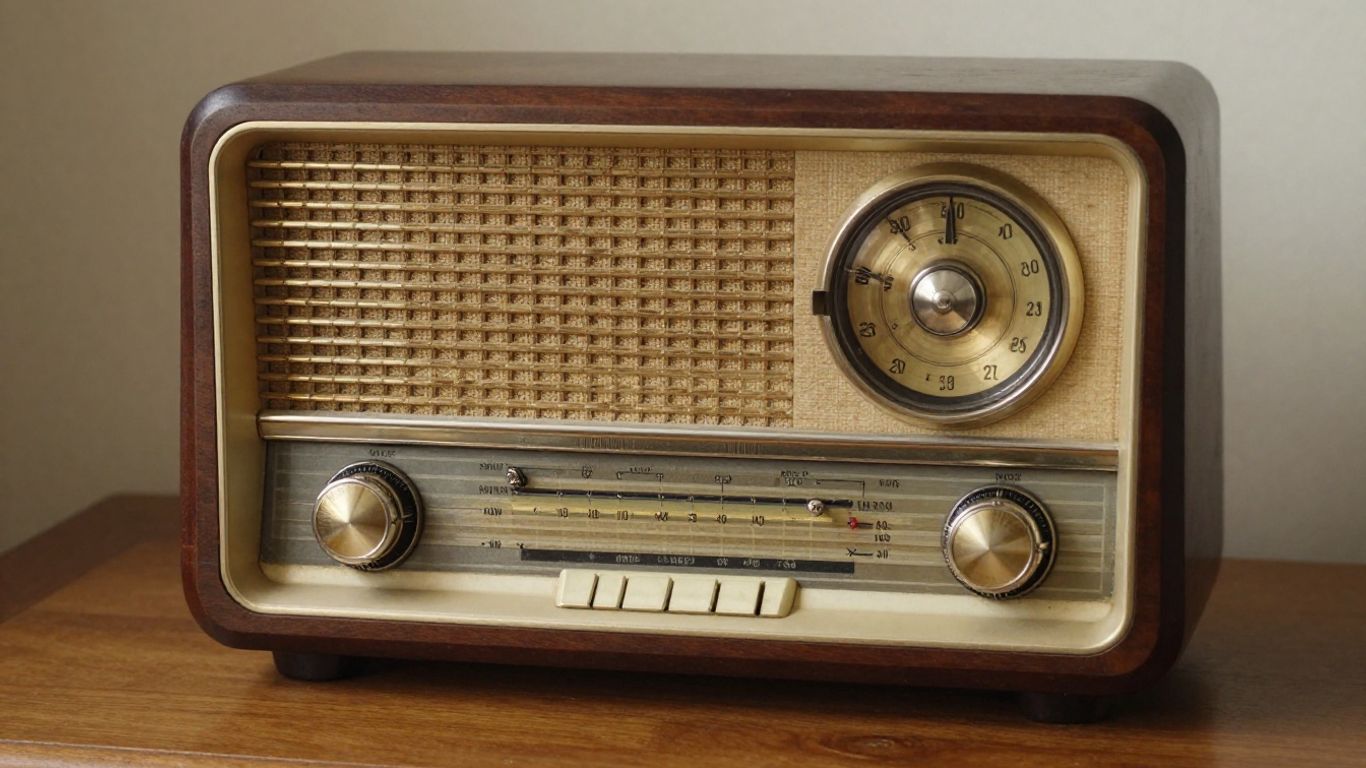
Before the internet and smartphones, there was the radio. This invention changed how people got their news and entertainment. It allowed voices and music to travel through the air, reaching homes far and wide.
Think about it: before radio, if you wanted to hear music or news, you had to be there in person or read it in a newspaper the next day. Radio changed all that. It brought live performances, important announcements, and stories right into people’s living rooms.
The ability to transmit sound wirelessly was a massive leap forward in communication. It wasn’t just about entertainment, though. During times of crisis or war, radio became a vital tool for sharing information quickly and widely. It connected people in ways that were never before possible.
Here’s a quick look at how radio developed:
- Early Experiments: Scientists like Nikola Tesla and Guglielmo Marconi were key figures in developing the technology in the late 19th and early 20th centuries.
- First Broadcasts: Regular radio broadcasting began in the early 1920s, with stations playing music, news, and dramas.
- Golden Age: The 1930s and 1940s are often called the "Golden Age of Radio," when it was the primary source of home entertainment for many families.
Radio paved the way for many other technologies we use today, like television and even the internet, by showing us the power of broadcasting information over long distances.
Radio’s impact was profound. It democratized information and entertainment, making it accessible to a much broader audience than ever before. It created shared cultural experiences and played a significant role in shaping public opinion and national identity.
24. Penicillin
It’s hard to imagine a world without antibiotics, and penicillin is where much of that story begins. Back in 1928, a Scottish scientist named Alexander Fleming was working in his lab, and as often happens, things got a little messy. He noticed that a mold had contaminated one of his petri dishes, and more interestingly, the bacteria around the mold seemed to be dying off. This accidental observation led to the isolation of penicillin, a substance produced by that mold that could kill harmful bacteria.
Fleming’s discovery was a game-changer, but it wasn’t until the 1940s that penicillin was developed into a usable medicine. Howard Florey and Ernst Boris Chain, working at Oxford University, figured out how to purify and mass-produce it. This was a huge deal, especially during World War II. Suddenly, soldiers who would have died from infected wounds had a fighting chance. The impact on medicine was immediate and profound.
Penicillin works by interfering with the ability of bacteria to build their cell walls. Think of it like a brick wall – penicillin prevents the bricks from being laid correctly, causing the wall to crumble and the bacteria to die. It’s particularly effective against a wide range of bacterial infections.
- Discovery: Accidental observation by Alexander Fleming in 1928.
- Development: Mass production and purification by Howard Florey and Ernst Boris Chain in the 1940s.
- Impact: Revolutionized the treatment of bacterial infections and saved countless lives.
The widespread use of penicillin and other antibiotics has dramatically reduced deaths from bacterial infections. However, the rise of antibiotic-resistant bacteria is a growing concern, highlighting the need for responsible use of these life-saving drugs.
25. Hindu-Arabic Numeral System and more
It’s easy to take for granted, but the way we write numbers today is a pretty big deal. We use a system with ten digits: 0, 1, 2, 3, 4, 5, 6, 7, 8, and 9. What makes it so powerful is that the position of a digit changes its value. For example, in the number 123, the ‘1’ means one hundred, the ‘2’ means twenty, and the ‘3’ means three. This concept, known as positional notation, is the backbone of modern math and economics.
This system didn’t just pop up out of nowhere. It actually started in India, then traveled through the Arab world, and eventually made its way to Europe and the rest of the globe. Before this, counting and doing complex calculations was a lot more difficult.
Here’s a quick look at its journey:
- Origins: Developed in India, likely around the 5th century CE.
- Spread: Adopted and refined by Arab mathematicians.
- Global Adoption: Introduced to Europe and became the standard worldwide.
The Hindu-Arabic numeral system, with its zero and positional value, revolutionized how we record, calculate, and understand quantities. It’s a quiet but constant presence in almost every aspect of our lives, from simple shopping lists to complex scientific research.
Think about it: without this system, things like computers, advanced engineering, and even basic accounting would be incredibly challenging, if not impossible. It’s a true testament to human ingenuity that such a simple yet effective way of representing numbers could have such a massive impact on civilization.
Looking Ahead: The Endless Cycle of Innovation
As we’ve journeyed through a hundred examples, from the earliest sparks of human ingenuity to the complex systems we rely on today, one thing becomes clear: technology is not static. It’s a continuous story, with each invention building upon the last. What seems like a marvel today will likely be a stepping stone for future generations. This ongoing process of creation and refinement shows our persistent drive to solve problems, improve our lives, and understand the world around us. It’s exciting to think about what comes next, as the spirit of innovation continues to shape our future in ways we can only begin to imagine.
Frequently Asked Questions
What is considered the most important early technology?
While many early inventions were crucial, the control of fire stands out. It provided warmth, light, and the ability to cook food, which greatly improved survival and health for early humans. This made it a fundamental step for civilization.
When was the wheel invented, and what was its first use?
The wheel is believed to have been invented by the Mesopotamians around 3500 B.C. Interestingly, its first known use was for making pottery, not for transportation. It took several more centuries before it was adapted for use on chariots.
How did the steam engine change the world?
The steam engine, especially James Watt’s improved version, was a driving force behind the Industrial Revolution. It powered factories, ships, and trains, leading to massive growth in manufacturing, transportation, and overall societal change.
What is the significance of antibiotics like penicillin?
Antibiotics, such as penicillin discovered by Alexander Fleming, revolutionized medicine. They provided a way to fight deadly bacterial infections, drastically reducing death rates from diseases that were once untreatable.
Who invented the internet, and how did it develop?
The internet wasn’t invented by a single person. It grew from projects like ARPANET in the 1960s, with key developments in networking protocols by people like Vint Cerf and Robert E. Kahn. It has since transformed communication, business, and information sharing globally.
Why is the Hindu-Arabic numeral system important?
This system, using ten digits (0-9) and place value, forms the basis for mathematics and many scientific fields today. Originating in India and adopted worldwide, it provides a clear and efficient way to represent and work with numbers.

Peyman Khosravani is a seasoned expert in blockchain, digital transformation, and emerging technologies, with a strong focus on innovation in finance, business, and marketing. With a robust background in blockchain and decentralized finance (DeFi), Peyman has successfully guided global organizations in refining digital strategies and optimizing data-driven decision-making. His work emphasizes leveraging technology for societal impact, focusing on fairness, justice, and transparency. A passionate advocate for the transformative power of digital tools, Peyman’s expertise spans across helping startups and established businesses navigate digital landscapes, drive growth, and stay ahead of industry trends. His insights into analytics and communication empower companies to effectively connect with customers and harness data to fuel their success in an ever-evolving digital world.